Colorful Stanley, Falkland Islands

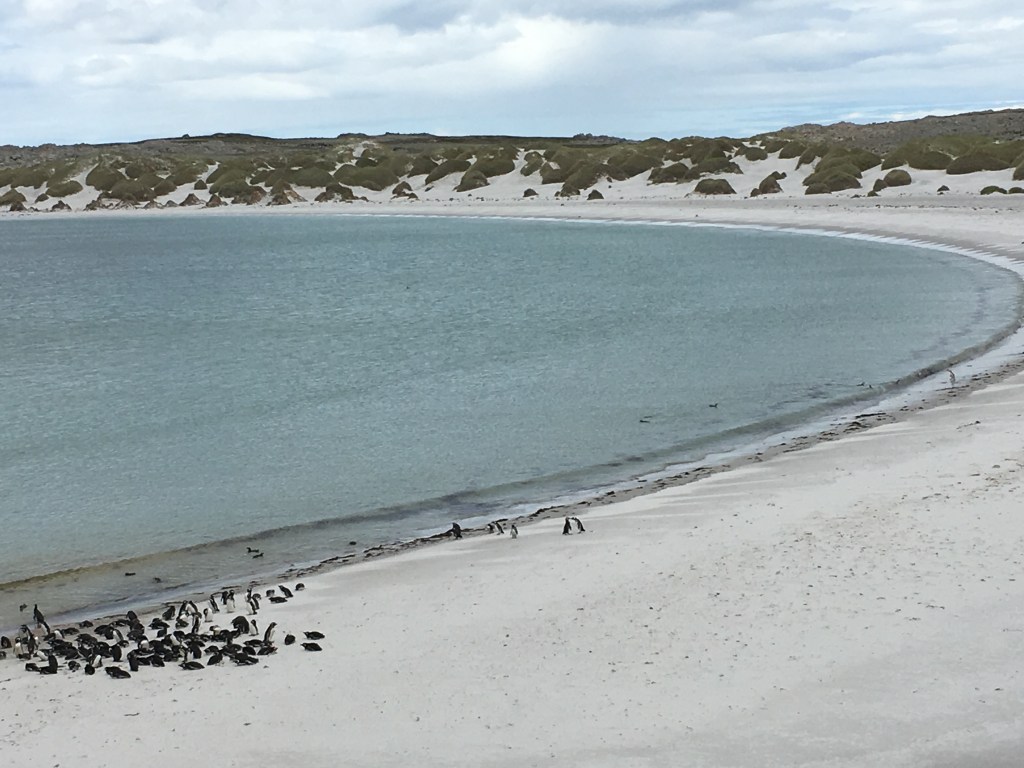
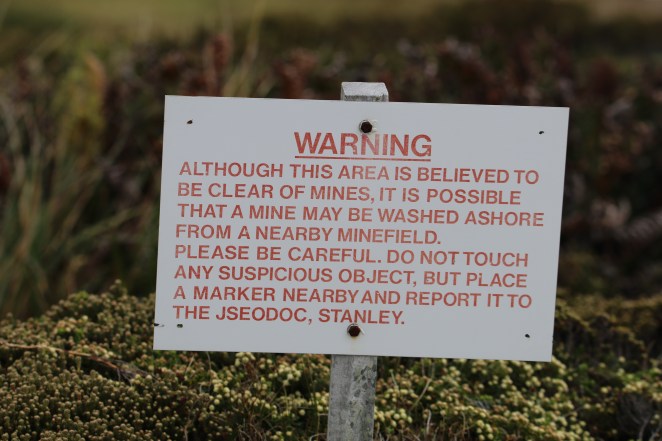
On April 2, 1982 the residents of Stanley awoke to an invasion of Argentine troops who landed in the dark at beautiful York Bay. Today, that beach and the water nearby is dangerous with land mines set by the invaders.
img_0068

I don’t understand why the government didn’t insist that those who set the destructive hardware (and lost the war) weren’t held accountable for cleaning up the mess? Governments really need more mothers  for logical discipline!

The penguins in the picture above don’t weight enough to detonate the mines, but the approximately 2,050 residents cannot use this beautiful natural resource–a whopping 35 years later. Storms continue to stir up the mines with  occasional explosions.

Paula and I went on a guided coastal walk, seeing flightless ducks,  Kelp and Upland geese, Magellanic penguins, and my favorite Megallanic Oystercatchers.

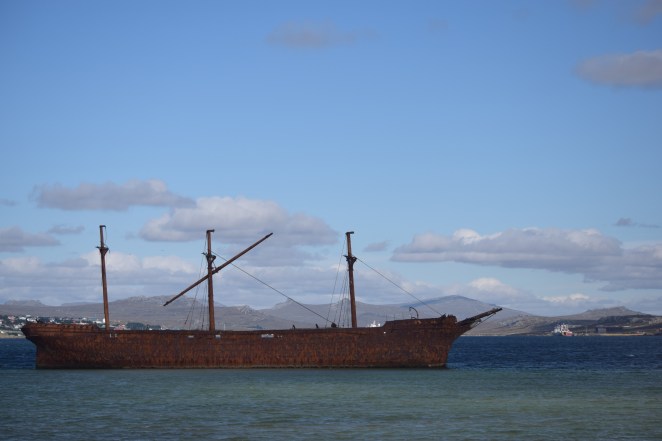
We passed ships like the Elizabeth, rusting in the harbor. this tells the tale of those hunting fur seals and whales from long ago. (Photo courtesy of Paula Hillier because I only had my long zoom lens that day.)
dsc00421

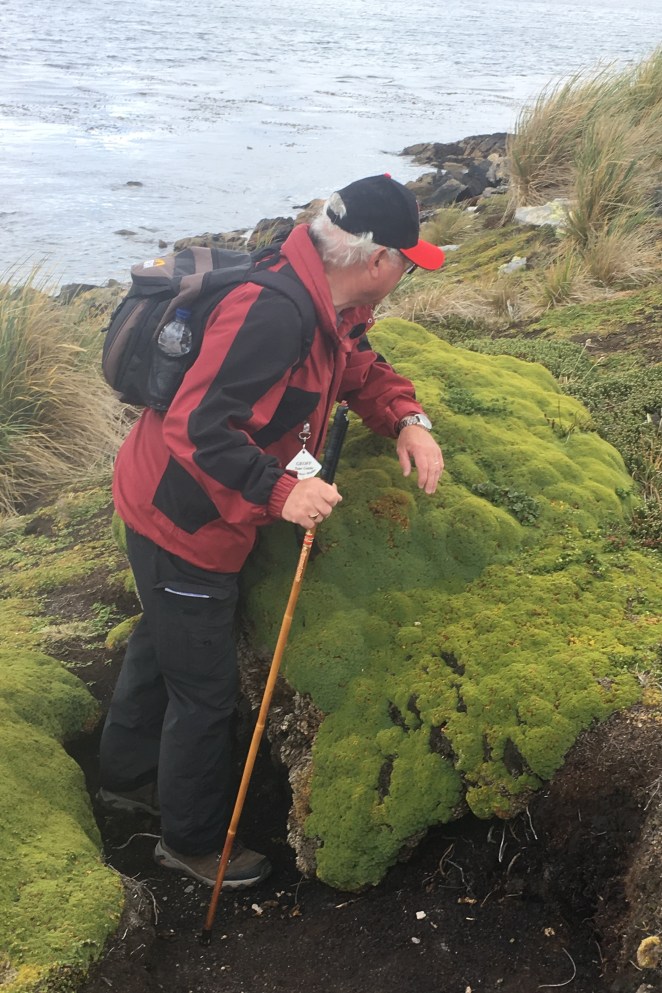
Our expert guide, Geoff Pring, offered us a buffet of edible plants, which we munched on like hungry kids. We tasted lemony scurvy grass which cured the sailor’s disease. We nibbled on diddle-dee berries, and sniffed vanilla daisy. It was a trek requiring fine tuning of all senses.

I loved the balsam bog pictured below, over a hundred years old and a quirky relative of the carrot family.  The gum from this plant is used by herbalists.
img_5029

I’m going to have to go back for another visit because we didn’t have much time to search the town for the gnome or the whale bone garden. But I did capture a perfect shot of the church with the whale bone arch and pictures from the ship as we sailed away.

Stanley, and the Falkland Islands held many pleasant surprises in diversity (and happiness) of her residents, in architecture, as well as the natural world.

Westpoint and Saunders Island Landings

Two days out of Ushuaia, Argentina enroute to the West Falkland weren’t spent sleeping, starting with 7:45 a.m. wake-up calls. The Marine animal specialist, Annie, did presentations on seals and whales while our ornithologist, Adrian, helped us identify birds of the Falklands and South Georgia Islands. Acacia, our photography guide taught us how to capture the perfect photo. Woody presented the history of the Falkland islands.

They tried to prepare us for the amazing experience on our morning landing at Westpoint Island and the afternoon landing at Saunders, which was quite the task. Westpoint has a booming summer population of four people and black-browed nesting Albatross and Rockhopper penguins by the thousands along the cliffs. We had to be careful walking to not step on these smallest (but most noisy) penguins or the endangered albatross that mate for life with their partners.

In the afternoon, the ship sailed to Saunders Island, site of the first English settlement in 1765. It is now home to 11,000 breeding pairs of black-browed albatross and five penguin species. The way I keep them straight:

Rockhopper–noisy and yellow brows

Gentoo–look like they have red lipstick and they are quite funny to watch as they steal rocks from other nests. They are quite animated.

Megellanic–live in burrows and bray like a donkey

Macaroni–Have a Donald Trump hairstyle and other mannerisms of the Trumpster.

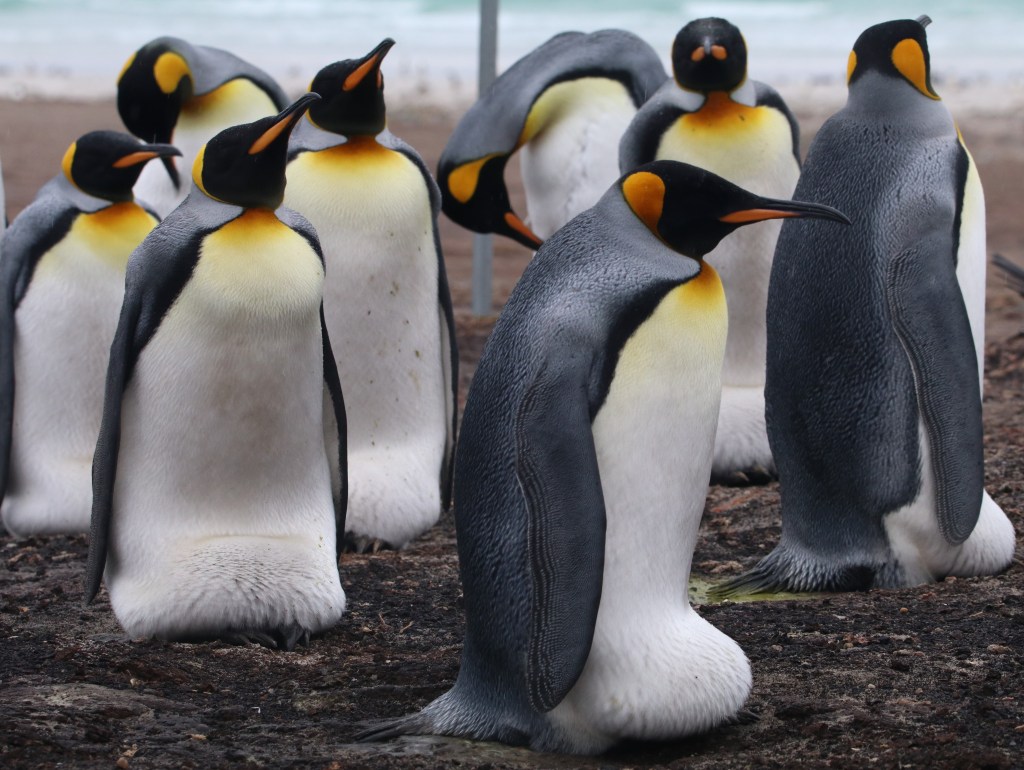
King–tallest penguin in the Falklands (only the emperor is bigger) with orange markings. Juveniles are fluffy brown and must molt before they can enter the water to eat. Some of them are larger than their parents. Apparently, molting is a miserable experience as they seem to be shunned or perhaps depressed.


We also saw whale bones above the beach and two predators–the Skua looking so sweet with the baby chick (but they are quite vicious) and the Striated Caracara just waiting for a baby penguin left alone.