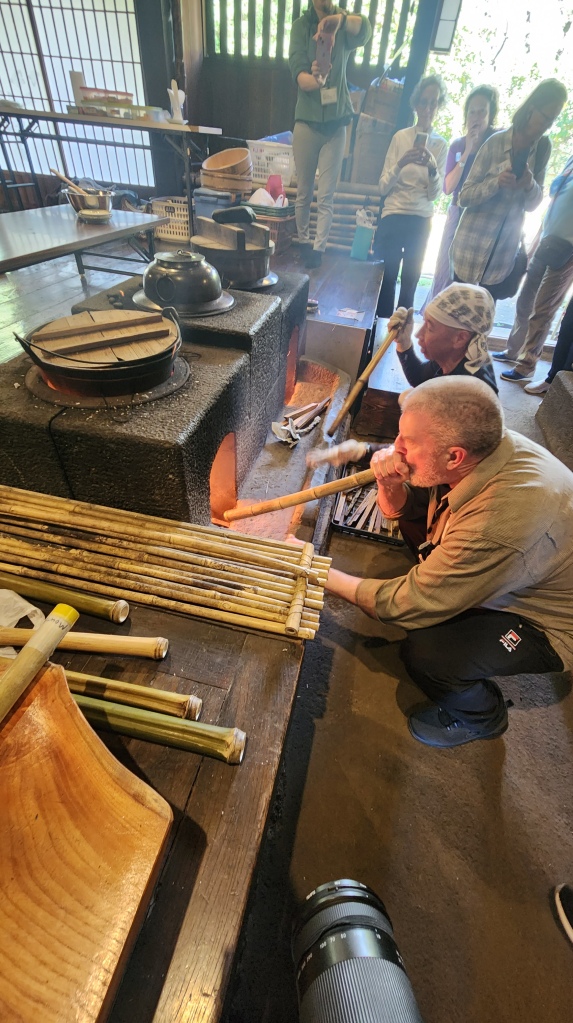
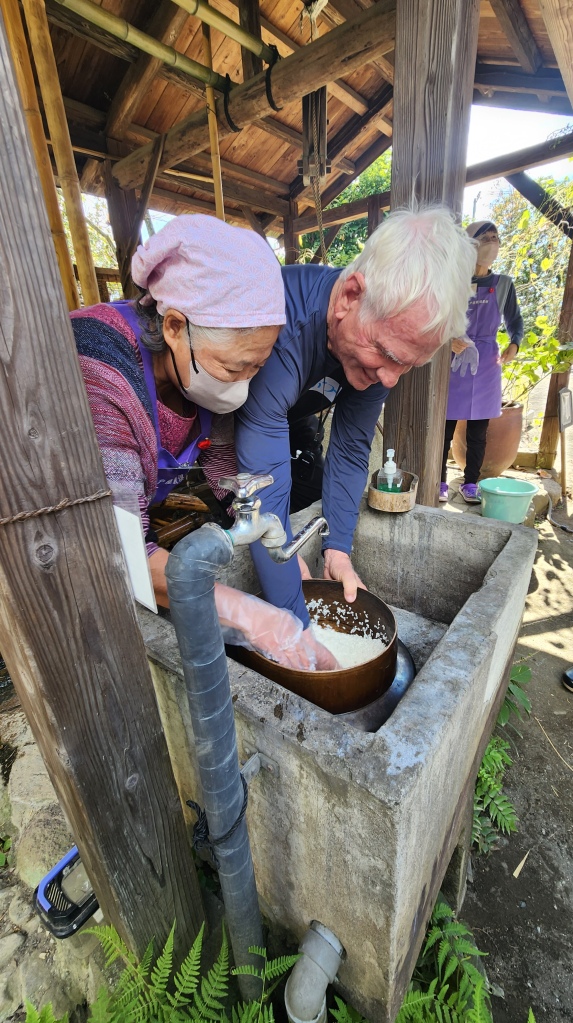
We were fortunate to visit Seto House on the way to Hakone where we helped locals make lunch. This centuries old home once belonged to an important leader and his family. At the entry, there’s a small mill that still works and gardens are in the back. The stove used to cook our rice has been used for over 300 years. This place is now the villages community center.
300 year-old stovethis is the only heat in the buidling–quite cold in winter! Cross section of packed thatch
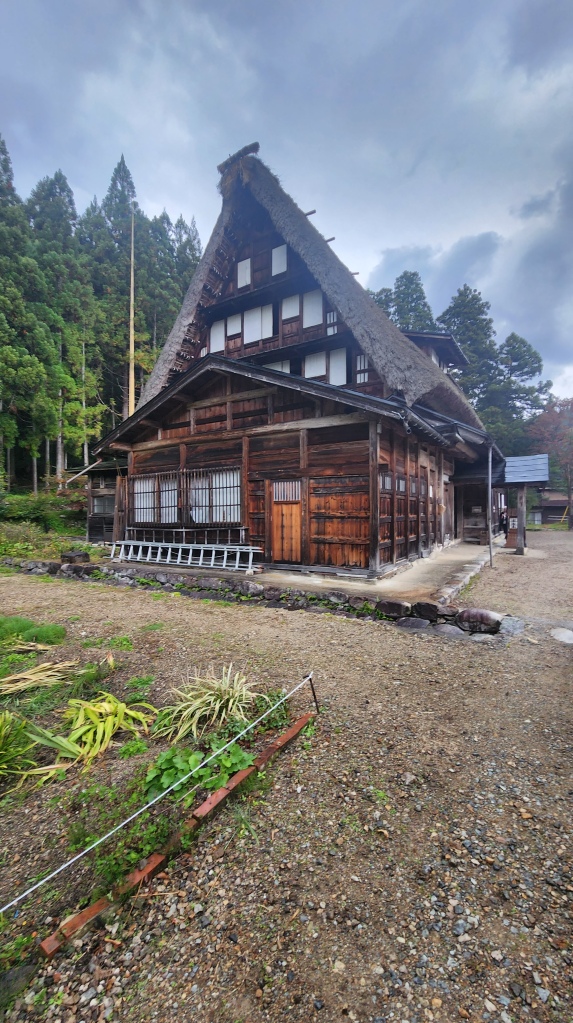
A few days later, we went to Ainokura in the Gokayama Valley , where there are 20 steep thatched roof homes in this World Heritage site. Some of the Gassho-style houses are now B&Bs. The villagers devised their own fire-hydrant system, since the biggest danger to thatch homes is fire. There’s a shinto shrine and Buddhist temples here too. It was a beautiful day with tree colors just starting to change and grass thatch stacked to dry in the fields.
hike above town for a better view
The last place, 5- storey Iwase House, has a 350 year-old heritage in the production of gunpowder and a close connection to the Sammuri and Shoguns. There’s a back entrance for the Sammuri and fake rooms to hide or escape. The upper floors are completely open with the middle floor used for staff sleeping areas but the upper floors were used for silk worm production and other agriculture needs.
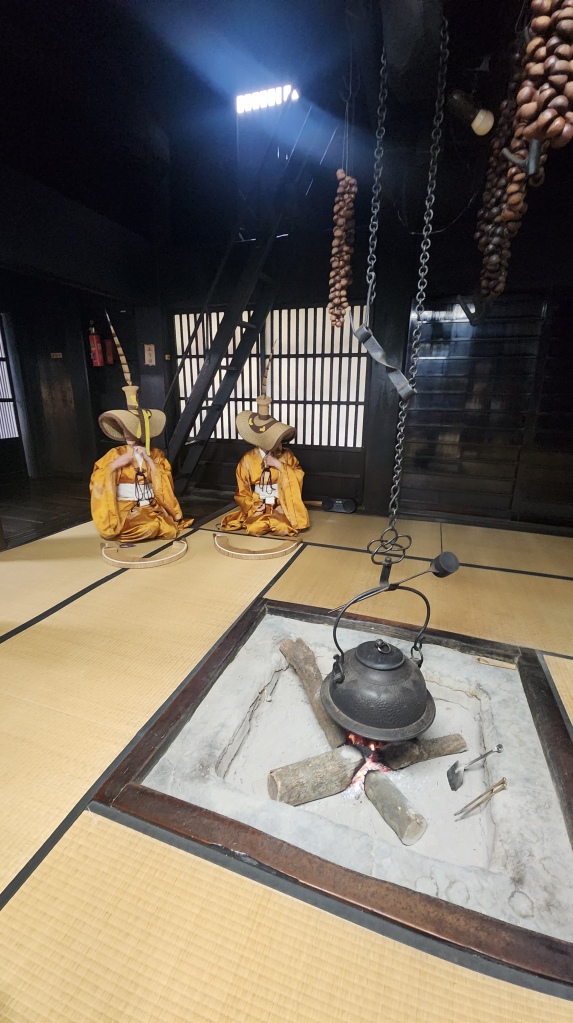
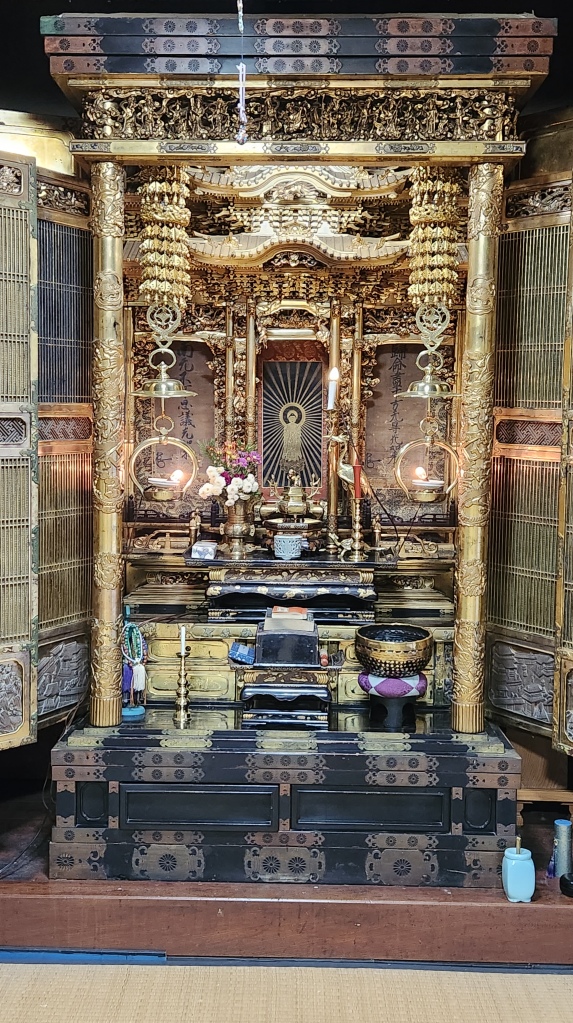
traditional dancers behind the fire–the only heat source in wintersliding doors open to the fish pond behind the houseBuddhist temple in the homeformal dining room for dignitaries steep roof like two hands in prayer Samurai entered through this door. 3rd floor showing blackened timbers and how vines or rope are used instead of nails or metal
Thatched homes ( Kayabuki Minka) have been built in Japan for over 5,000 years, which was a surprise to me. The roof is densely packed and can last 20 years or longer. The rain only penetrates and rots the very top layer, so the roof is never completely stripped. Some communities chip in to help each other, but more often masters who have learned the craft are hired and payment subsidized by the government. Gassho homes are places of invisible energy. The immense roof without interior divisions represents the willingness to have an open mind and resembles praying hands.Traditional dancers at Iwase house use ancient instruments called “Kokoriko” made out of hundreds of wood clappers.
The dance was once upon a time performed by unmarried girls with lyrics about love and for wishes to be granted.
My first dreams of Egypt began at my grandmother’s home where my monthly ritual of reading National Geographic Magazine began. There I was–a seven-year-old curled up in an overstuffed chair with my bobby socked feet curled under my Catholic school uniform as I learned about chasing the sun to grasp eternal life. Although the thought of having my brains picked out of my nose during the mummy process gave me pause.
Now older and not necessarily wiser, I searched the risks verses rewards which included negative perceptions in the States about Egypt. My clock keeps ticking and I was done waiting for the perfect time to see these mystic wonders and astounding artifacts. All of us live in an imperfect world. Holding my breath, I clicked the purchase this trip button with Overseas Adventure Travel. Then I went to a book store to purchaseThe Yacoubian Building by Alaa Al Aswany.(amazing look at Egyptian culture and the revolution.)
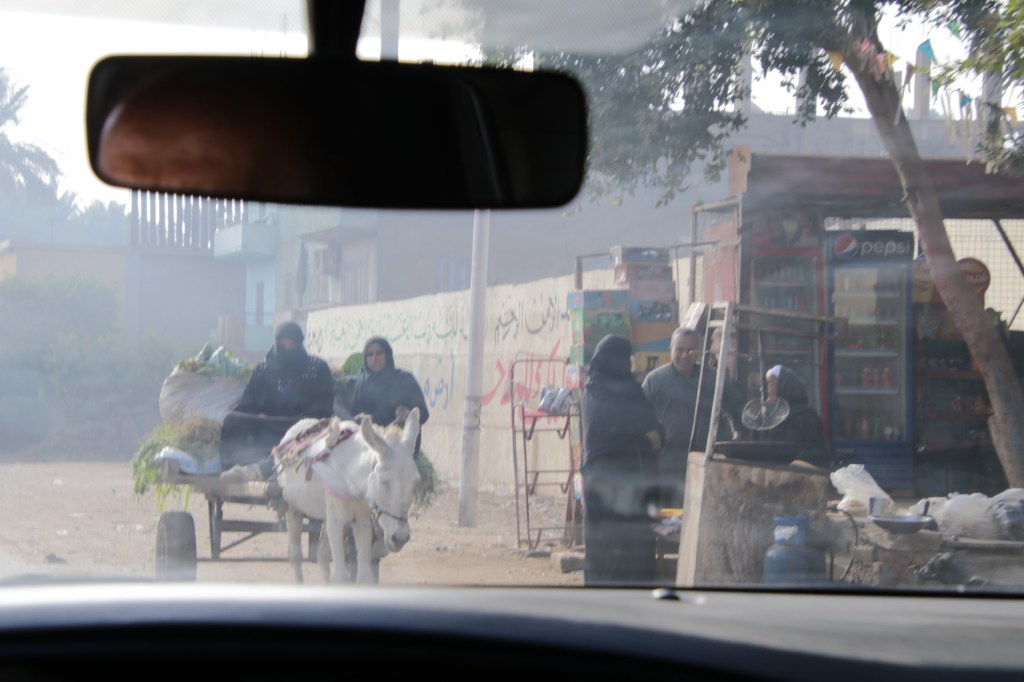
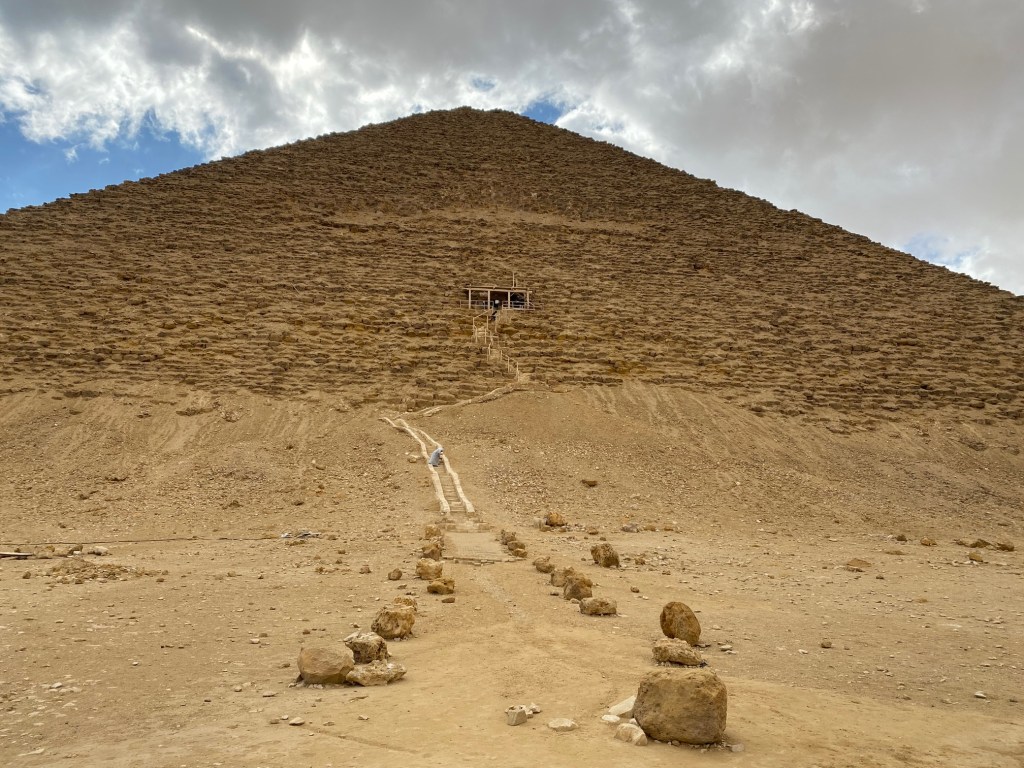
Since we flew in a day early, Bonnye and I booked a driver through the concierge service to take us to the Red Pyramid and Bent Pyramid at the royal necropolis of Dahshur and to the burial city of Saqqara. It was a fascinating drive, even though our driver got lost and we passed military carrying AK-47’s. Luckily, none of them saw Bonnye taking this picture or else we might still be in jail. ( I highly recommend NOT taking pictures of military anywhere in the world)
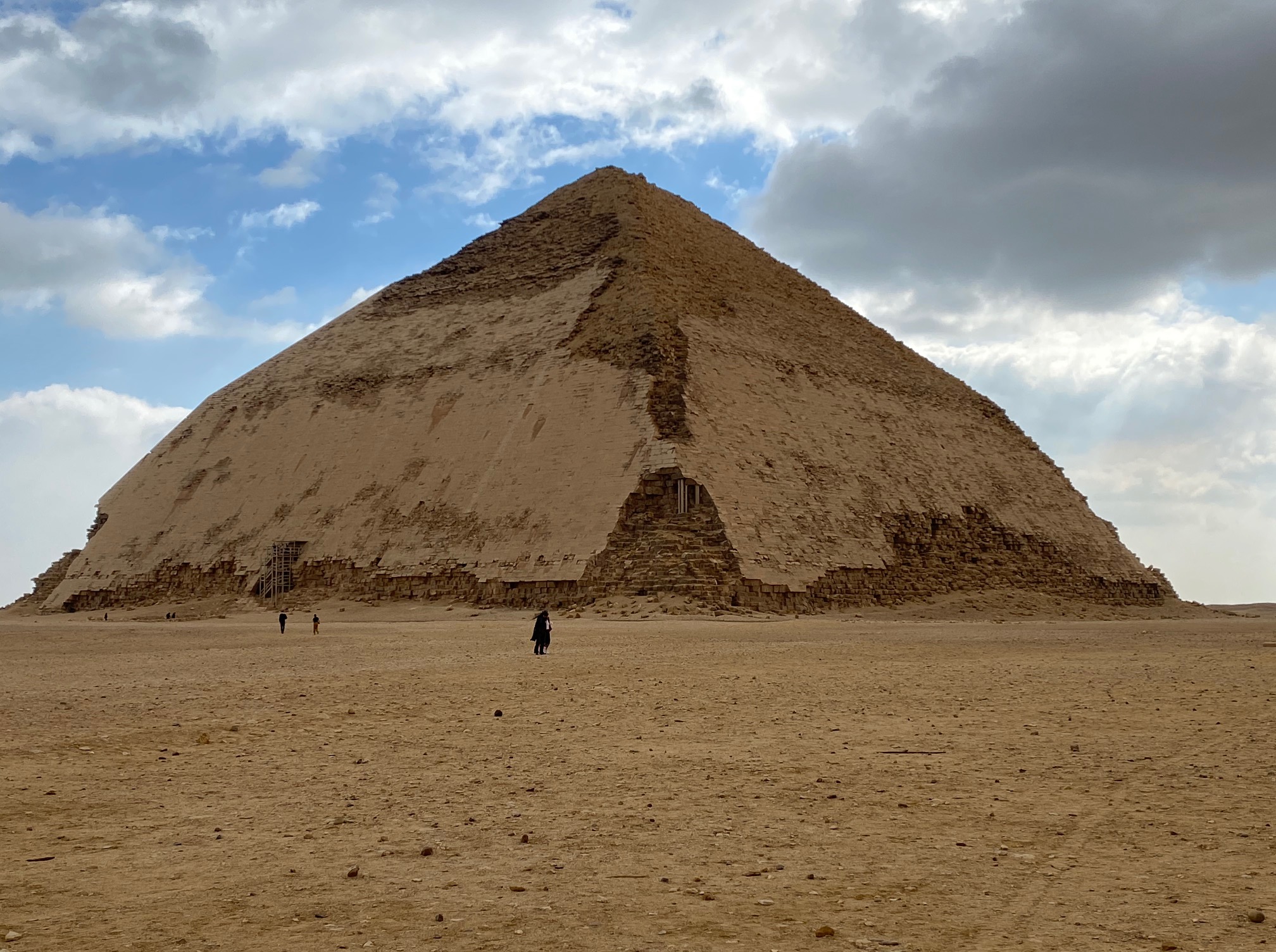
Bent Pyramid
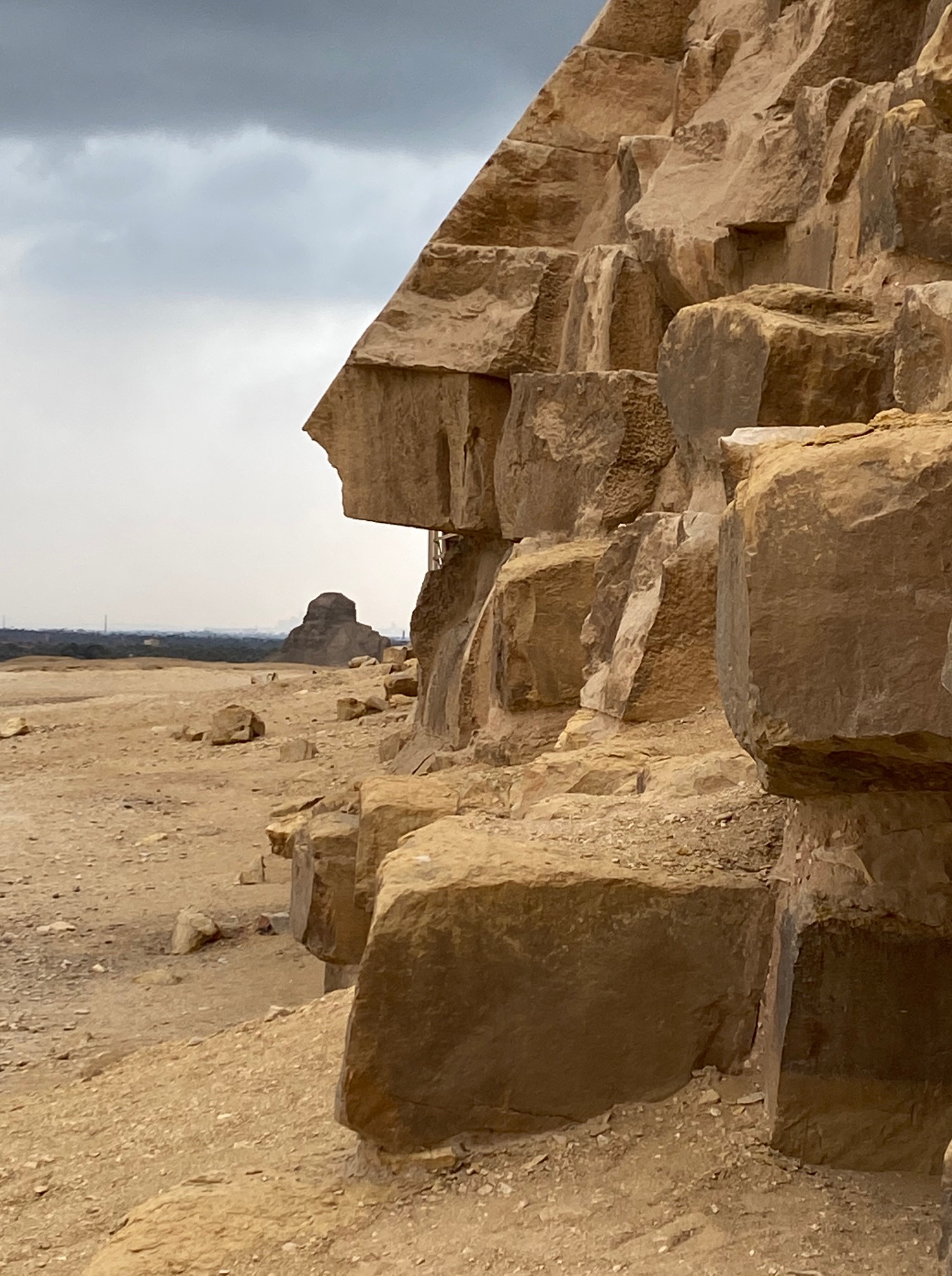
This early transitional pyramid is bent because good ol’ Pharaoh Sneferu couldn’t quite figure out the geometry in his quest for a smooth limestone tomb. See the bend half way up? Before the fourth dynasty, all pyramids were step-shaped. This was Sneferu’s second attempt for a geometric tomb after the disaster of the sinking Black Pyramid that is also in Dahshur. The change in angle might also have happened if the building started to become unstable.
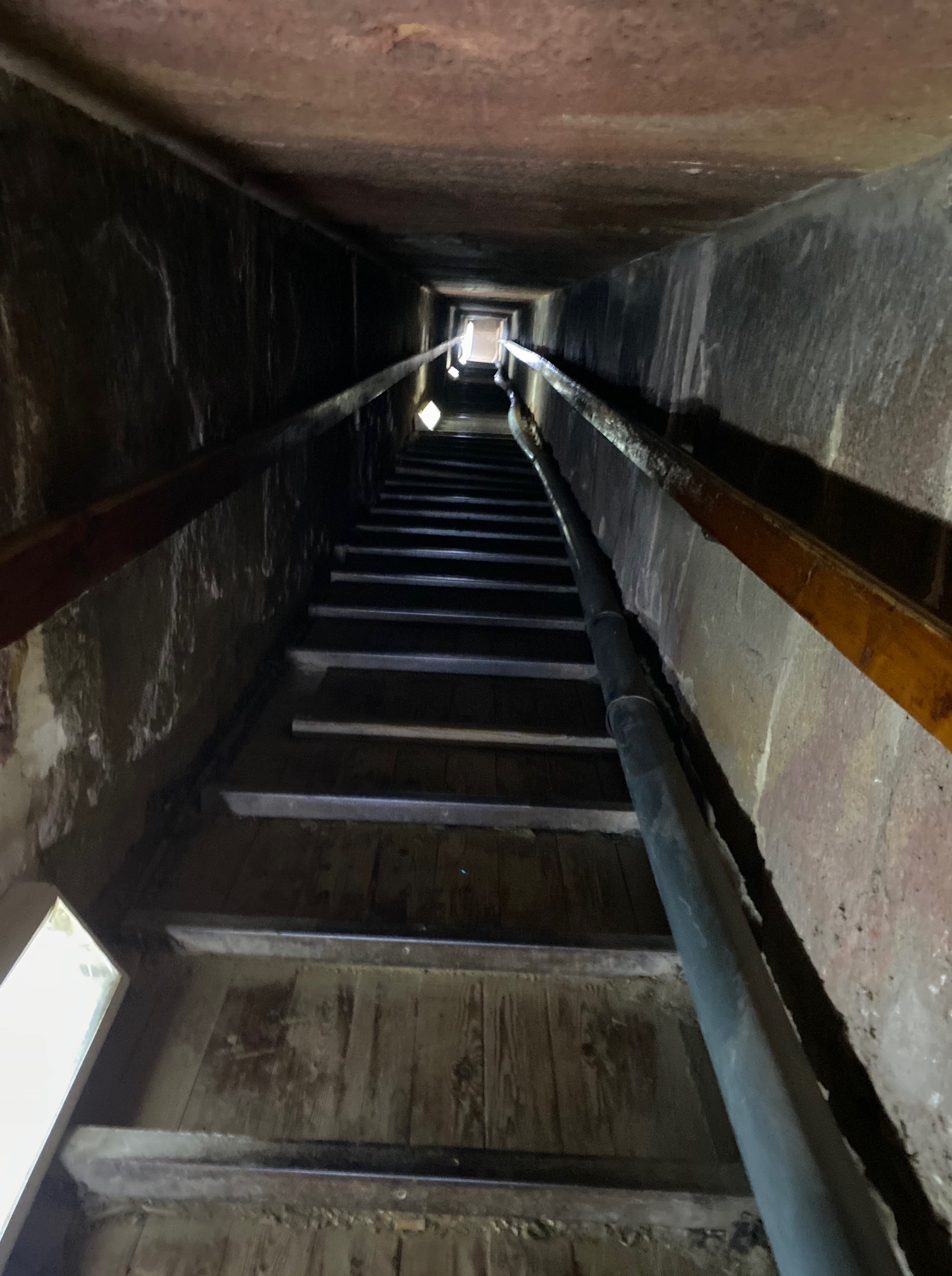
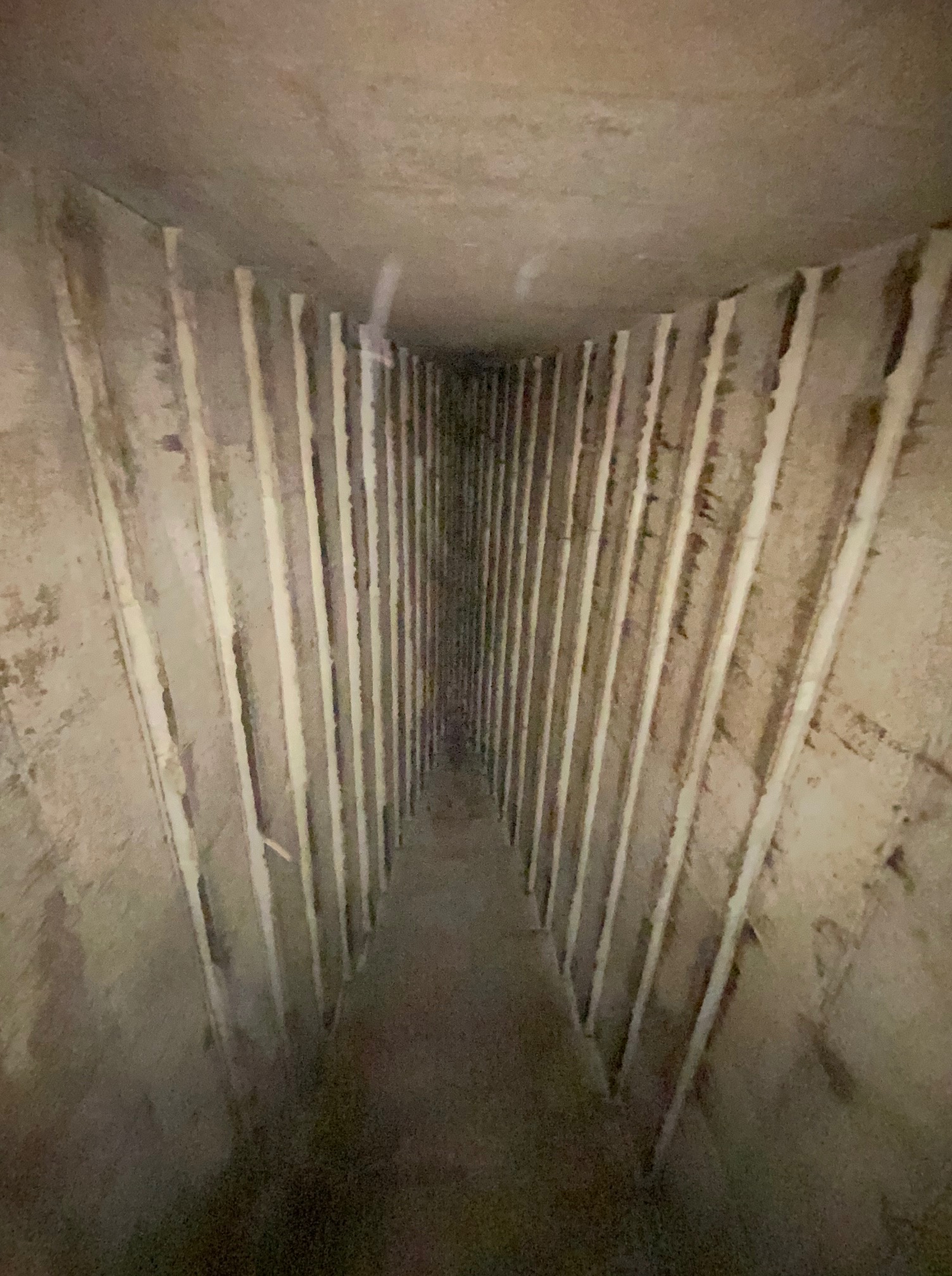
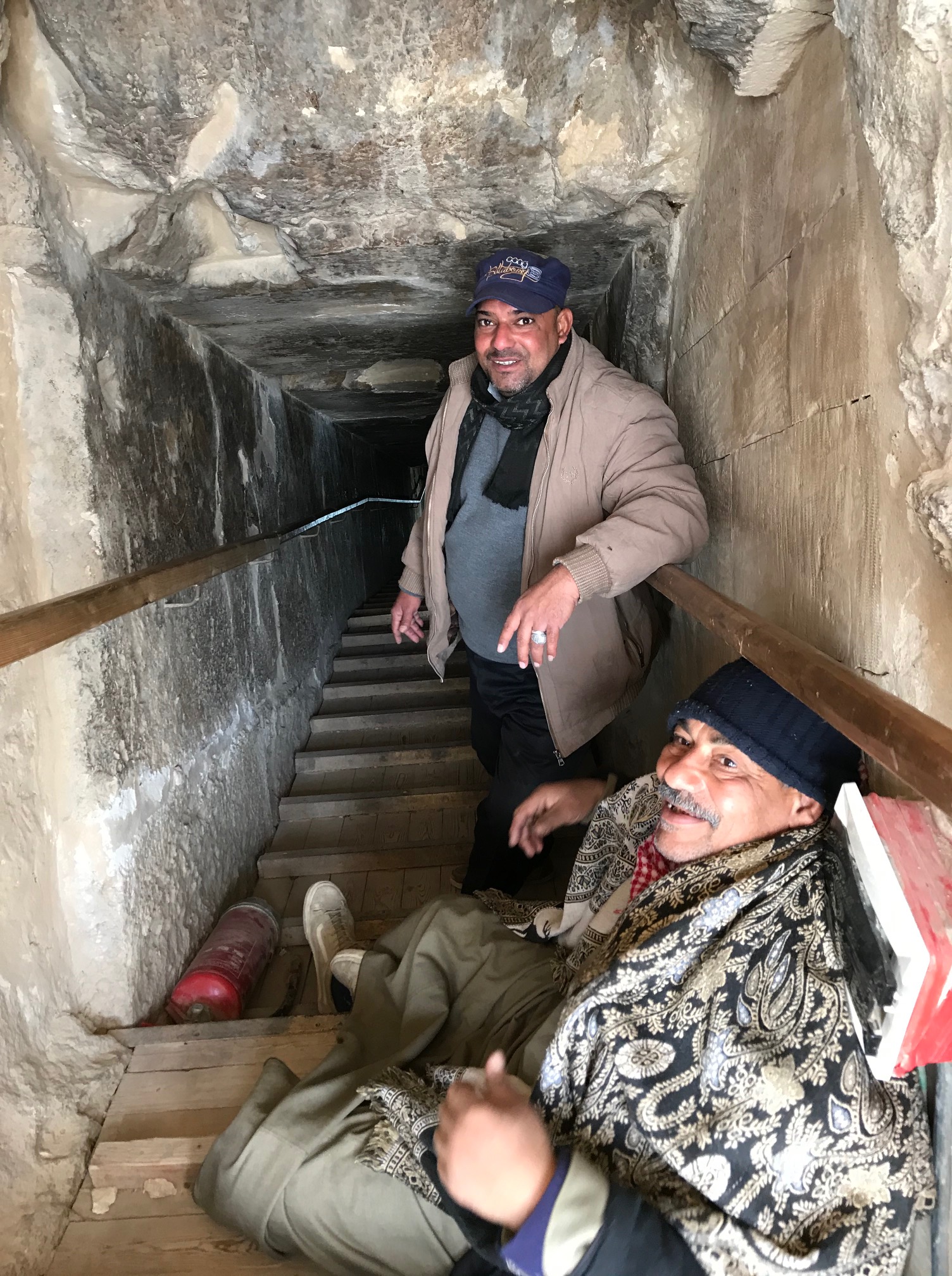
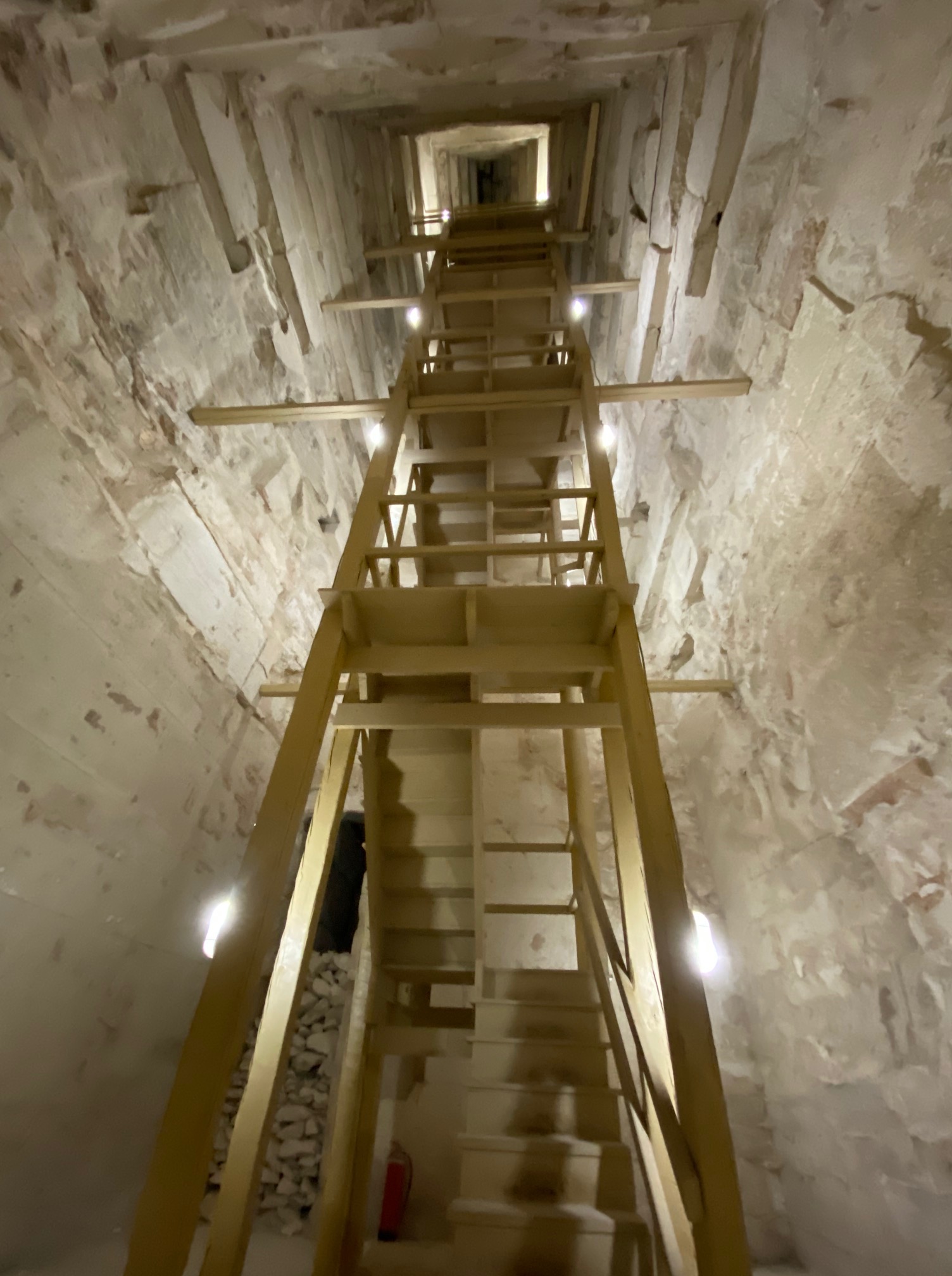
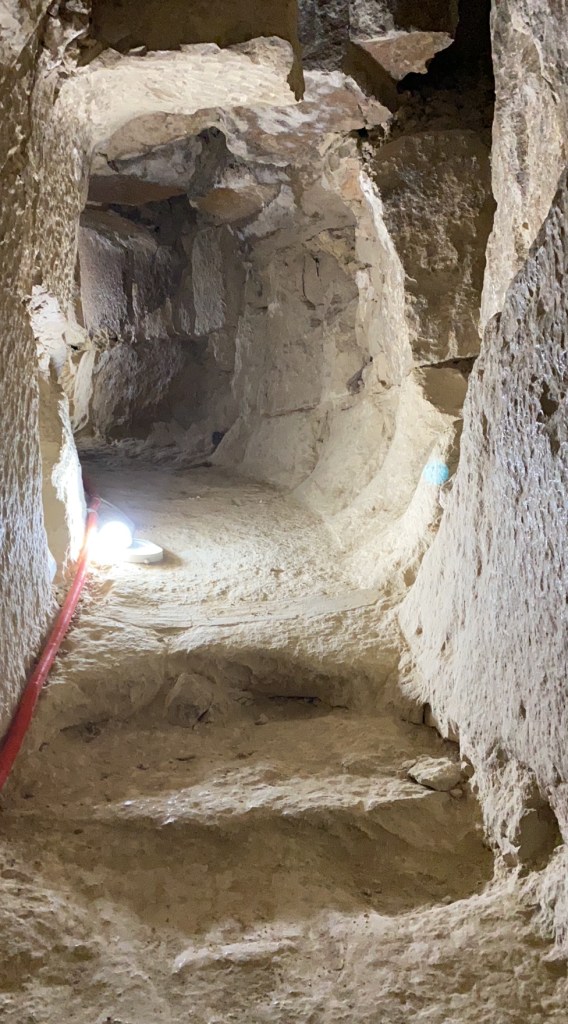
It was a kick to walk (and crawl) through the steep shaft down to the two large corbelled chambers built 4,600 years ago. Let me add that there were few people visiting that day, which was great. Imagine being inside the belly of a pyramid with people moving in both directions. It would be impossible with crowds. The added benefit was being able to feel like a real archeologist discovering an empty tomb. The Bent was closed for 50 years because of a nearby army camp so it was an honor to be able to explore.
*** on a side note–if ticket takers offer to take your picture, you are expected to pay them!!!***
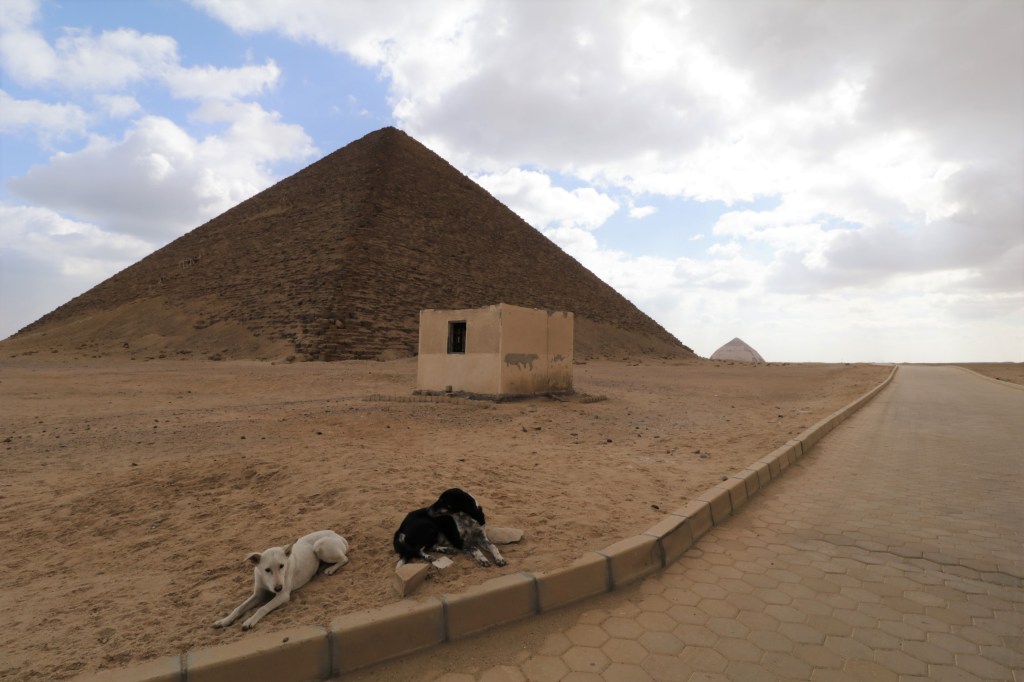
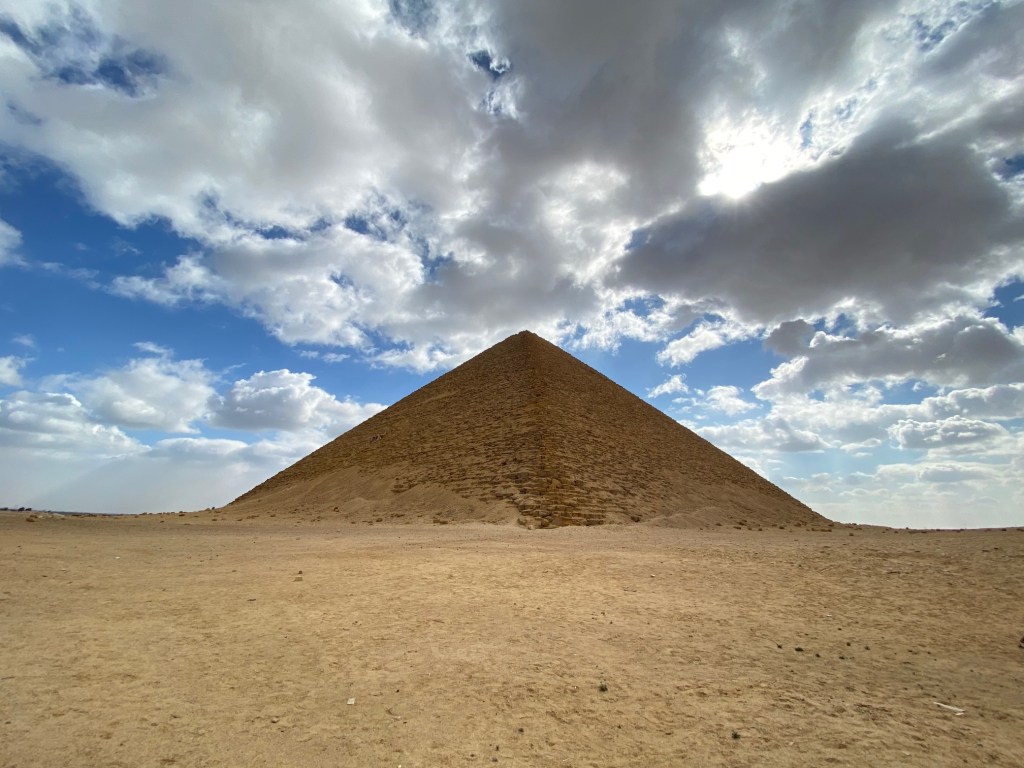
Red Pyramid
It took Sneferu three times to figure out the right angle for his tomb in Dahshur. The Red limestone pyramid is the first success as well as the third largest such edifice in Egypt. (His son went on to build the largest–more on that later). It was covered in white Tura limestone but people in Cairo took the blocks for their own buildings. It’s thought that the man known as “the good pharaoh” was buried in the three chambered Red Pyramid. A mummy was found there but it disappeared. Keep an eye out for it on ebay.
There have been recent finds from a queen’s tomb nearby and there are at least 11 other tombs that haven’t been explored yet.
Saggara Necropolis
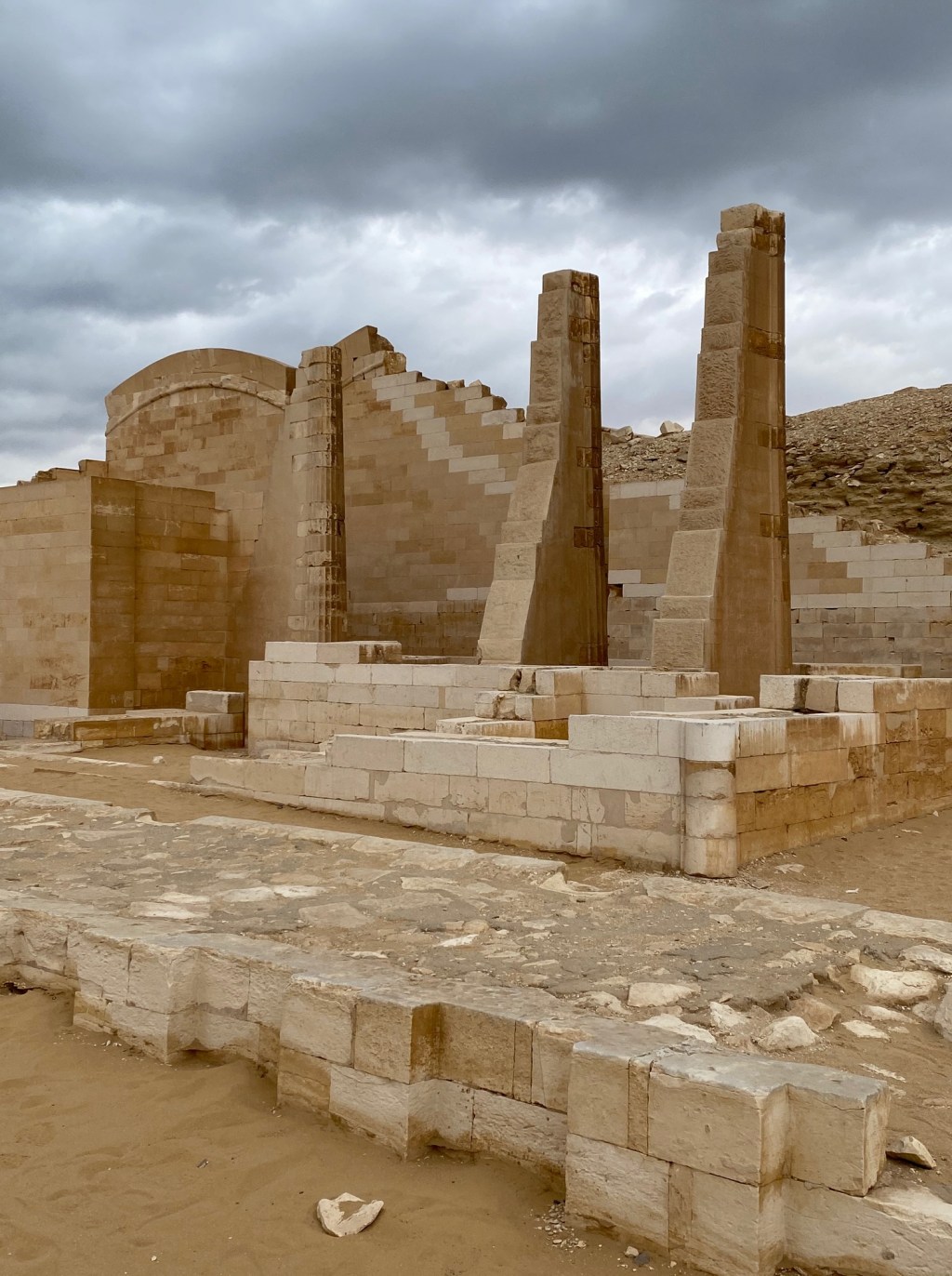
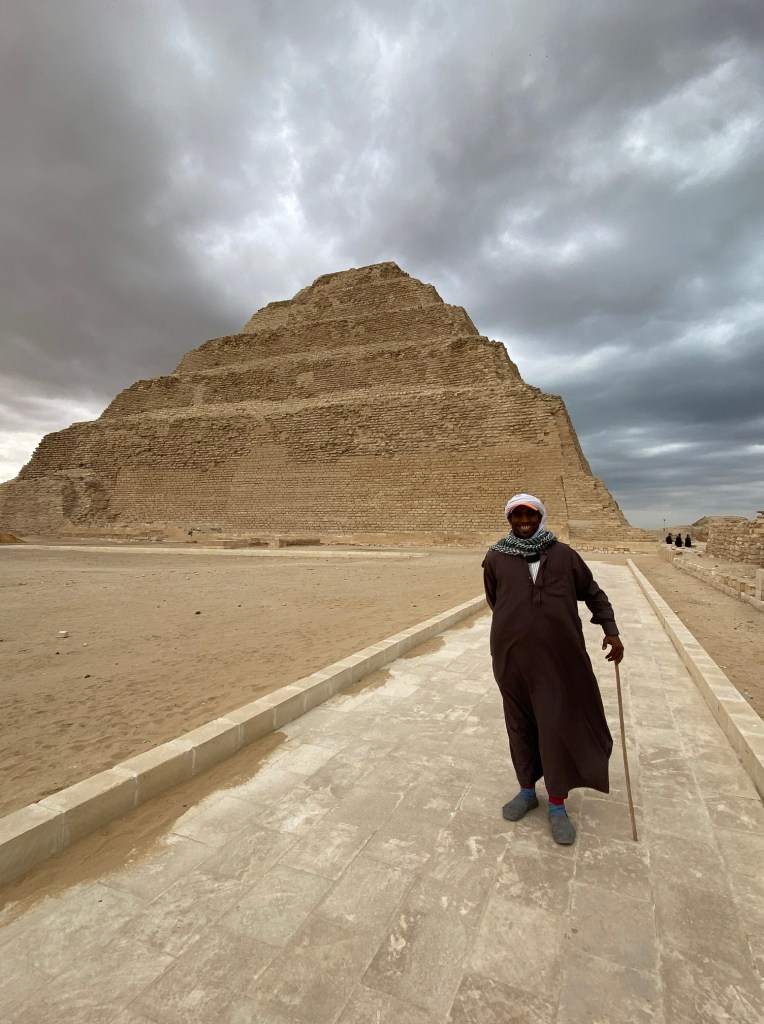
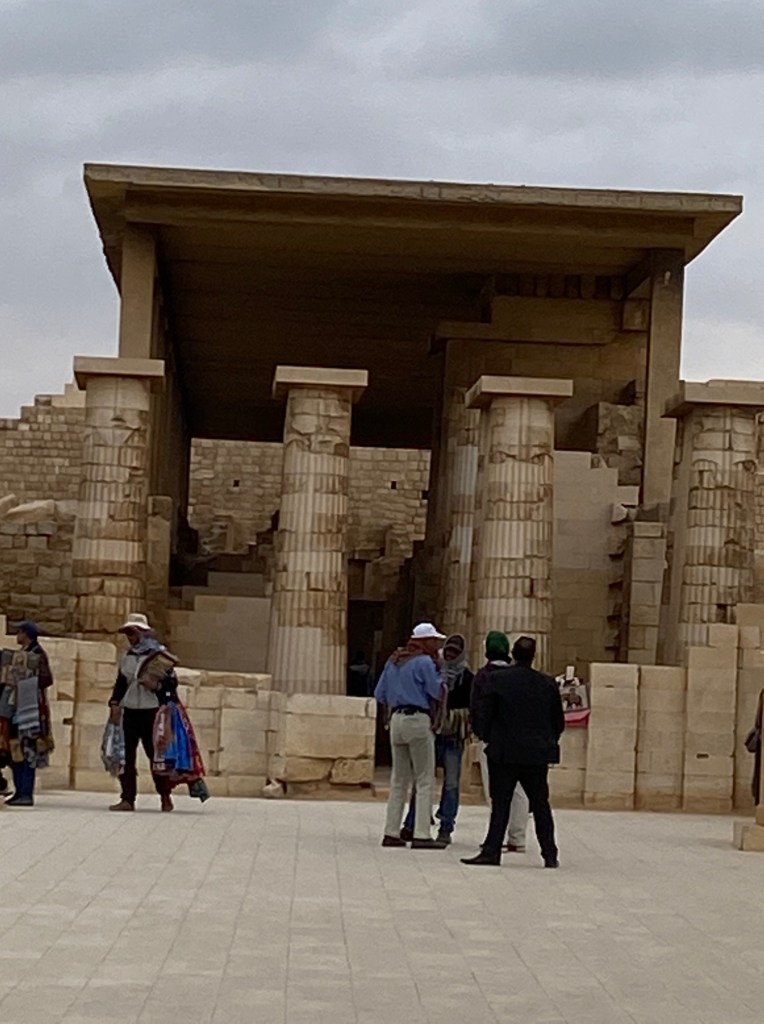
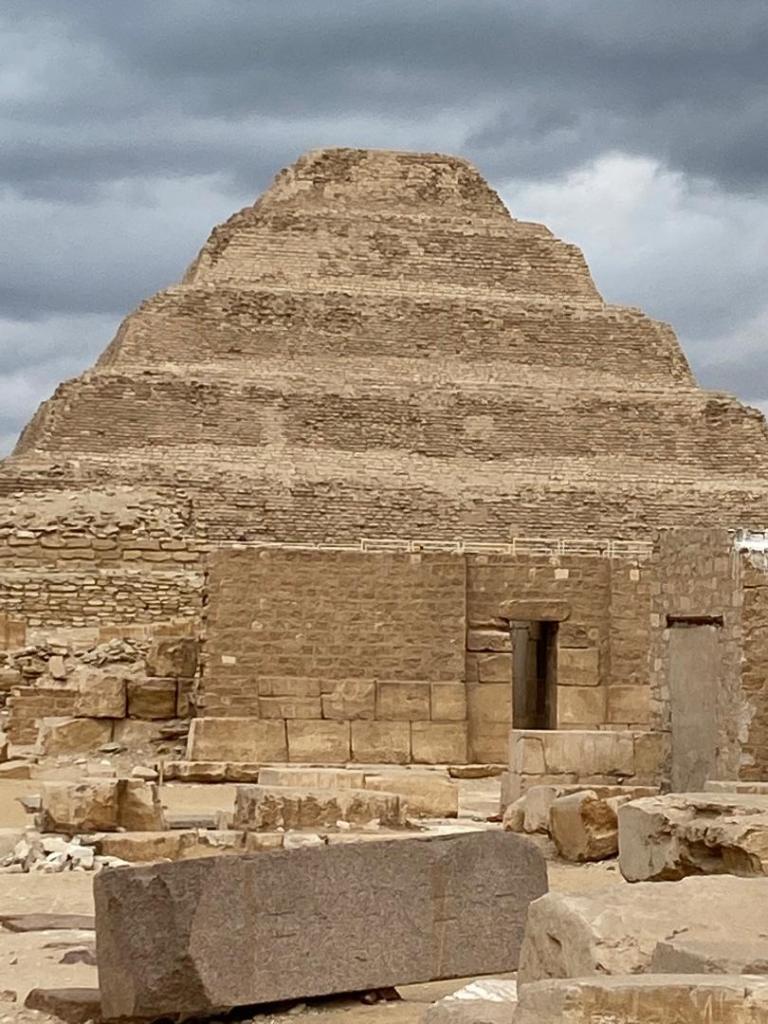
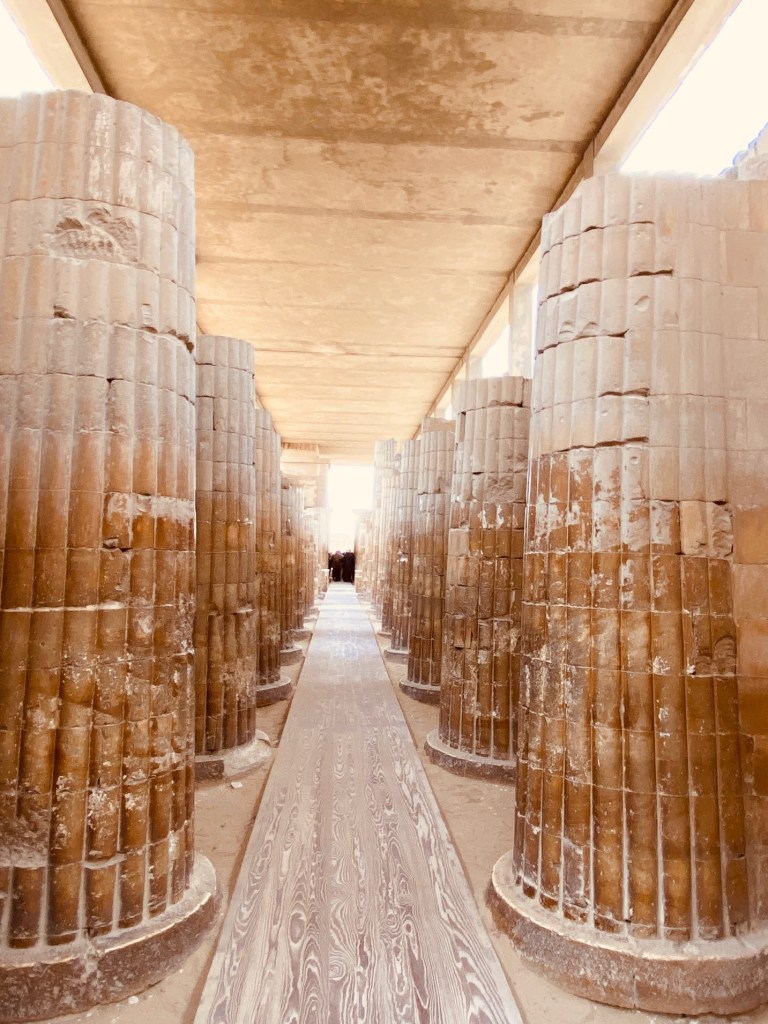
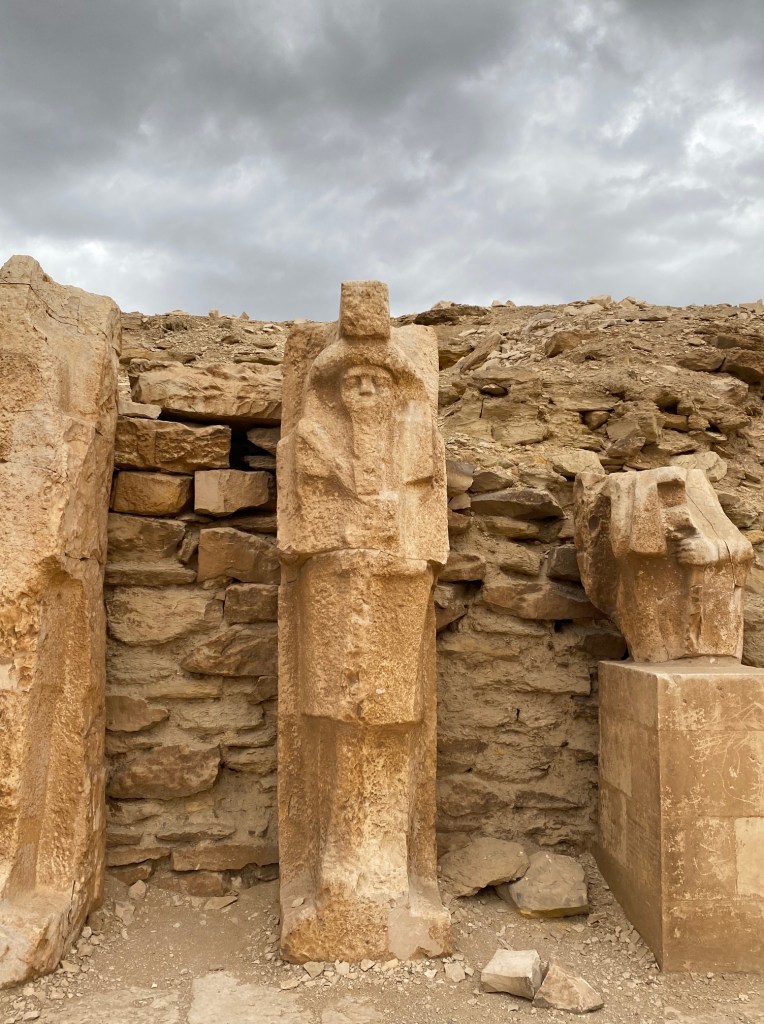
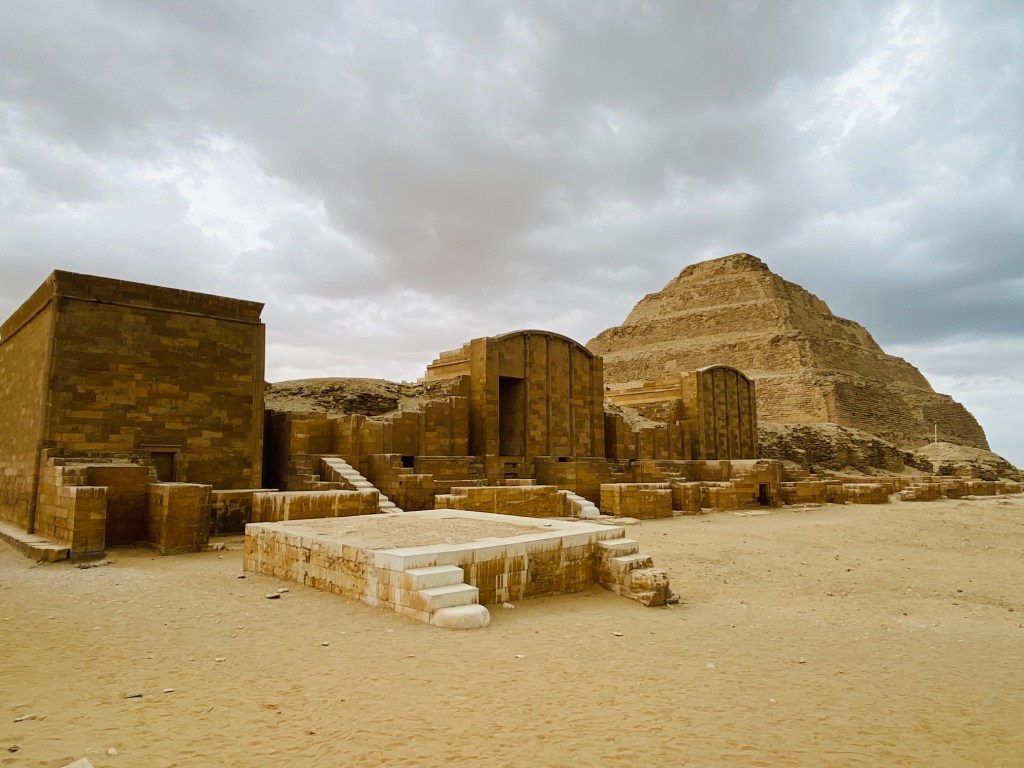
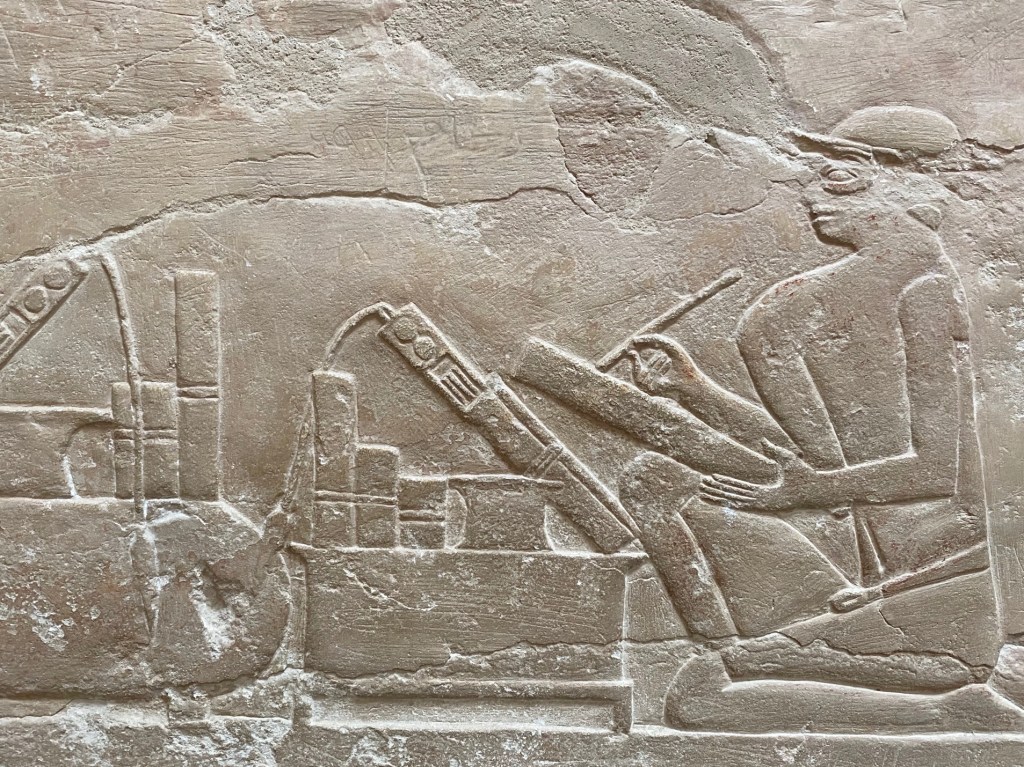
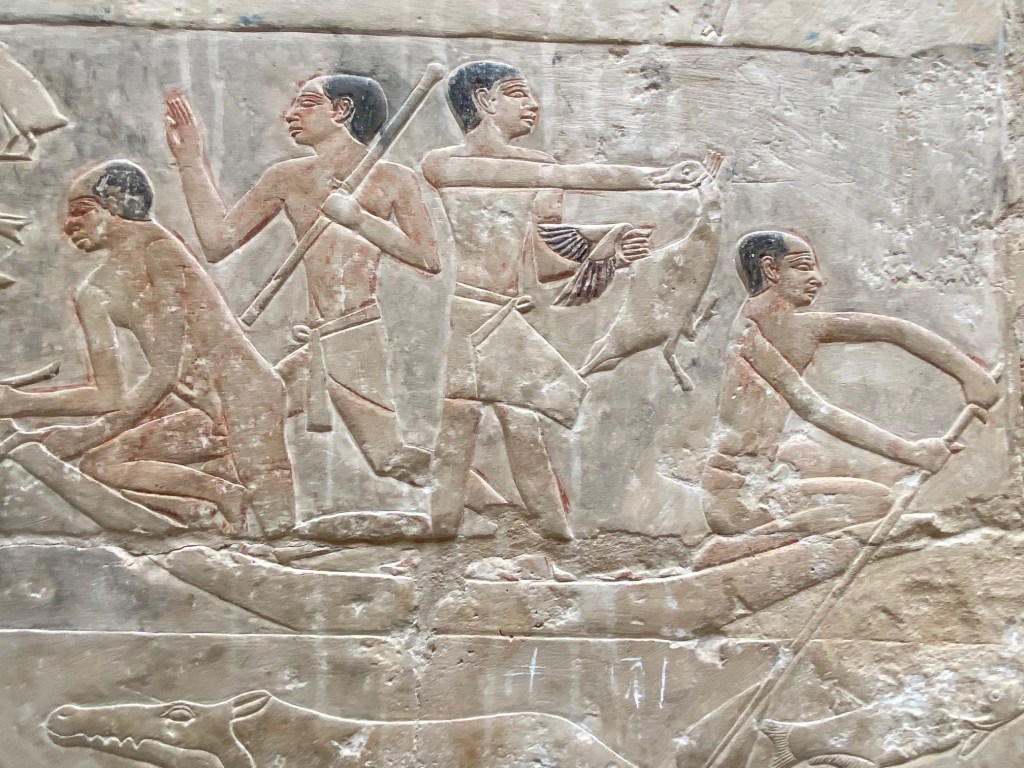
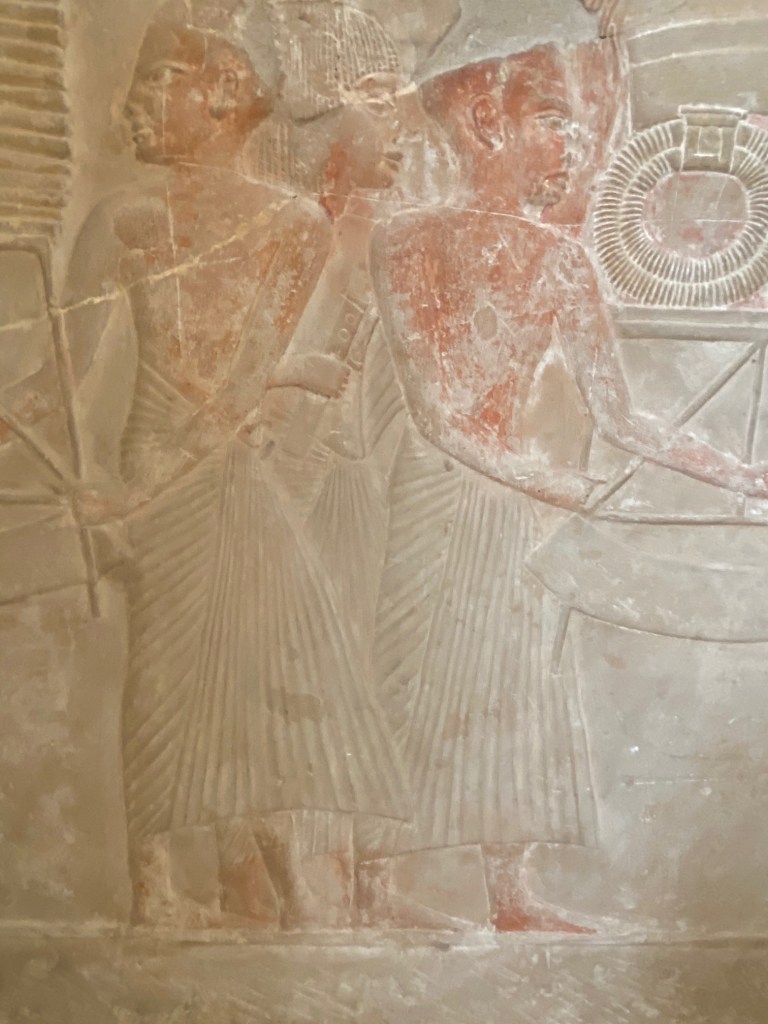
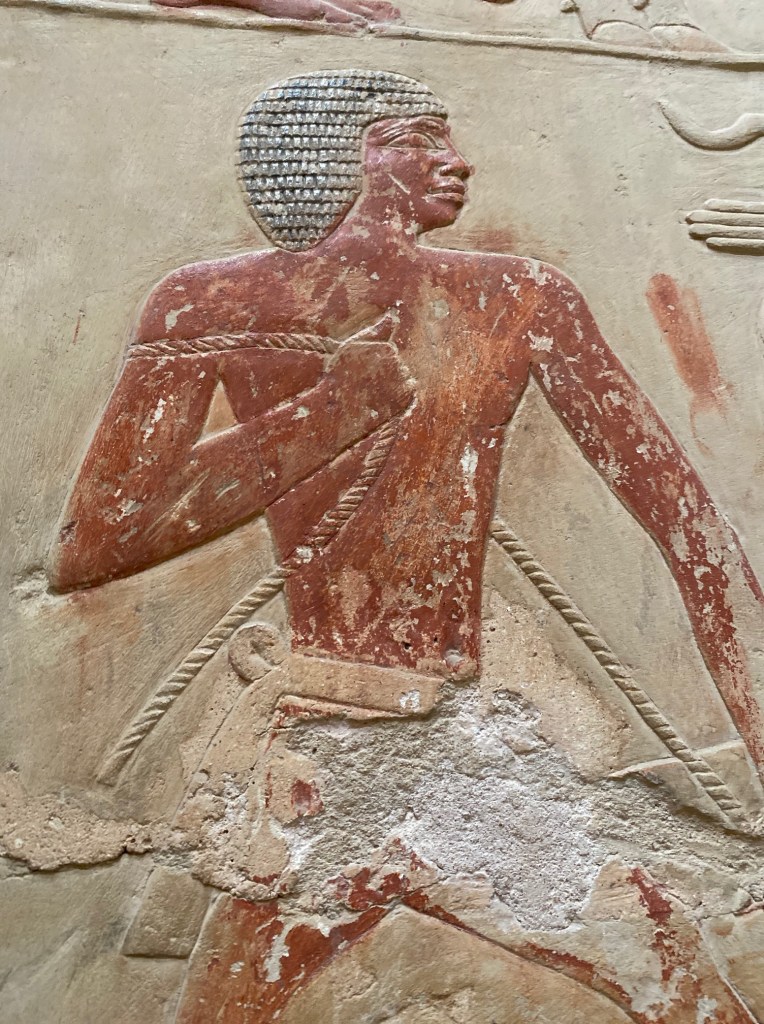
Nearby the Dashur pyramids is the city of the dead for royalty and merchants from the ancient city of Memphis. It covers an area of 4.3 miles by 0.9 and was surrounded by a 32 foot wall. There are some burials from the second dynasty but It all went crazy with the third dynasty step-pyramid (of Djoser). Everyone wanted to spend eternity with the rock-star king’s so it expanded with an entry courtyard, a court of 40 columns, open courtyards and many smaller tombs called mastabas. Rituals and burials happened here for 3,000 years.
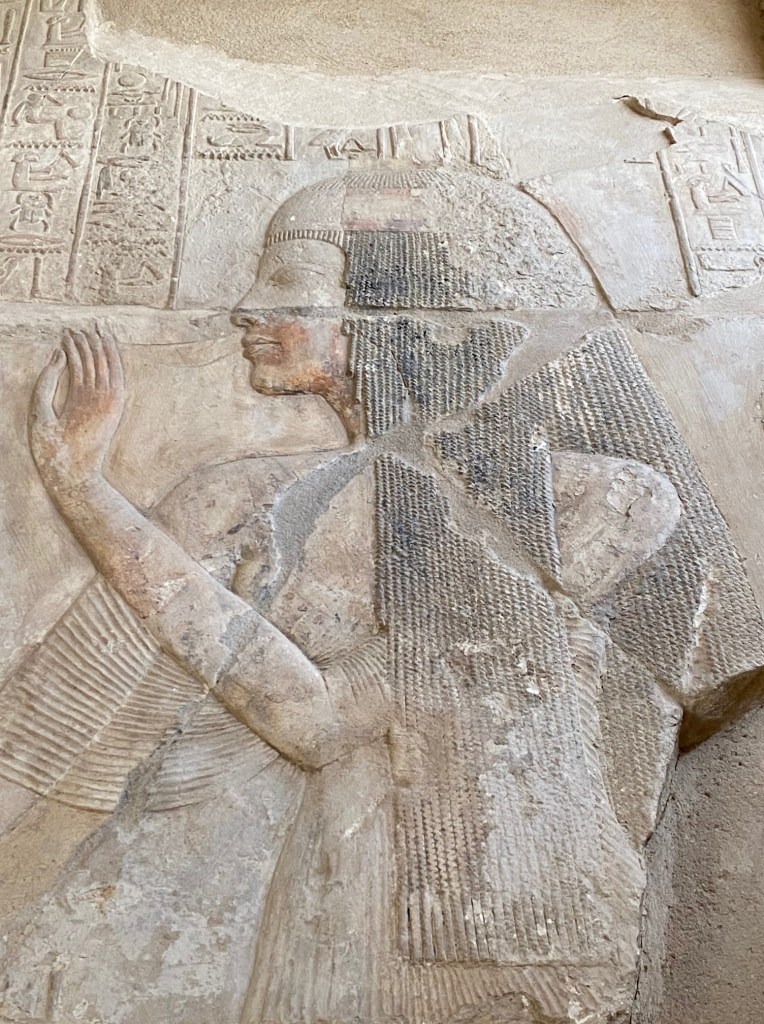
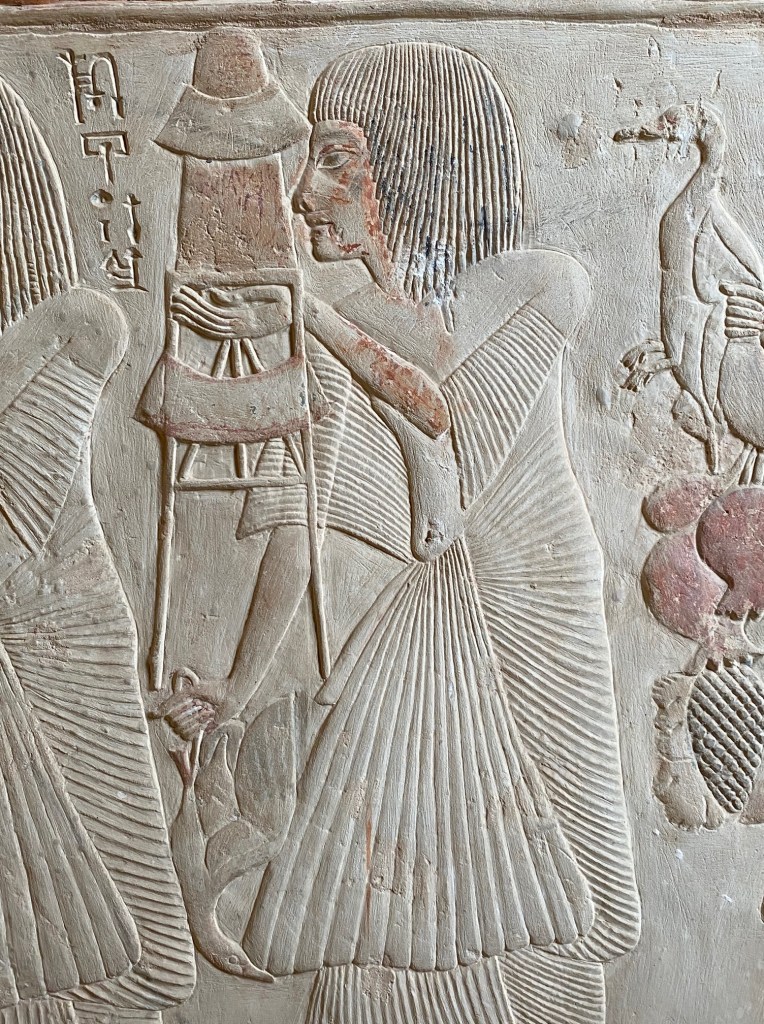
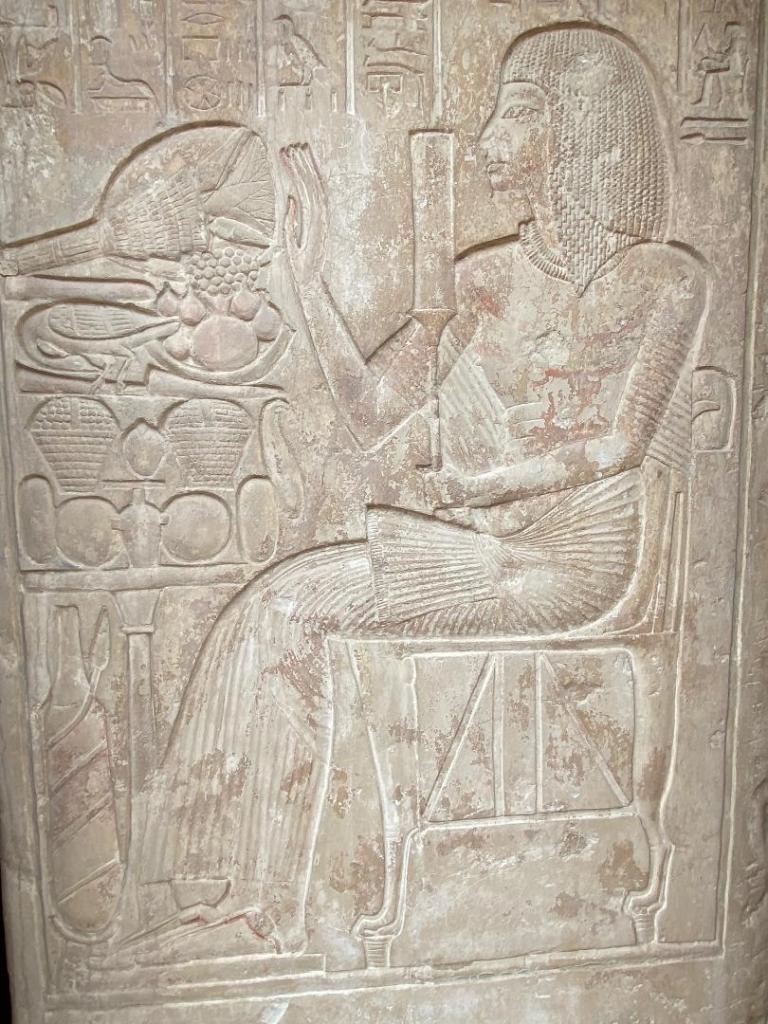
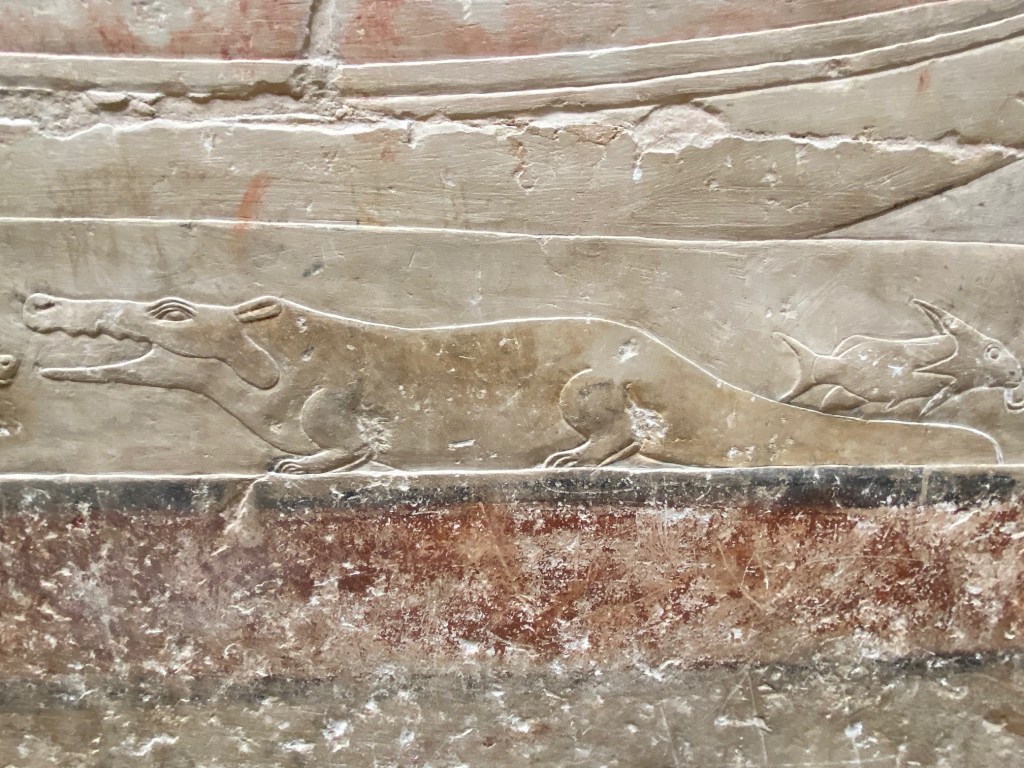
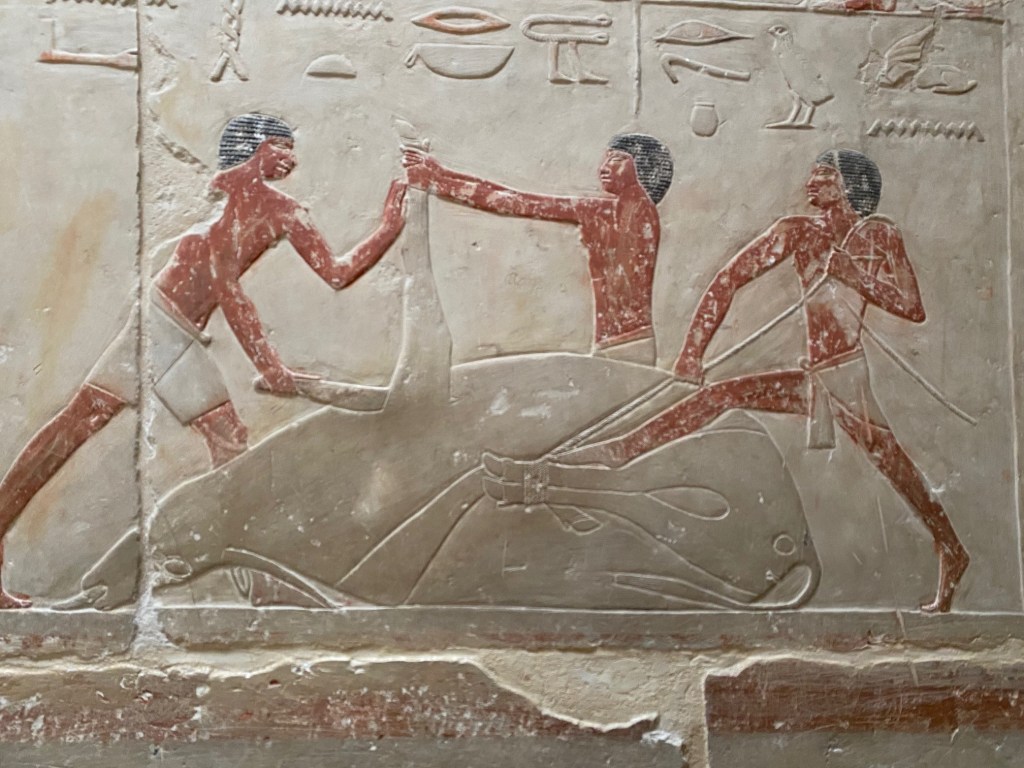
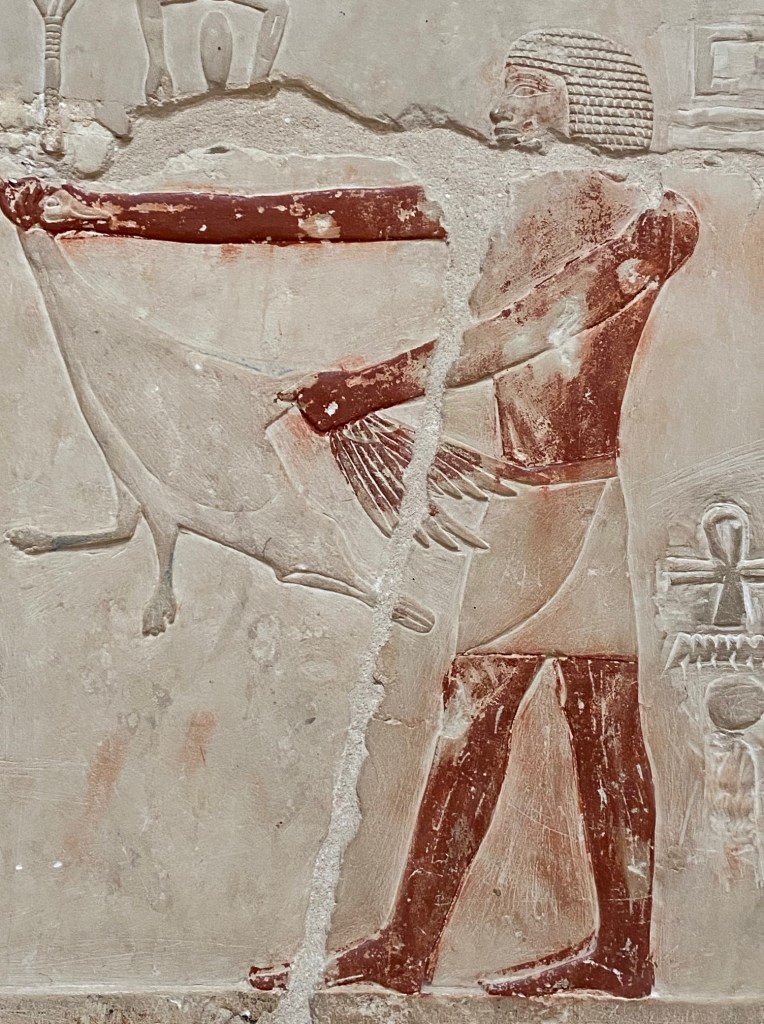
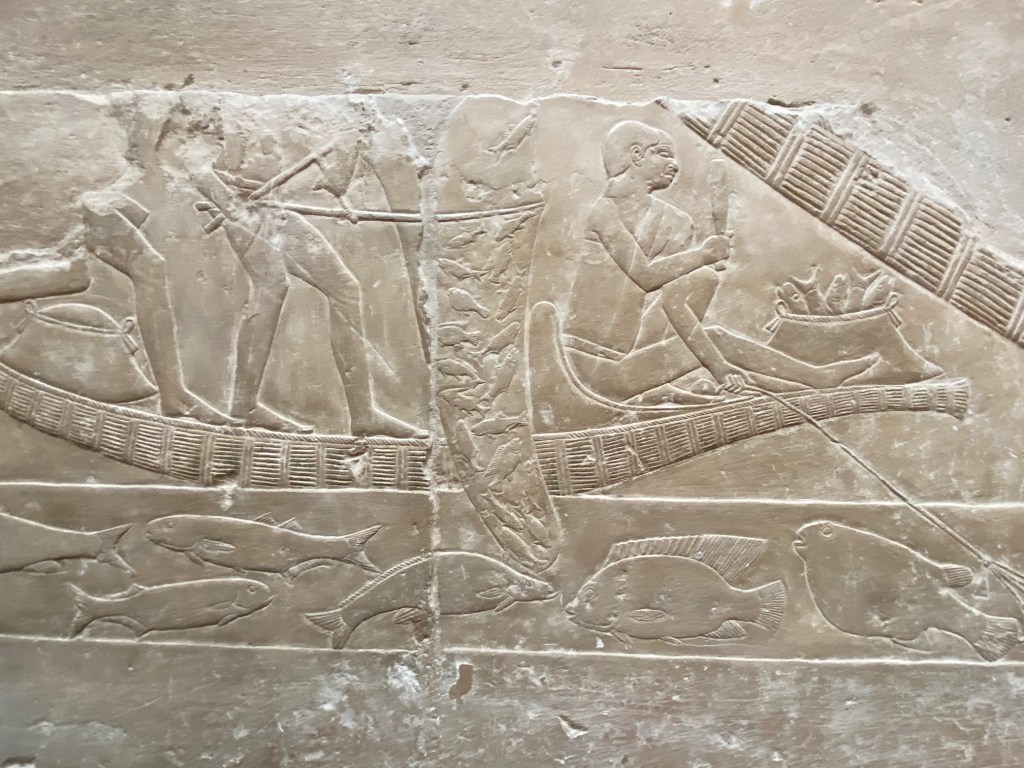
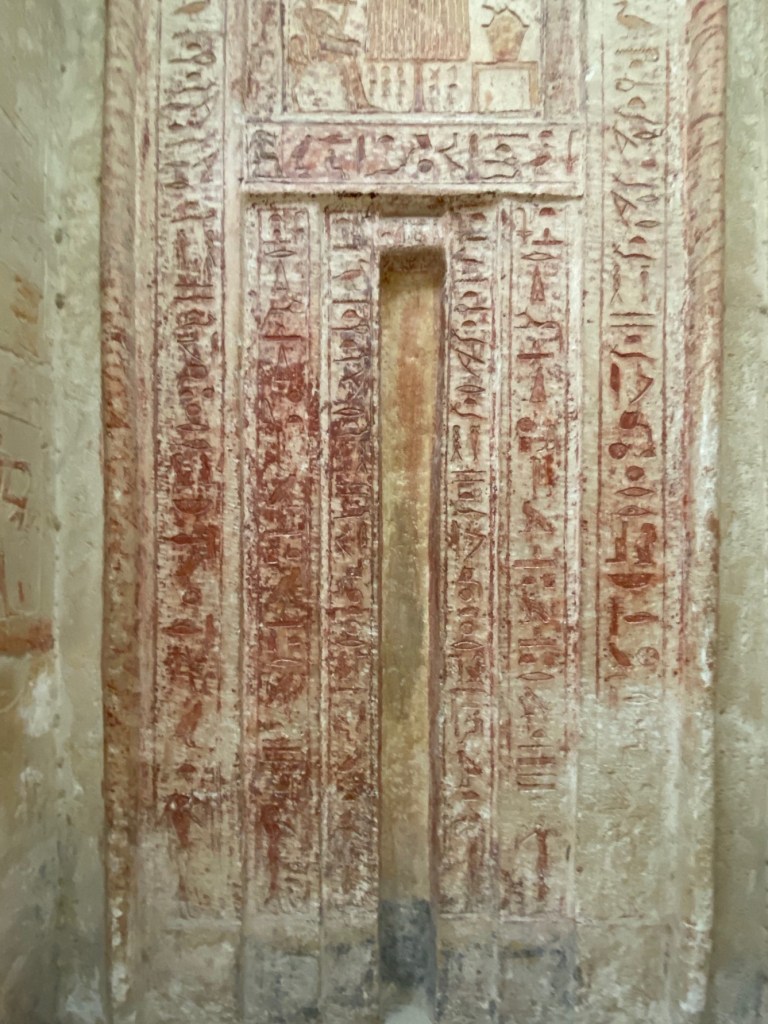
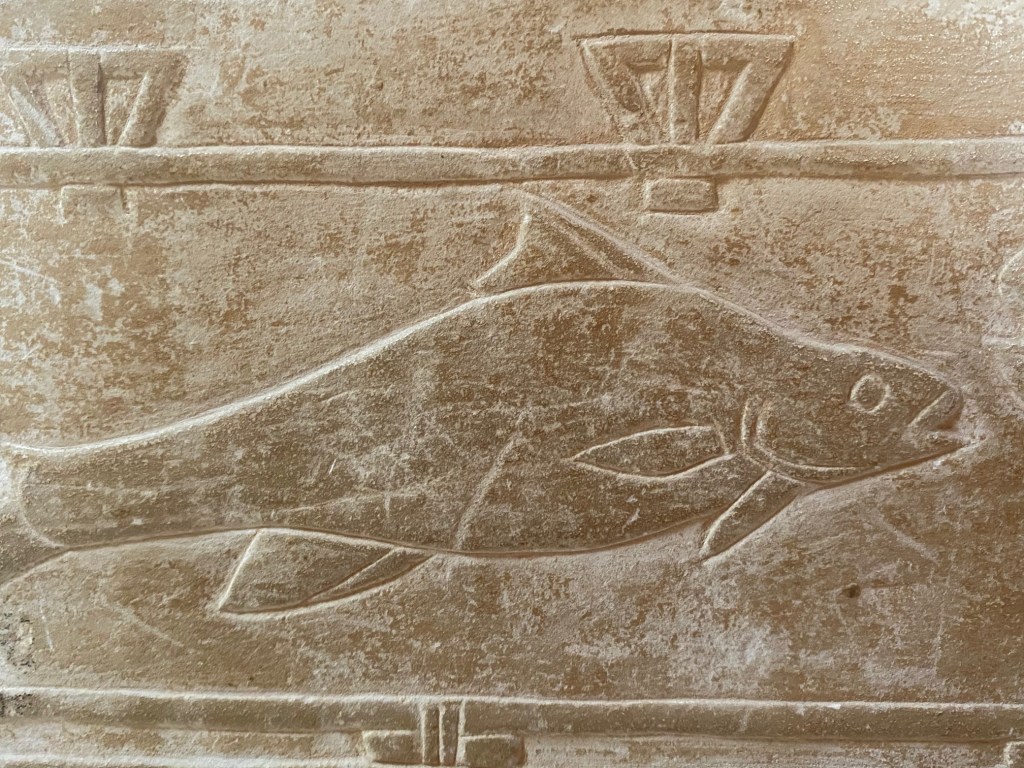
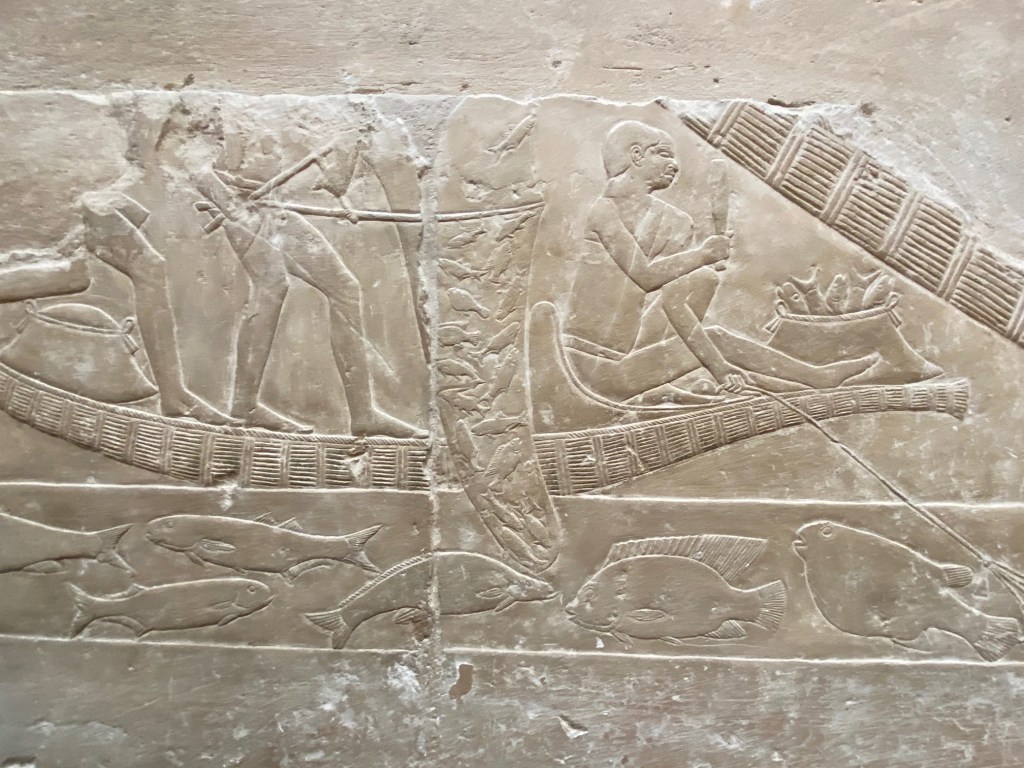
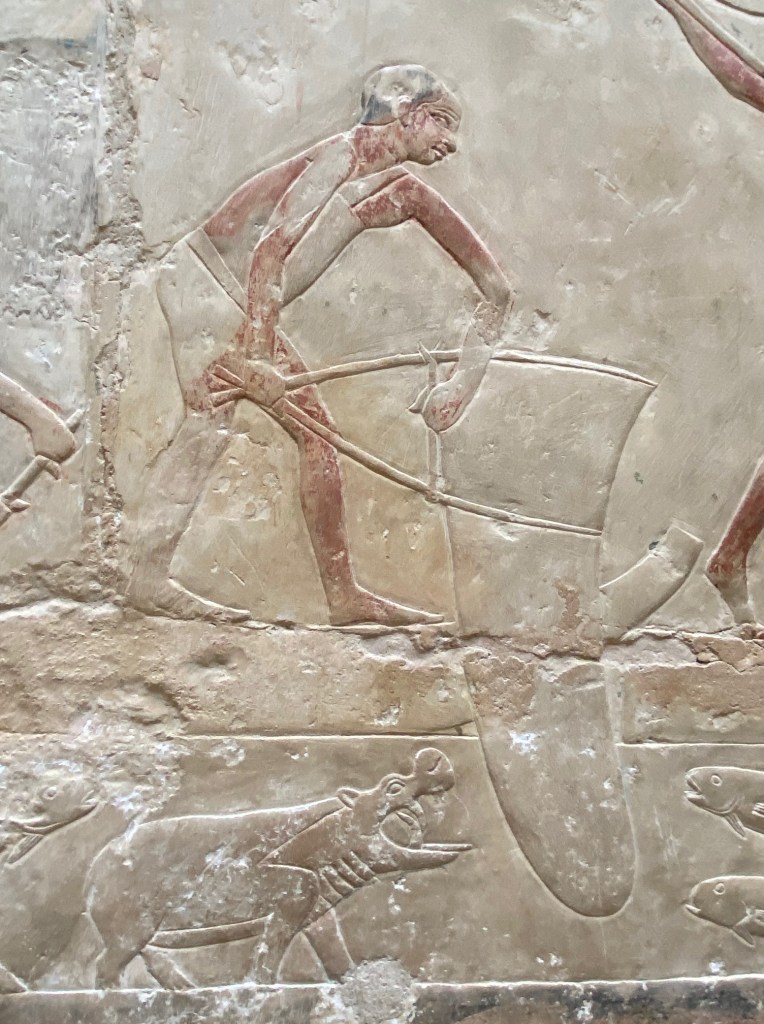
I found several tombs to be very interesting. Idut was the daughter of King Teti (6th dynasty, circa 2,360 B.C.) Her tomb shows every day life with hunters, fishermen, and even a relief of herself carved on the wall. Head west to Inefert’s tomb. He was the prince Vizier and on the walls is a carving of them entering a bedroom with two beds that servants are preparing. The other tomb we tripped on by accident as it’s away from the main complex. Maya, the treasurer of Tutankhamun has beautiful carved walls.
***Be prepared—there are men at the main entrance who act like they’re going to show you around. At first I thought it was included in the entry to the UNESCO World Heritage site. But I quickly figured out that they wanted to be paid. I stopped the man rushing us down the entry hallway and said, “I don’t want a guide. I won’t pay you!” He continued to follow and tried to show us things. I told him at least 3 more times that I wouldn’t pay him before he got snippy and made comments about “you’re rich from America.” I had to raise my voice to get him to leave us alone. It happened again at Maya’s tomb. I again warned the man who ended up cursing me. We were so frustrated we didn’t finish looking at the tombs in that direction. I’m certain that if we had a man with us this would have been handled quickly and quietly.***















 Adventure Quest