Pause for one moment. I don’t mean Hoagy Carmichael’s place. I mean the bona fide country that borders Turkey, the Black Sea, Russia, Azerbaijan and Armenia.
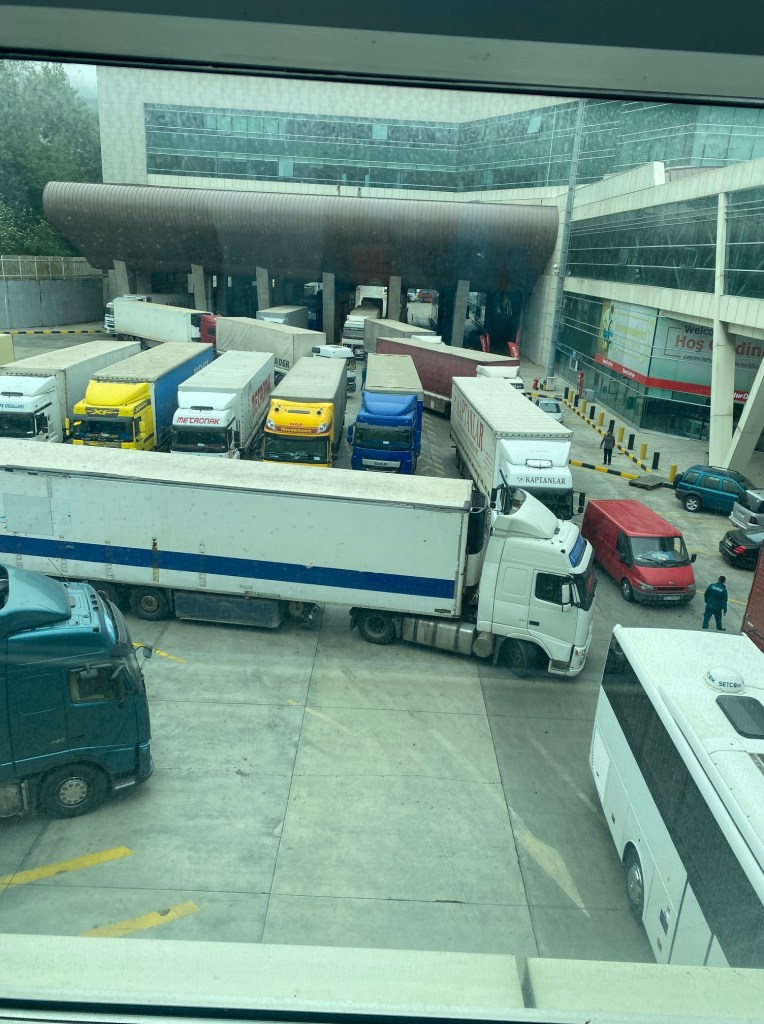
The war between Russia and the Ukraine continues and truck traffic is backed up for many miles with supplies being shipped through Turkey and Georgia heading to the war zone. Trucks pull off the road and wait their turn to be called to another pullout a wee bit closer. Hurry up and wait.
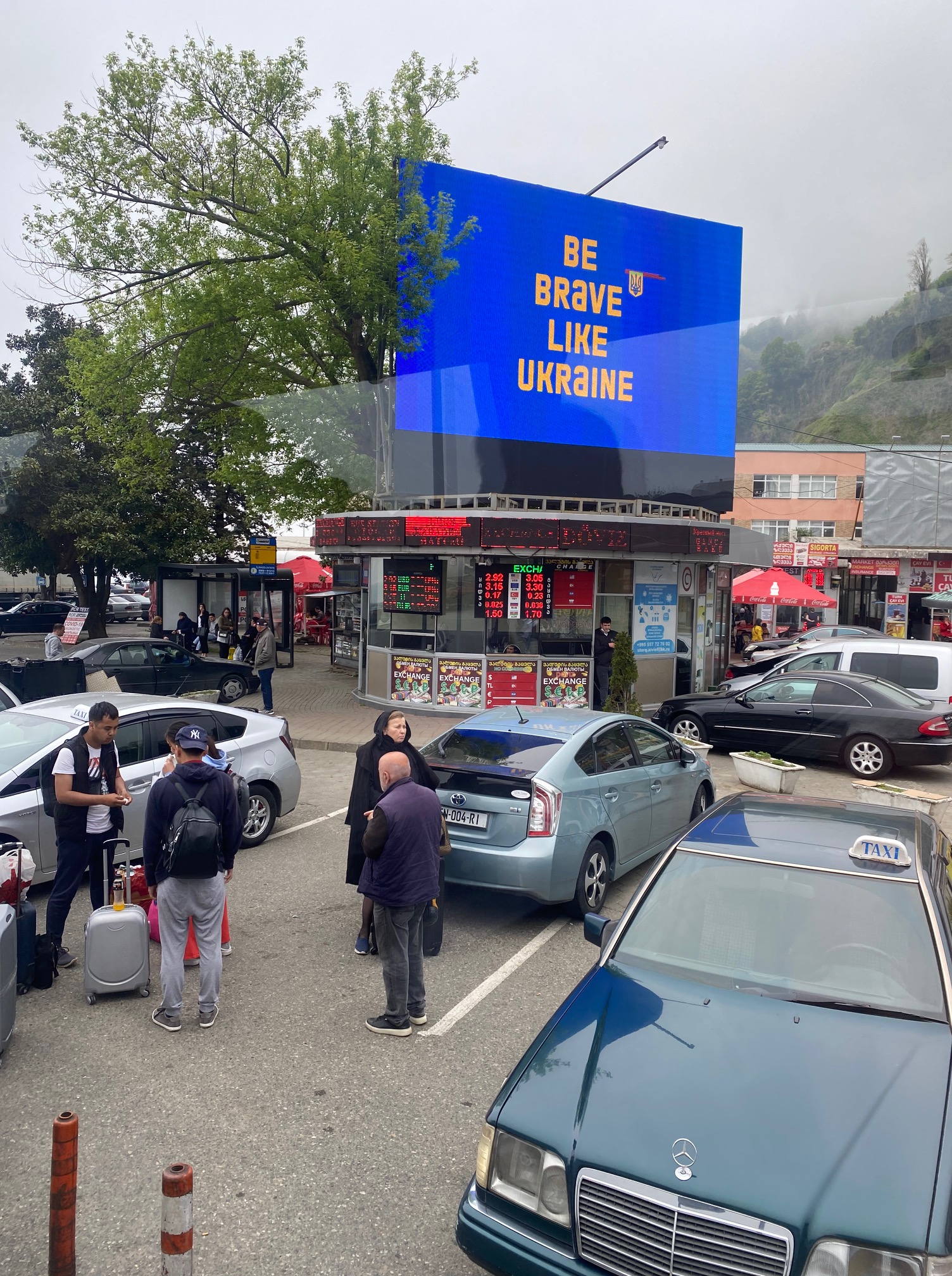
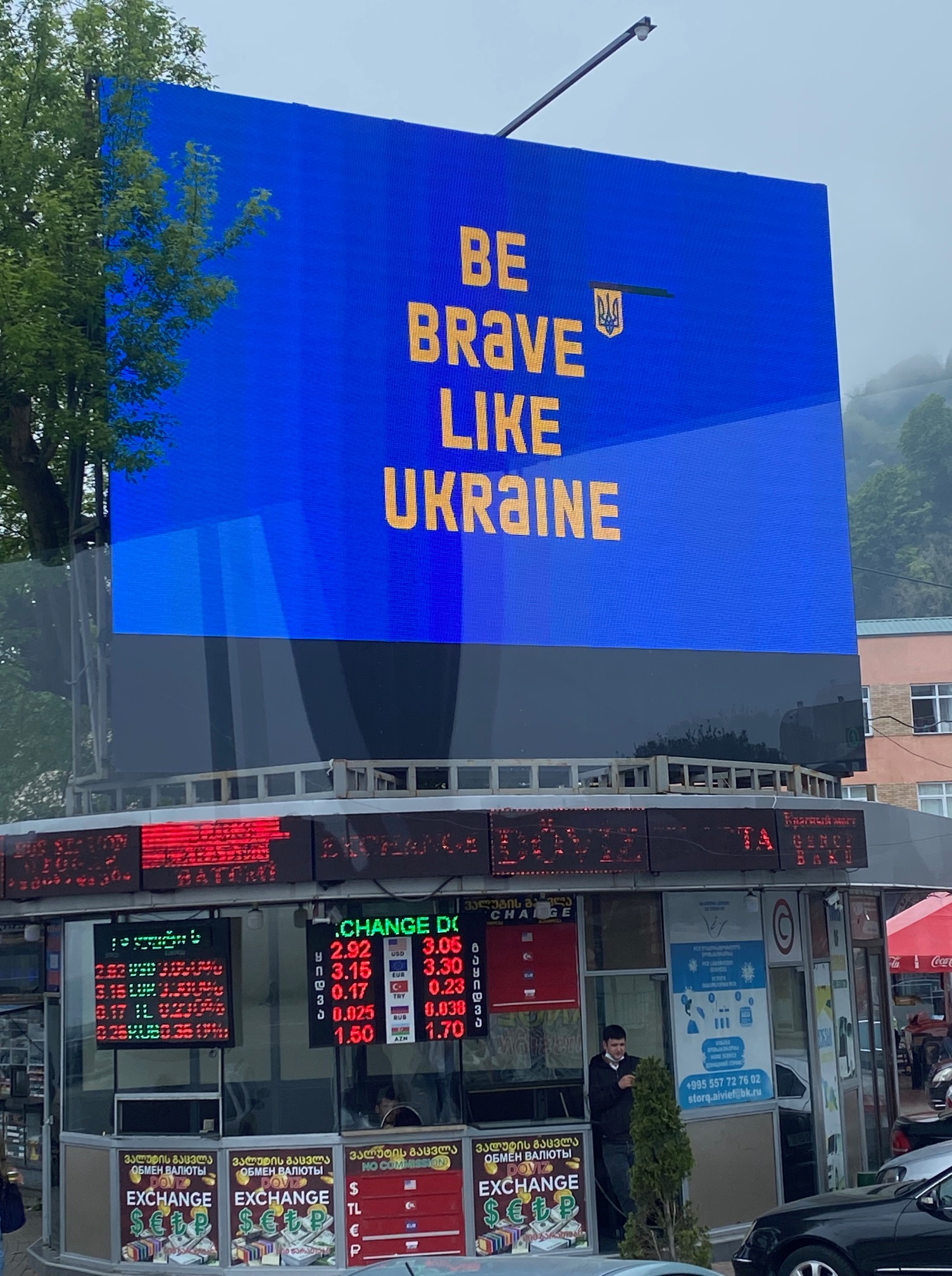
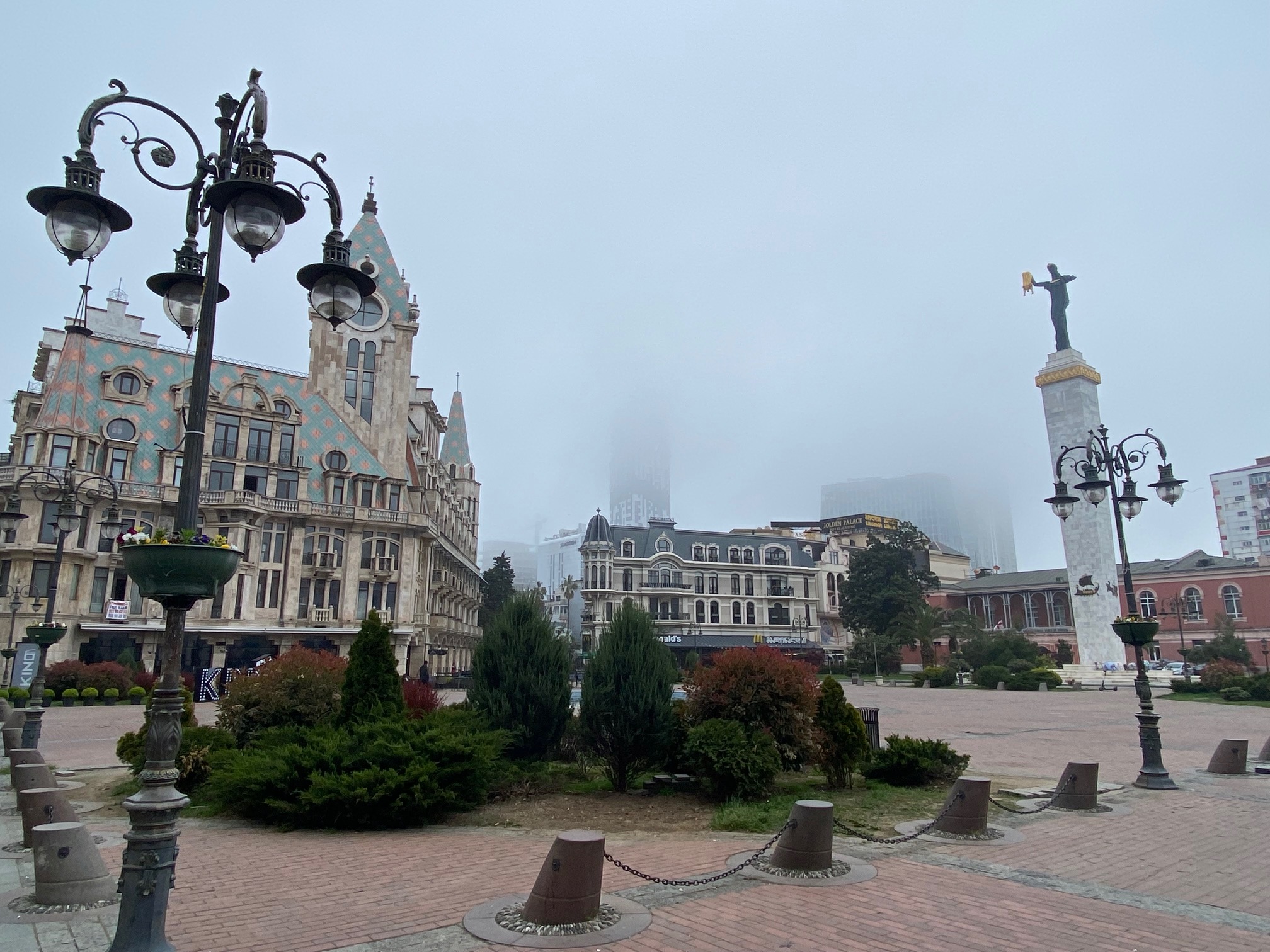
It wasn’t that long ago when Georgia won their own independence from Russia (1991). These heart-felt signs are right at the border expressing support and unity. I’m certain that Georgia fears that they could be next. It appears there’s no love loss as it took about two seconds to remove Lenin’s statue from Batumi’s freedom square after independence was declared.
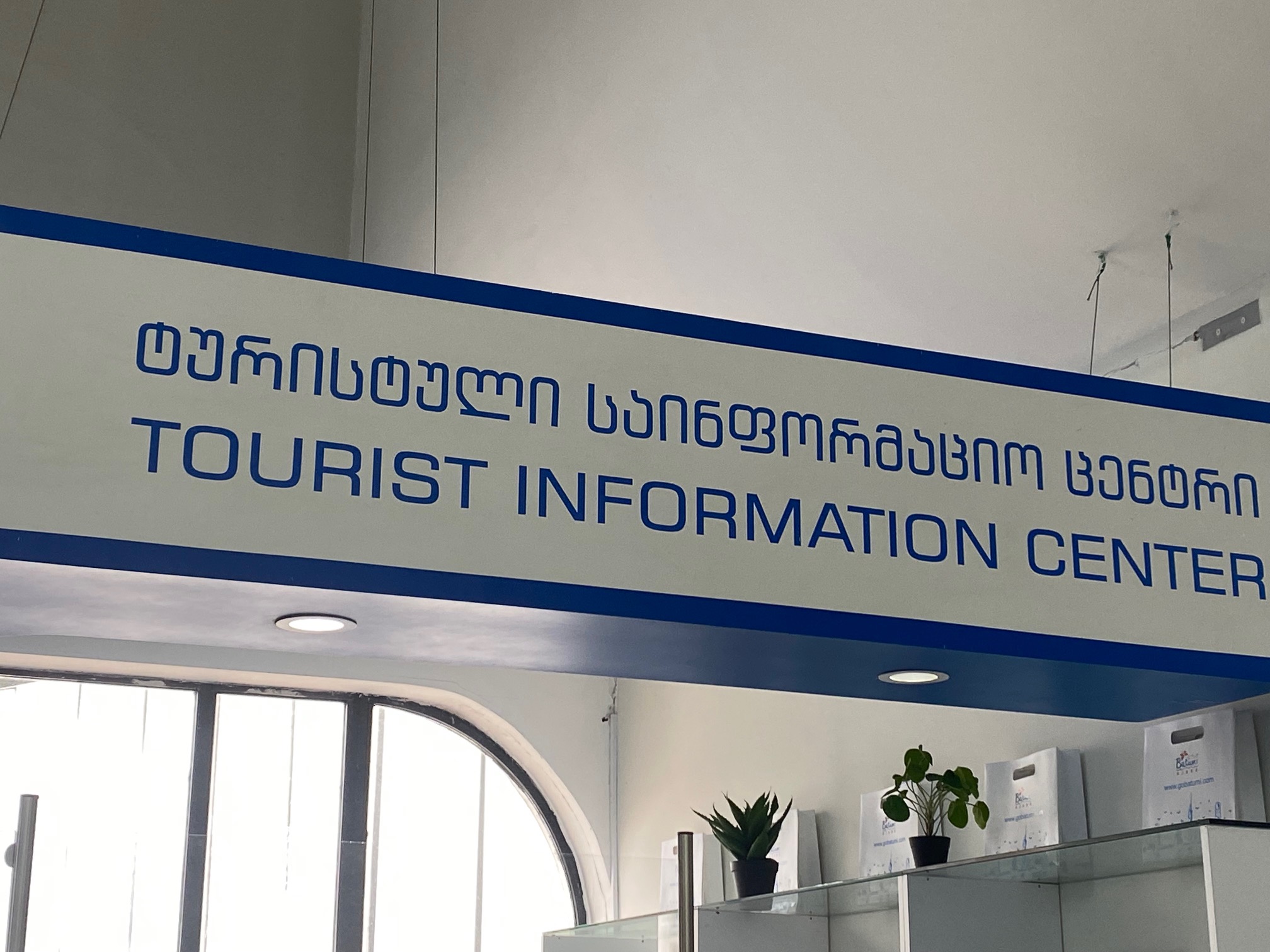
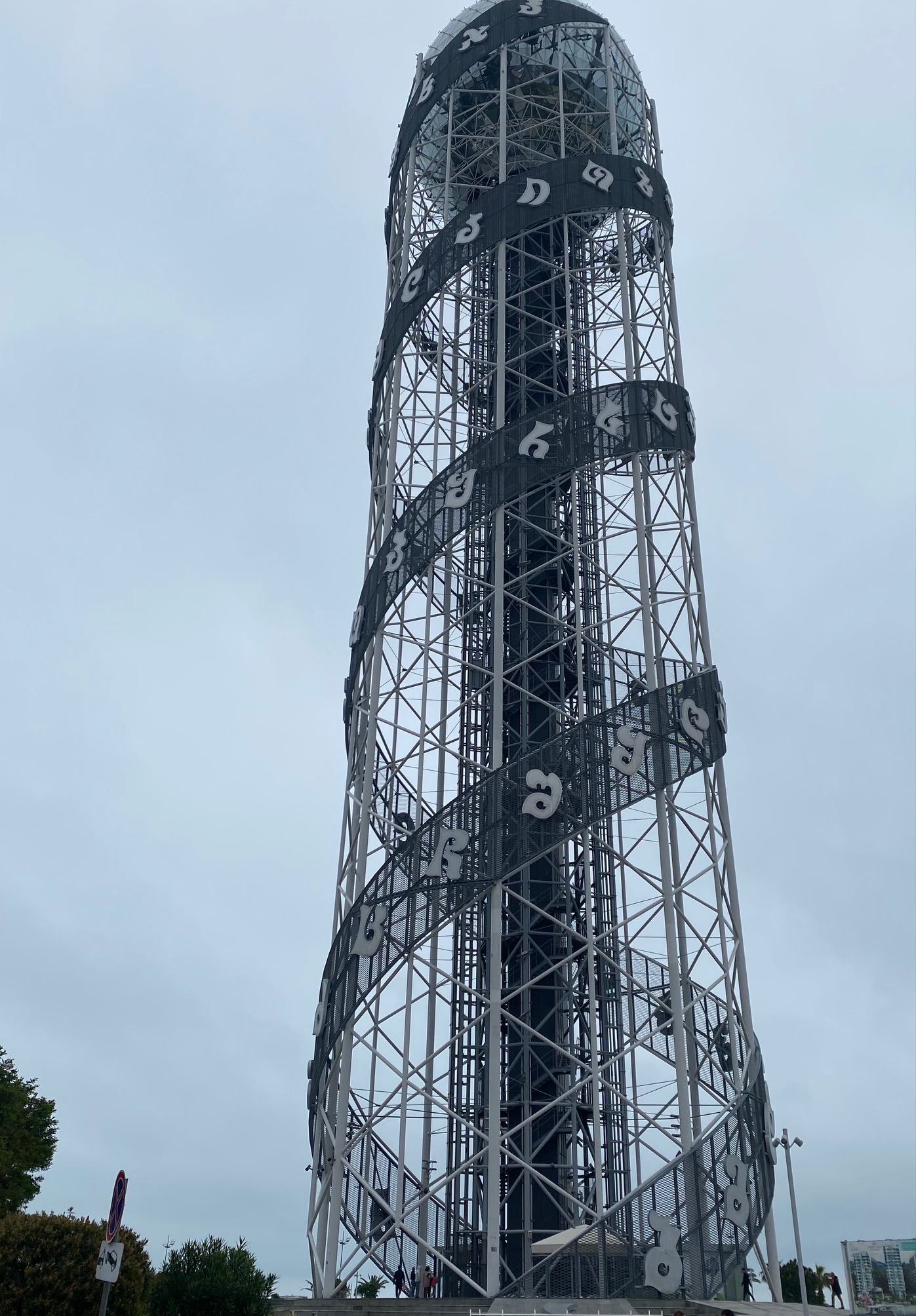
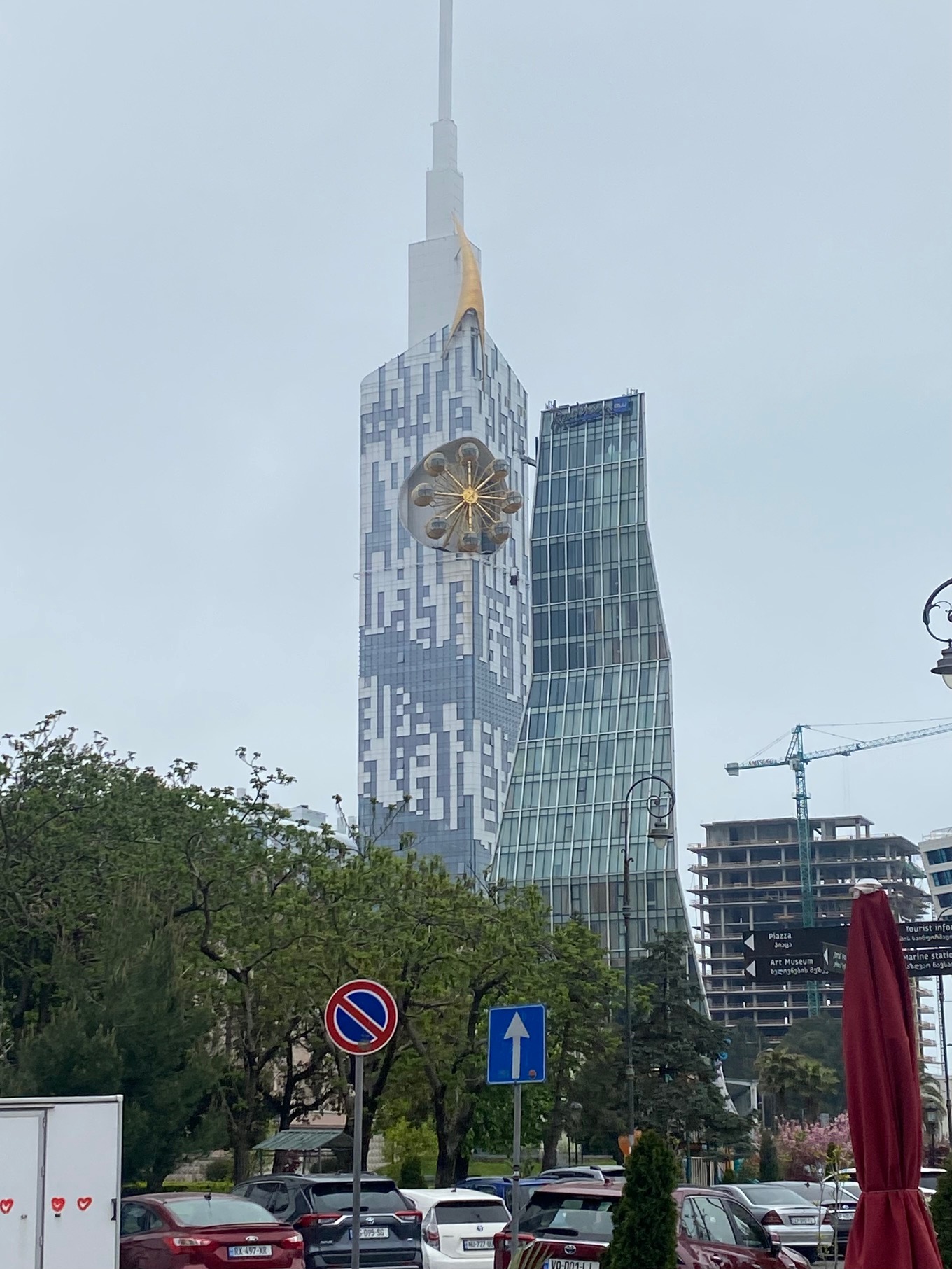
There’s culture shock simply crossing the border into Georgia. First, you can’t read the Kartvelian language which has some connection to ancient Aramaic. There are 33 letters in the written word but it looks like computer code. In Batumi along the sea walkway there is the Alphabet Tower with letters swirling up the hard metal surface. I don’t know. Looks Greek to me!
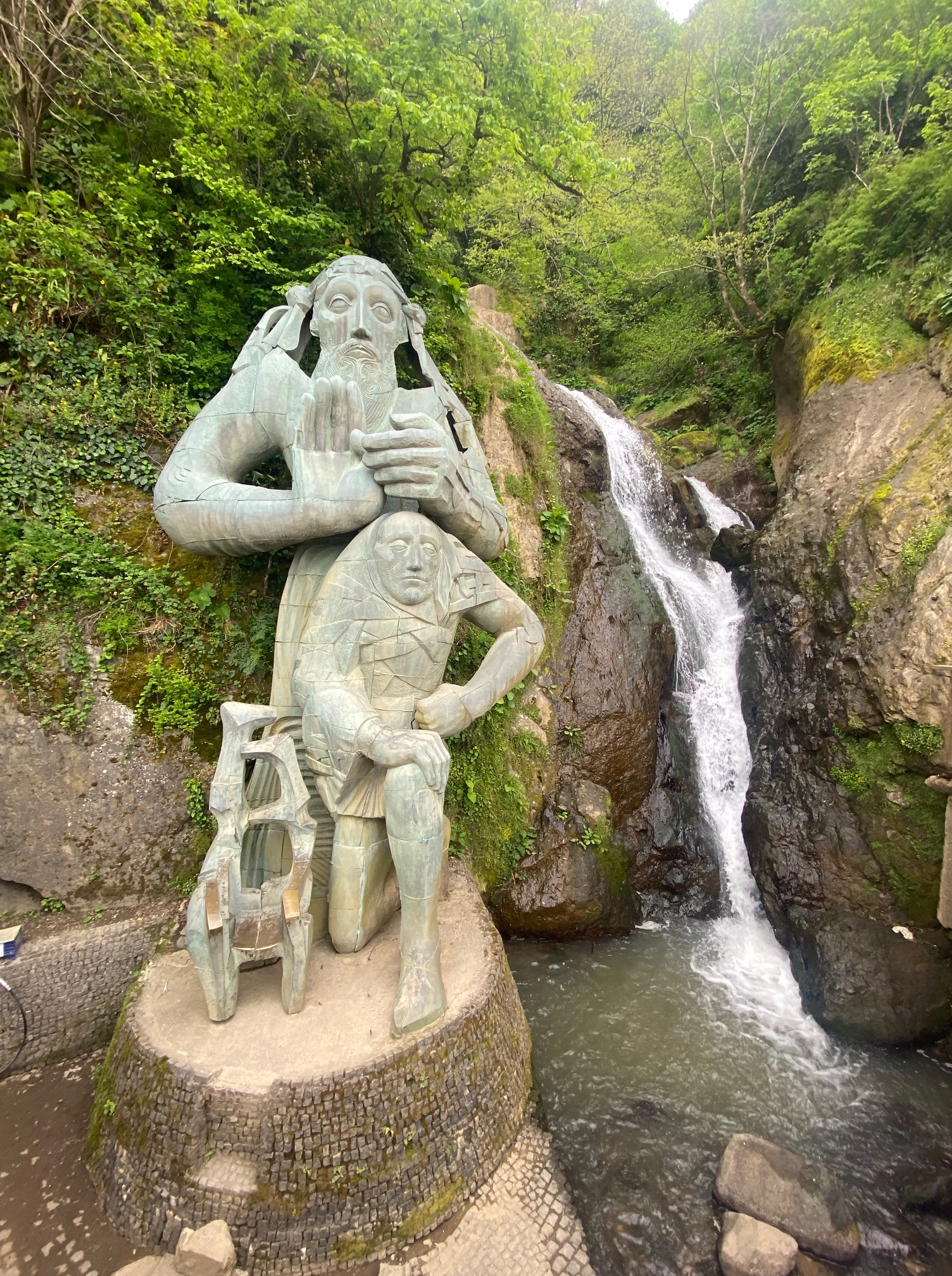
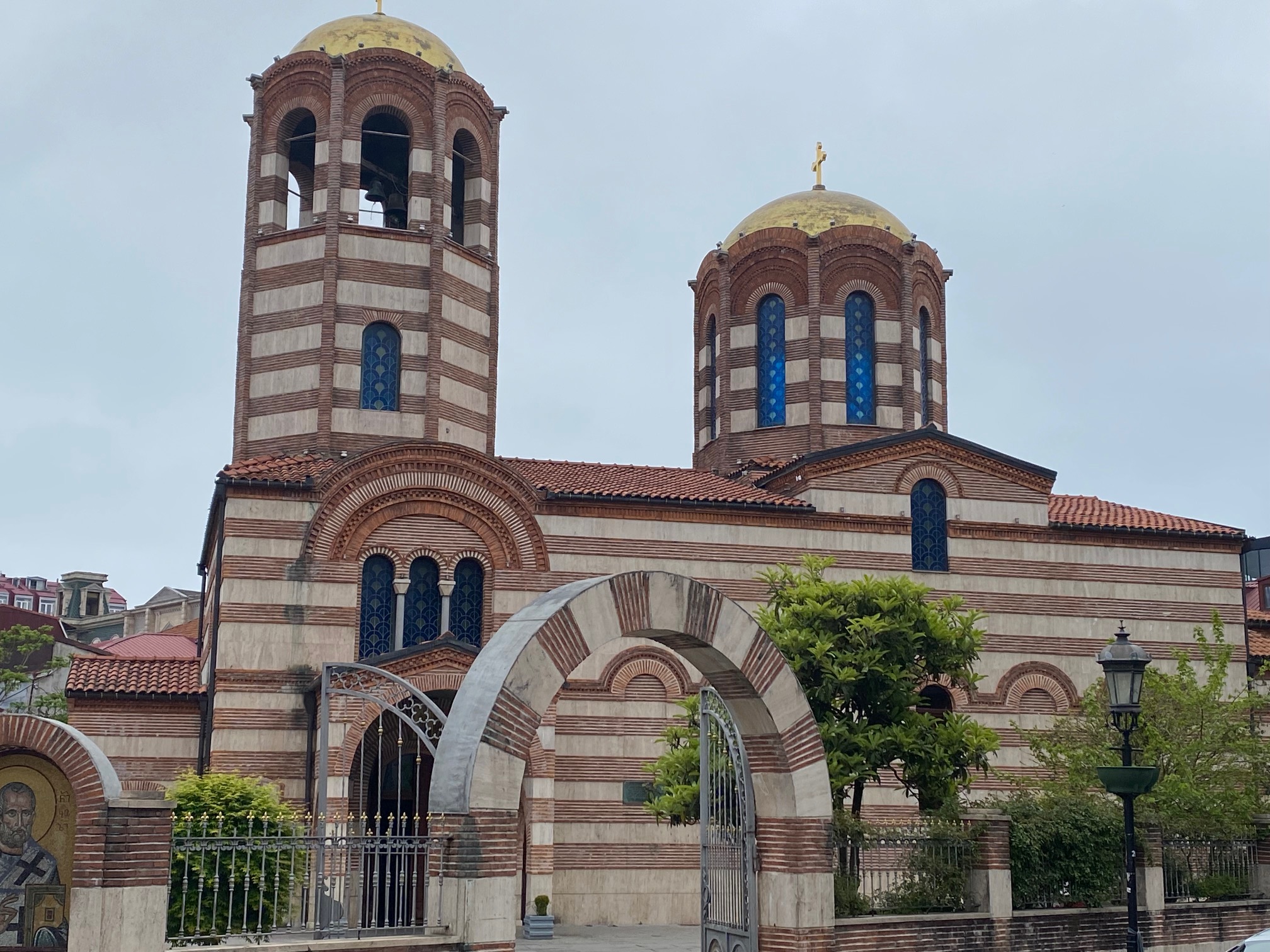
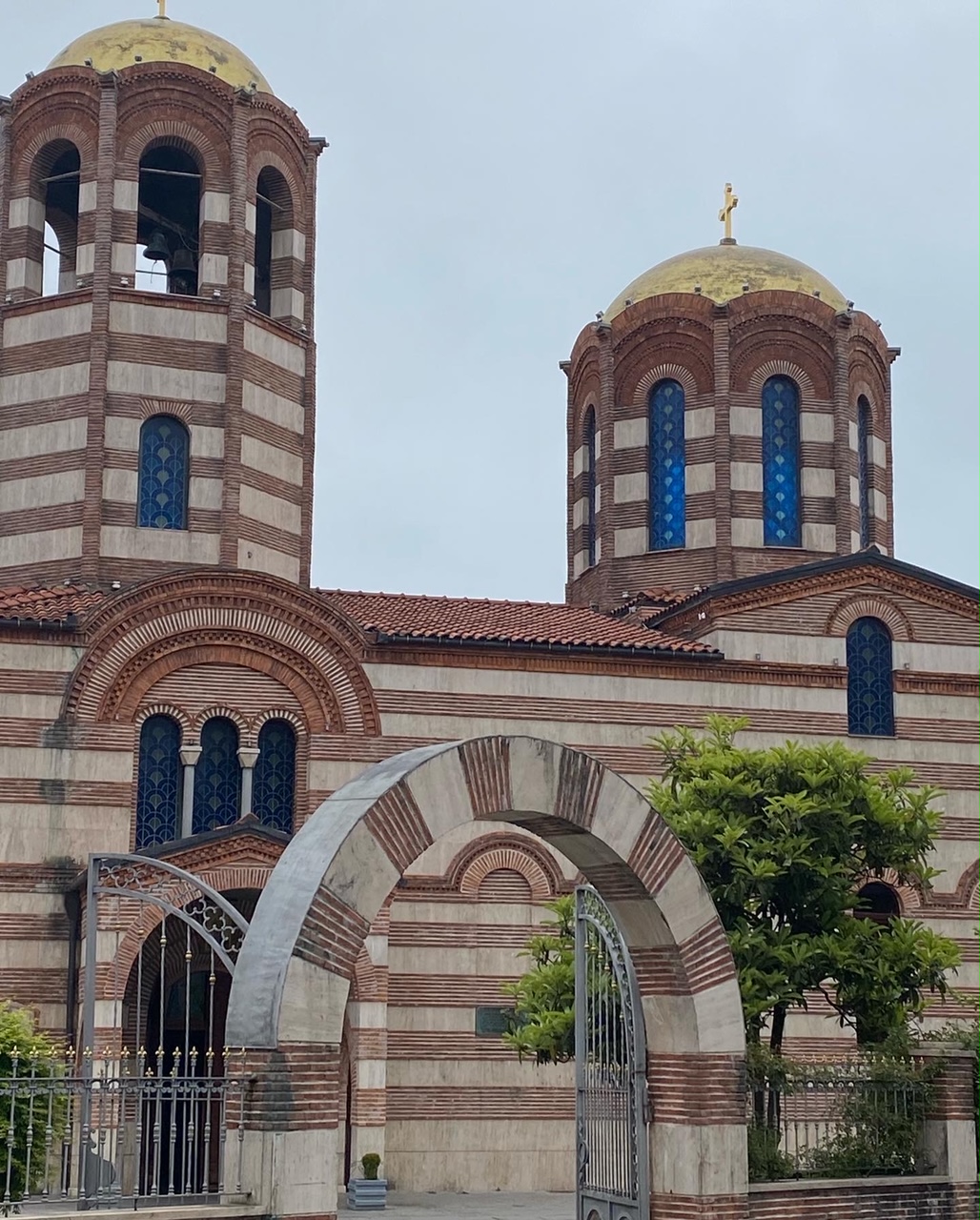
We’ve left the Muslim faith behind and now embrace Christian Orthodoxy. It’s very clear with a chapel at the border and nearby there’s a small waterfall with a statue of a saint offering a blessing. No more head-coverings and welcome mini-skirts.
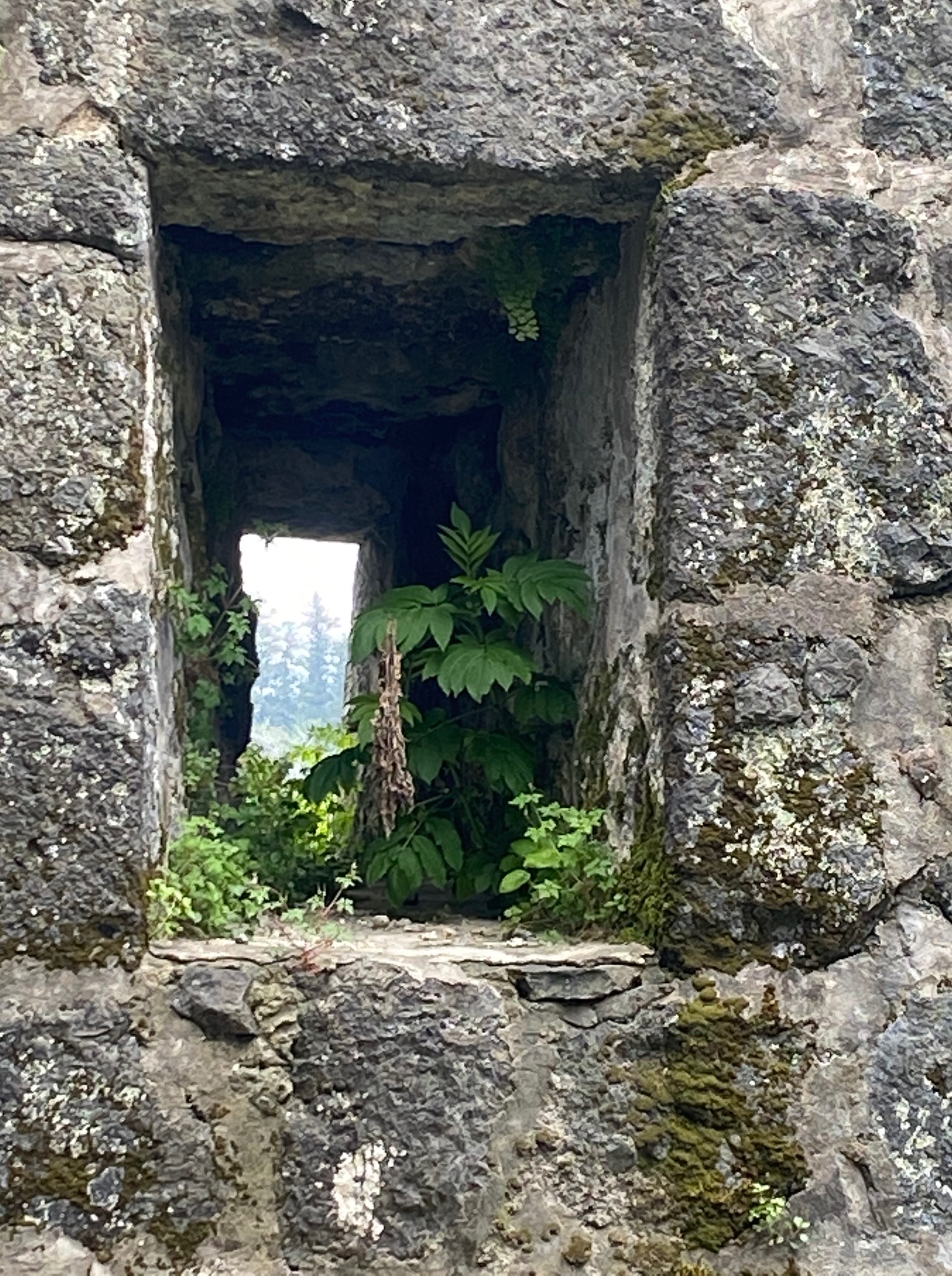
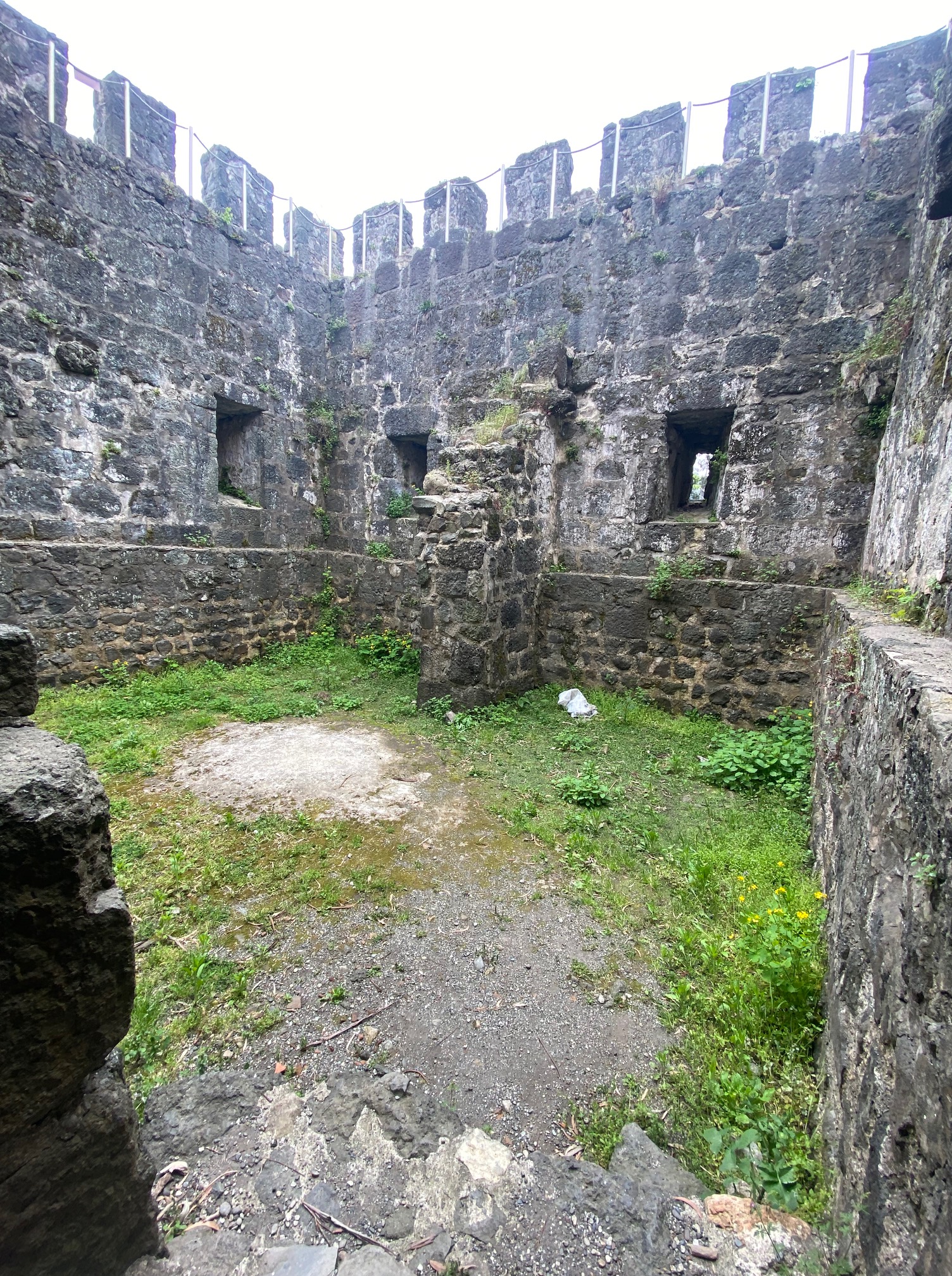
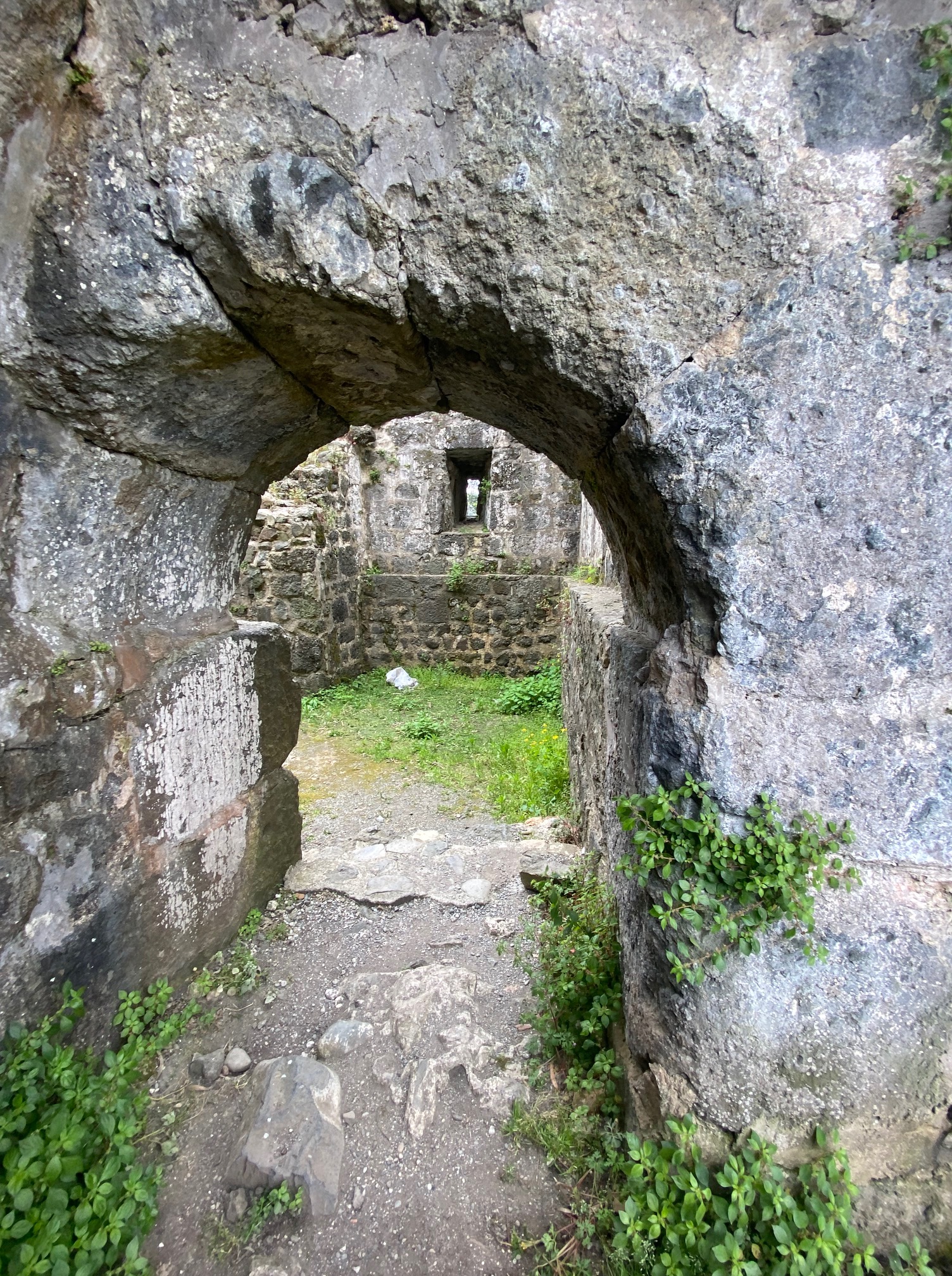
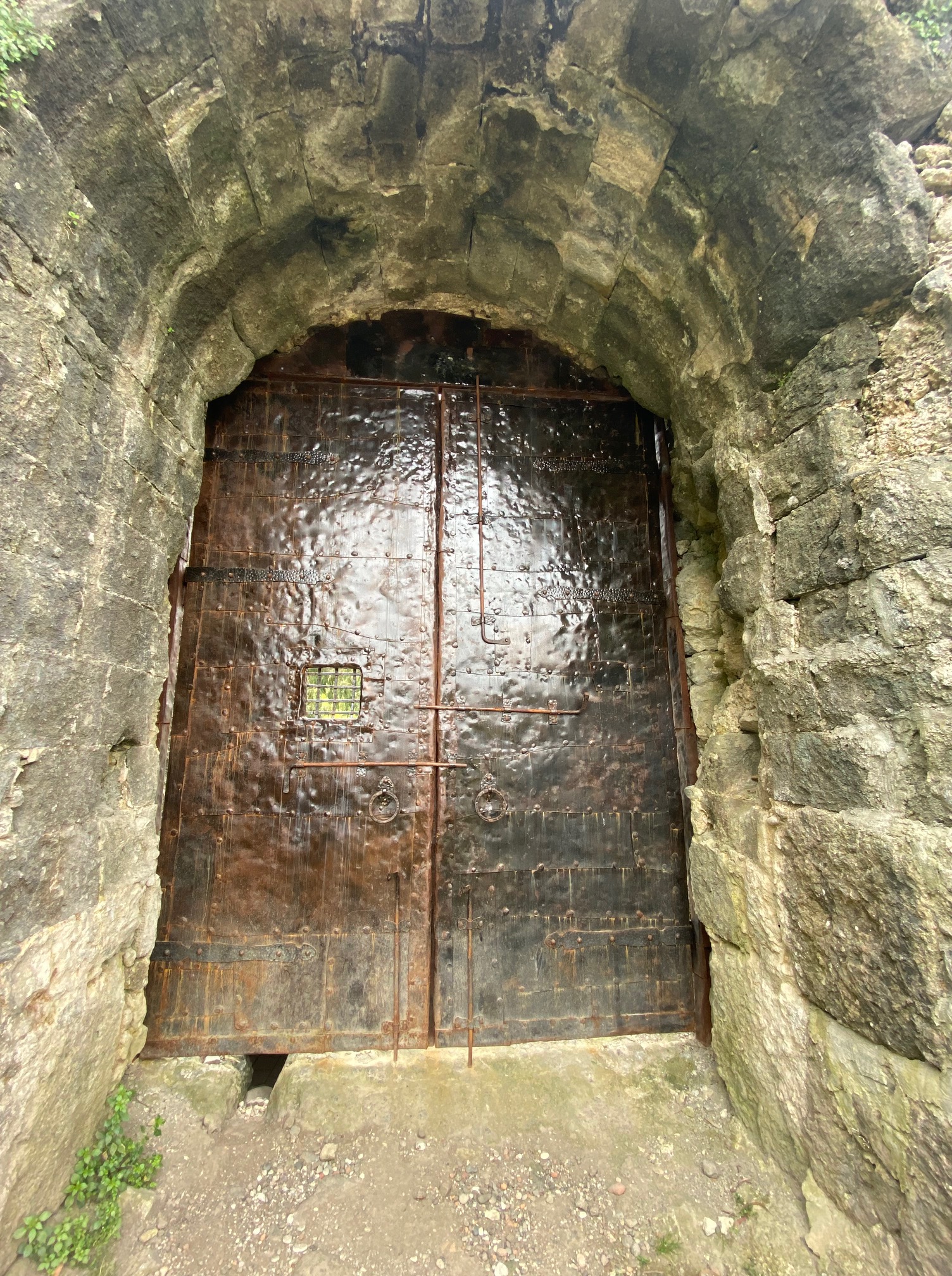
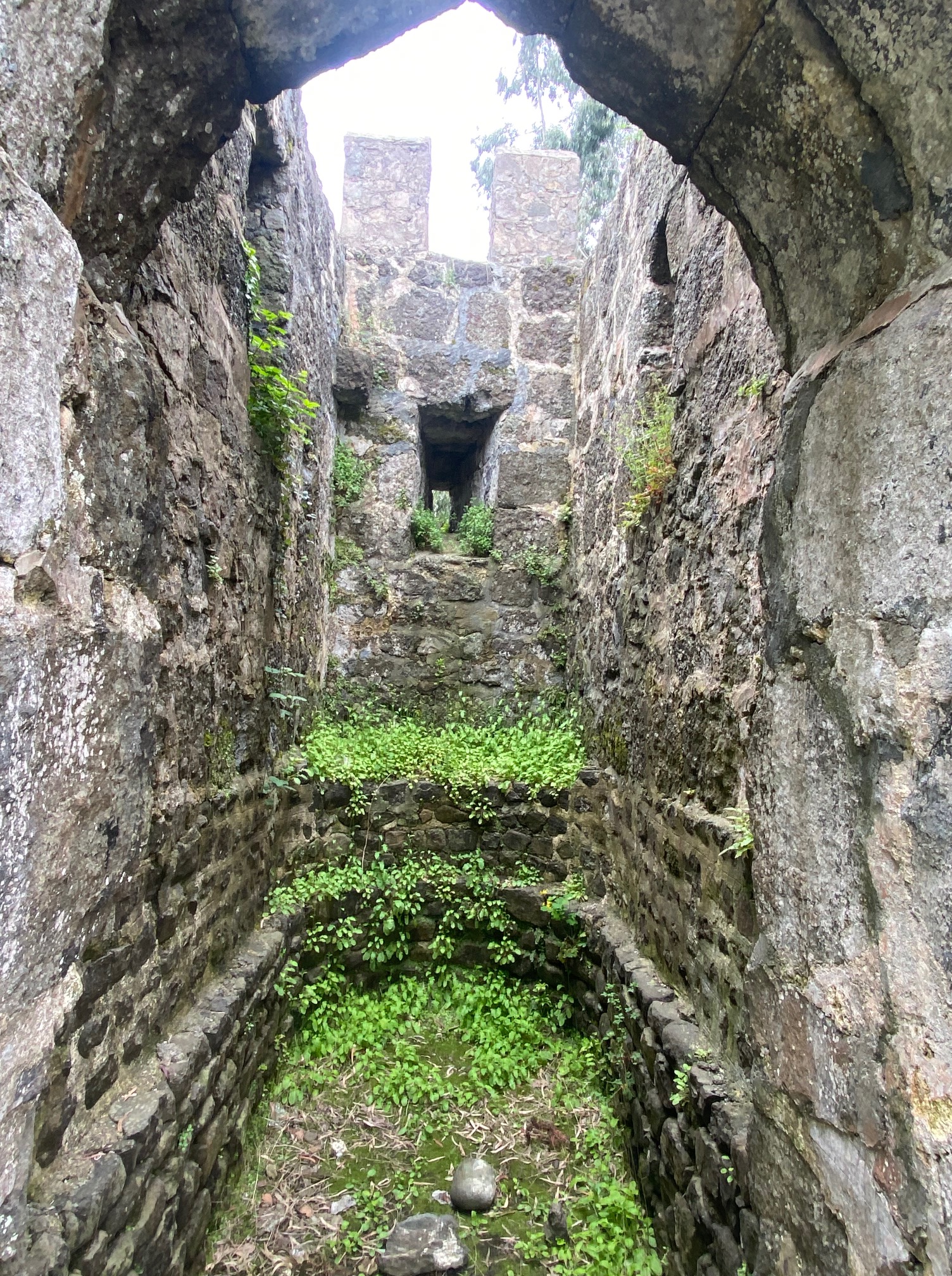
About 15 miles before Batumi there’s a Roman Era castle in Adjara, Georgia. The archaeology digs show an early layer from 7-8 BC. The Roman’s expanded this fortress later in the 1st century A.D. It’s believed that 1200-1500 soldiers were stationed here. There are remains of a Roman bath, barracks, and parts of 18 towers built into the walls. In the 4th century AD the Romans abandoned the compound, but by the 6th century it was taken over by Byzantines. As time marched on, the garrison was later controlled by the Ottomans. Sounds like we’re playing Russian Roulette.
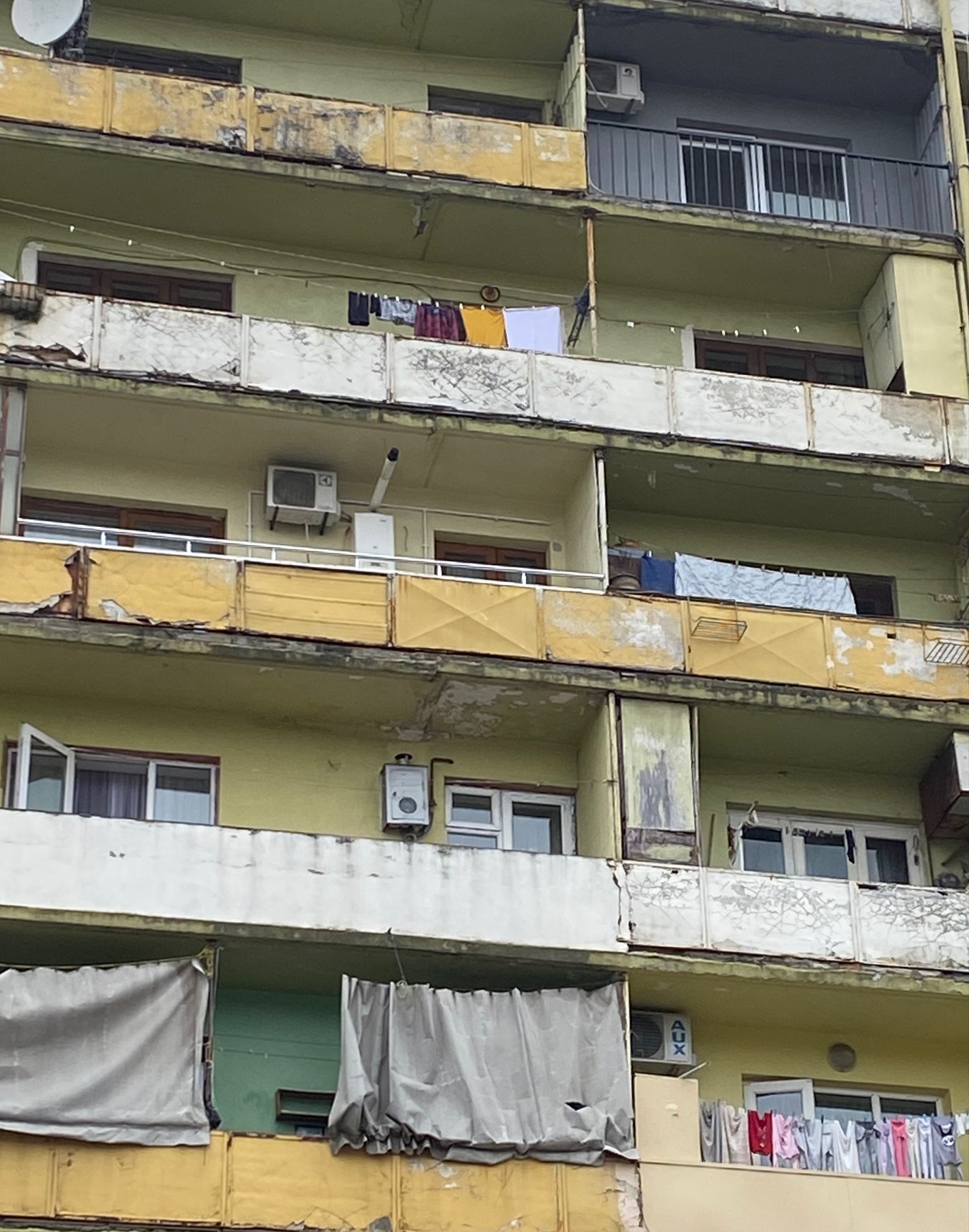
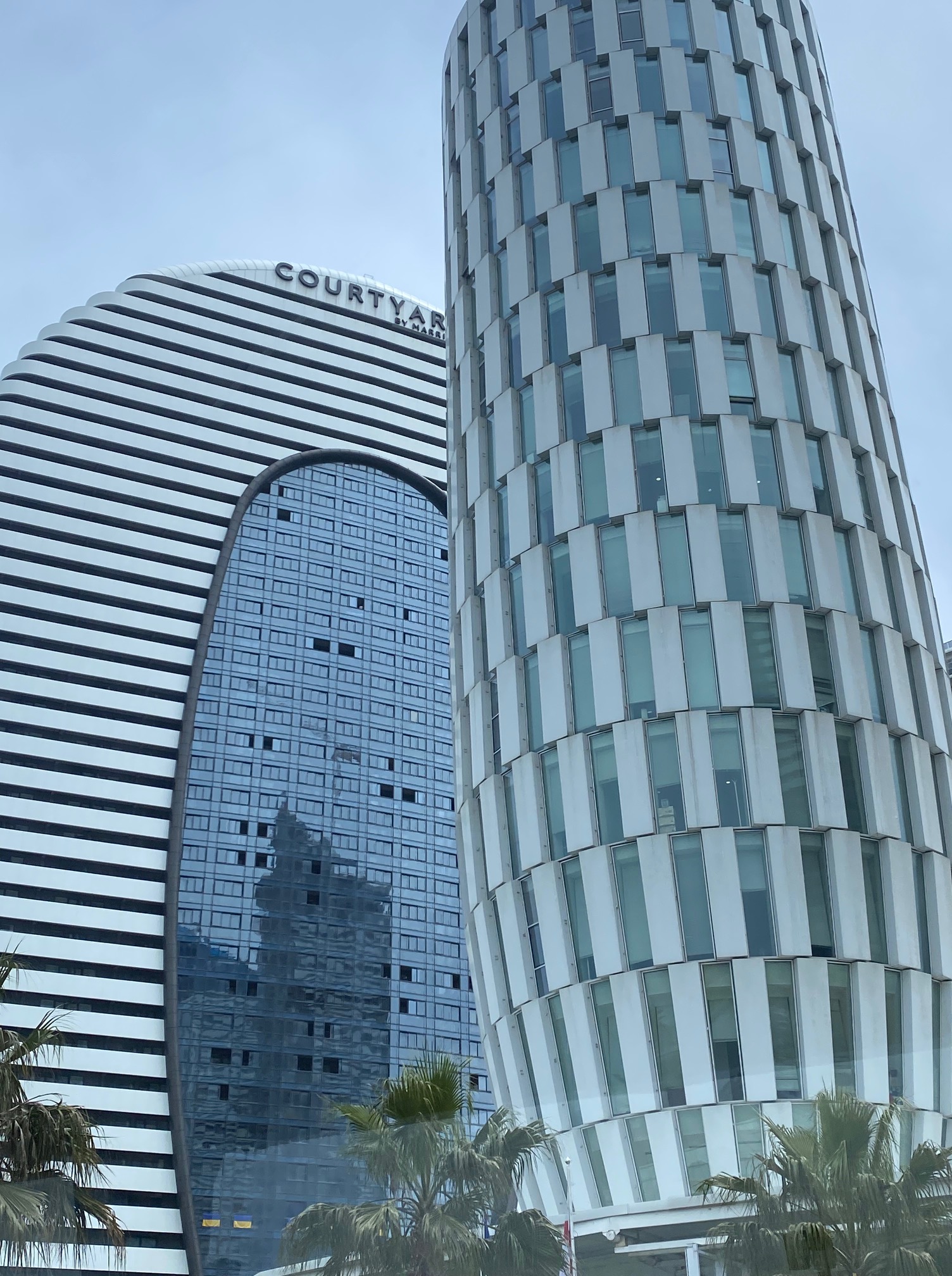
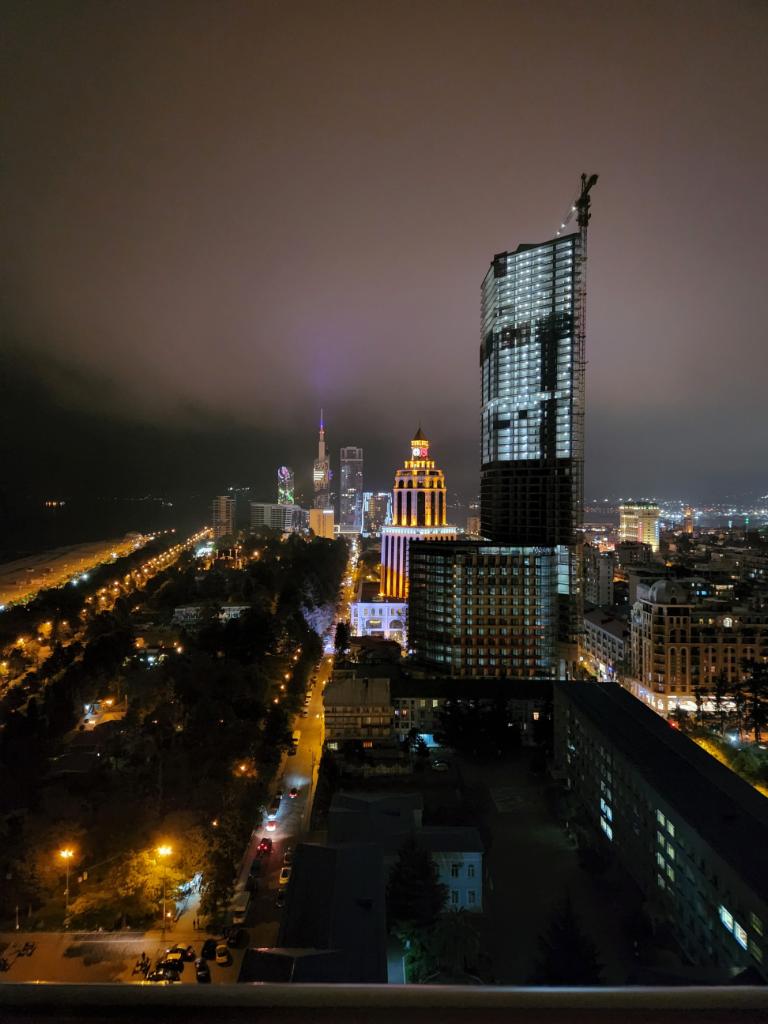
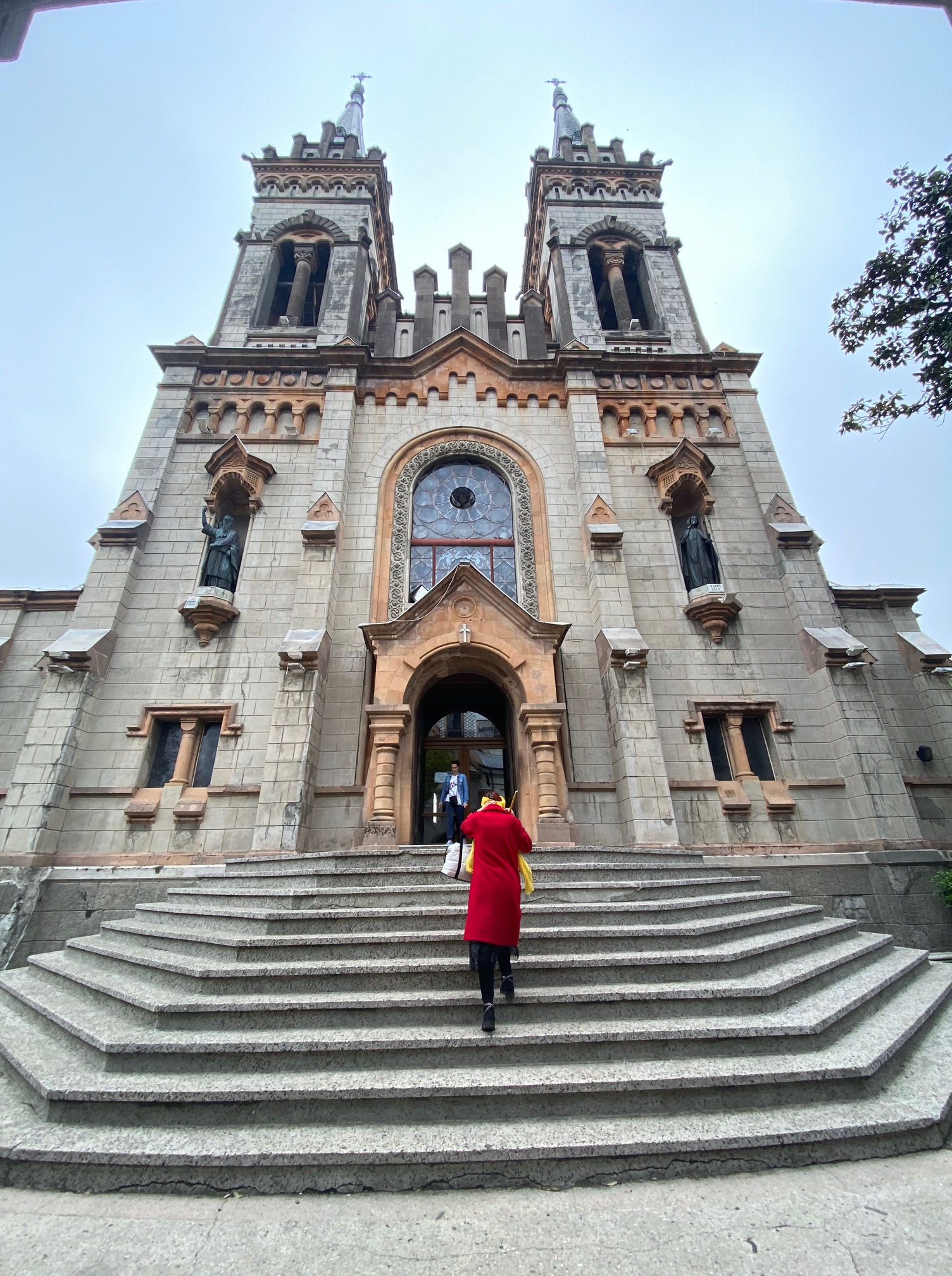
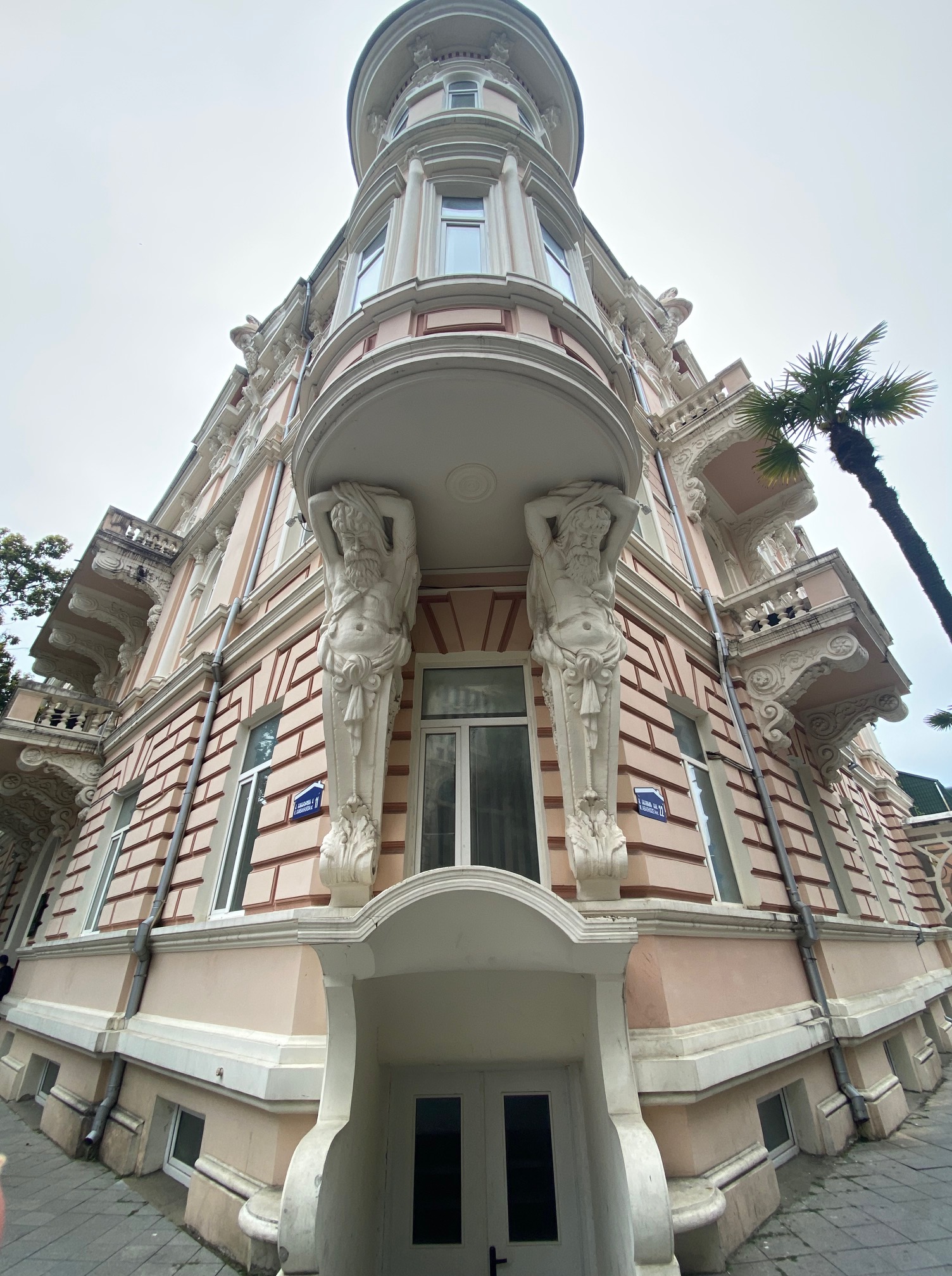
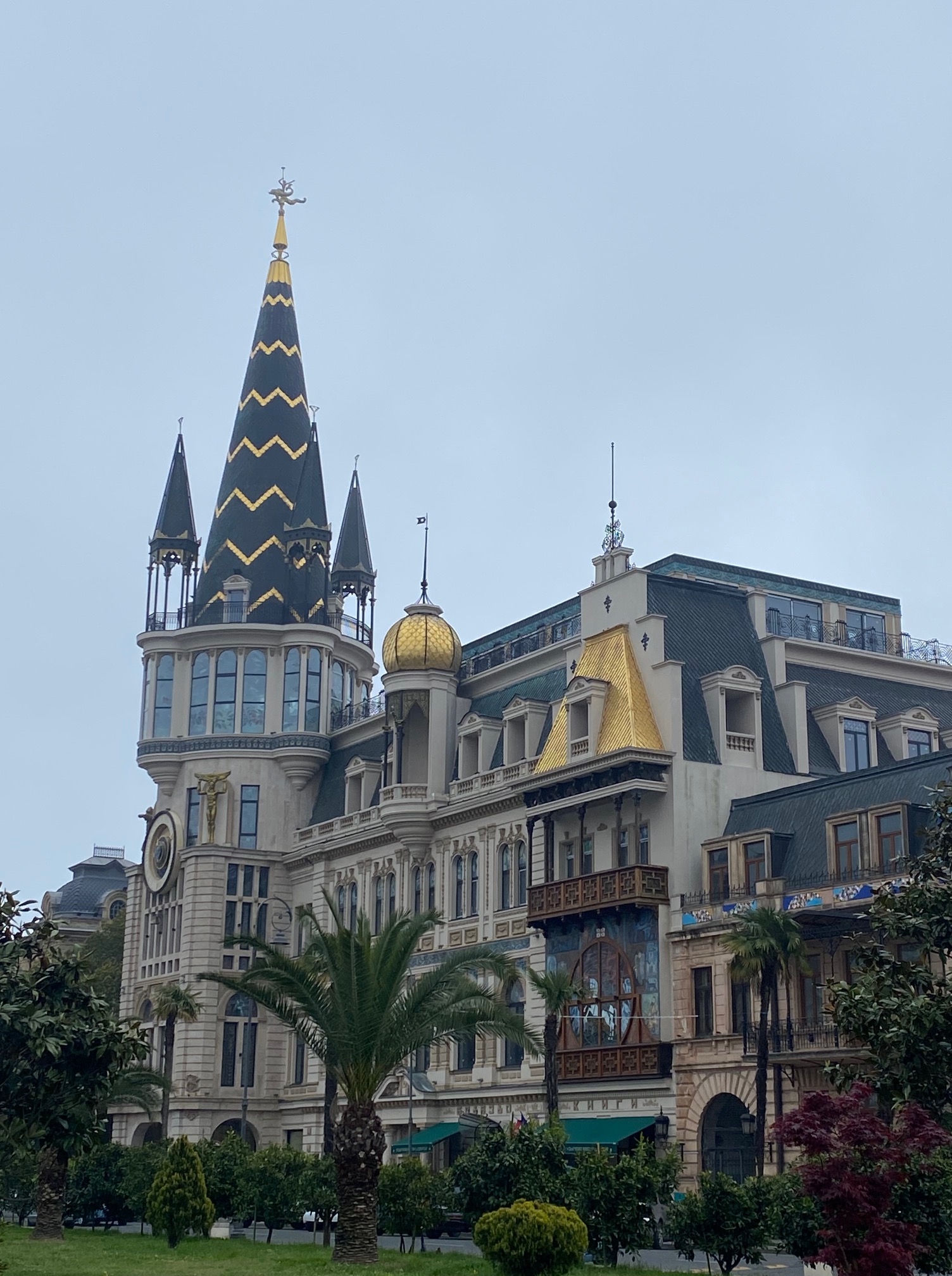
Speaking of gambling, Batumi is THE Las Vegas on the Black Sea. The city has grown rich from gambling Turks, Russians, and visiting Saudi’s. There are building cranes all over town and construction is booming, even in this COVID era. The architecture runs the gambit from sleek modern to soviet era housing to kitschy fun. And the skyline at night is gorgeous from a roof-top deck.
There are several squares:
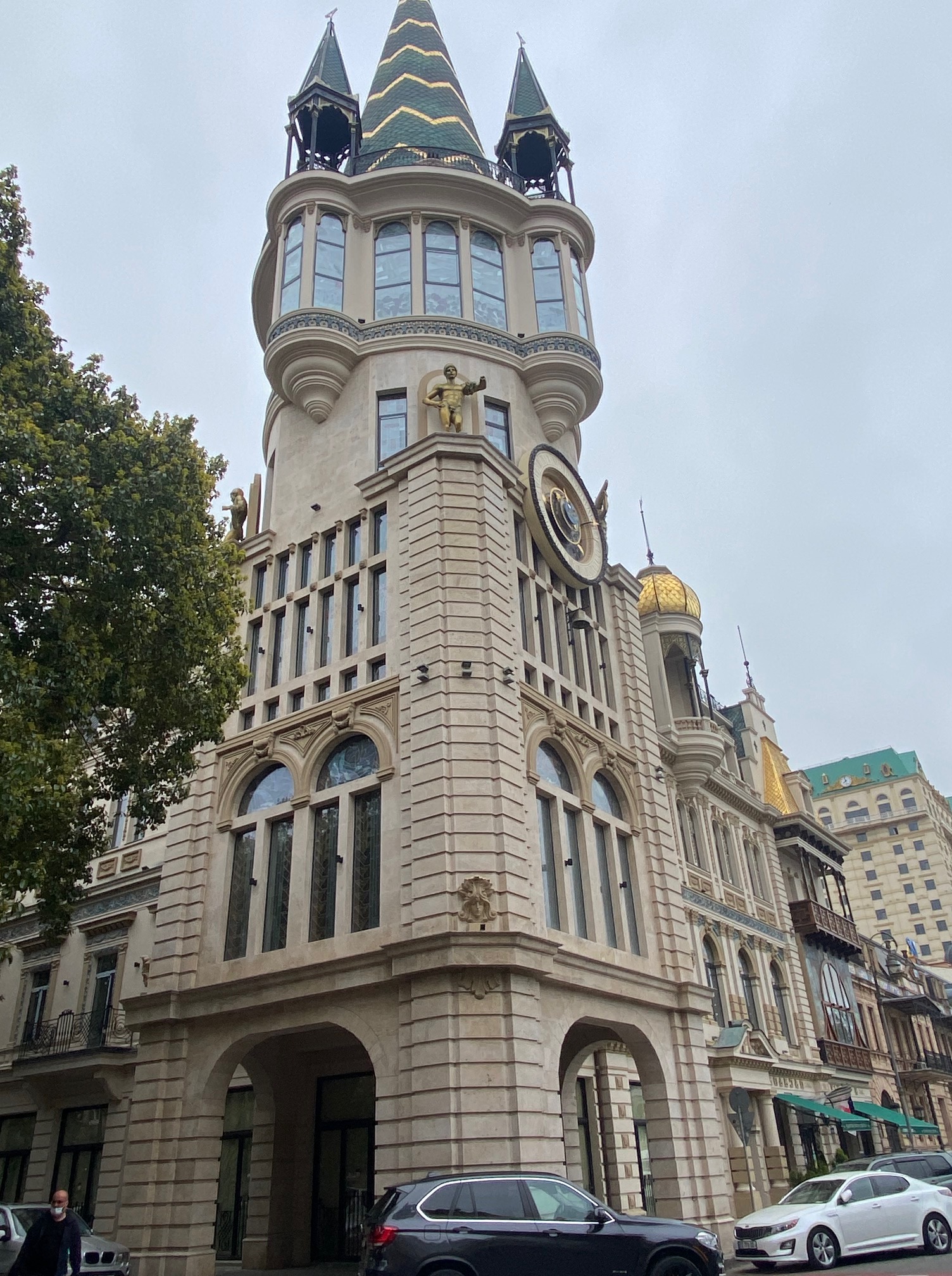
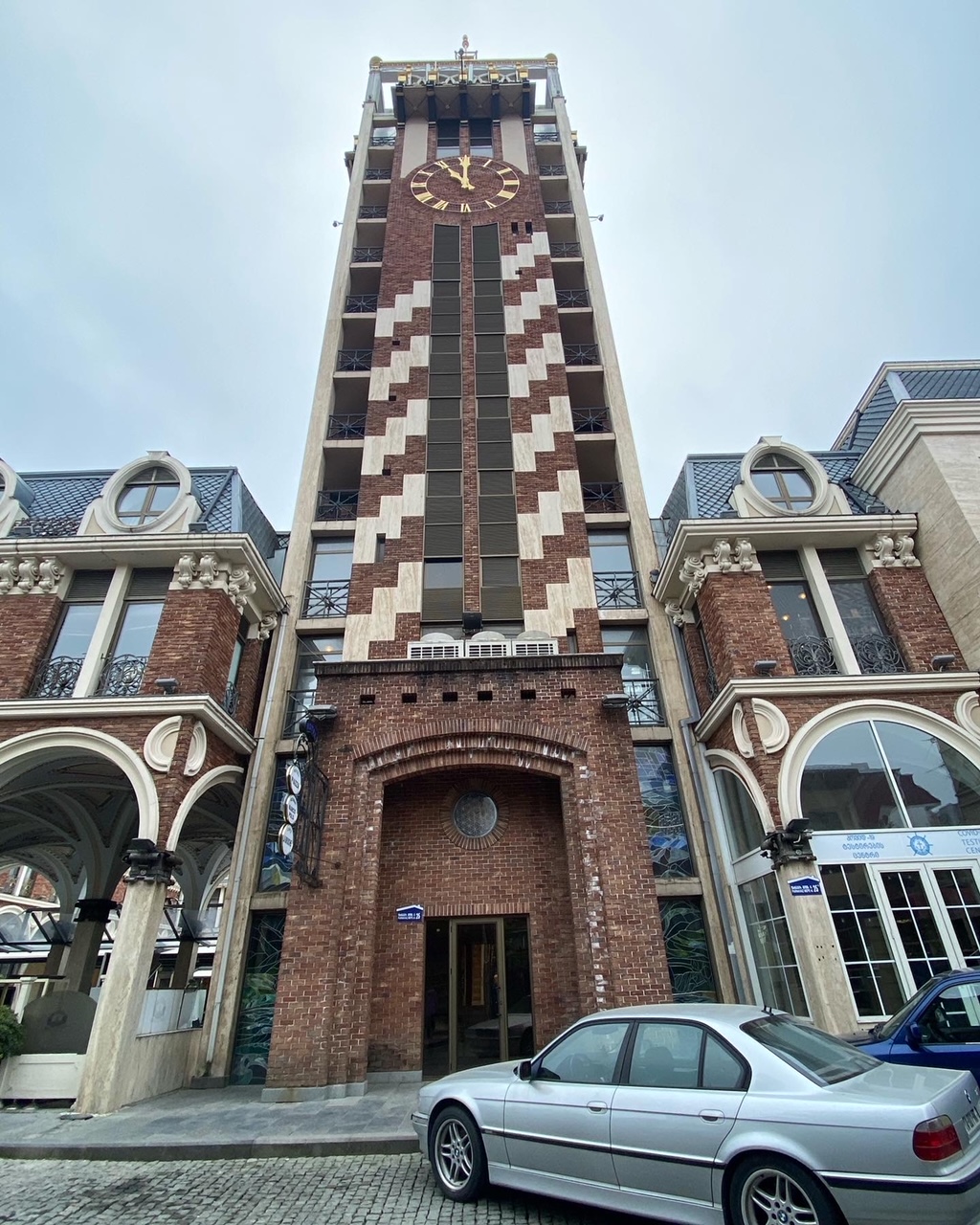
Europe Square with 19th and early 20th century buildings. It was fun to walk around and experience old world charm. I couldn’t get enough of the blooming wisteria as I’ve always wanted to grow it—but it won’t grow where I live.
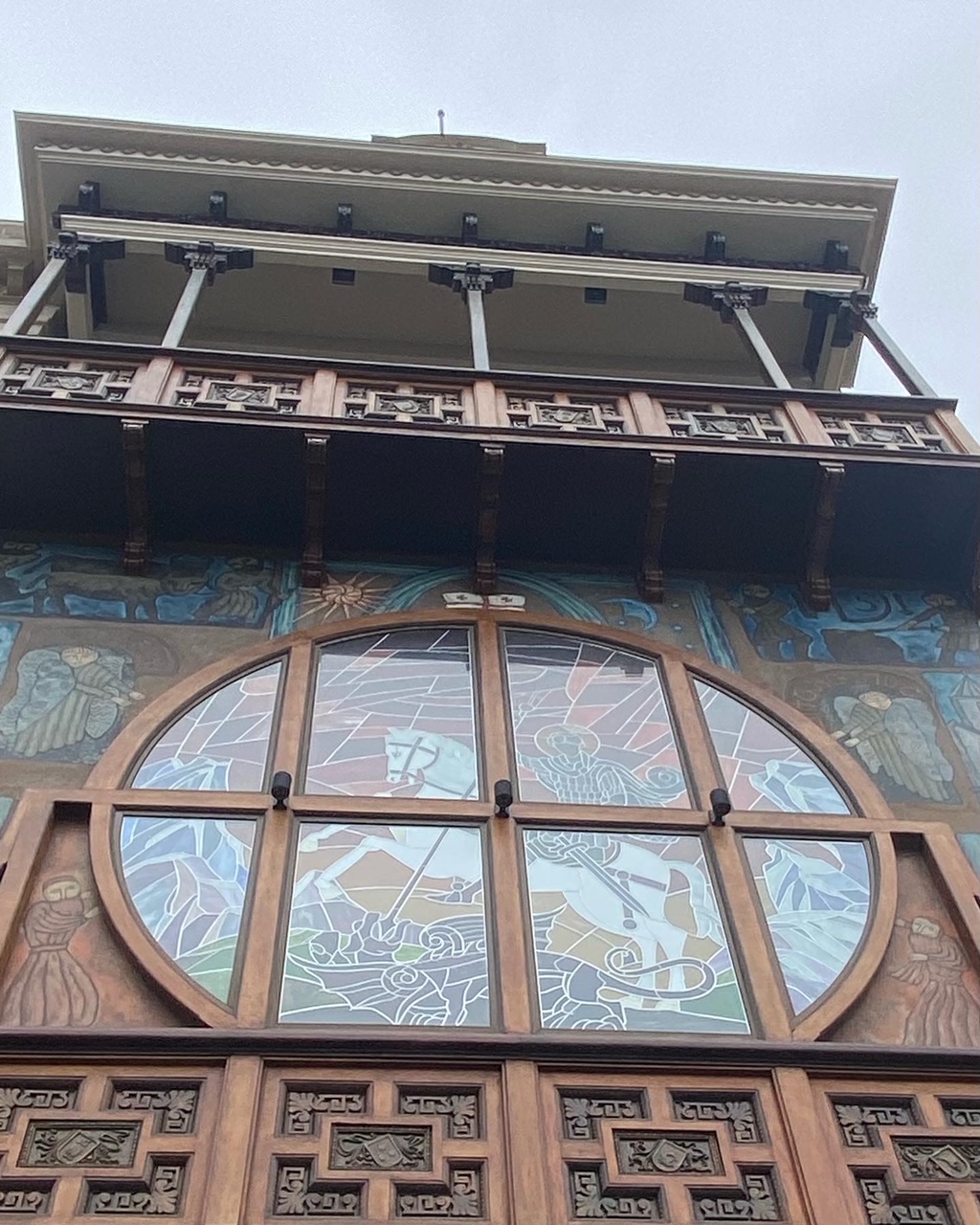
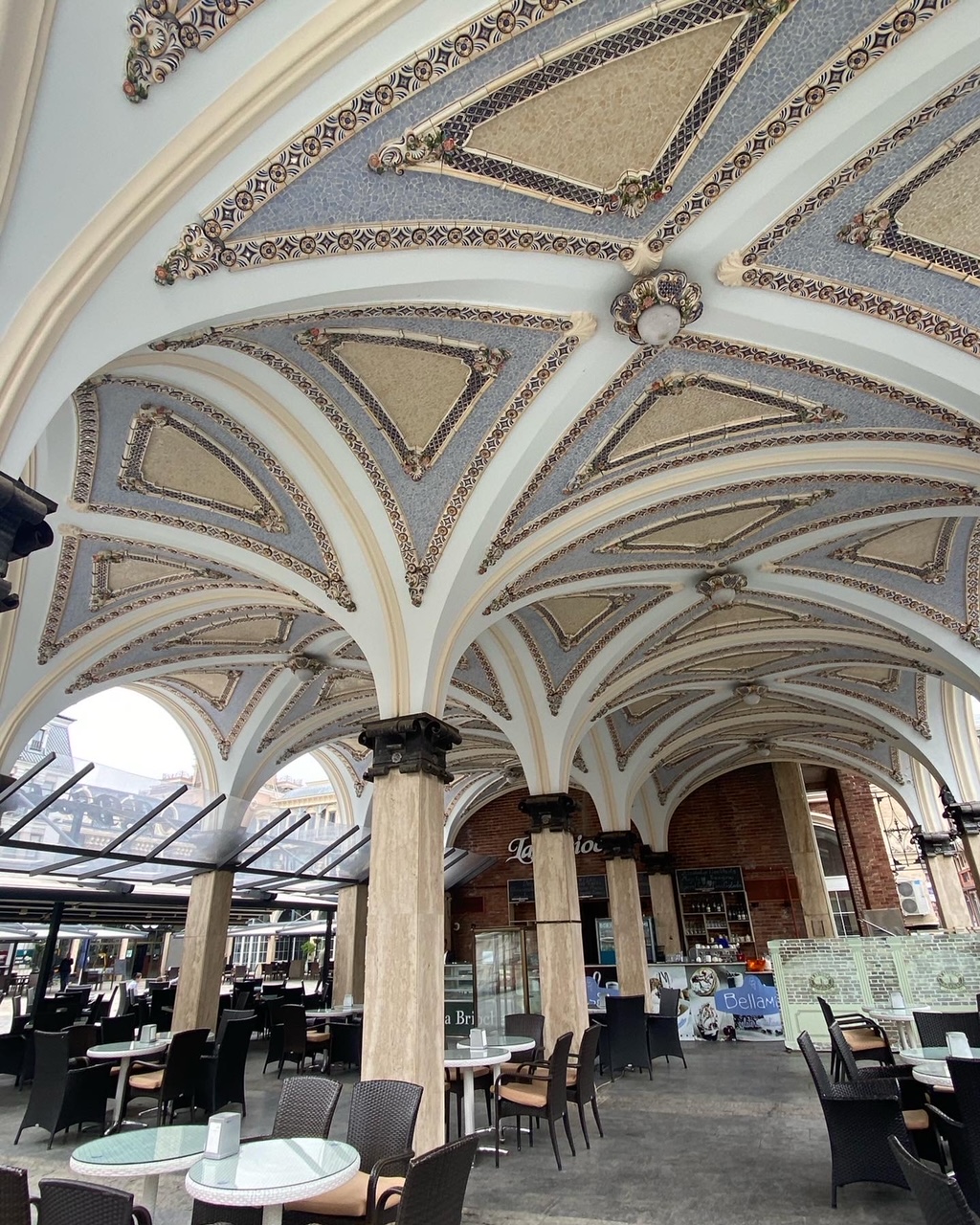
Piazza Square is decorated with mosaic and stained glass to look like something from Italy.
We didn’t visit Freedom square near the water, but there’s a beautiful pedestrian walkway through a park all along the Black Sea. It’s a fun place to people watch and eat at various restaurants. The locals are friendly, even when we crashed a birthday party.
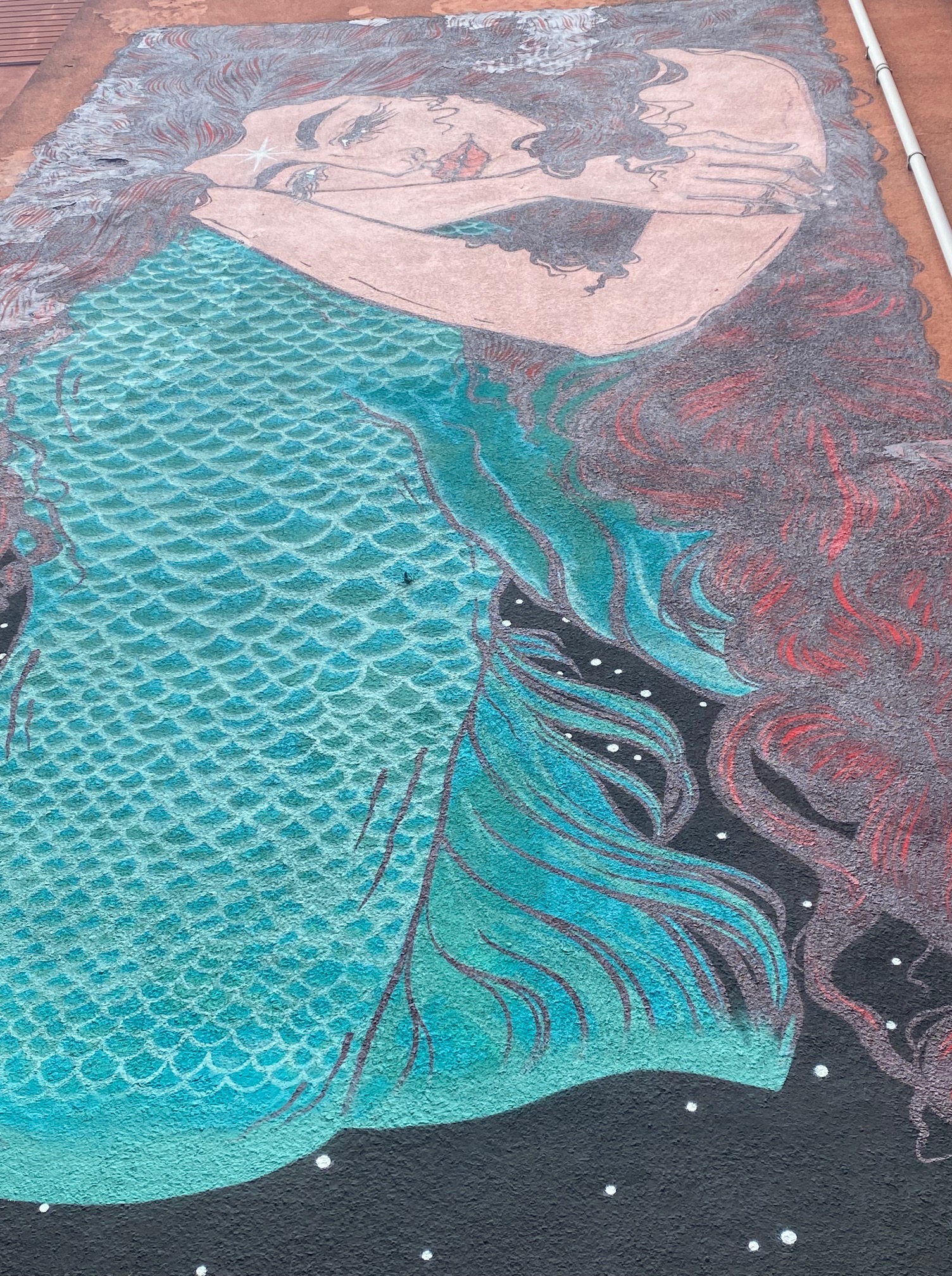
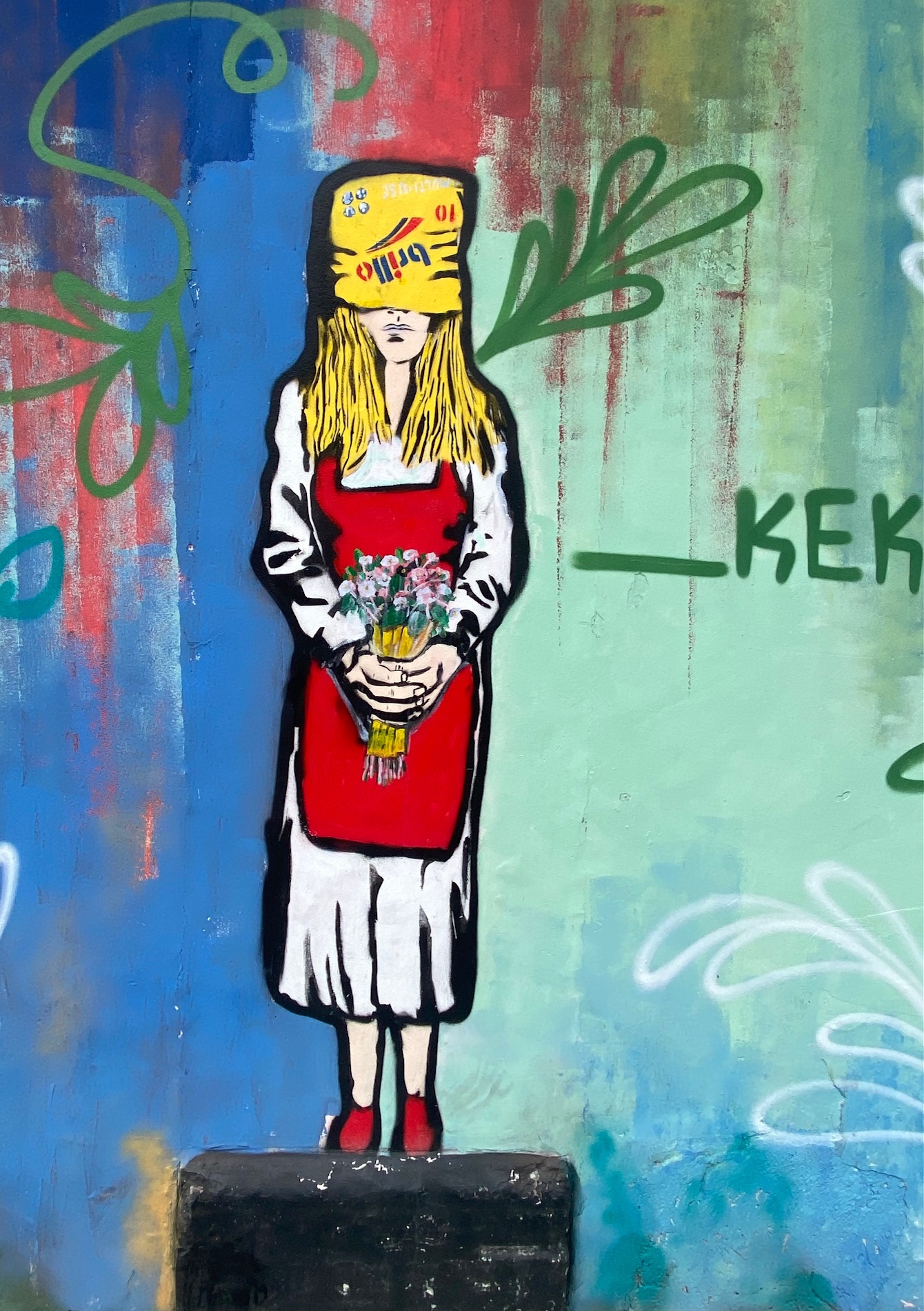
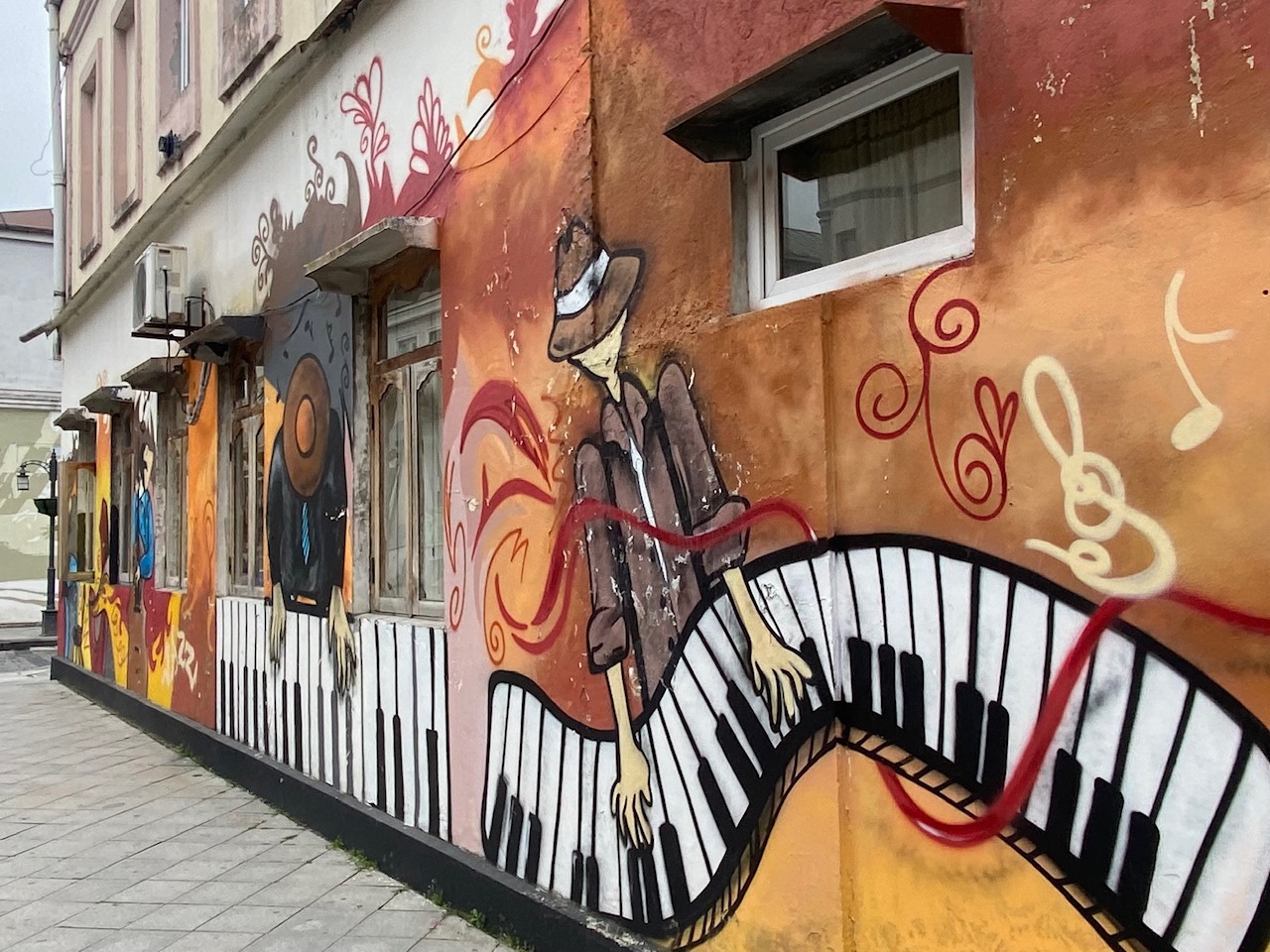
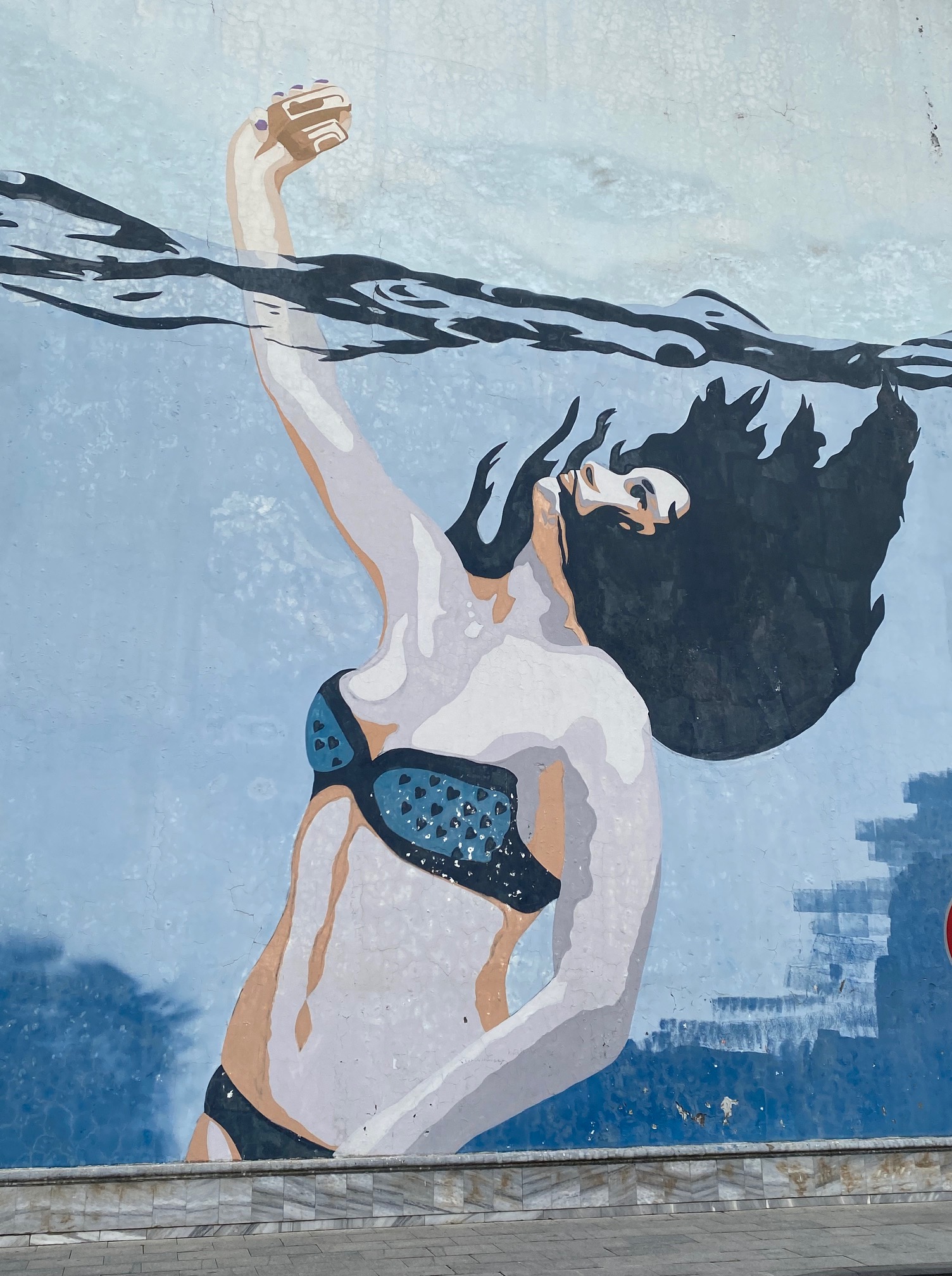
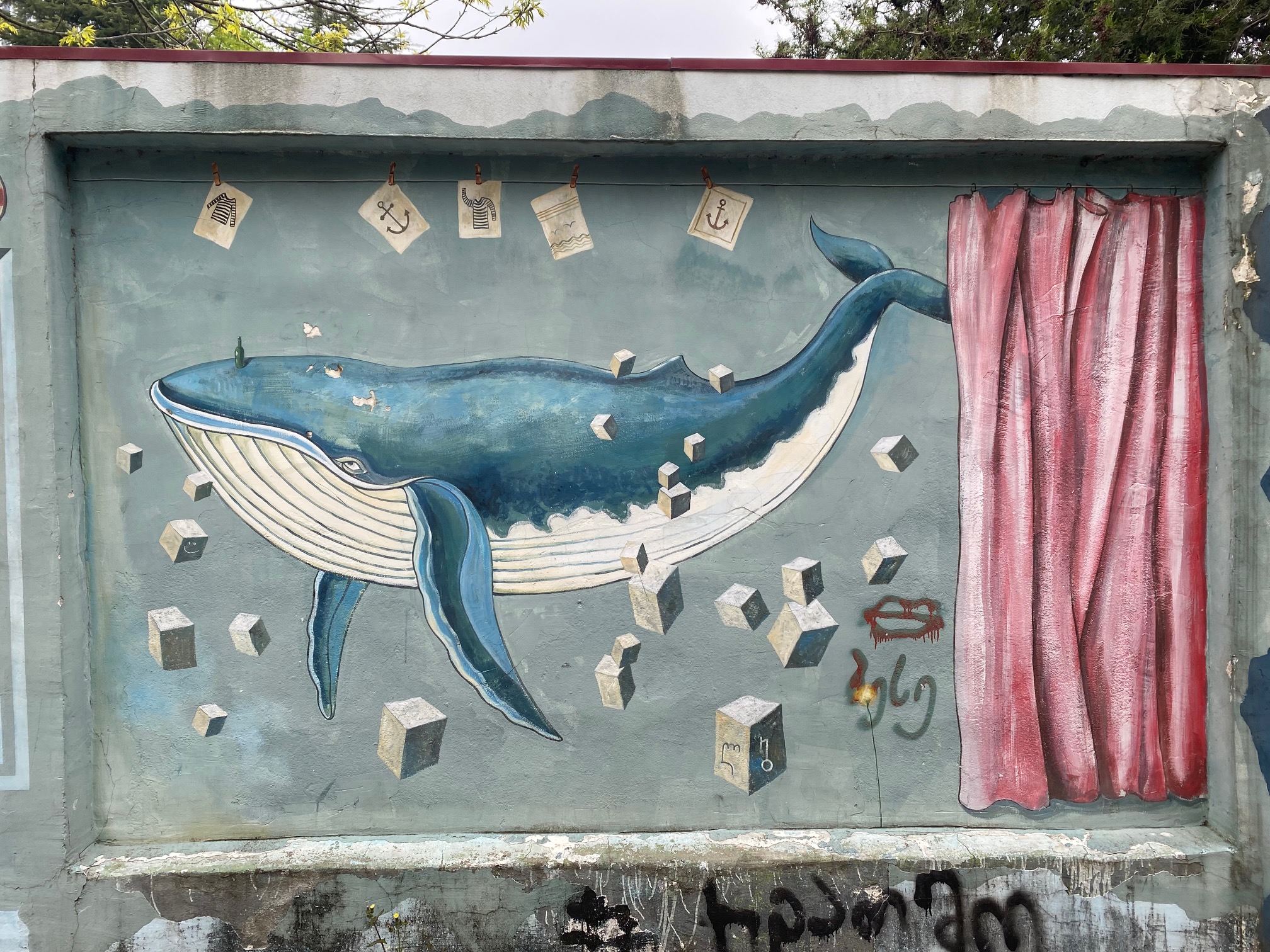
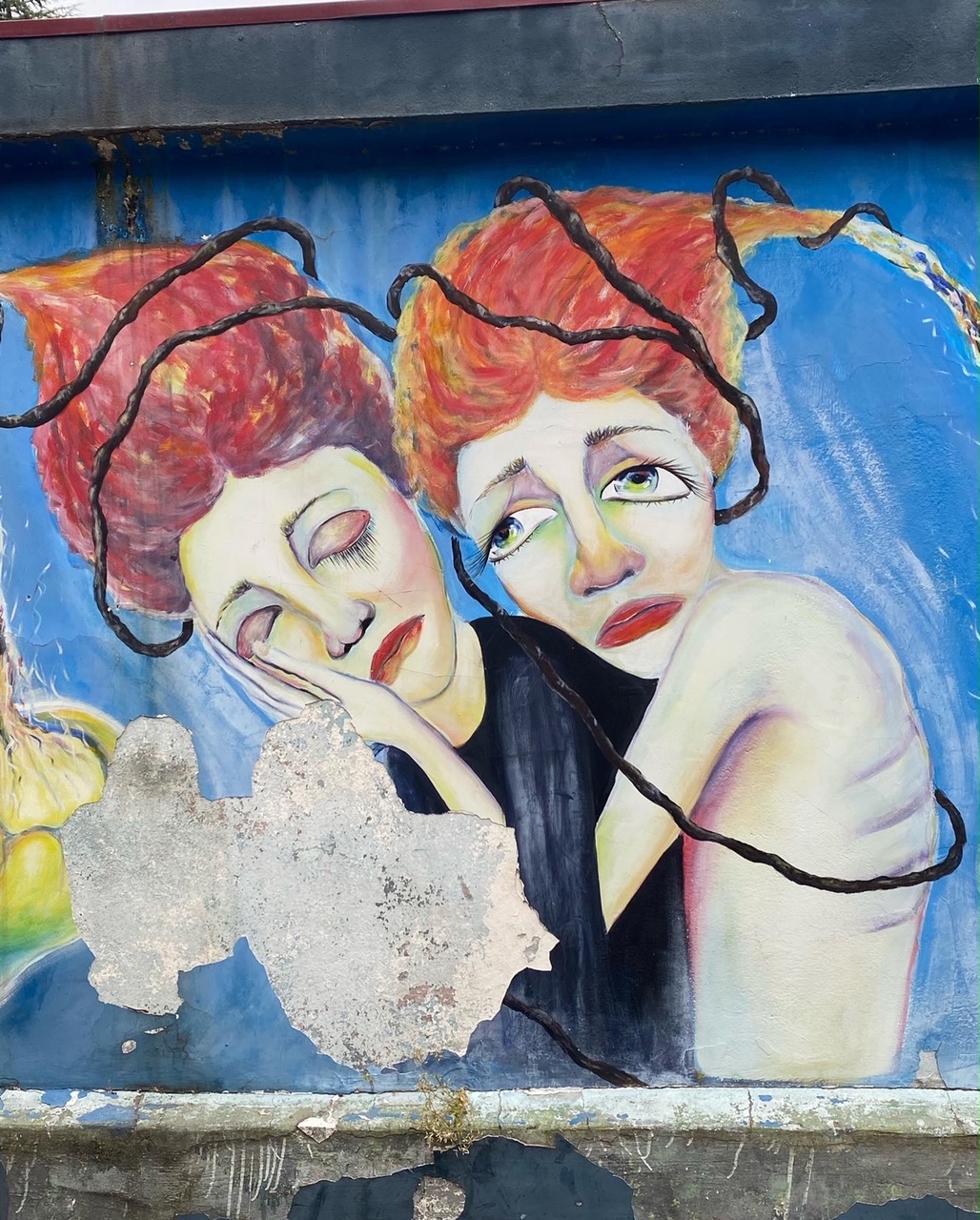
Batumi is famous for many murals. Anyone fond of geocaching or treasure hunting will like to see how many they can find.
The Batumi Botanical Garden, a little outside of town, is also along the sea and is a nice place to stroll through huge magnolia trees and sections of Japanese Maples. The tepid Mediterranean climate allows many sub-tropic plants to grow here.
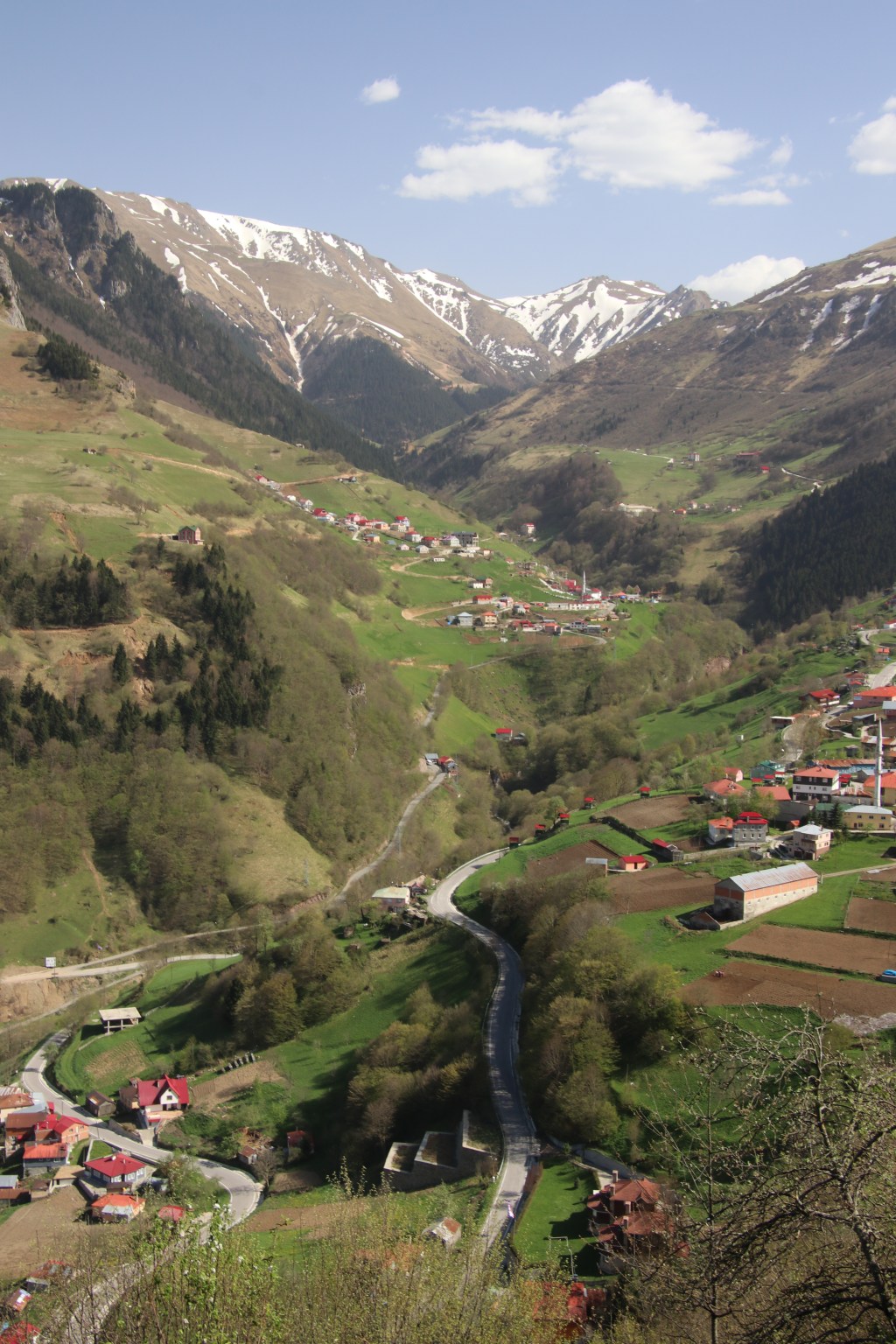
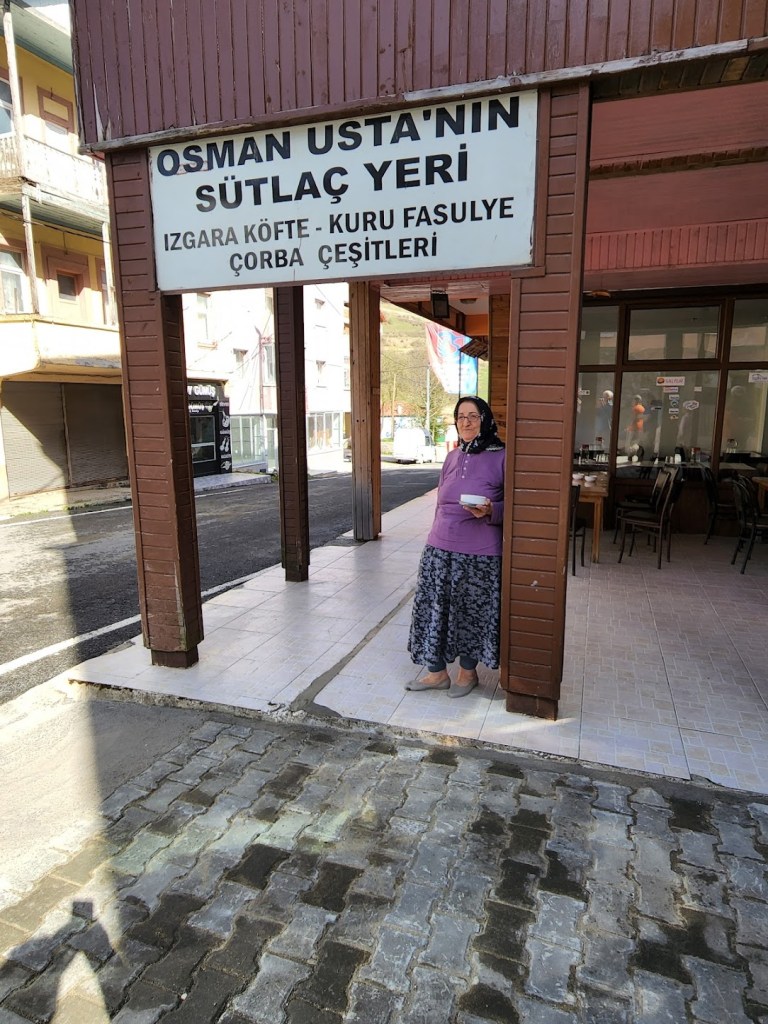
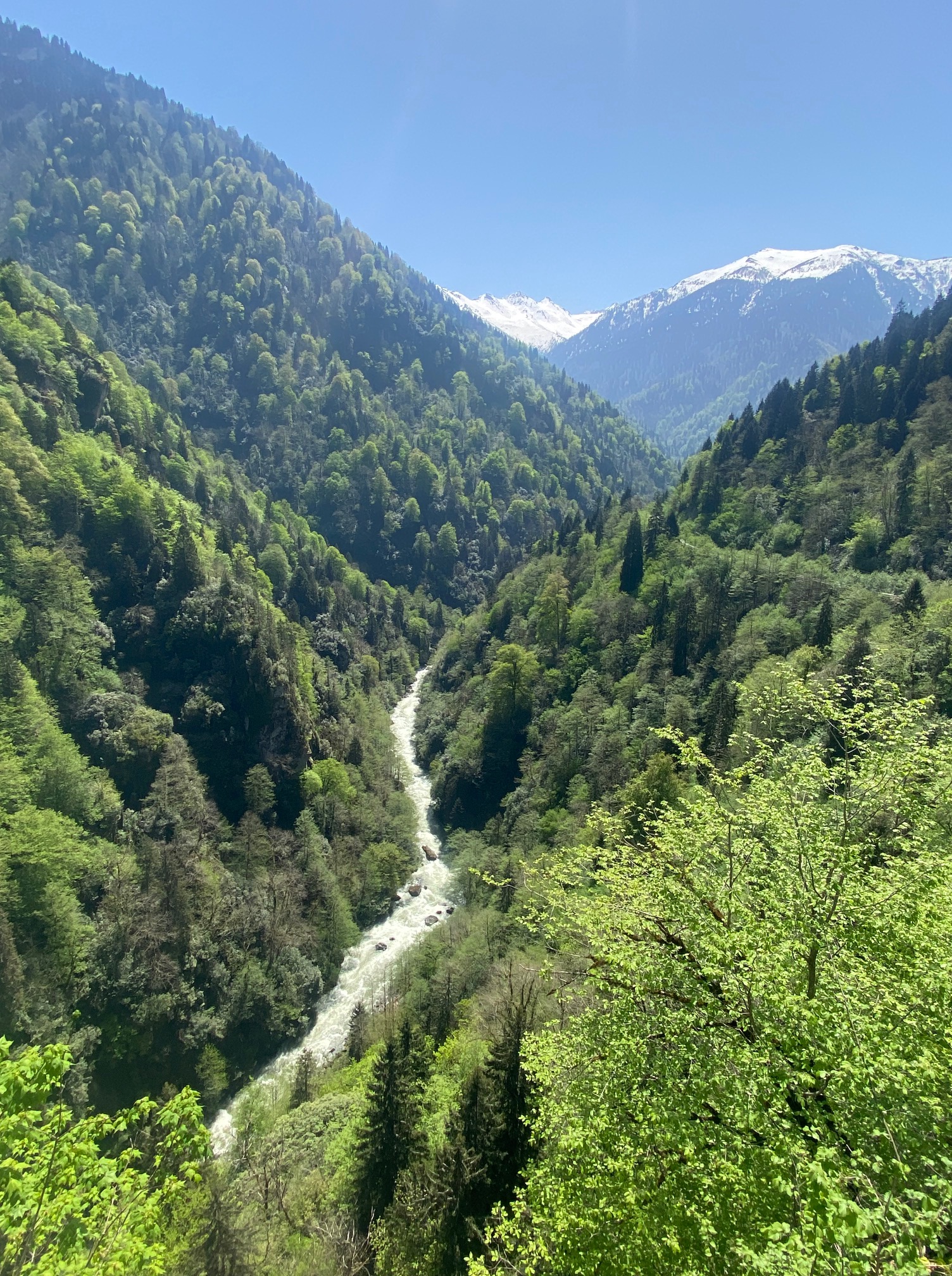
The featured picture in this post isn’t taken in Switzerland. It is a Turkish village called Hamsikoy at the base of the Zigana Mountain. This area of Turkey has lush green forests and alpine plateaus with a backdrop of snow covered peaks. This was such a surprise to me. The view is great but you’re coming to Hamsikoy for the best rice pudding in all of Turkey. Look for the Sutlac sign on the right as you enter town.
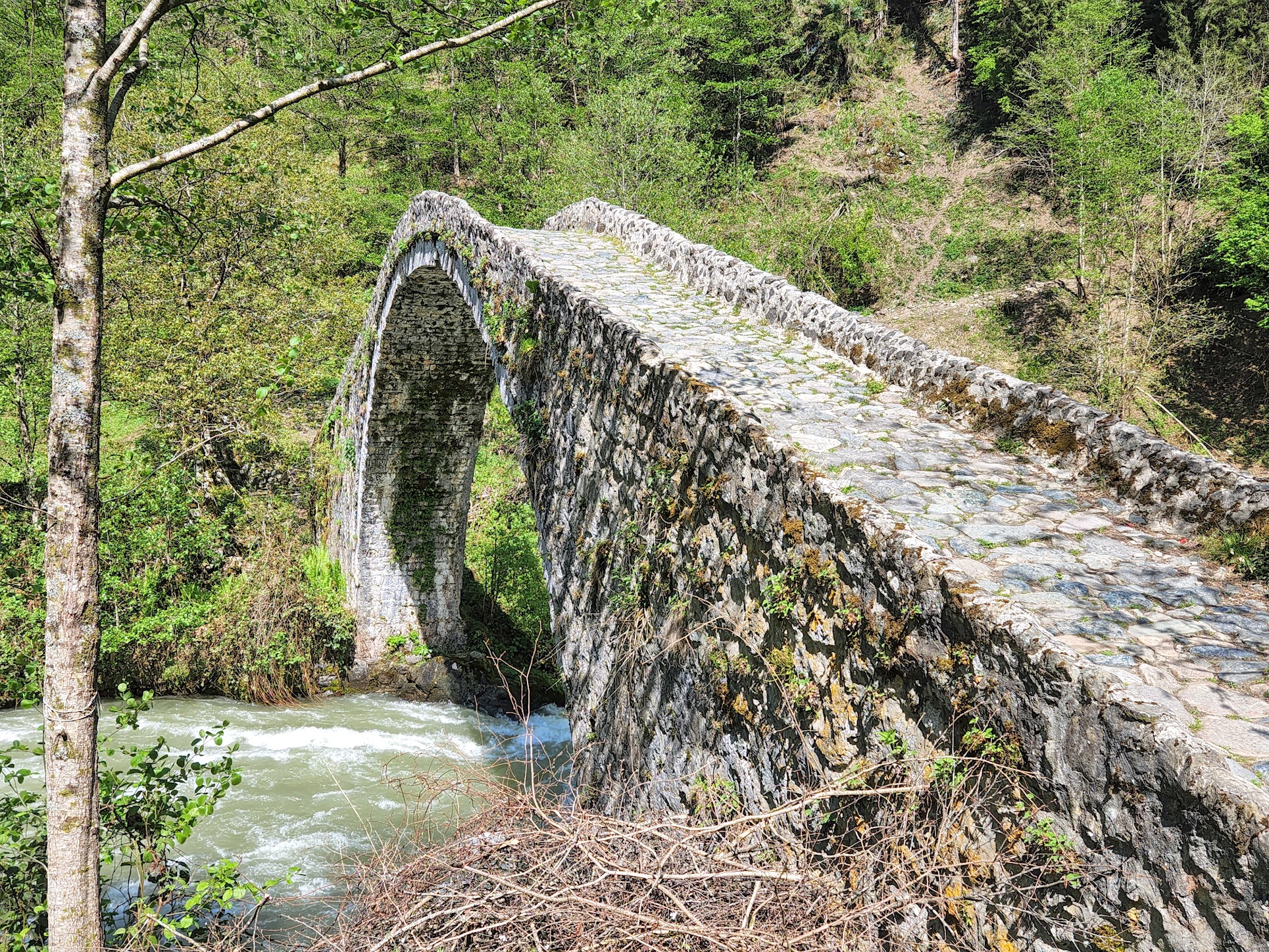
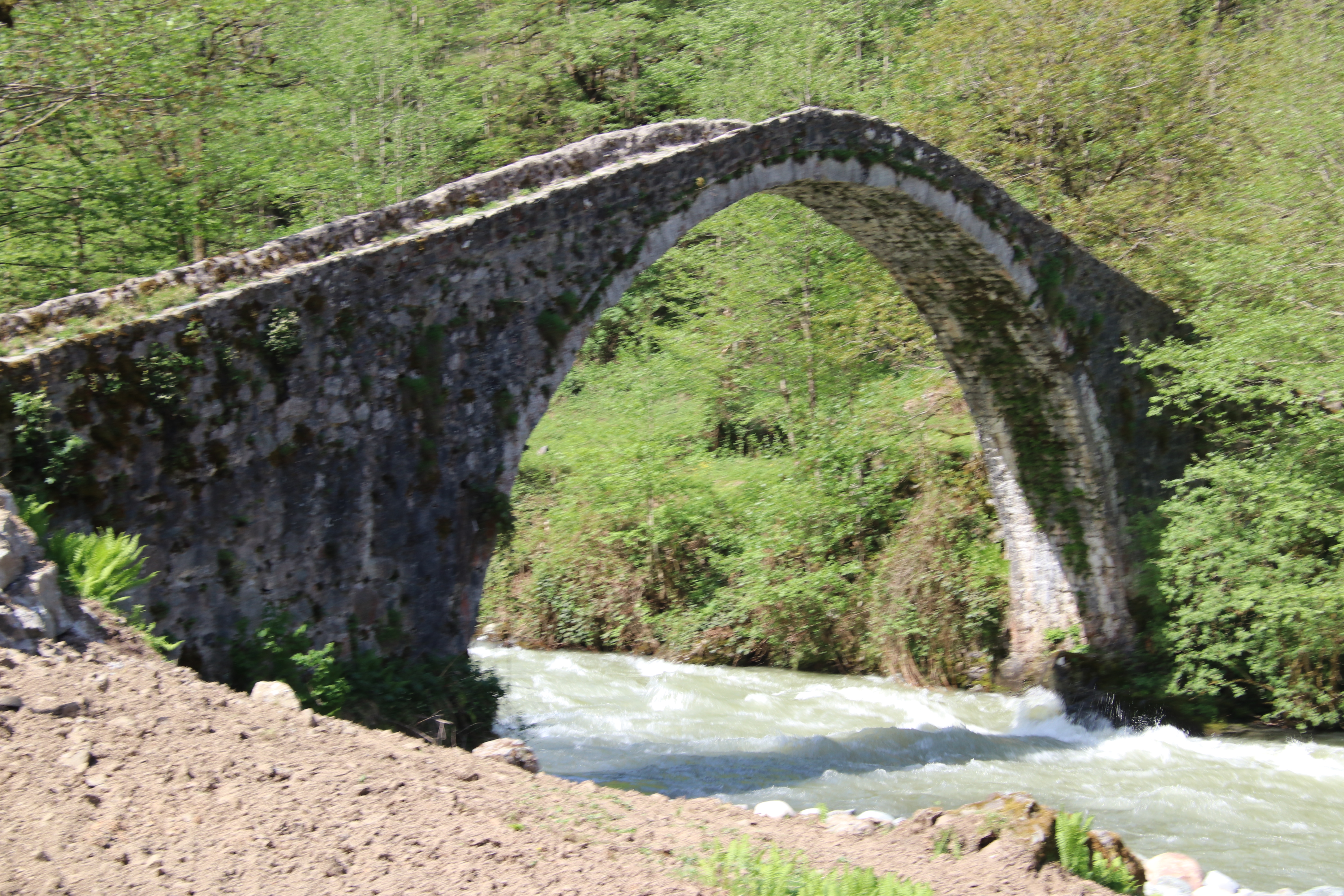
On the way to Zilkale Fortress, you will pass medieval bridges. In the surrounding hillsides there are centuries old wooden homes peppering the green forest.
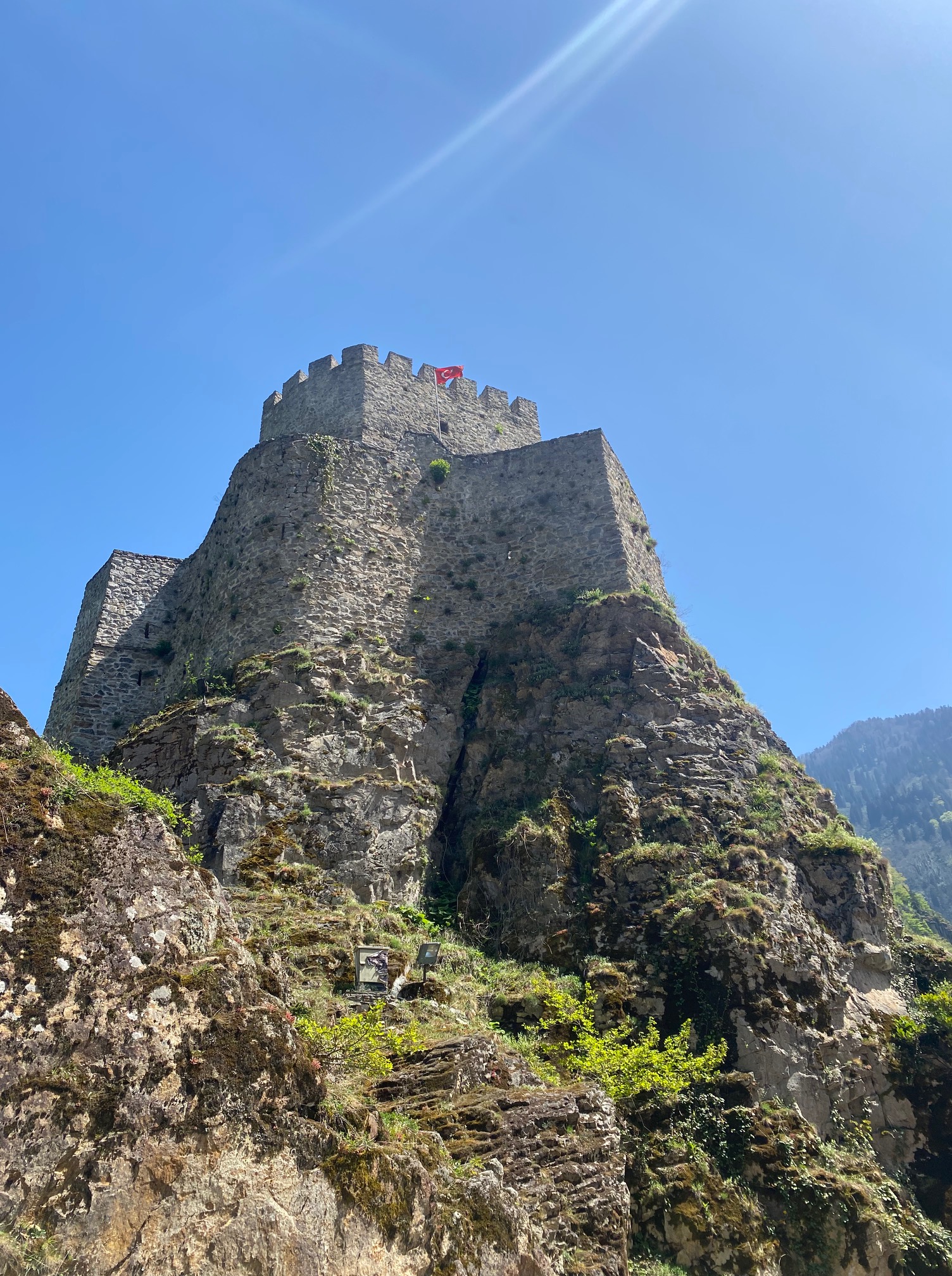
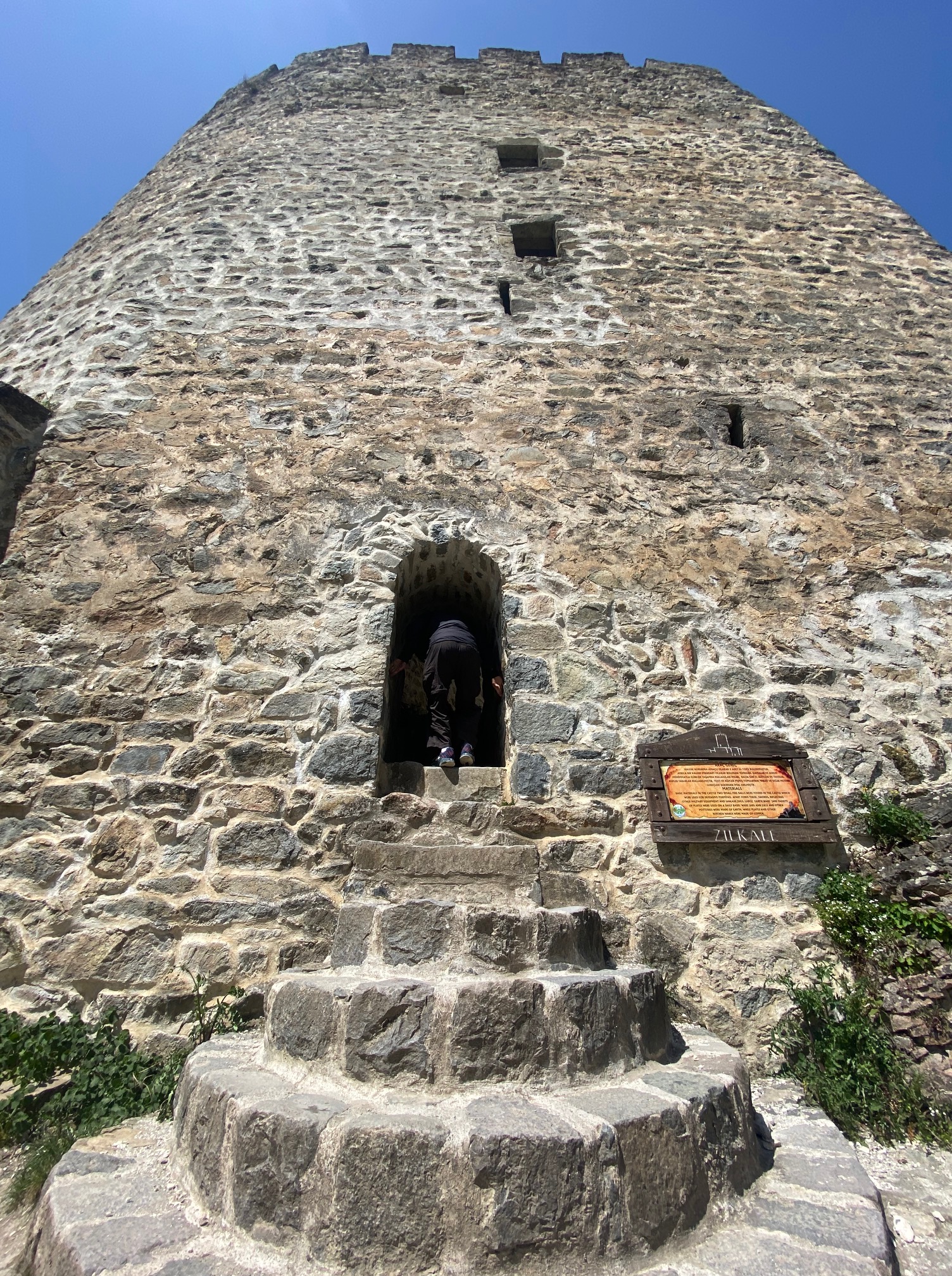
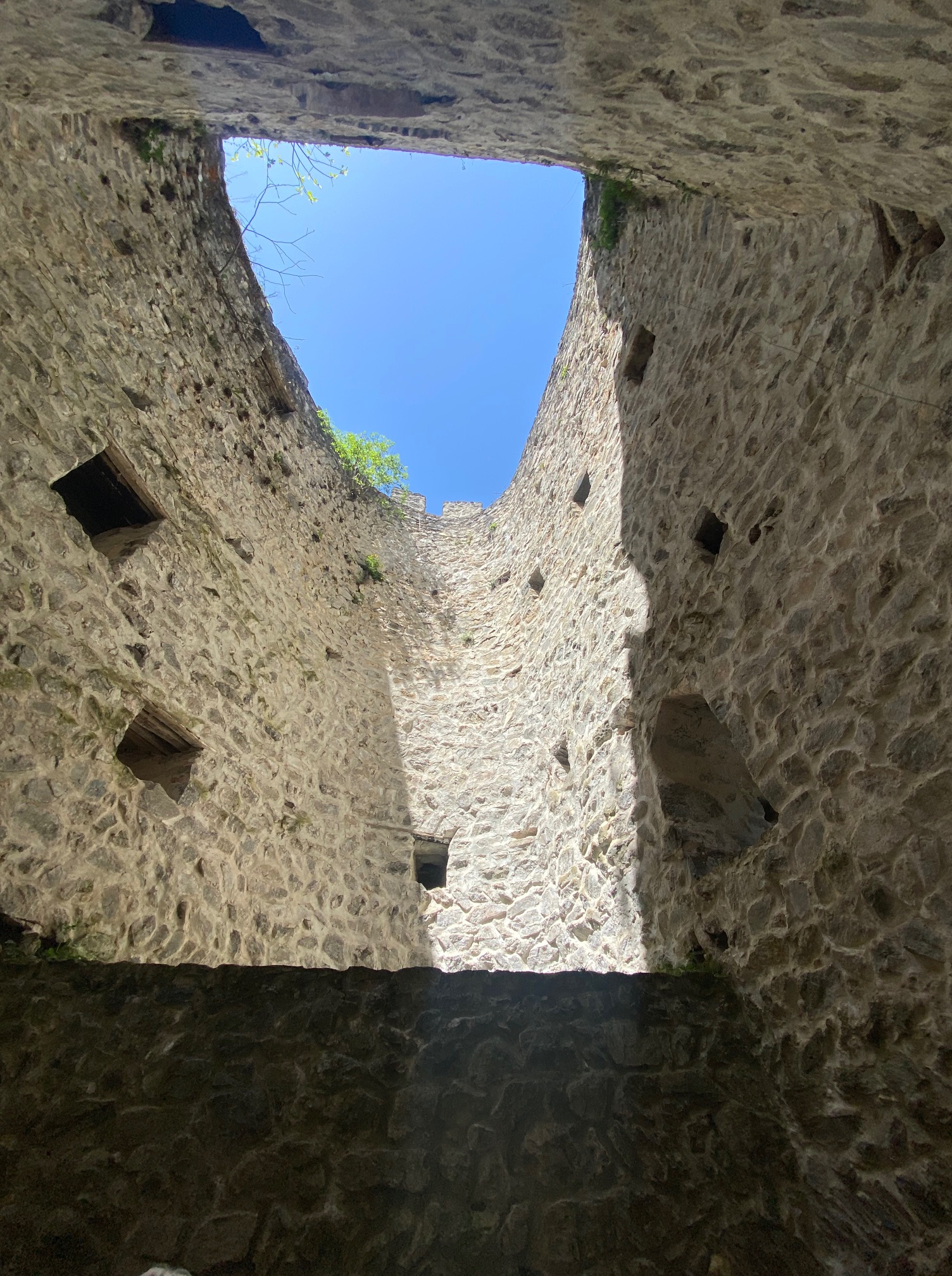
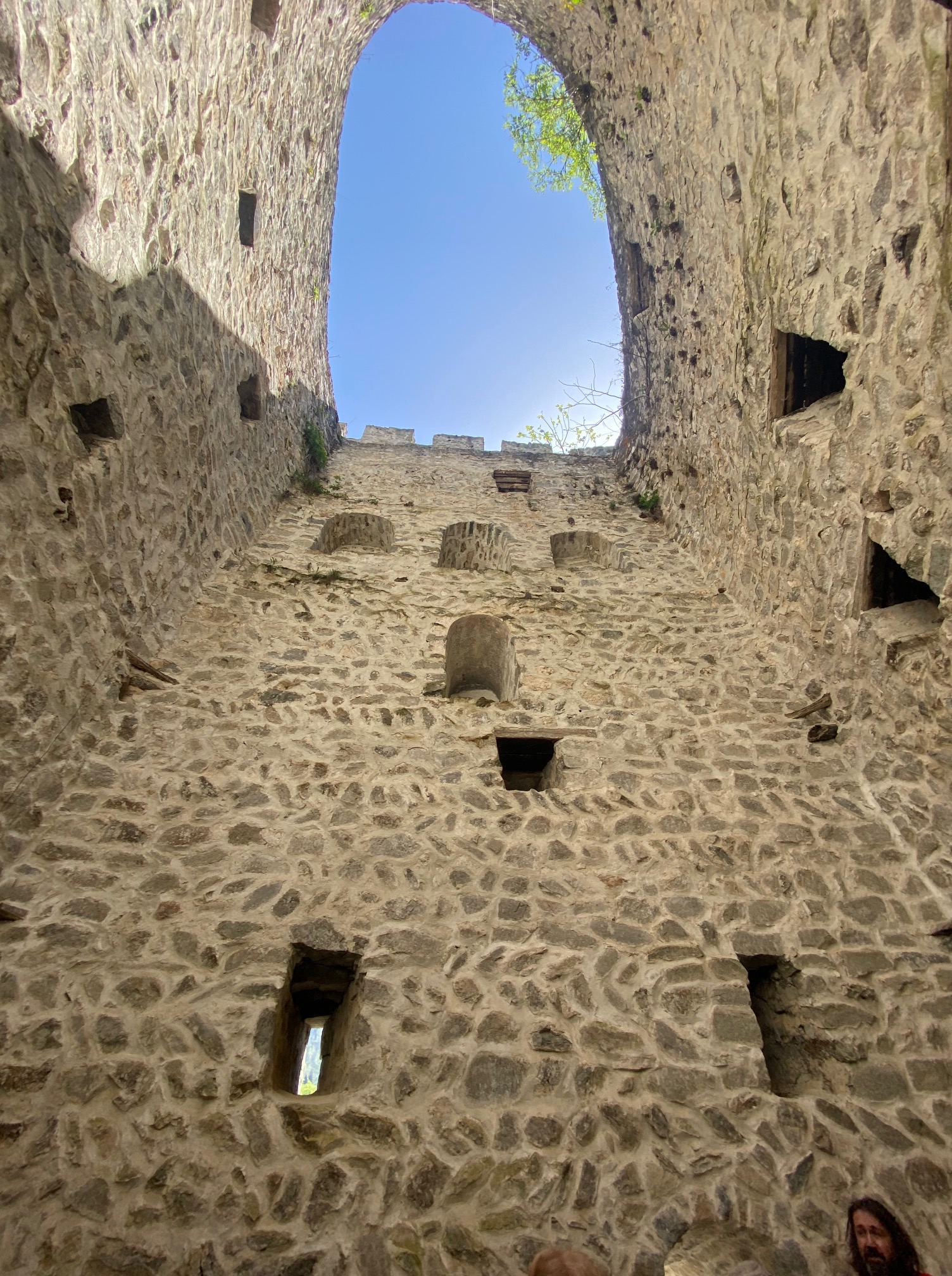
Zilkale Fortress is a castle built during the Byzantine Empire in the 14th century. It is in a stunning location high on a cliff above the Firtina River. The views from the upper walls of the surrounding Pontic mountains (12,917′ ) and the wide panorama to the river below is simply breathtaking.
This fortress was an important place along the quicker, but more dangerous, silk road route to the port in Trabzon where items were loaded onto ships. I cannot imagine a caravan of animals and packs making it through this terrain. Remains of a chapel, the garrison, outer and inner walls, tower and chapel can be explored. This route for the silk road was so rough it required defensive fortresses every 30 km.
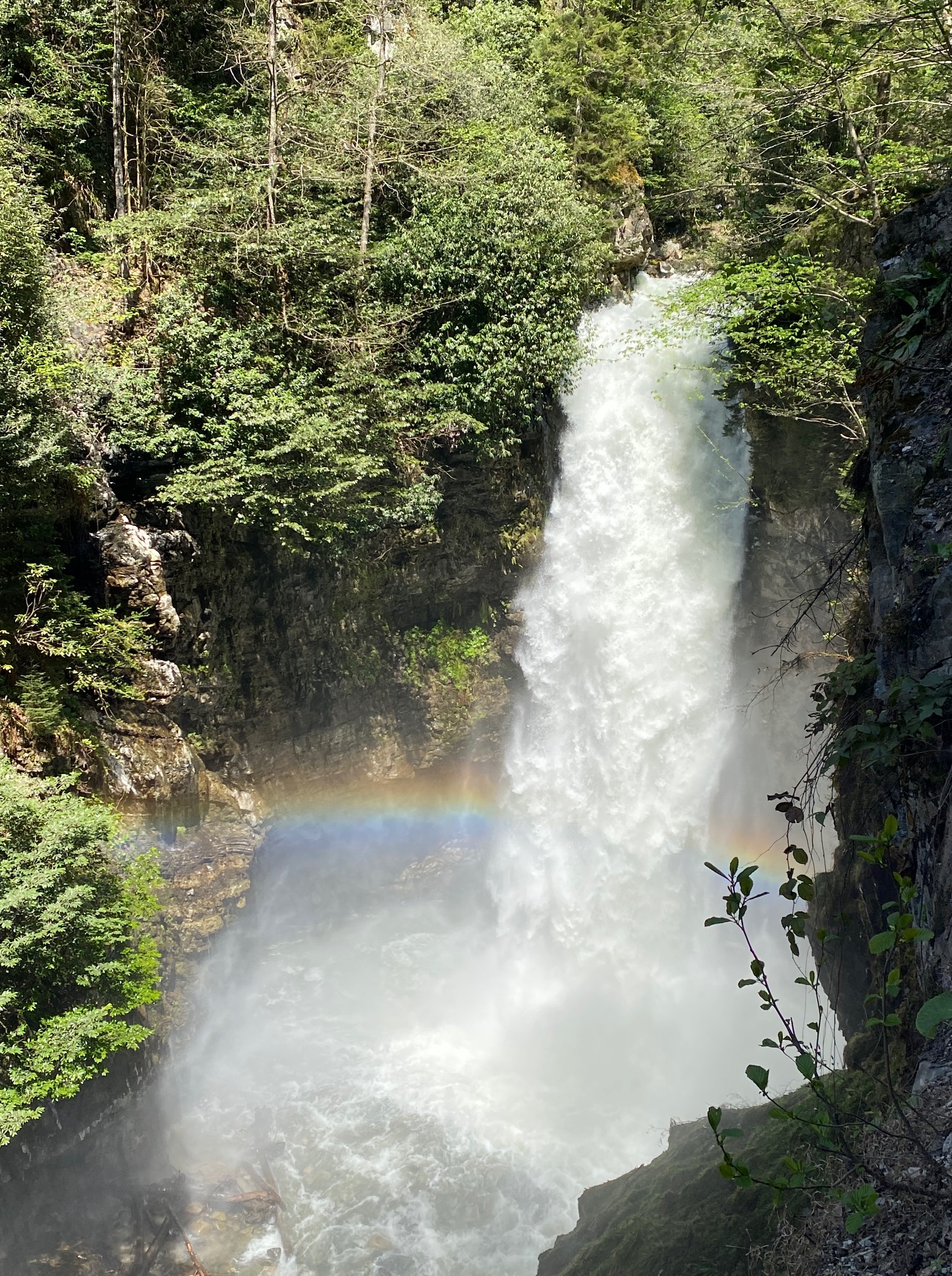
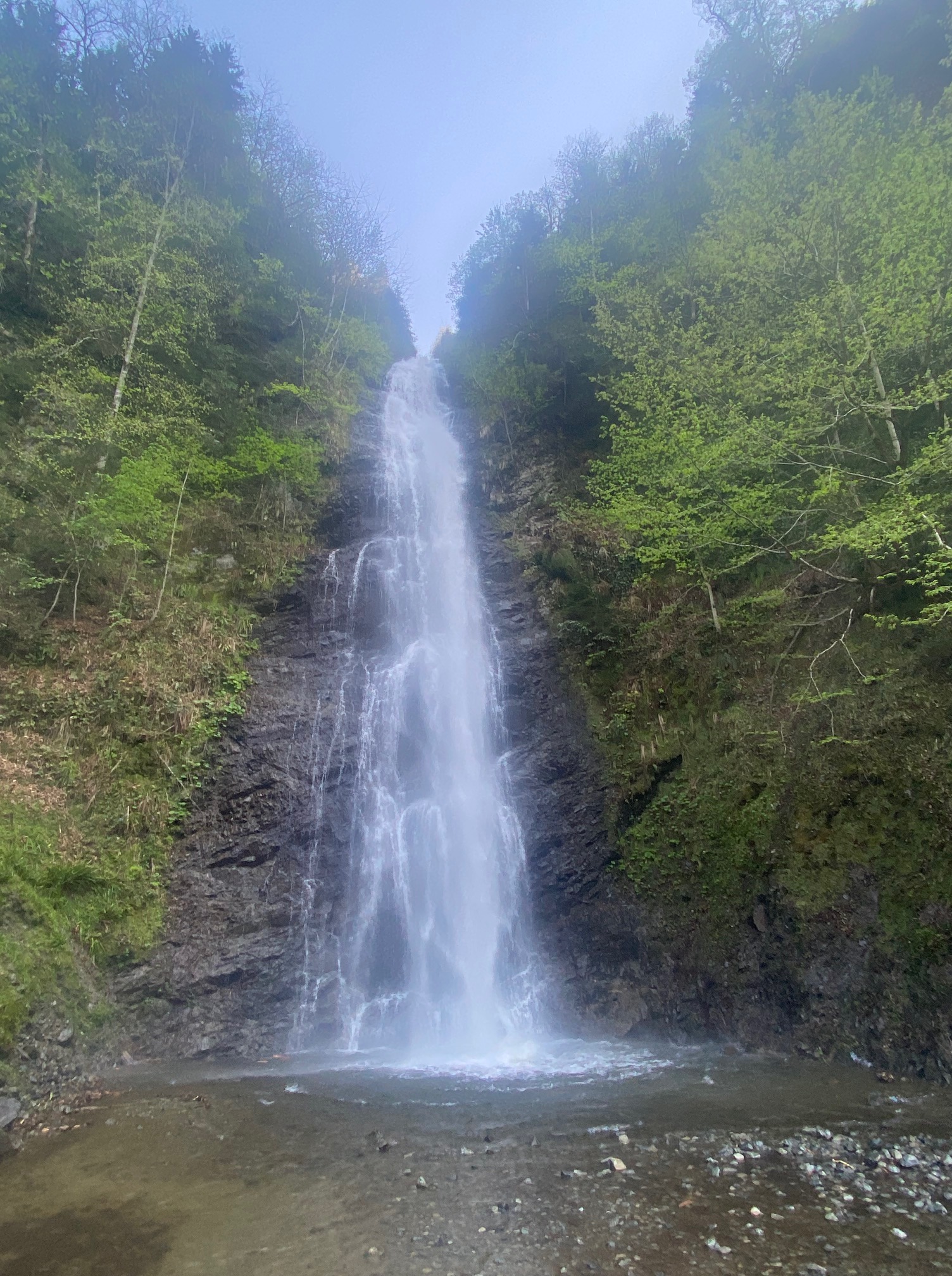
6 km away from the fortress is Palovit Waterfall in the Kackar Mountains National Park. It is 49′ high and thundering with water. Rainbows dance in the afternoon sun and settle on lush plants. Climbing down the walkway is wet and potentially slick. When you get to the barrier at the end, you can’t see the whole falls. The real view is better from the road a little higher up from the stairs.
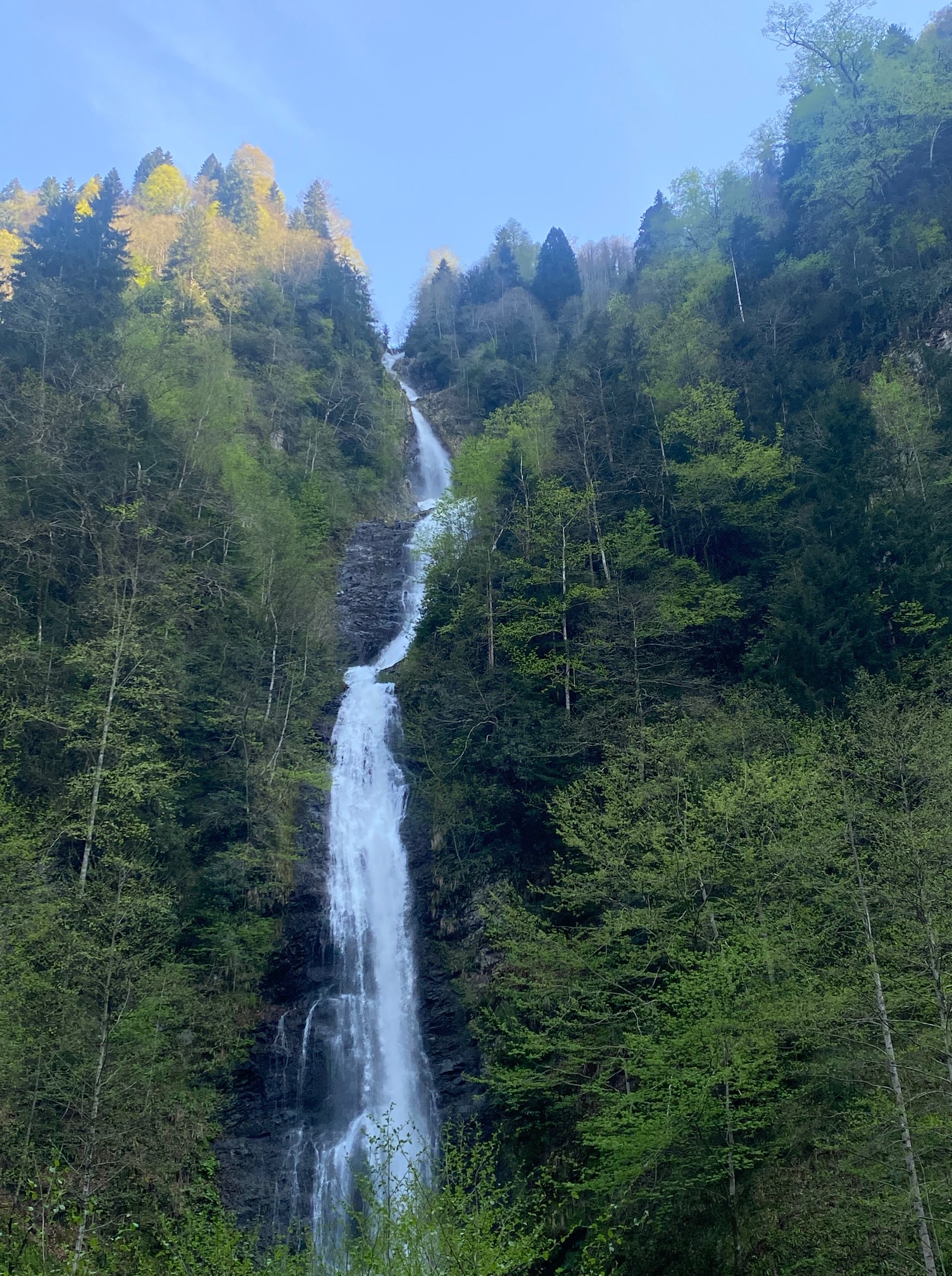
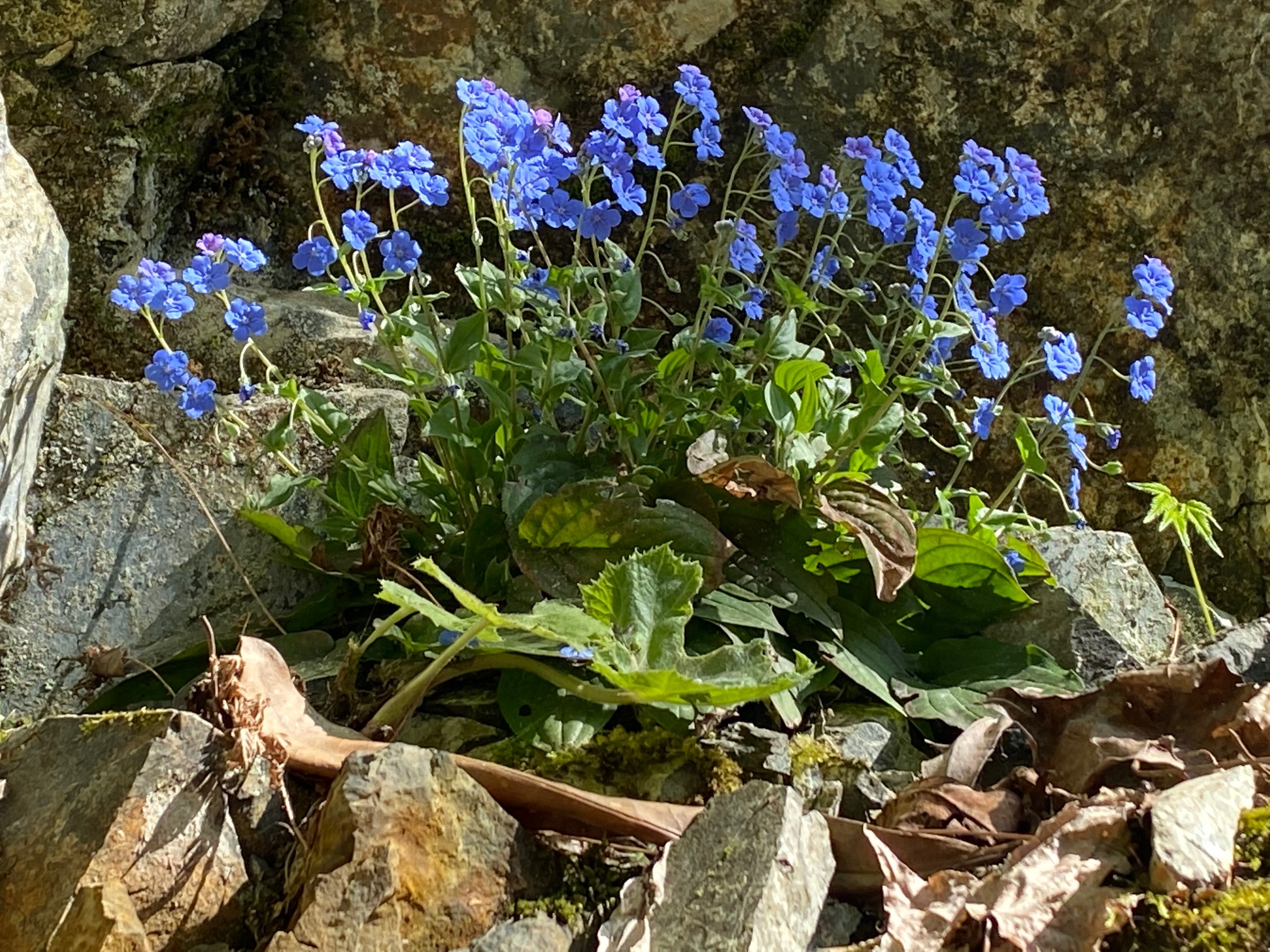
and a little further on is a short hike to the Tar River waterfall. This is a paved river-side track. Through a dark green forest with flowers blooming and we found watercress too. I’d like to return to this part of Turkey and do some hiking in the mountains.
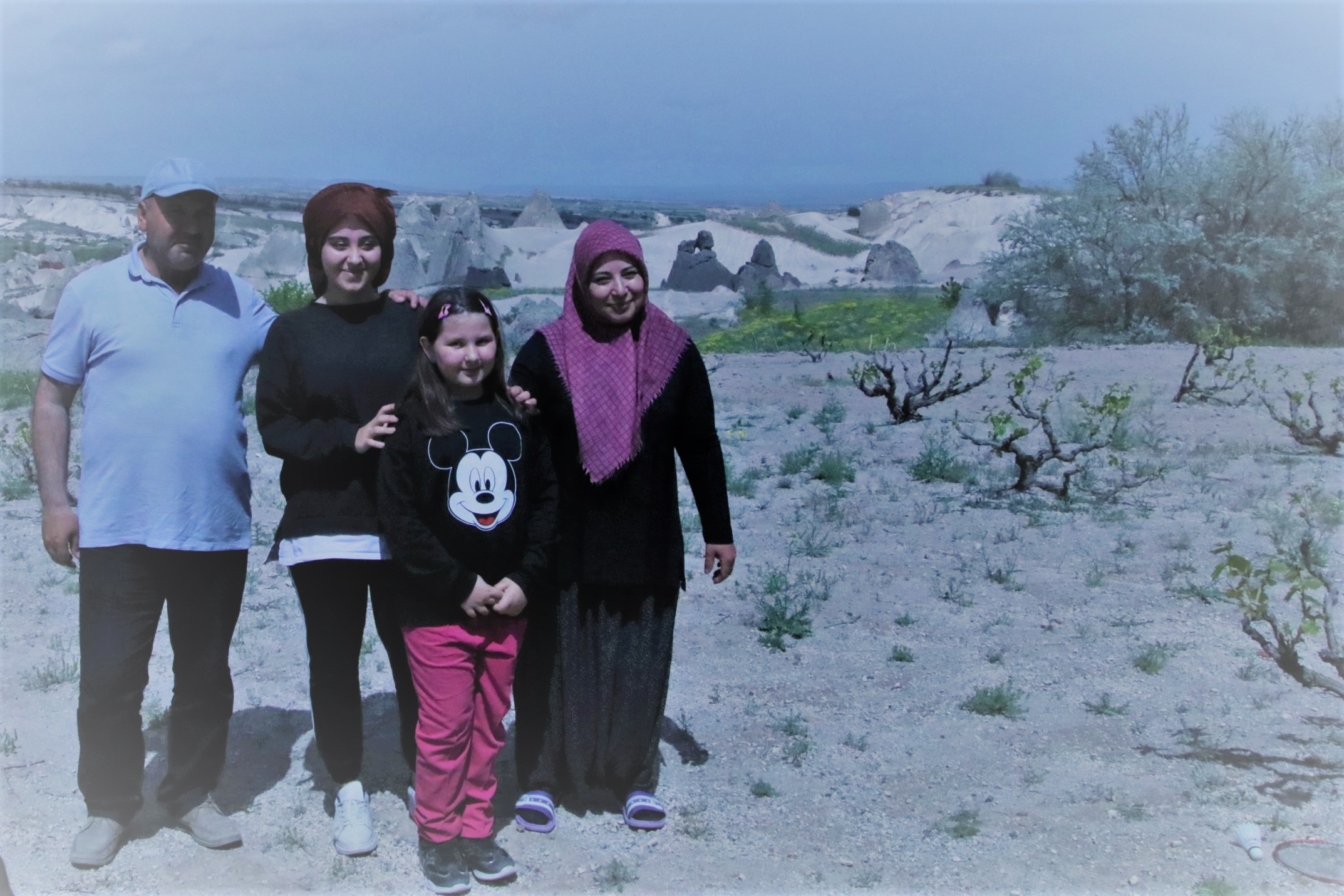
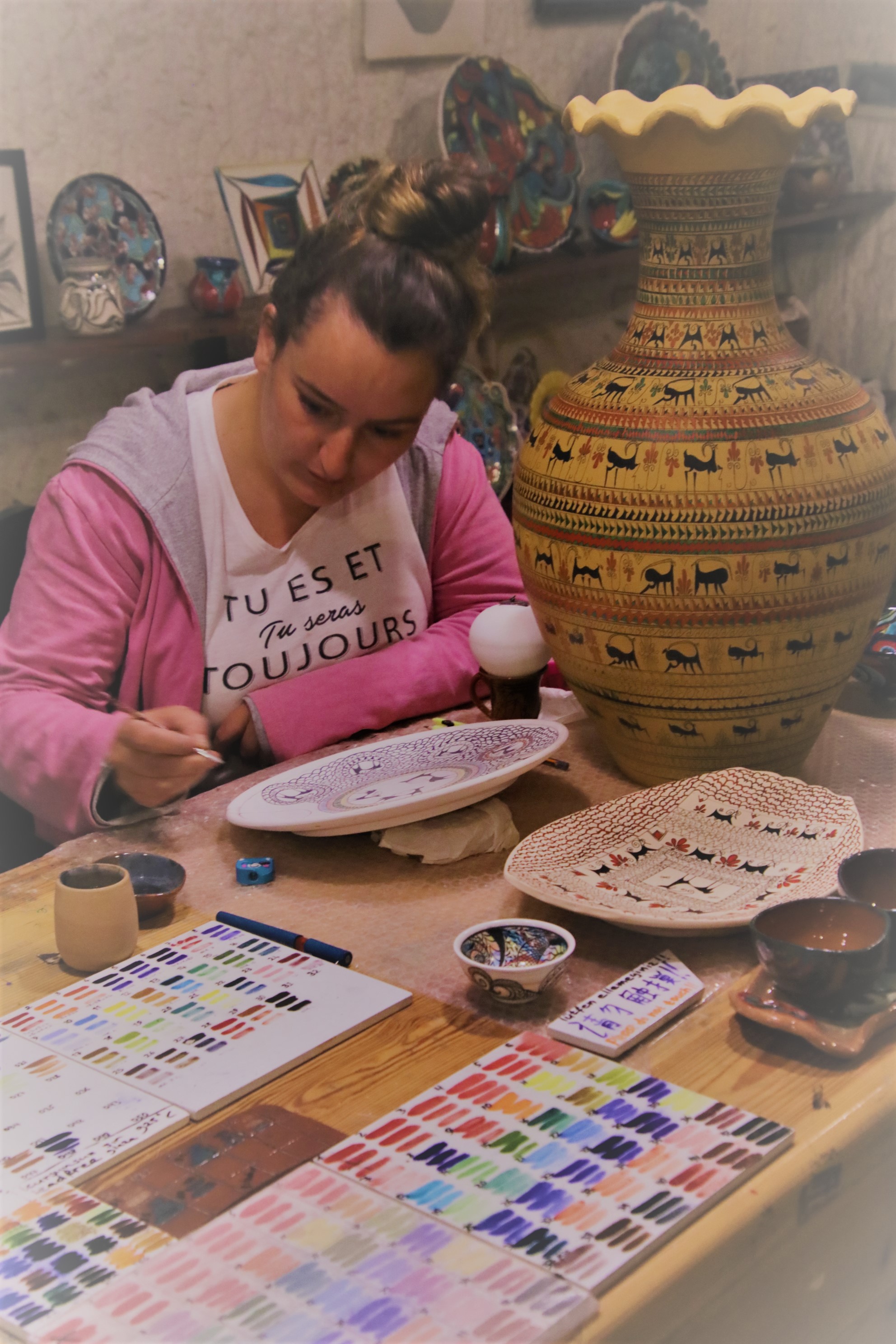
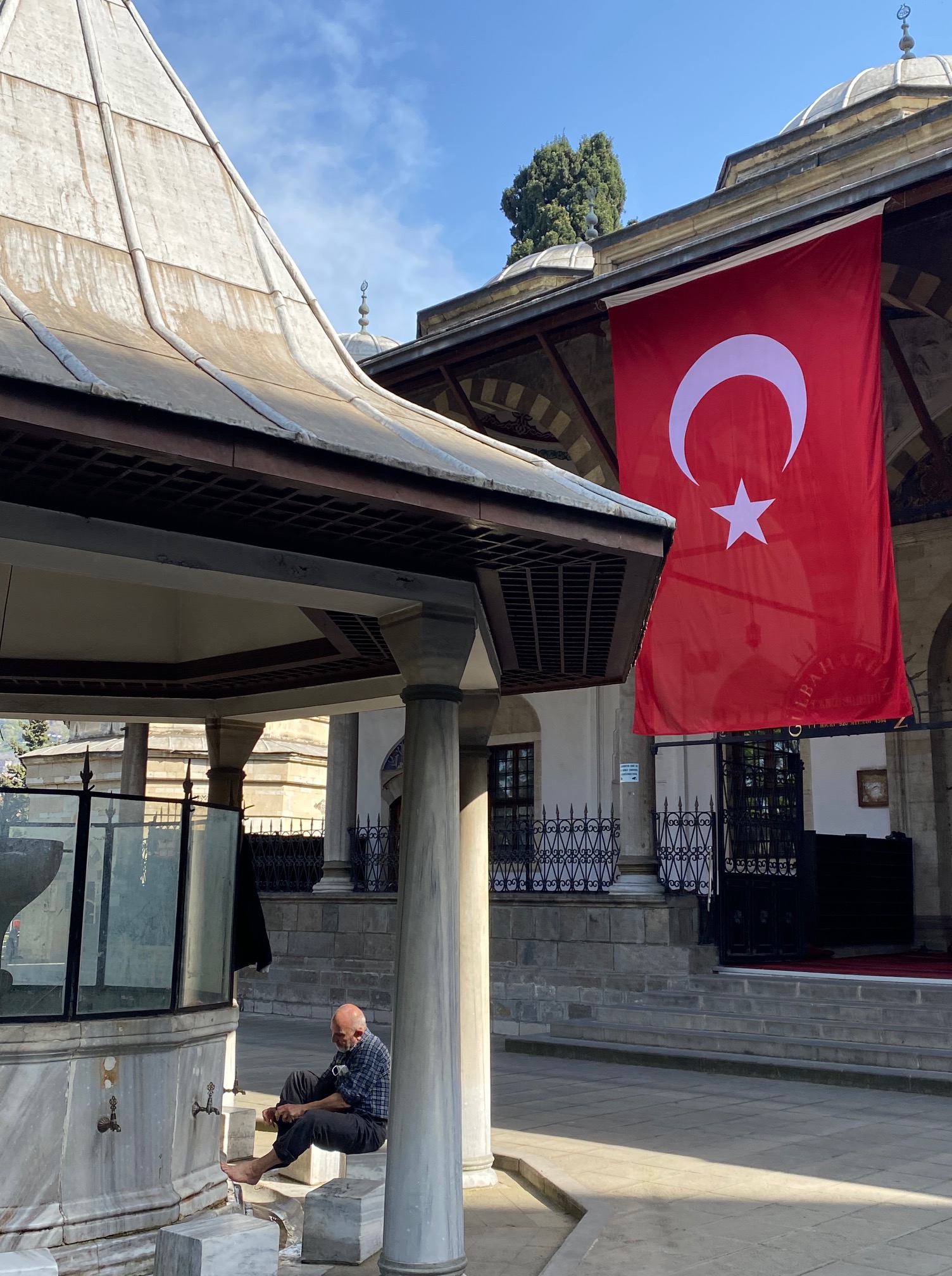
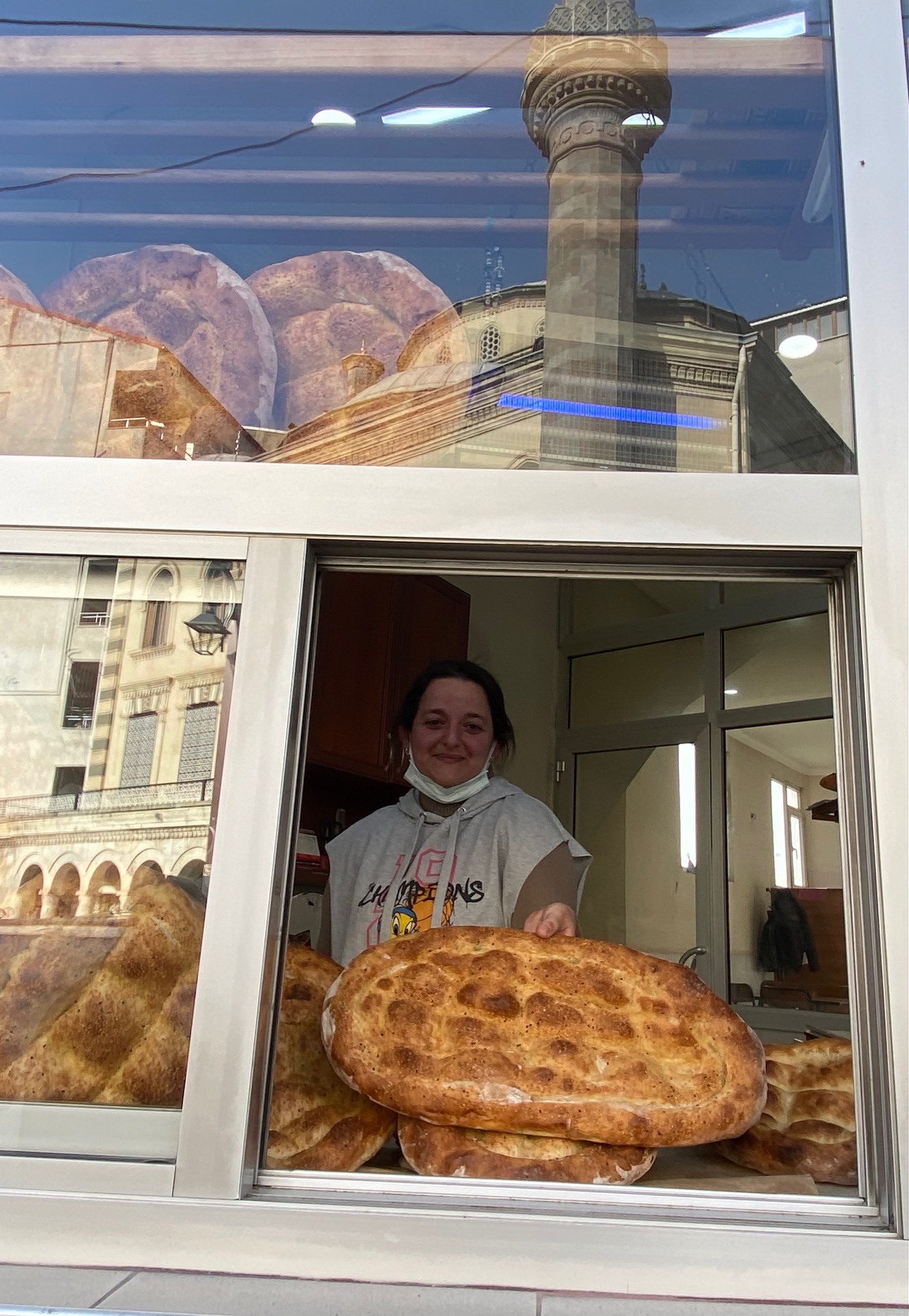
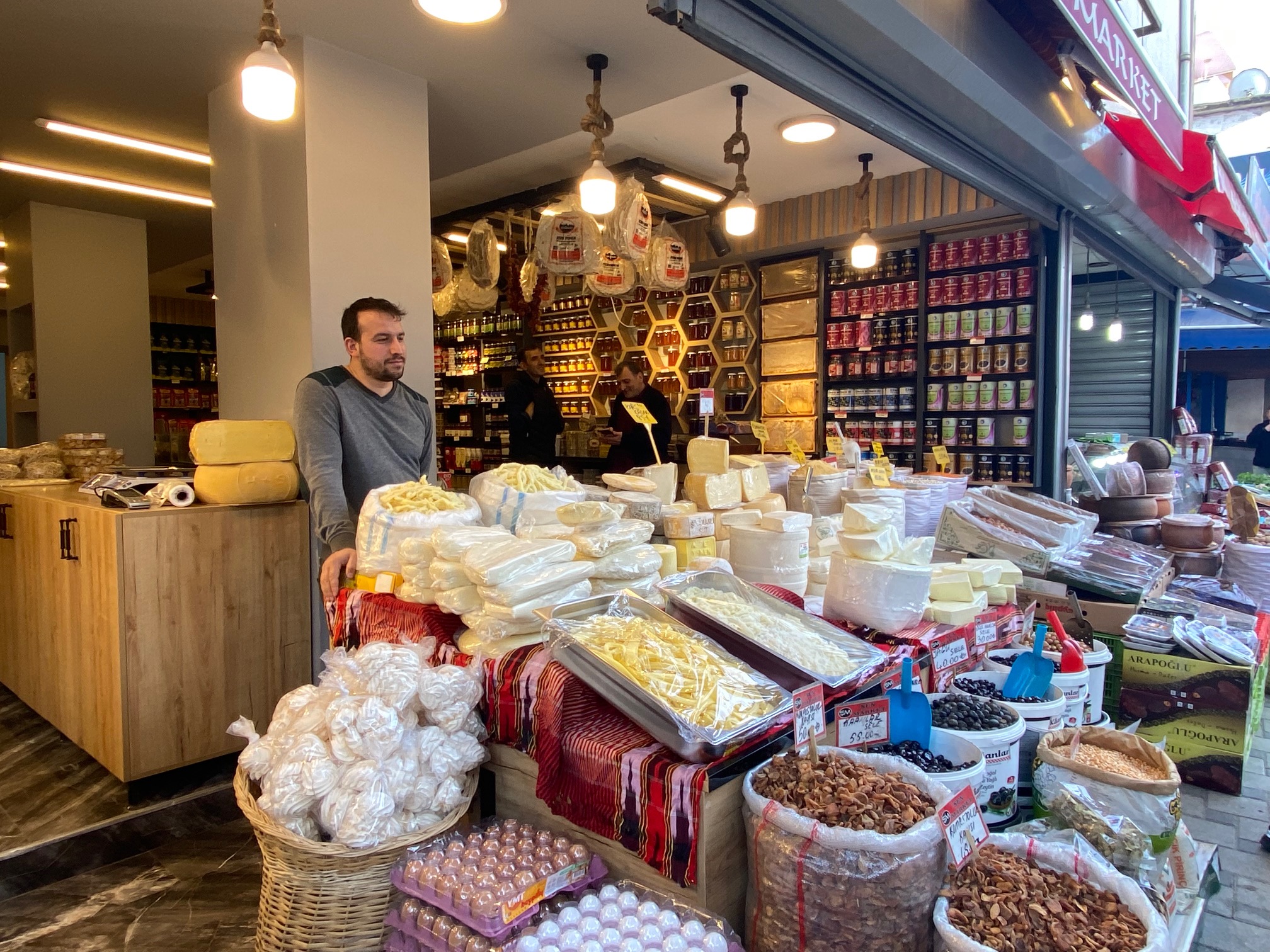
There are many reasons to travel, but the best is local people I’ve met along the way. These interactions are rich experiences that I will never, ever forget. From now on, I plan on posting pictures people and will include how we ate together, laughed, reached out beyond our differences to find a common core. I hope to catch the glitter in their eyes or perhaps a tear. Look for passion in their faces. These are a few of the people I met in Turkey.
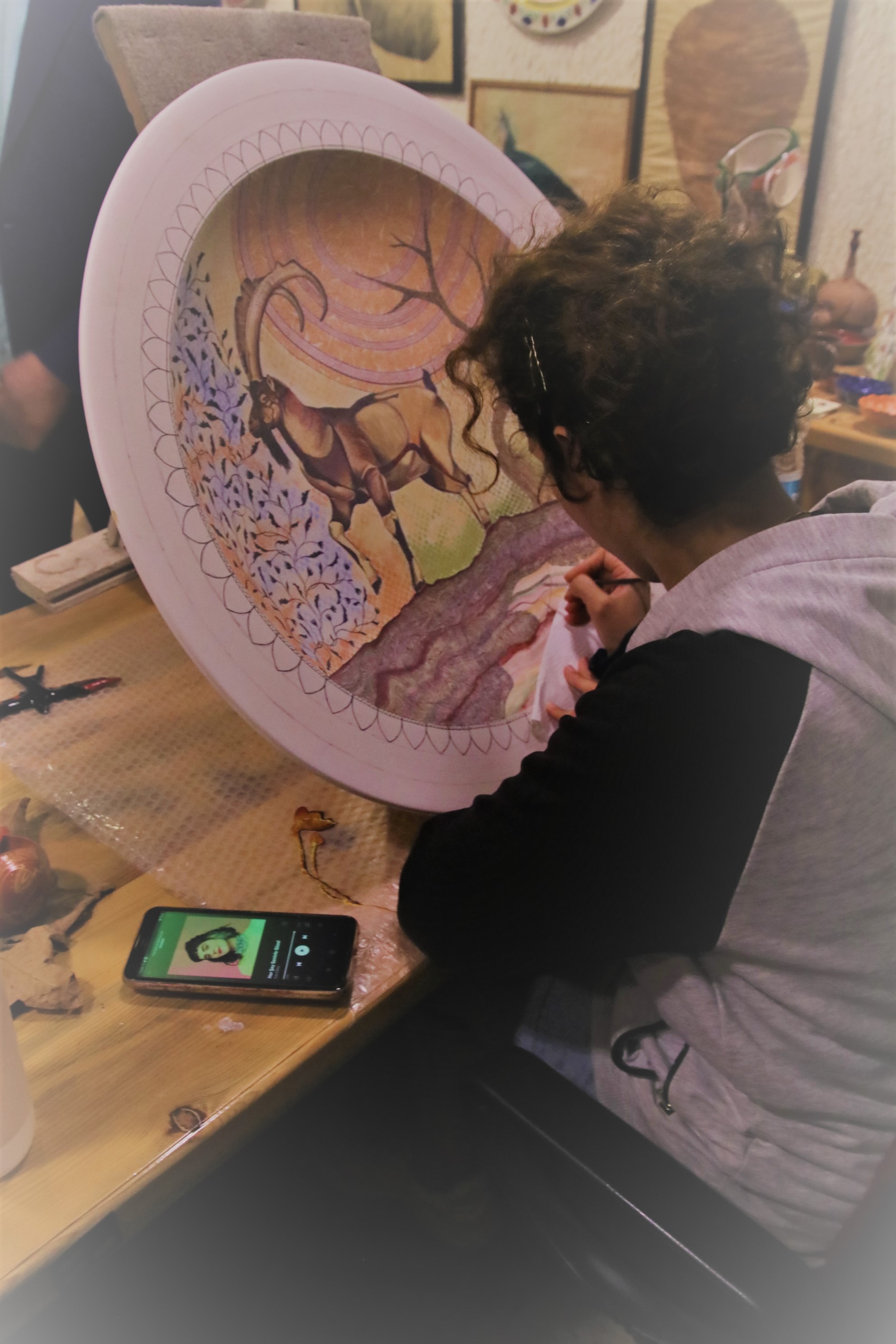
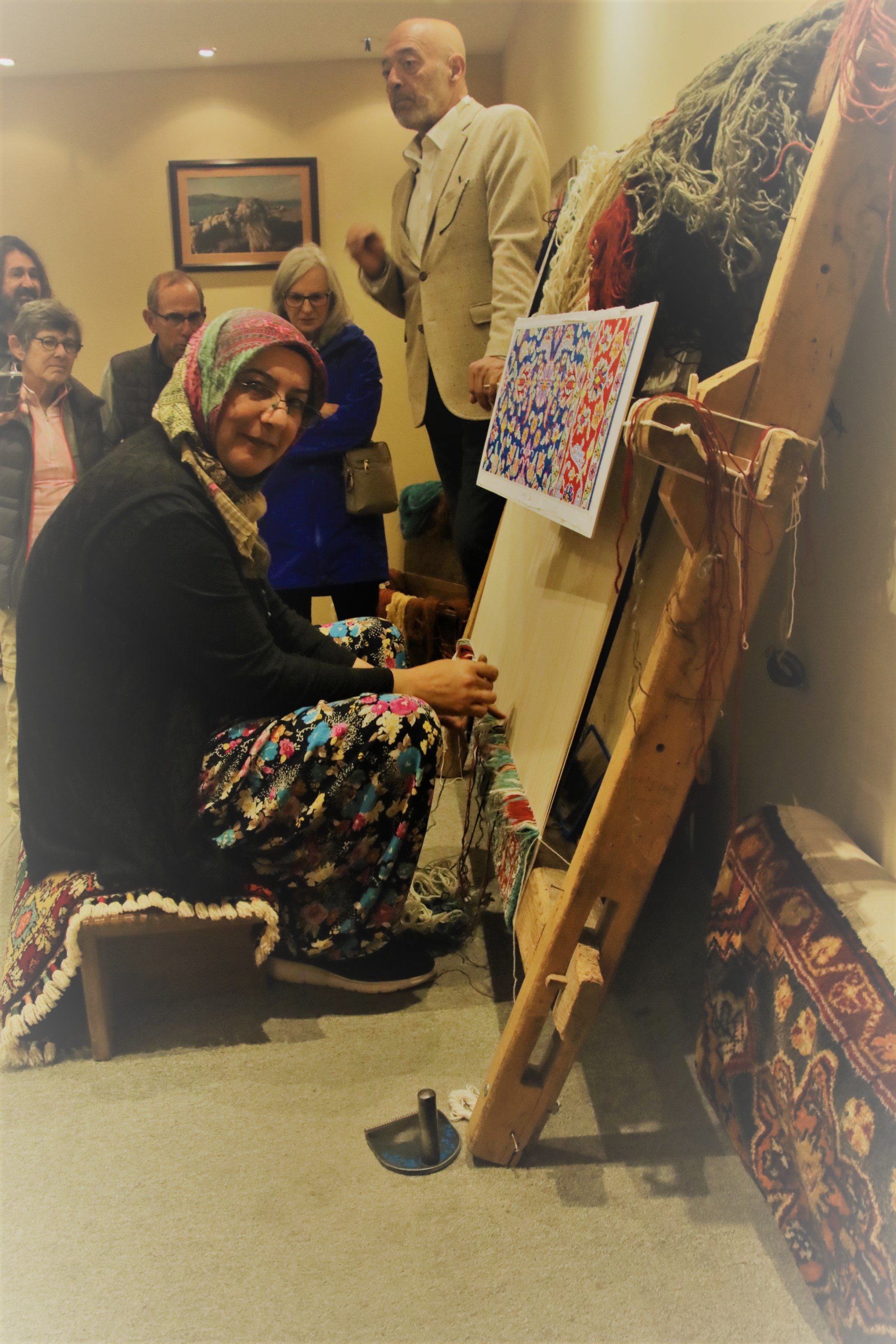
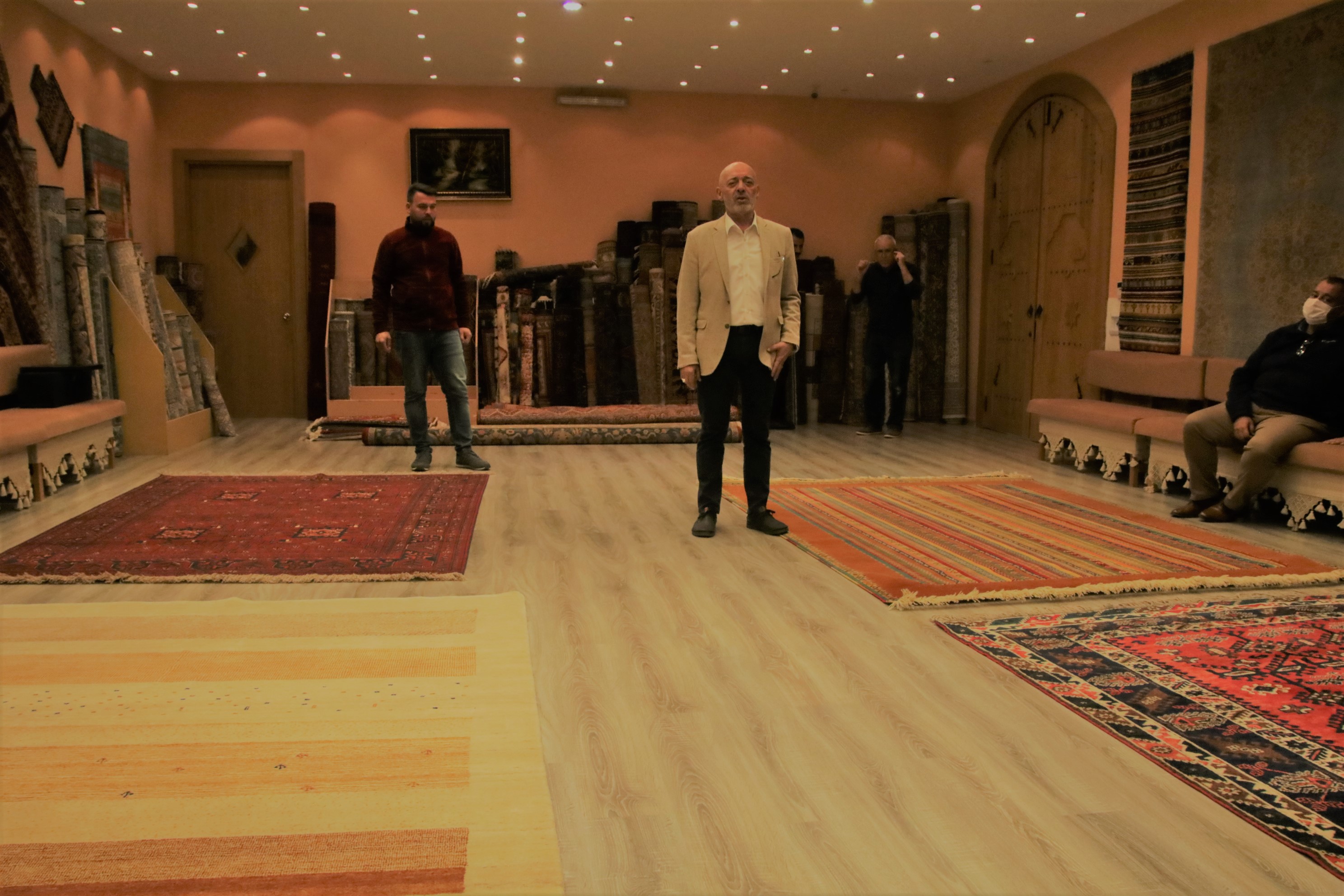
From upper left: Near Cat Village, Irfan Yuzer and his family grow grapes for wine in a hostile environment. They had us over for the best homemade breakfast and shared their dreams, hopes for their 3 daughters and talked about the difficulty for farmers across the globe. Since Covid, Mrs. Yuzer is back in school working on a degree. The next 3 are artists who hand glaze pottery using tiny brushes. The next two are from a women’s coop (NGO) for rug weavers, which is becoming a lost art. I learned so much about wool and silk, to dyes used, to knot counts for quality rugs. This coop kept the women working all through COVID and the government supplemented their craft.
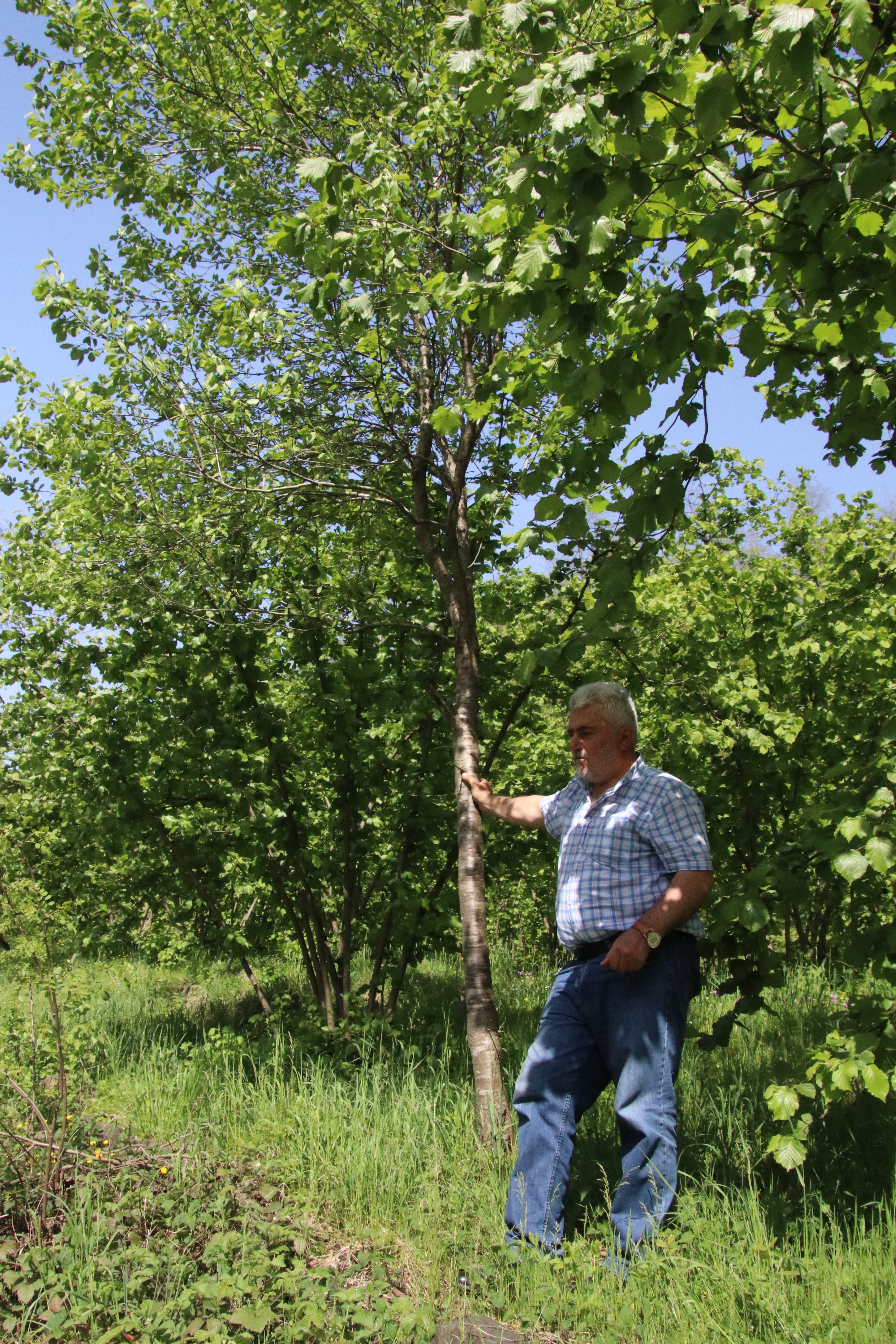
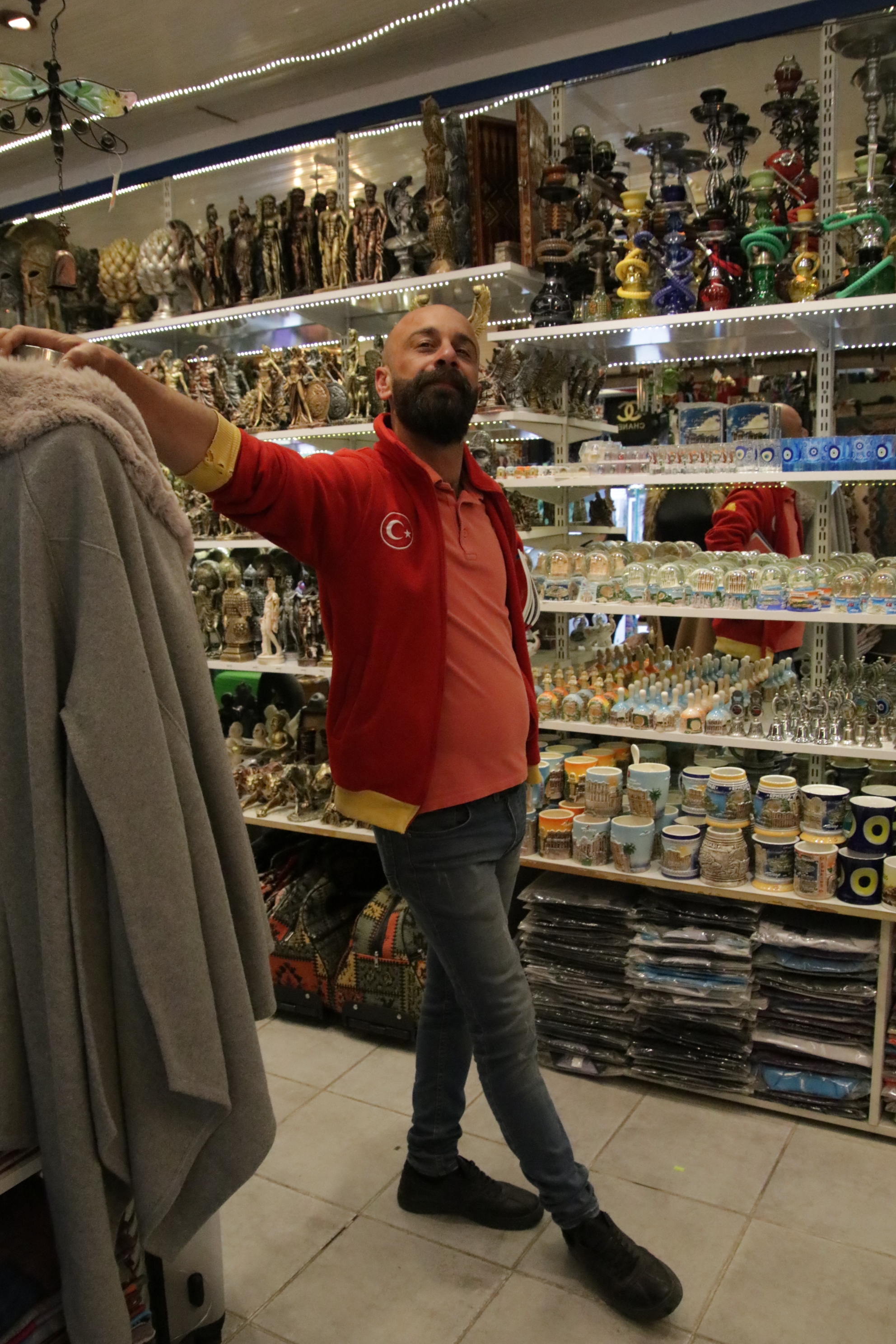
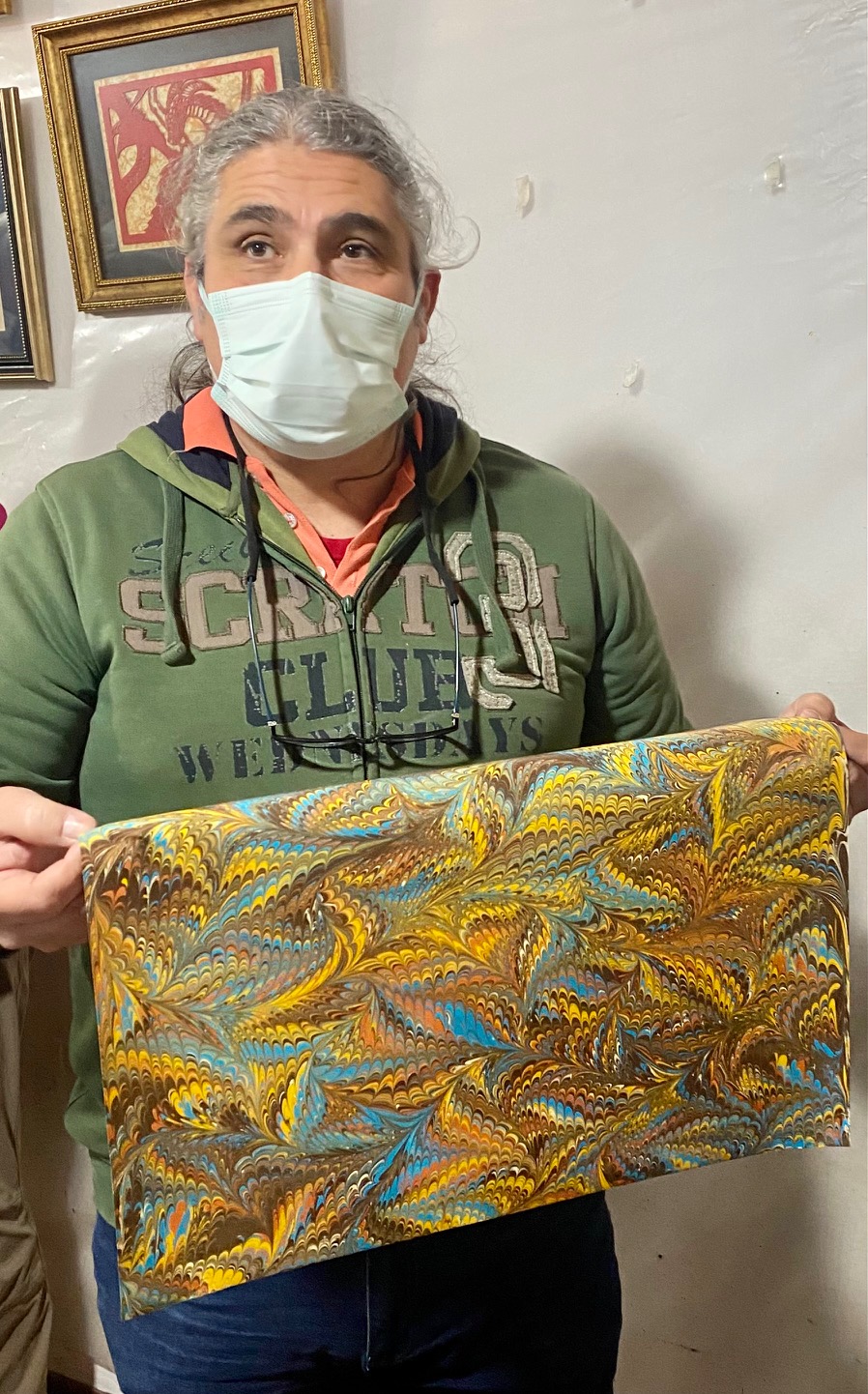
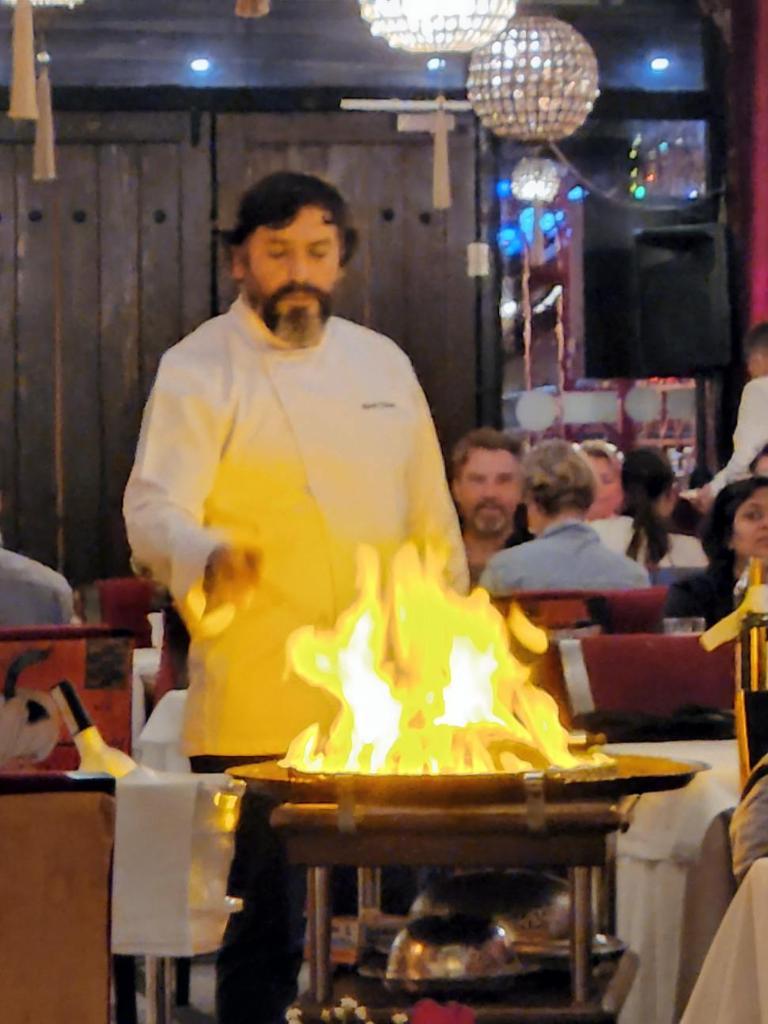
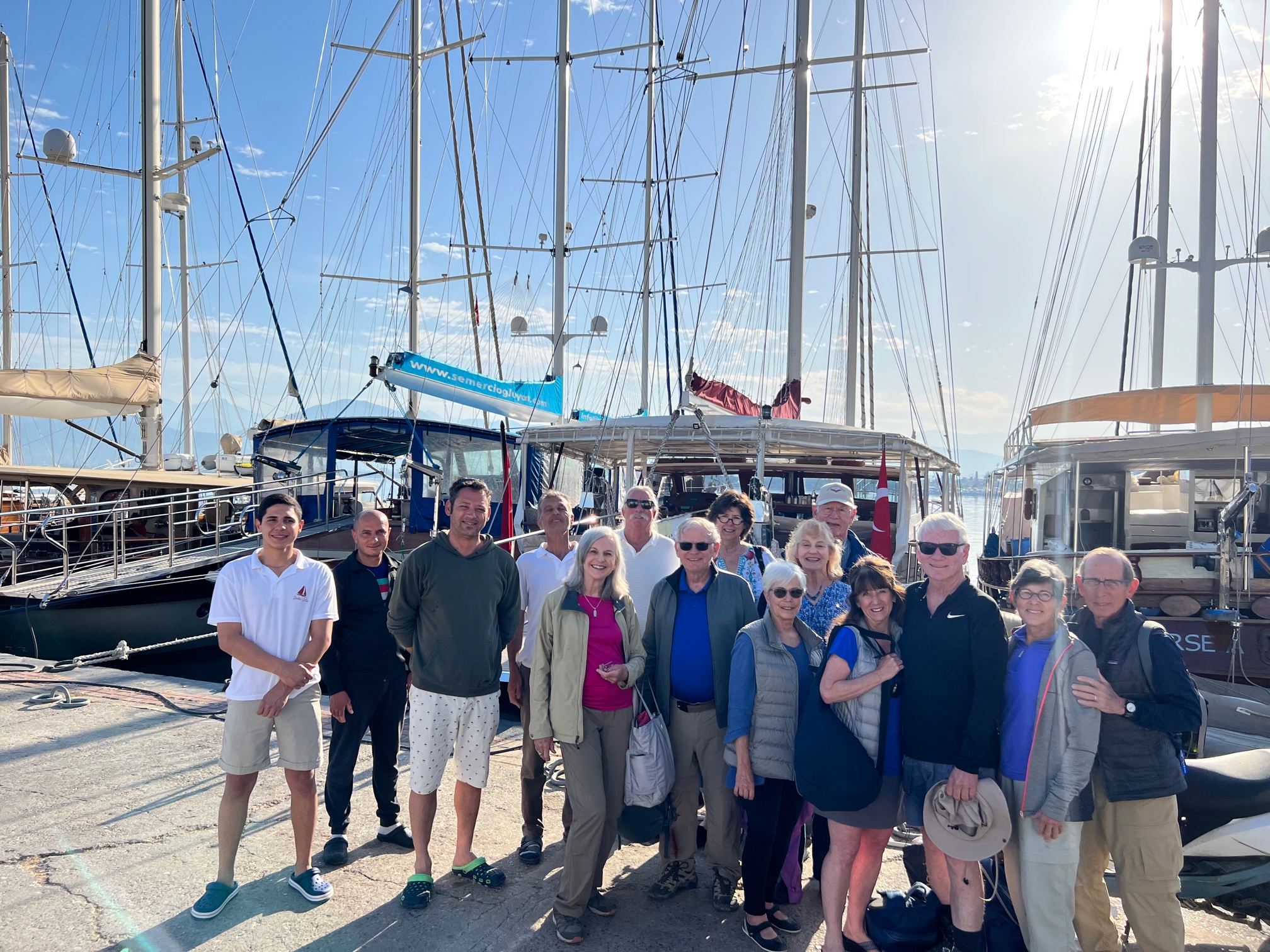
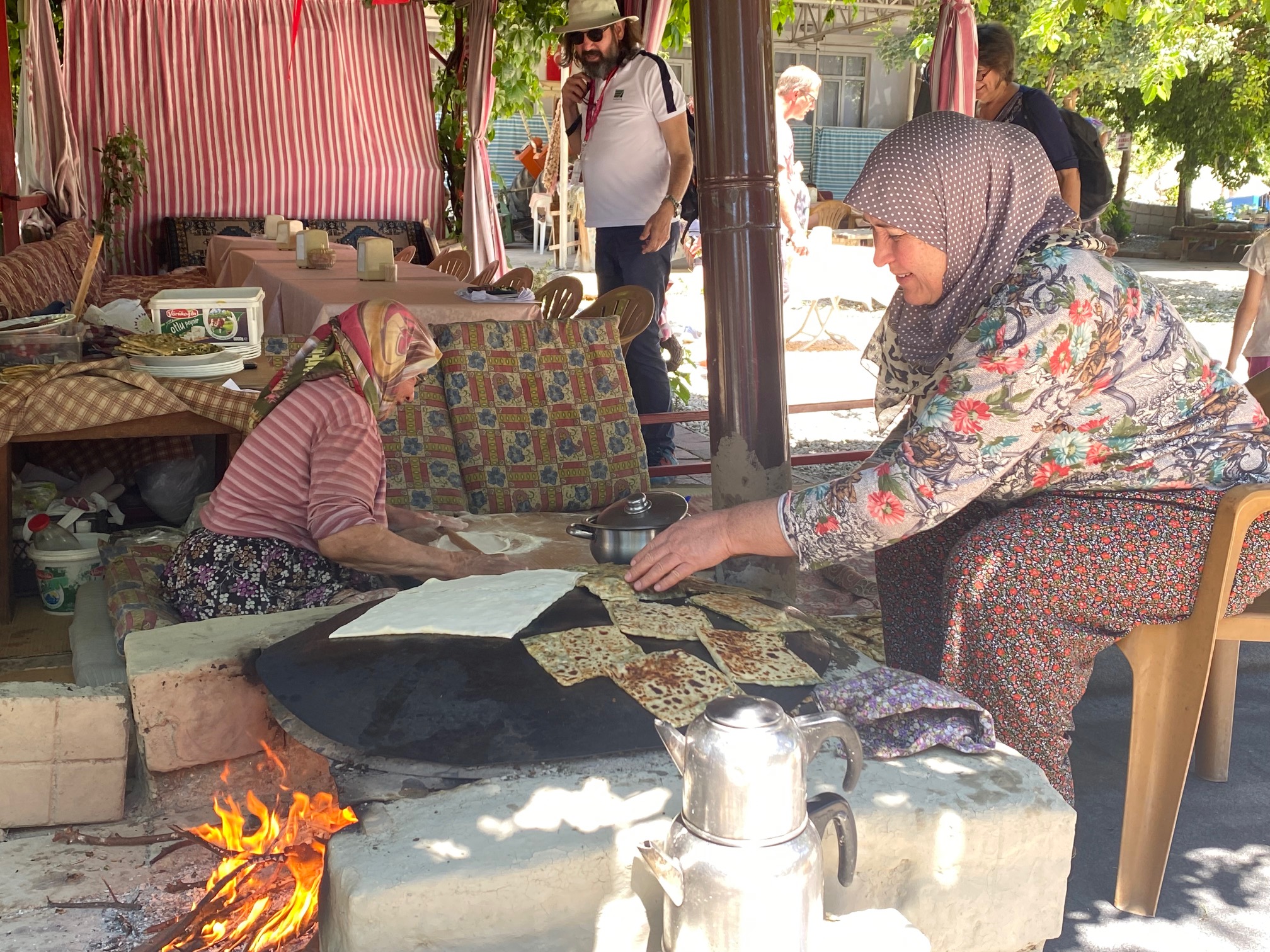
In the Trabzon area there is “an ocean of Hazelnut trees” that cling to every steep hillside. We met this local man who explained about growing and harvest. The next picture is a cheeky employee at a tourist shop who had fun posing for me. Negotiating is an art that works better when you have fun ! 3rd: Artist Ebru Kursu. Right: Chef Necati Yilmaz in Istanbul ( near Hagia Sofia). This is one of his special dishes, duck encased in salt. After flaming, the salt case is hammered away exposing the cooked meat. Necati owns Deralliye Cuisine where he replicates meals served in the palace to the sultans. bottom left: We ate a homecooked lunch in Ceceva Village, high in the mountains where this family grows tea. Upper right: What a fantastic crew on our Gulet ( traditional boat) named Sadri Usta. Bottom right: We stopped for a great lunch here. Ladies were making grilled flatbread with spinach and cheese. Dish is called Gozleme.
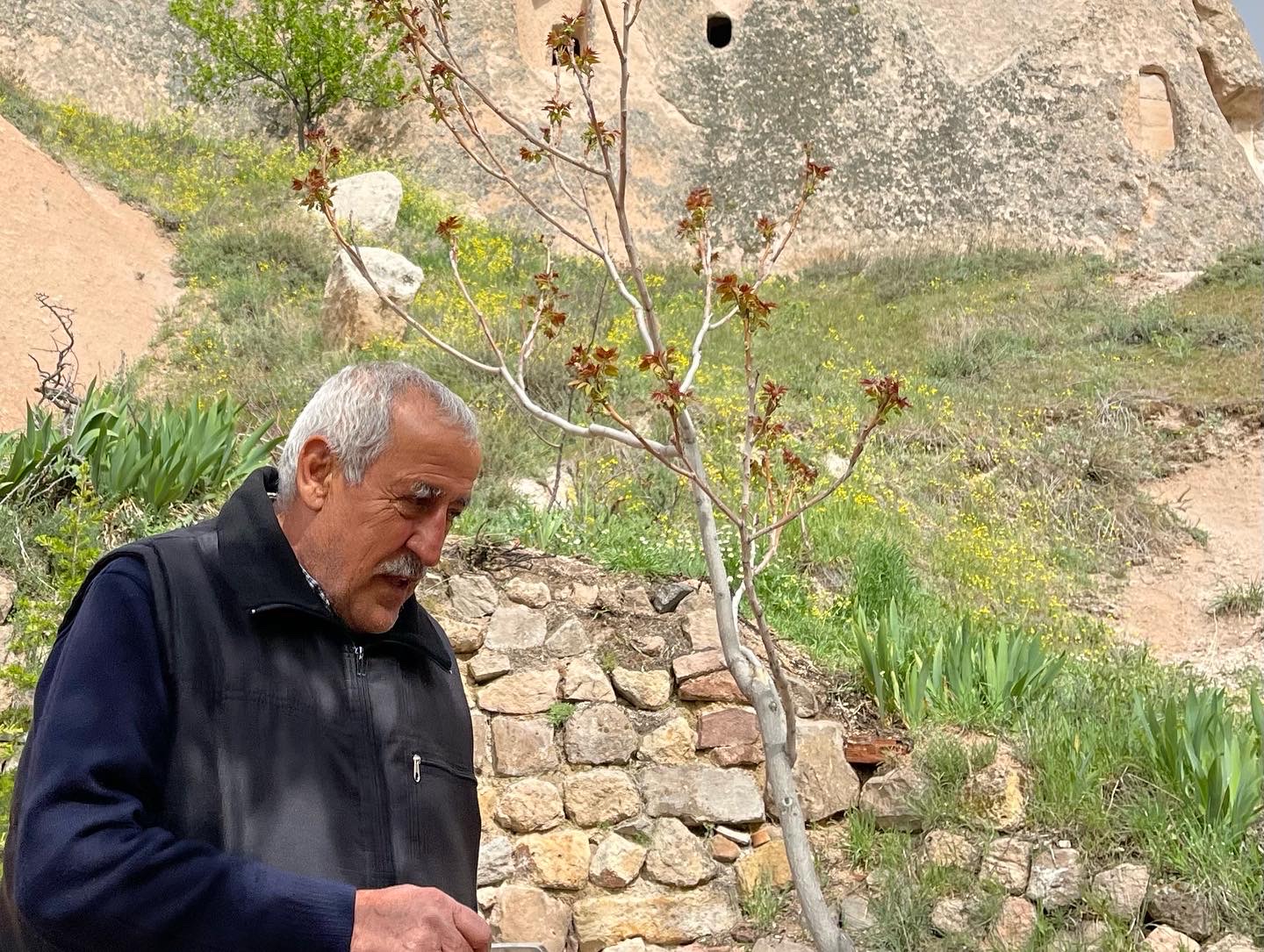
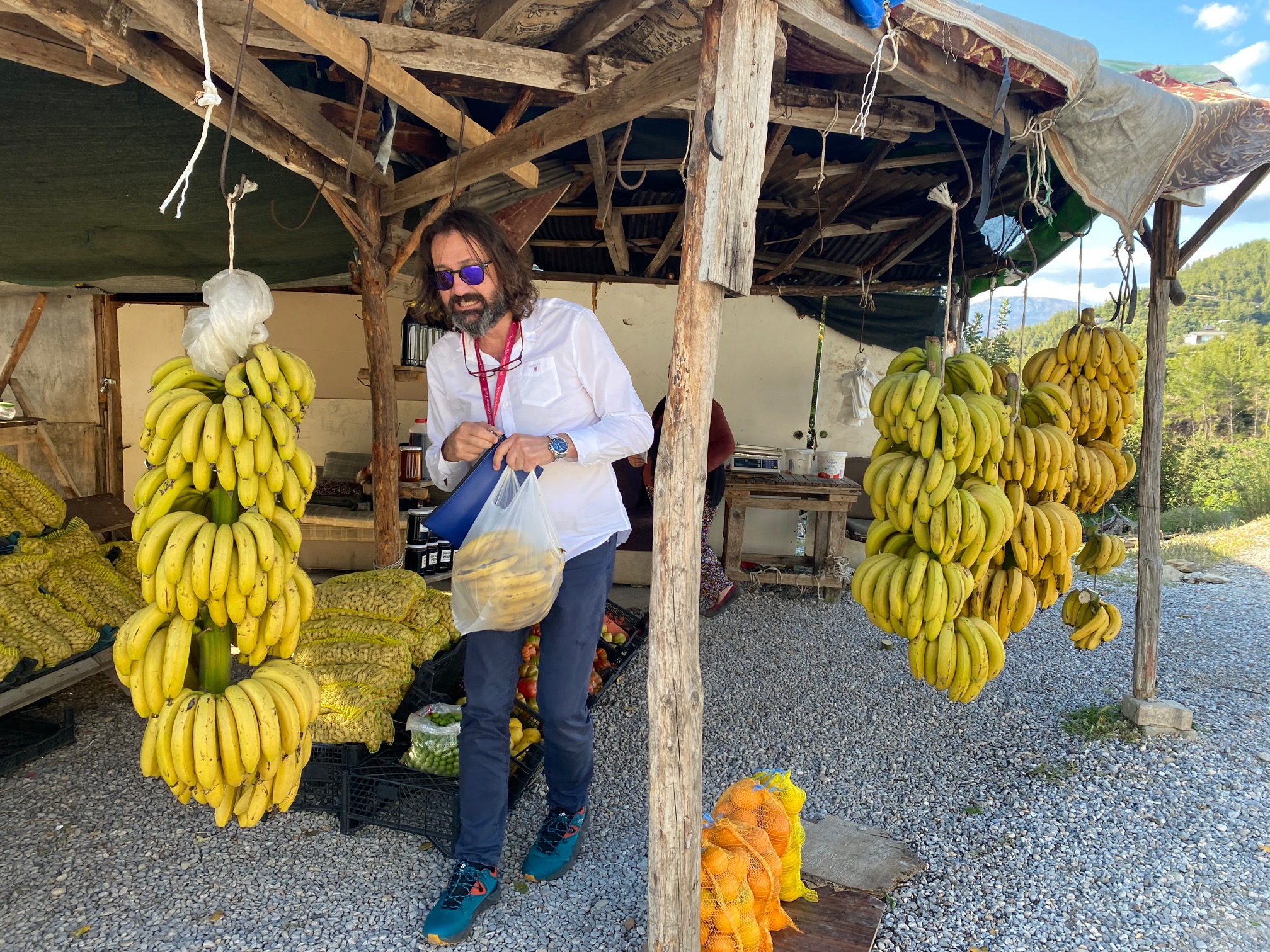
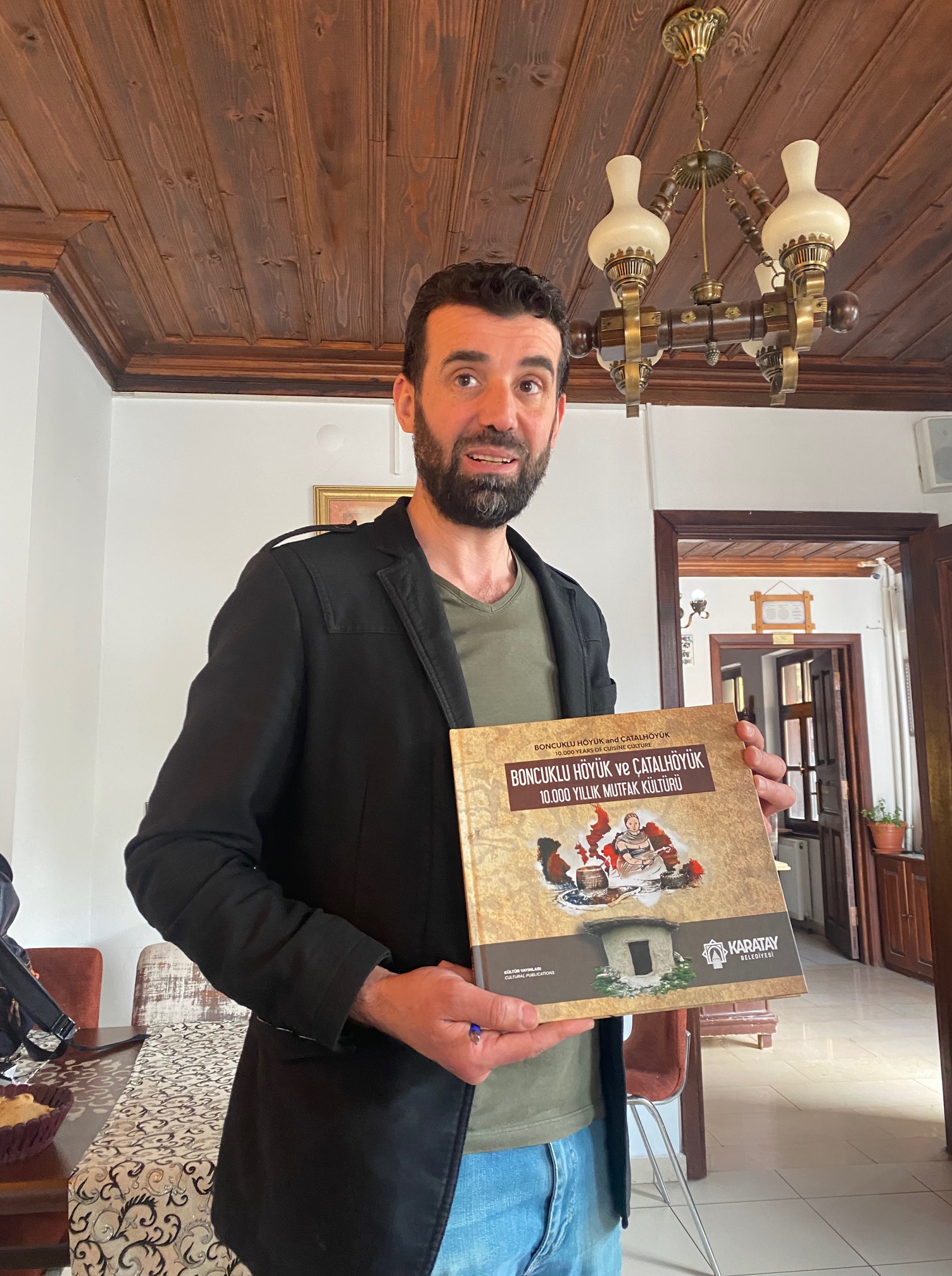
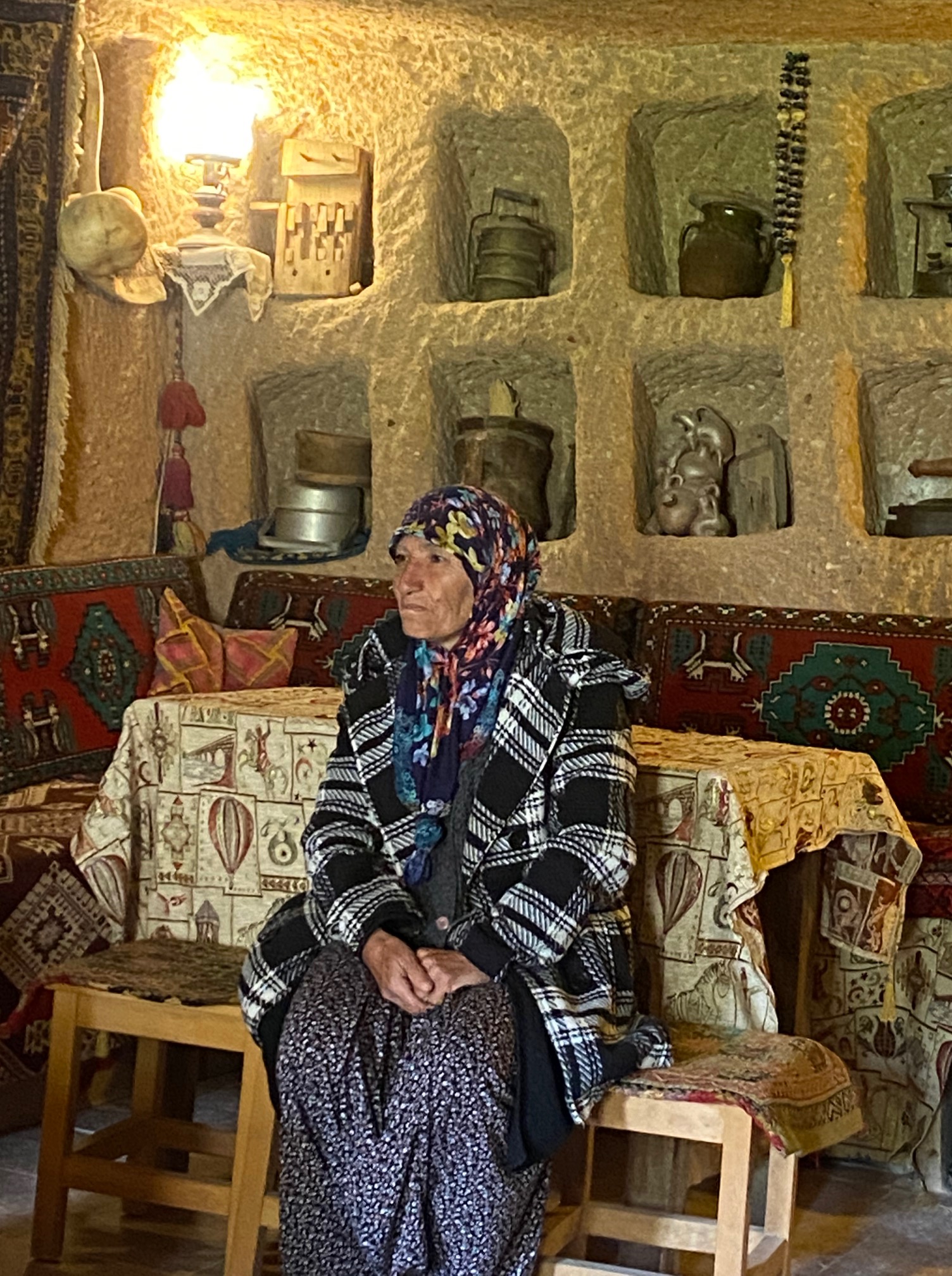
On the upper left: Ismail is the 5th generation to be living in a fairy house in the Cappadocia region. In the middle is a picture of his wife. Bottom left is our fearless exceptional tour guide, Aykut. He stopped at a roadside fruit stand to buy us some Turkish bananas. Next is Somatci Restaurant owner who just won an award for this book containing ancient recipes. Ismail’s wife is far right
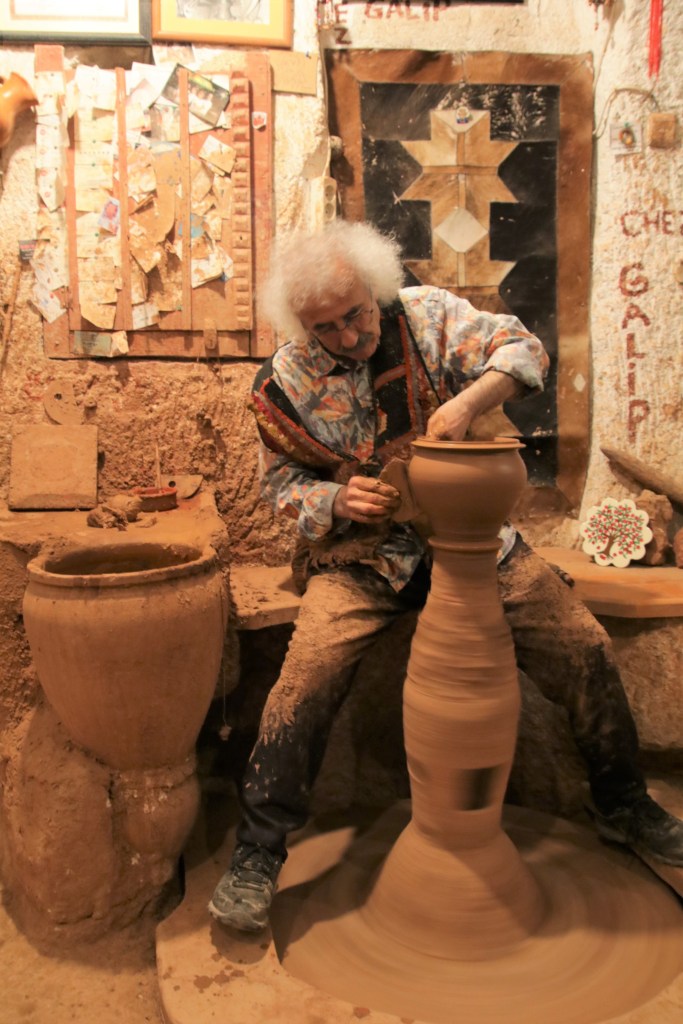
Last is Galip pottery’s 5th generation master. He trains new potters from around the world in his studio in the Cappadocia region. Yes, he does look like Einstein! Check out Chez Galip.
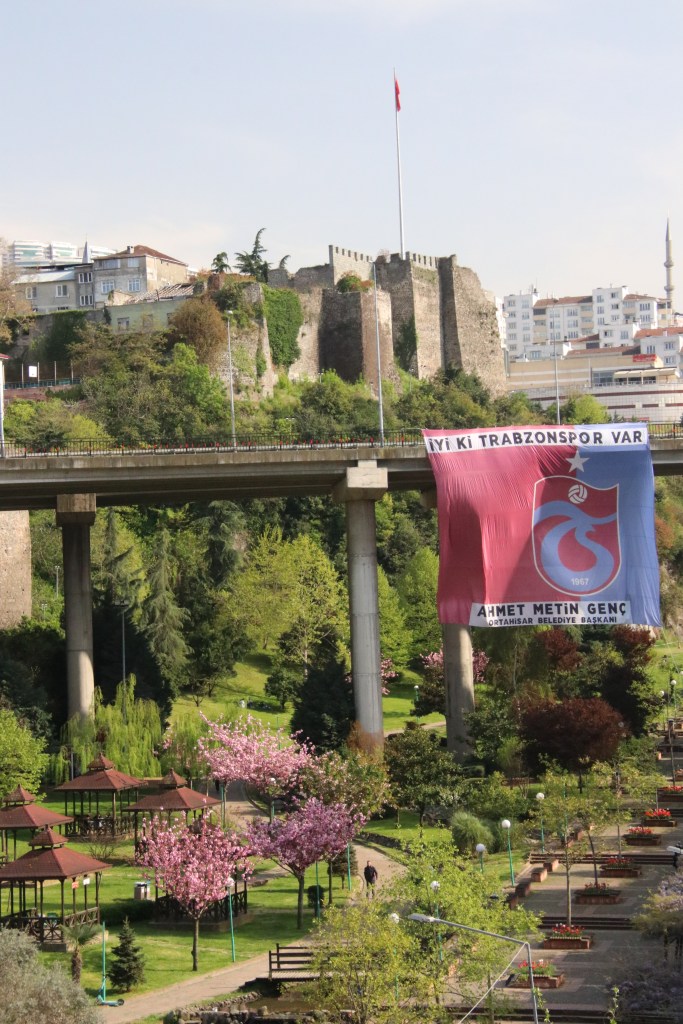
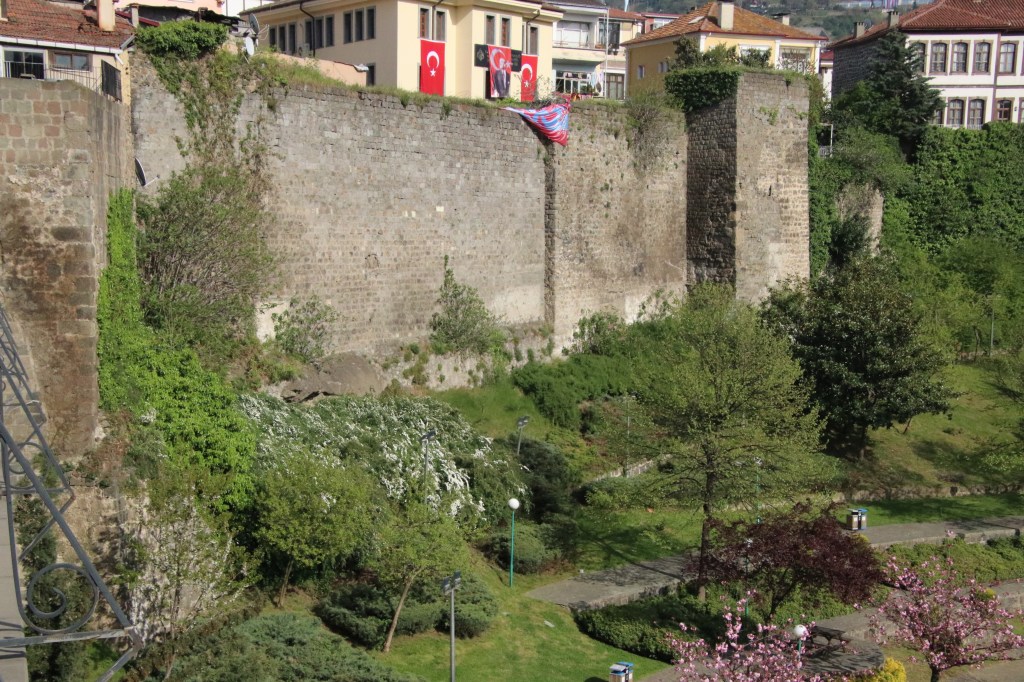
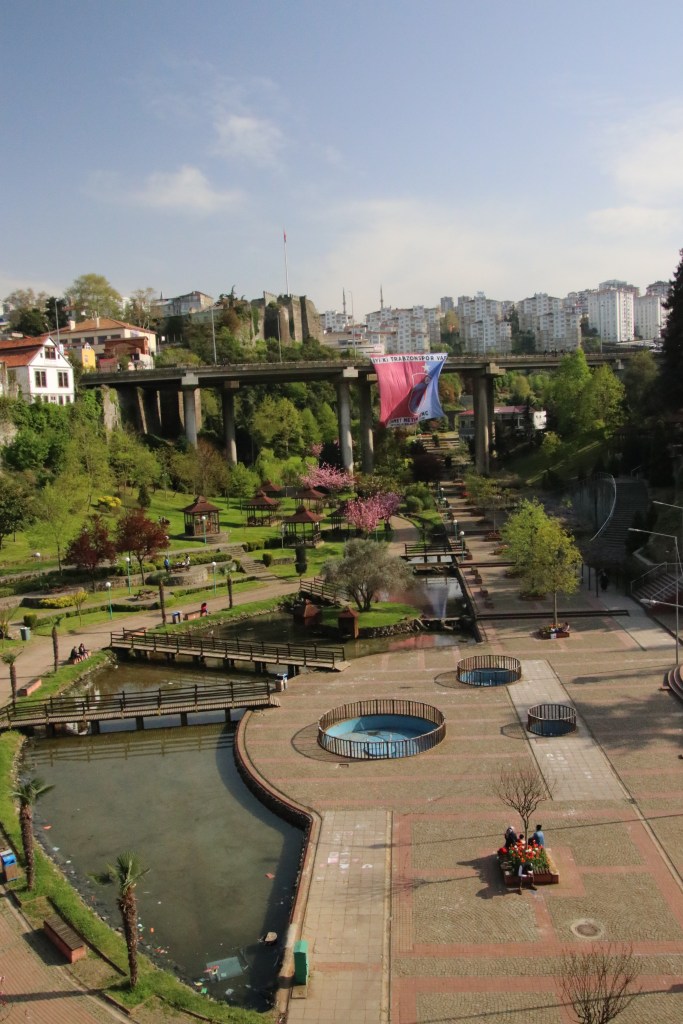
Trabzon is nestled in a lush green valley hemmed between mountains and the sea. Flags were draped everywhere for their football team, Trabzon Spor. Even though we visited during Ramadan, there was an undercurrent of excitement for the upcoming final game where they cinched the National title.
Typical of anywhere in Turkey, Trabzon has a long, distinguished history starting as a Greek settlement in 756 BC. Justinian expanded the Roman defenses in the 6th century and the fortress walls still stand. Today, they form a backdrop for the beautiful Zagnos Valley Park.
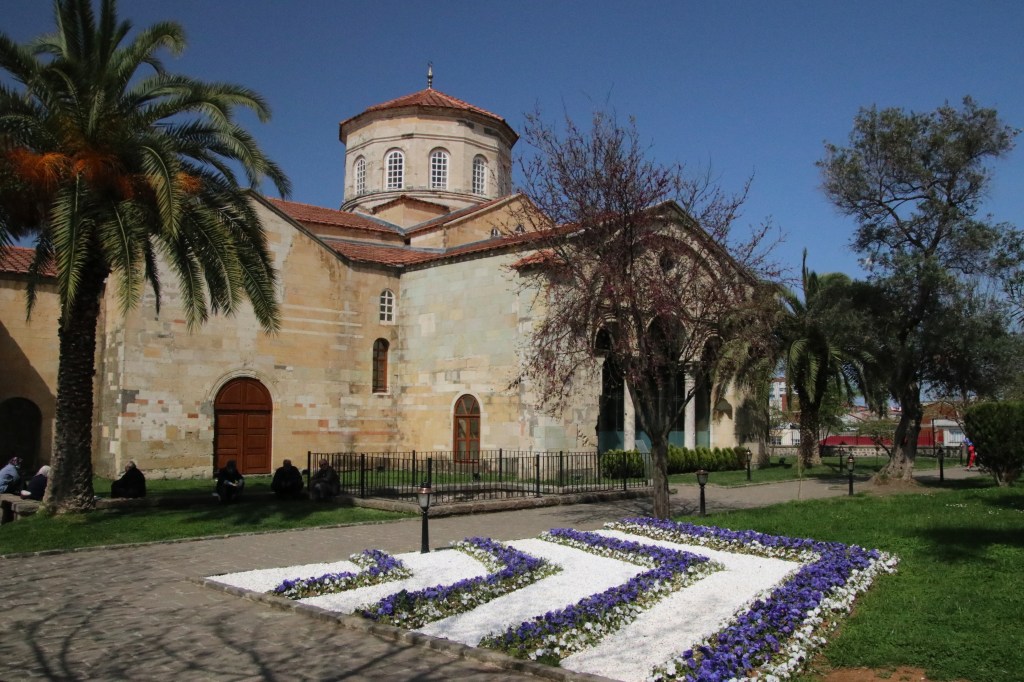
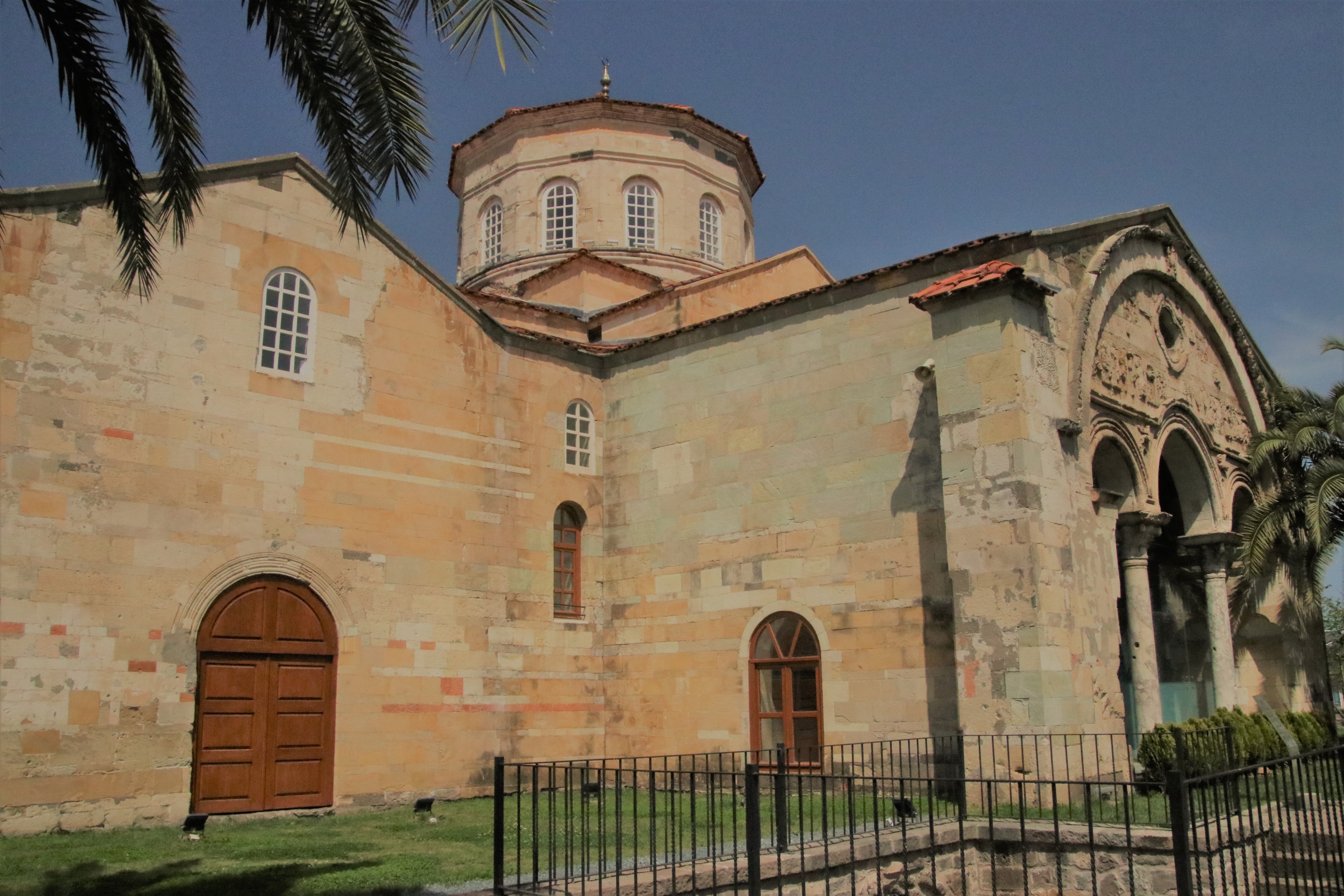
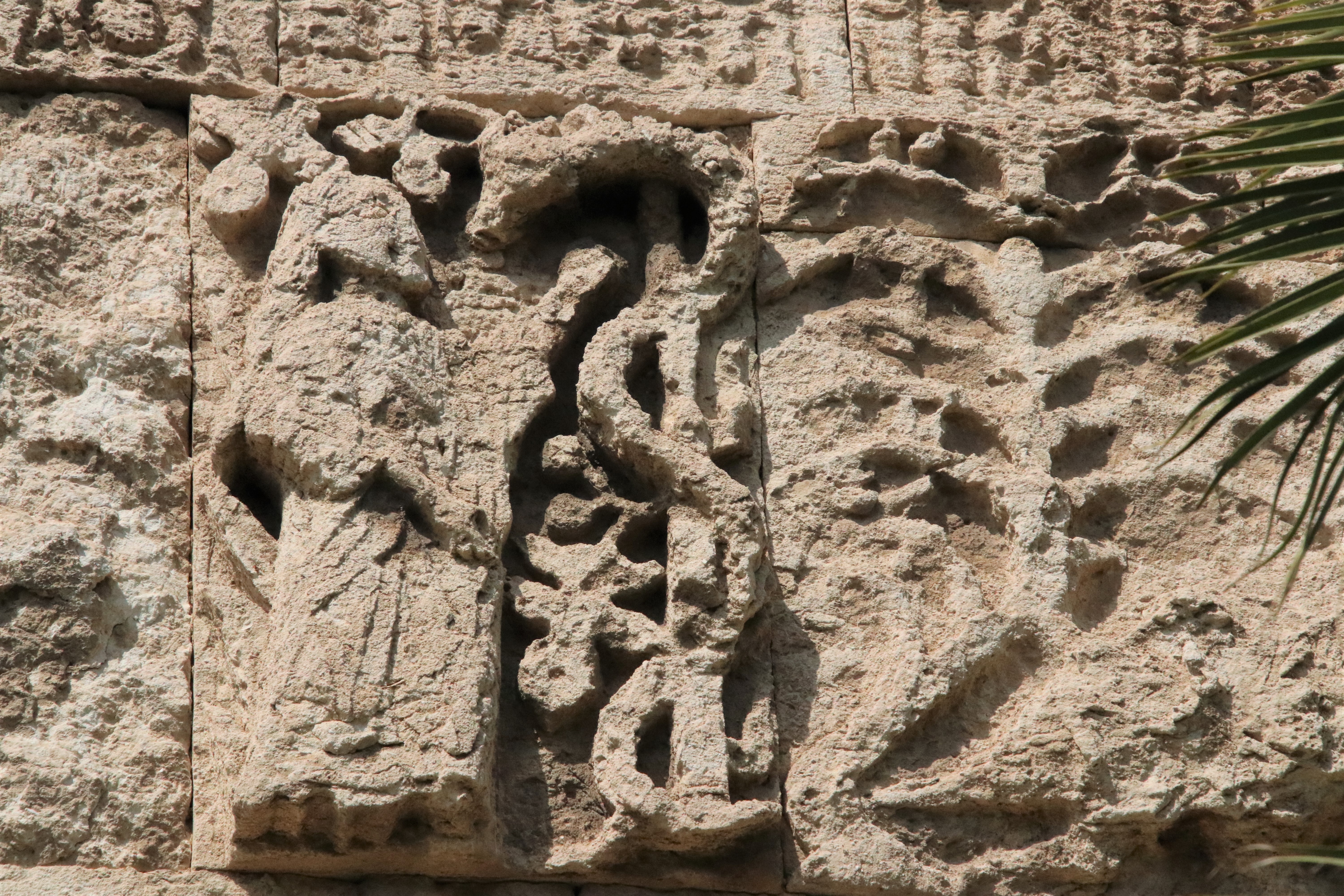
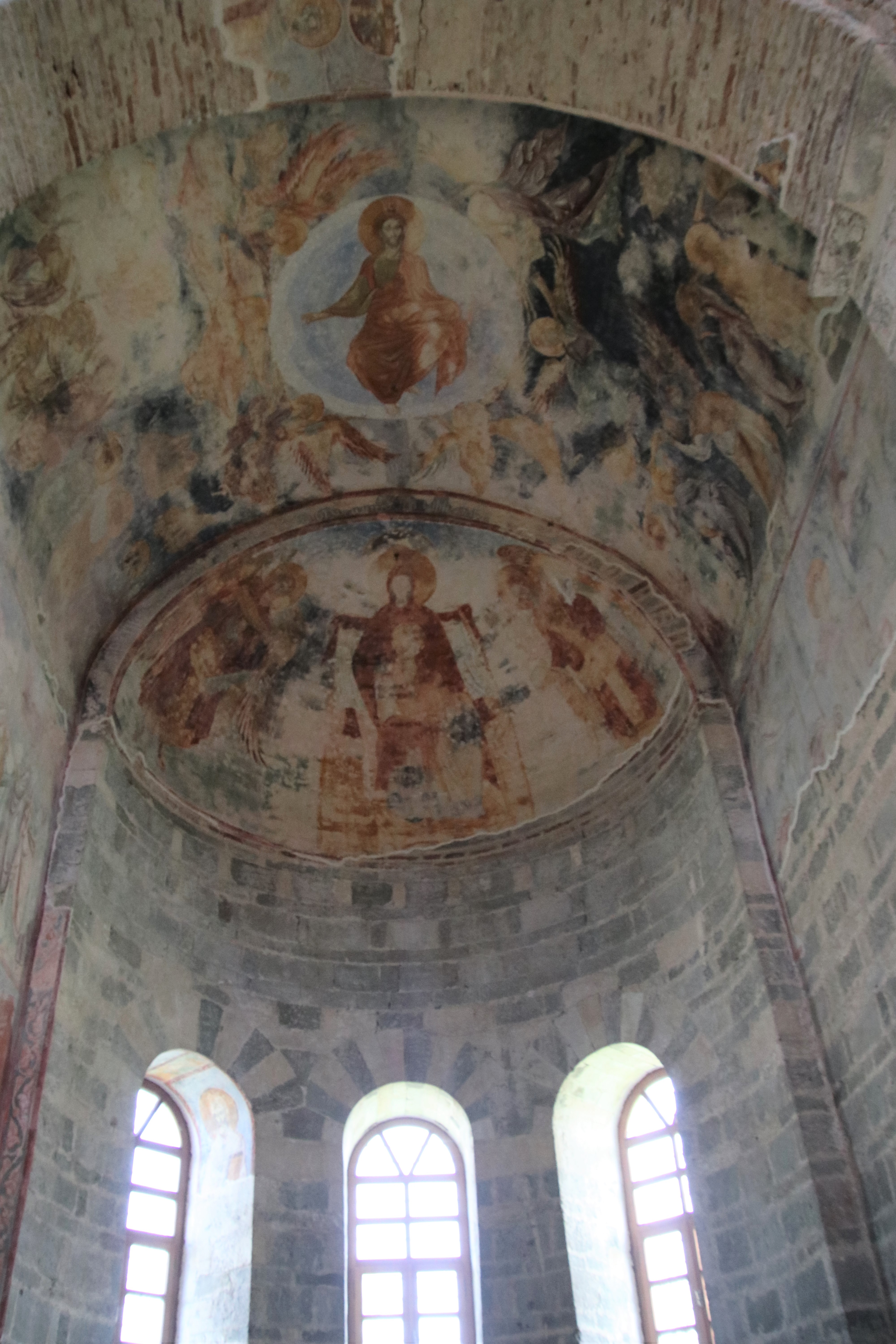
When Istanbul and #1 Hagia Sophia (Aka: Holy Wisdom Church) fell to the Muslims, the Orthodox faithful escaped to Trabzon and built #2 Hagia (out of 3 total) in the year 1260 AD. The beautiful frescos remain, even though this is a mosque ( and has been on and off since 1584) where depictions of spiritual faces are not tolerated during prayer . It’s a miracle that this survives today. I love the painting of Jesus without a beard, which would have put him at the age of 12 when He was teaching in the Temple.
DRIVE TO SUMELA MONASTERY
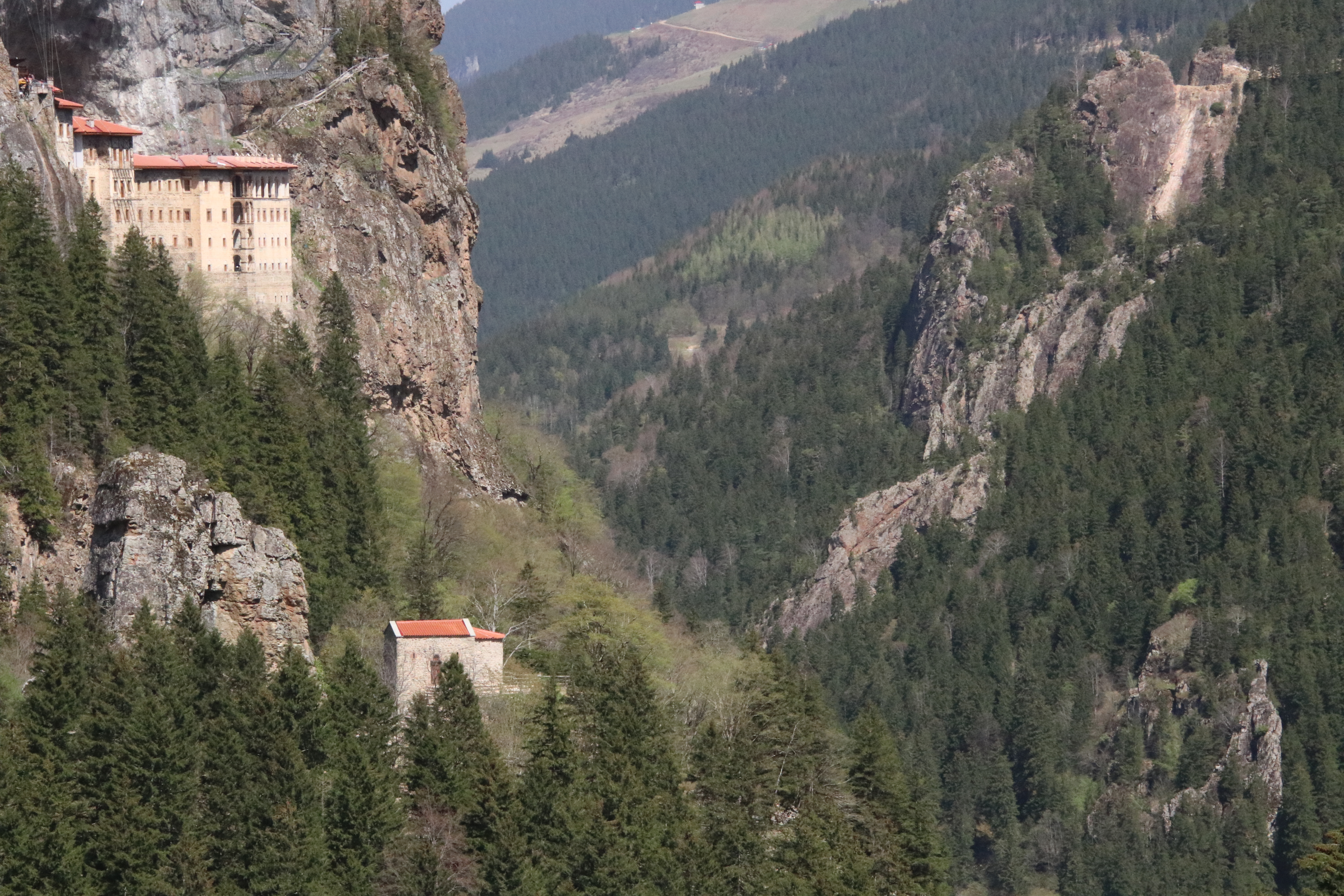
The 4th century Sumela Monastery is about an hour drive from Trabzon through dark green forests that rise up the Zigana mountains to snowy peaks. It’s May and waterfalls thunder with ice melt. The spray catches rainbows in the afternoon sunshine.
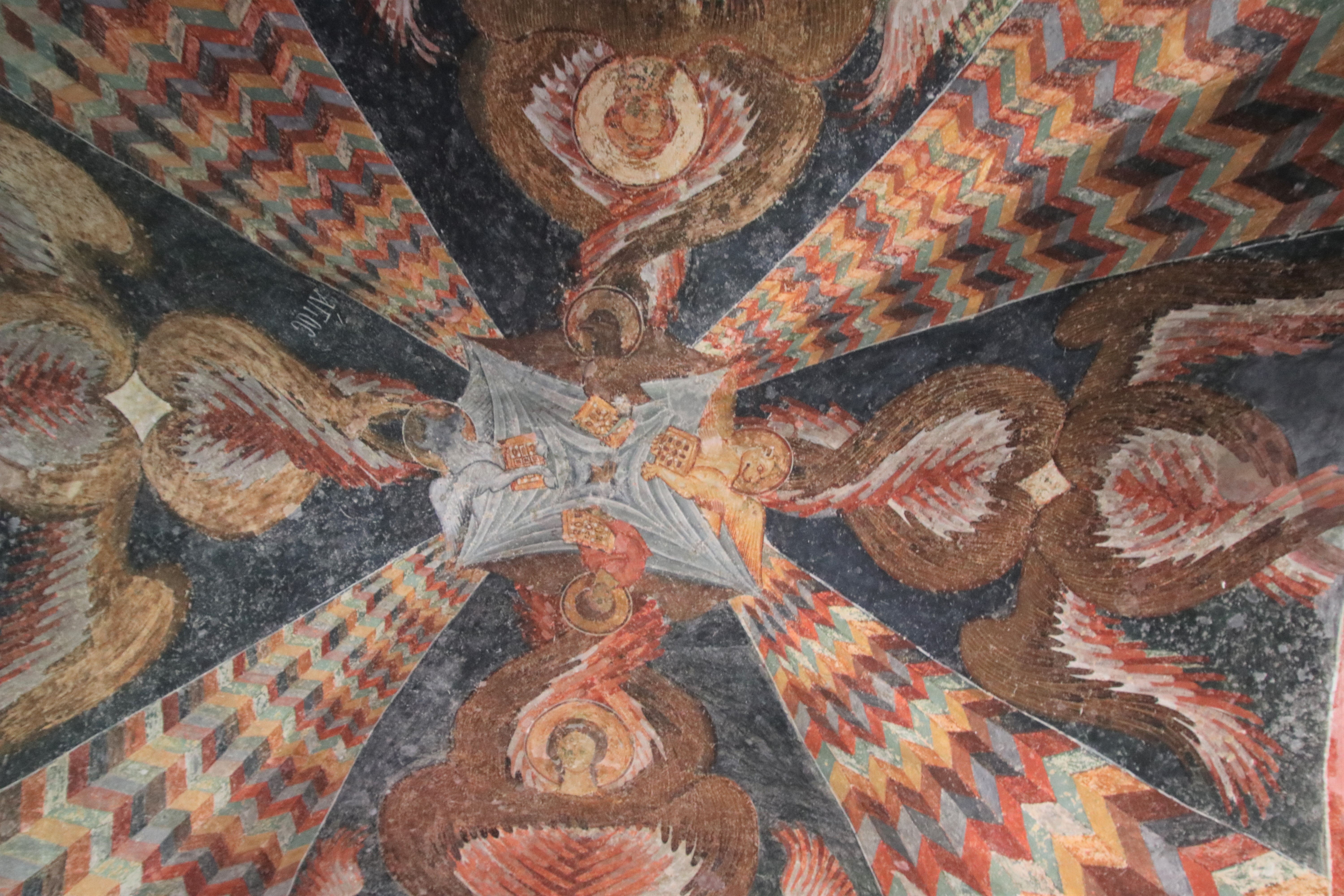
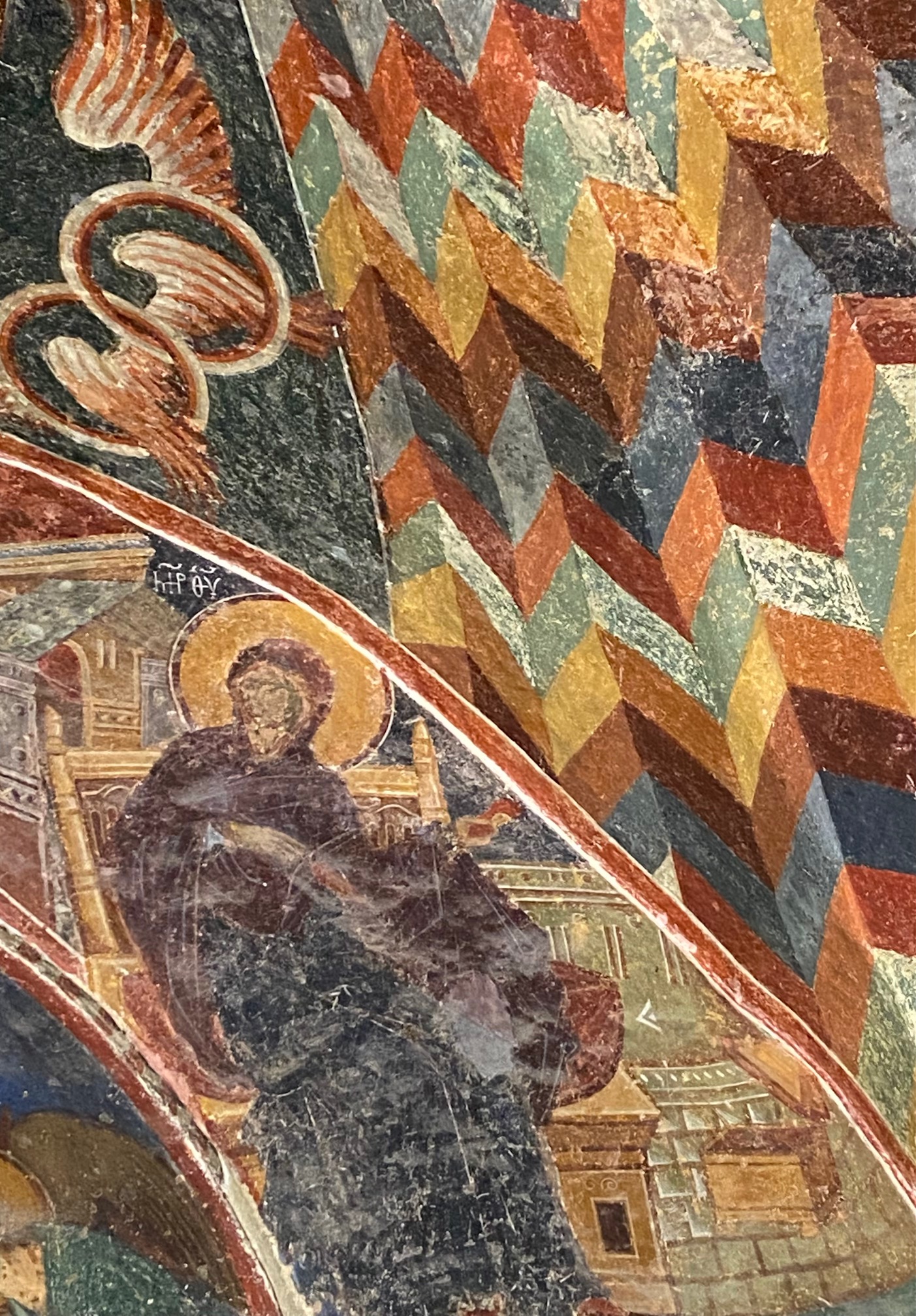
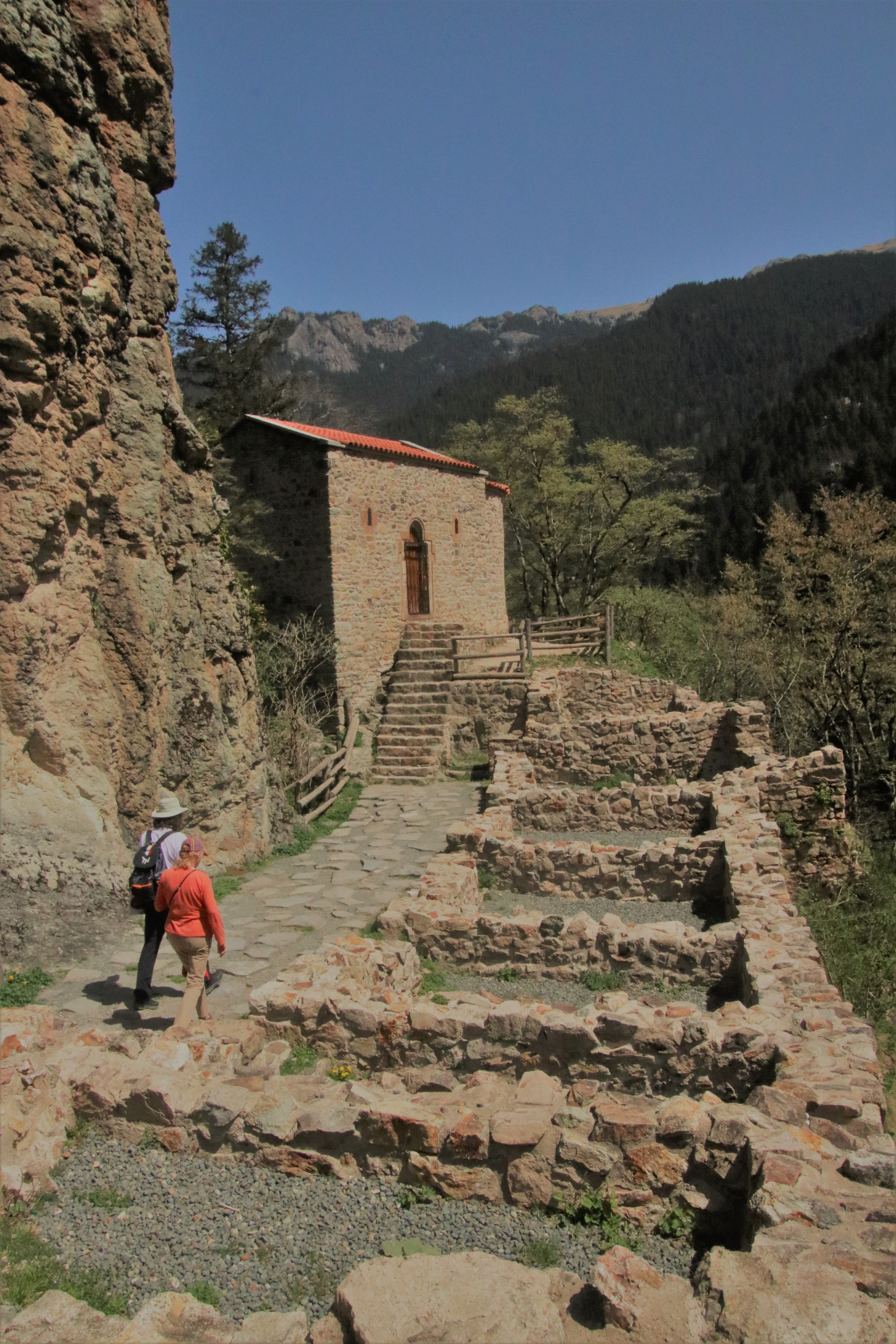
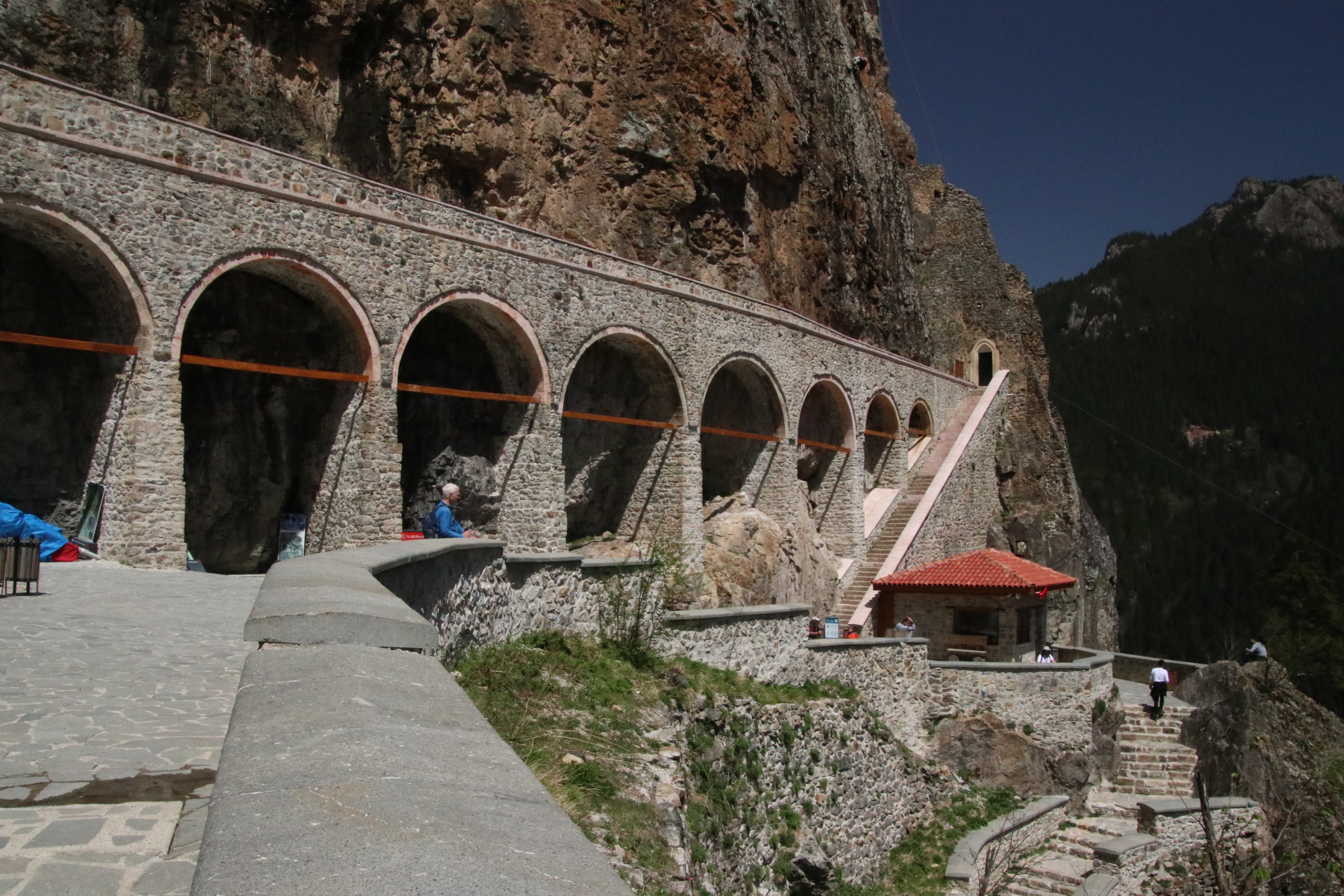
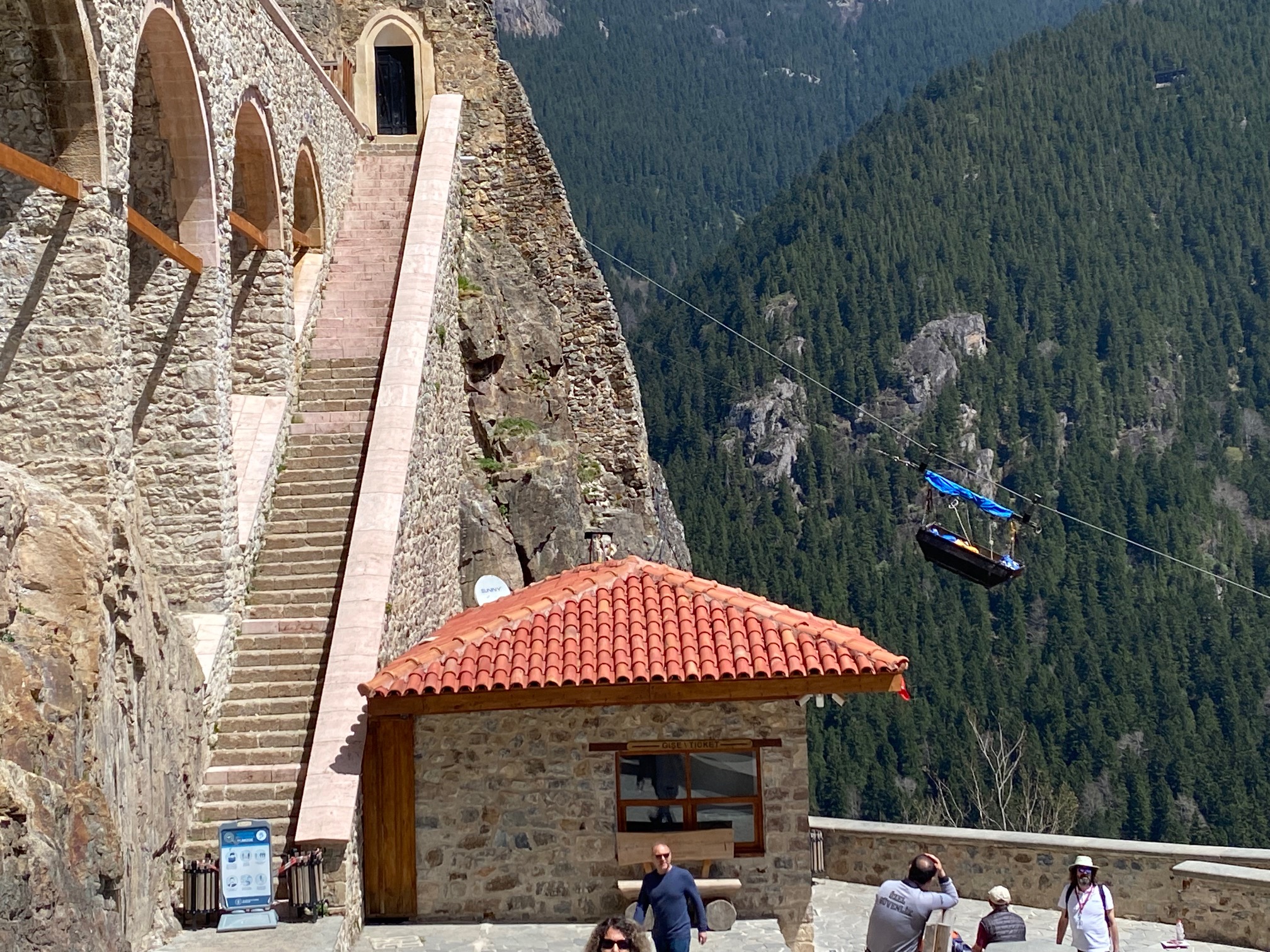
Sumela means virgin of the black mountains and was built into a cave decorated with frescoes. It was already an important Orthodox center when Selim Grim invaded in 1461. He was wounded and the monks healed him which was great– because the monastery was spared. The larger buildings were added in the 17th century. We could not tour inside due to a dangerous rockfall and reinforcement work on the mountain. Still impressive, and the walk in is lovely. Don’t miss the mini chapel and ruins of monk quarters to the right.
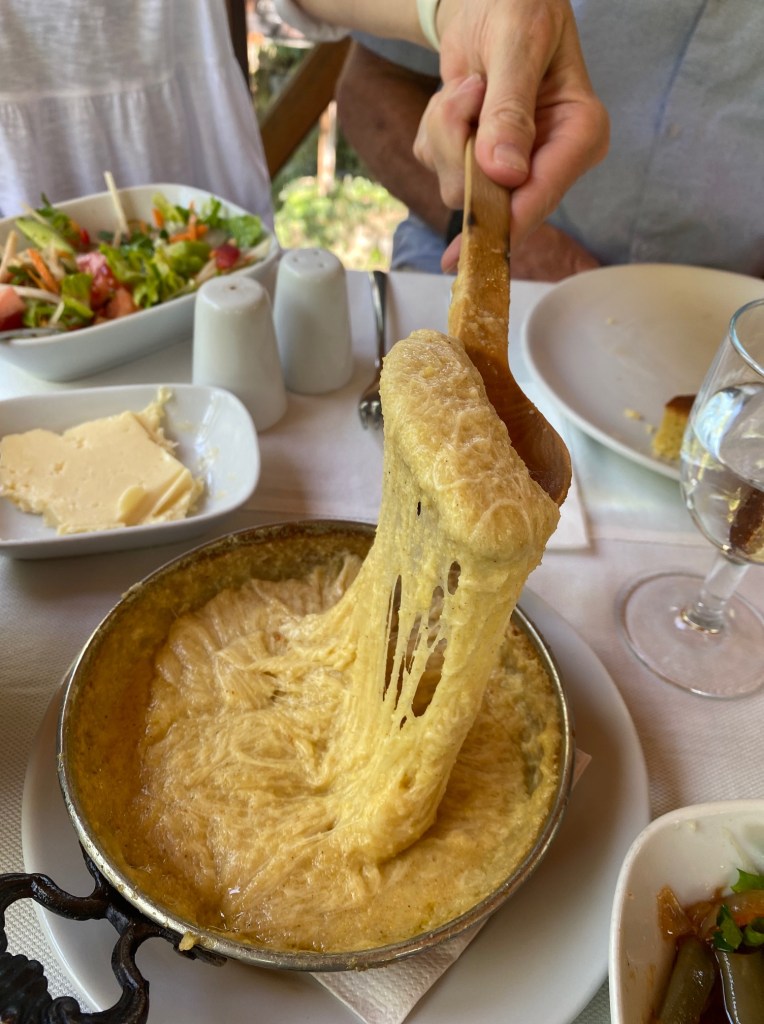
We had a lovely fresh trout lunch at Sumer Restaurant near a rushing creek. One of the dishes we ate was Kuymak which is melted butter, cheese and grain. Kind of like macaroni and cheese with a deconstructed noodle.
Back in Trabzon, wander the old town to see mosques and old wood buildings, visit the silver workshop of Saray Gumus, and wander the pedestrian walkway (Uzun Sokak). Try some Kome ( mulberry paste with walnuts) and Cig Kofte ( bulgur wheat and spicy tomato paste balls served on lettuce). Some impressions of Trabzon below:
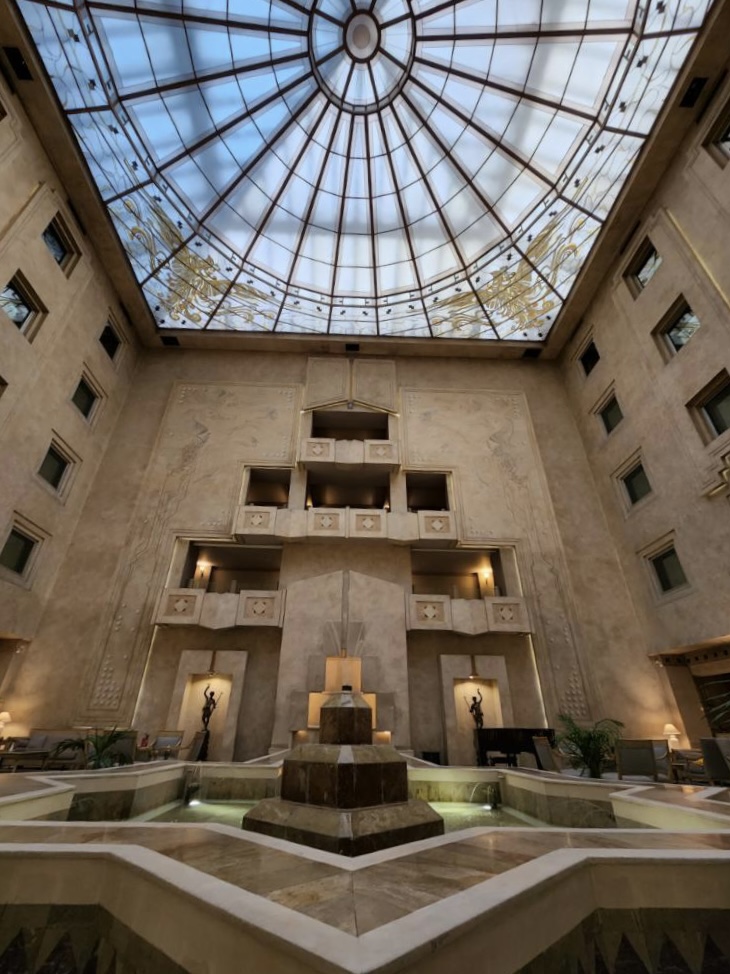
We had a lovely stay at Grand Zorlu Hotel and it’s convenient for restaurants and shopping.
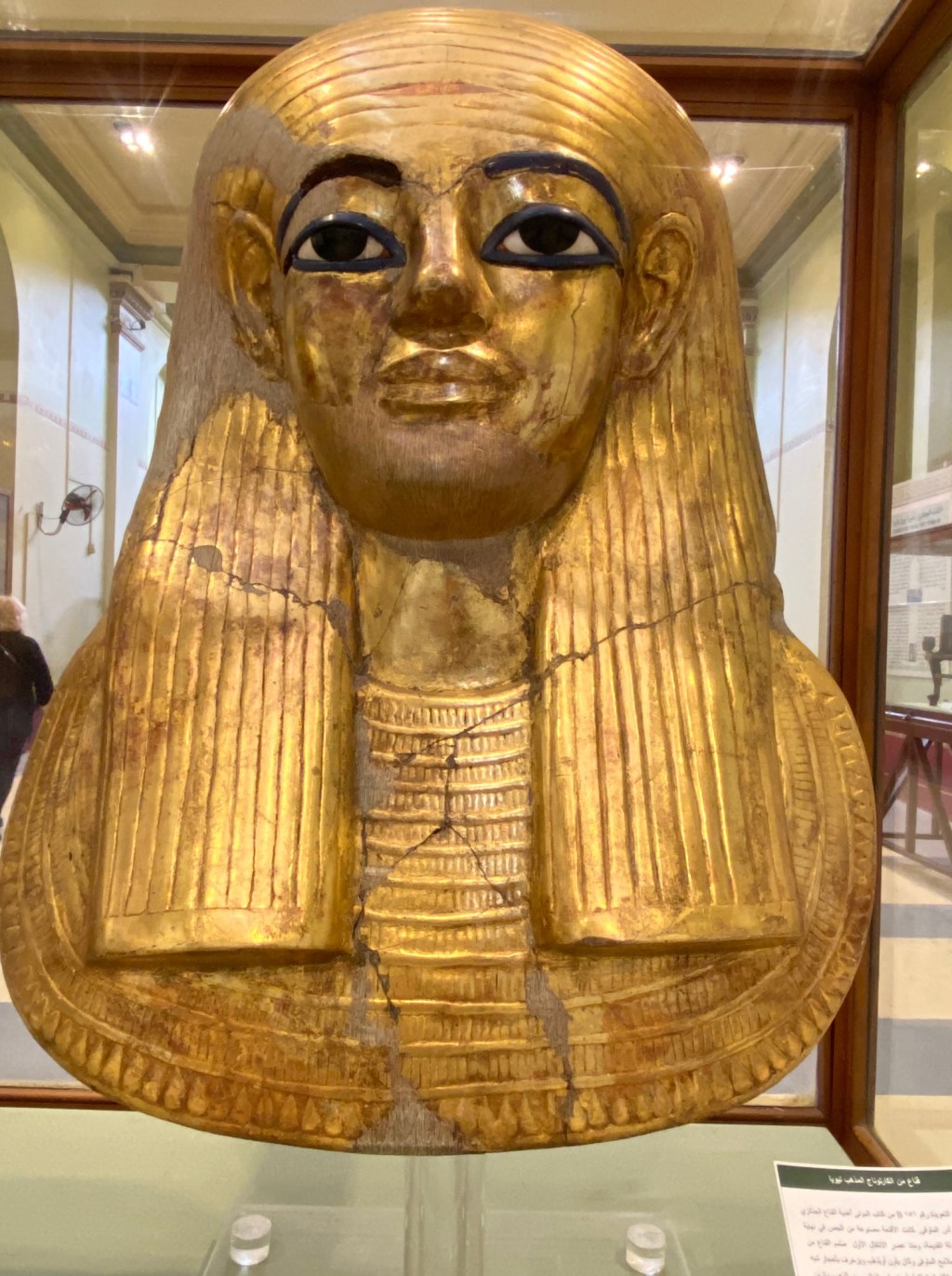
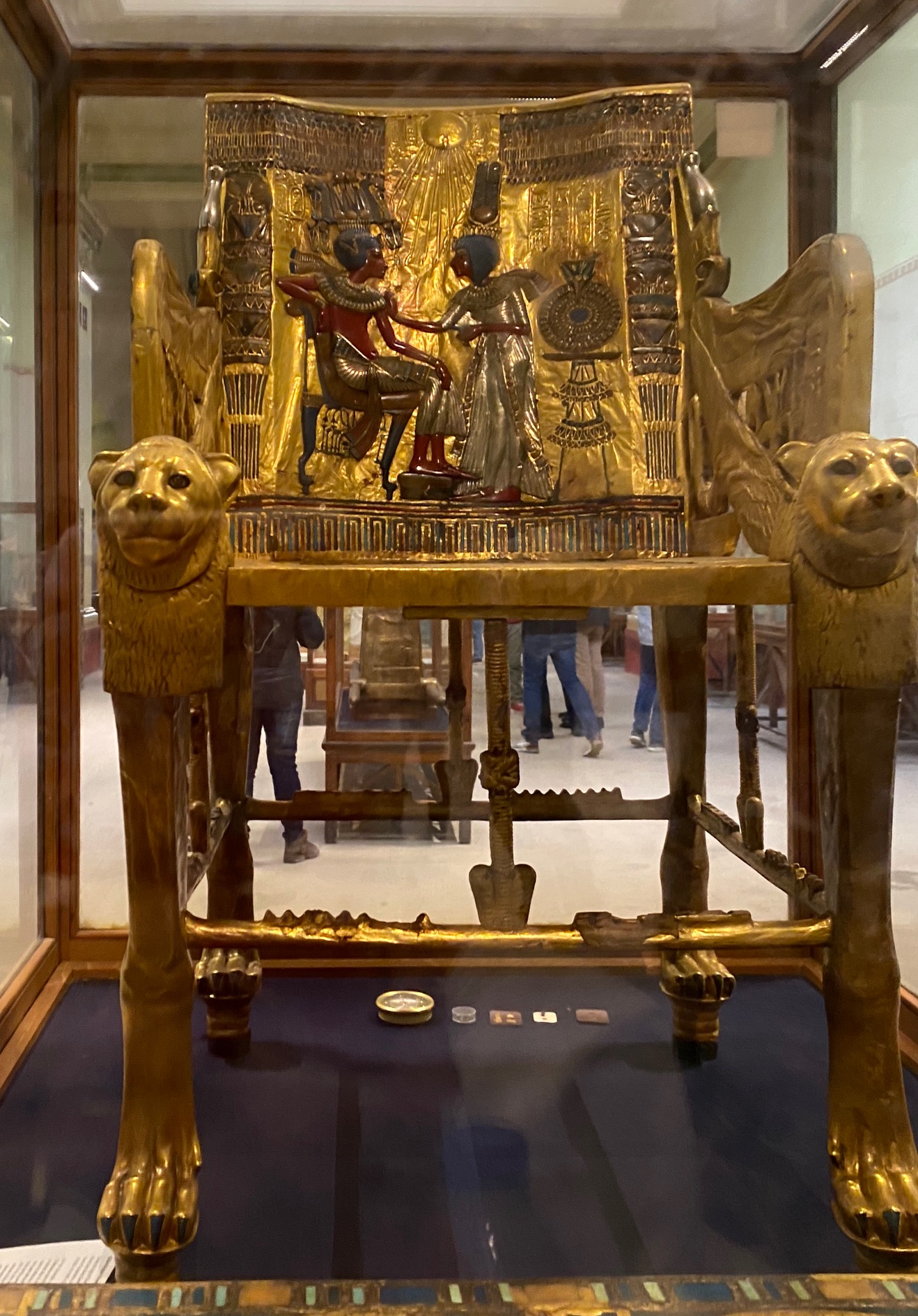
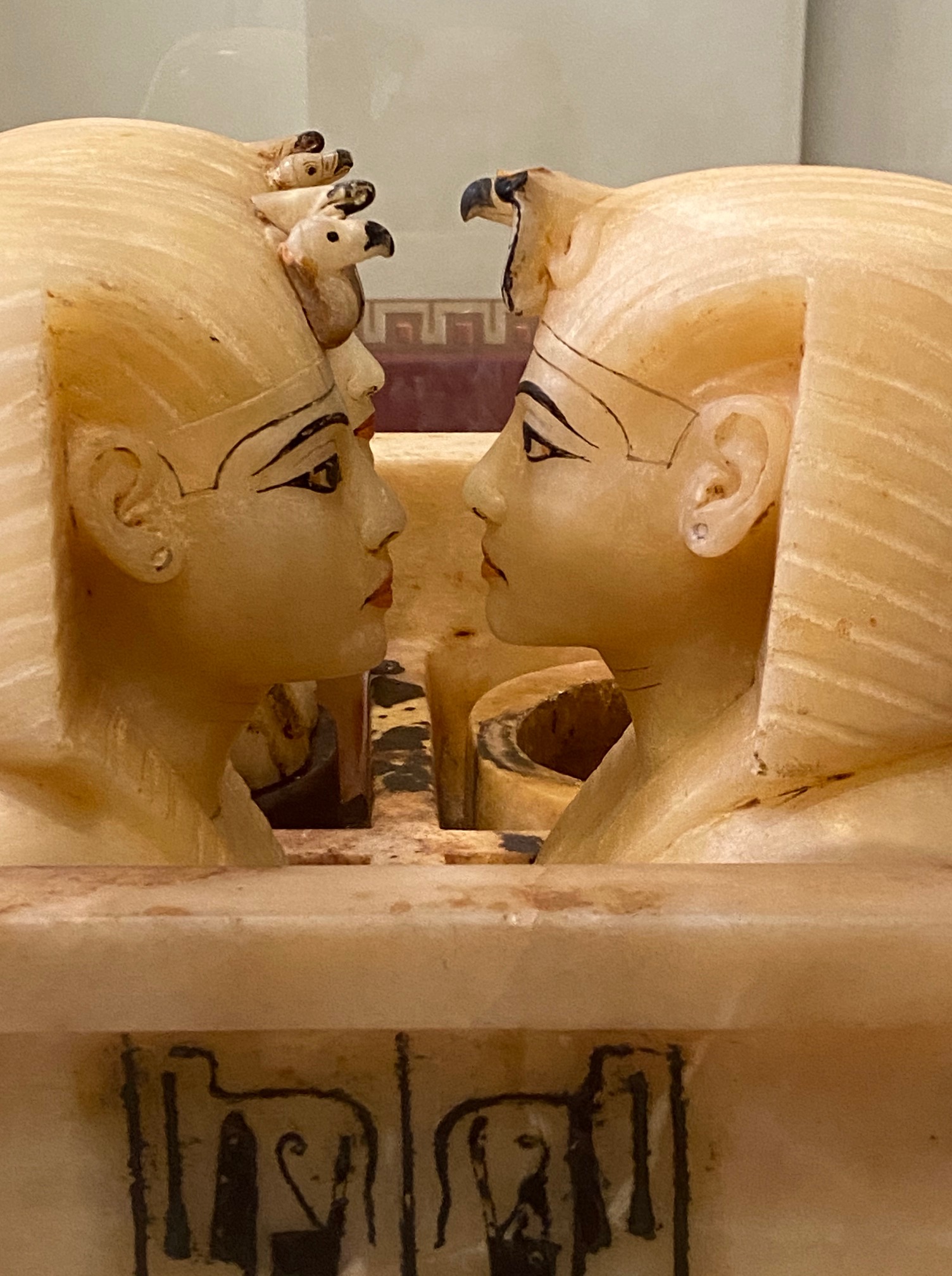
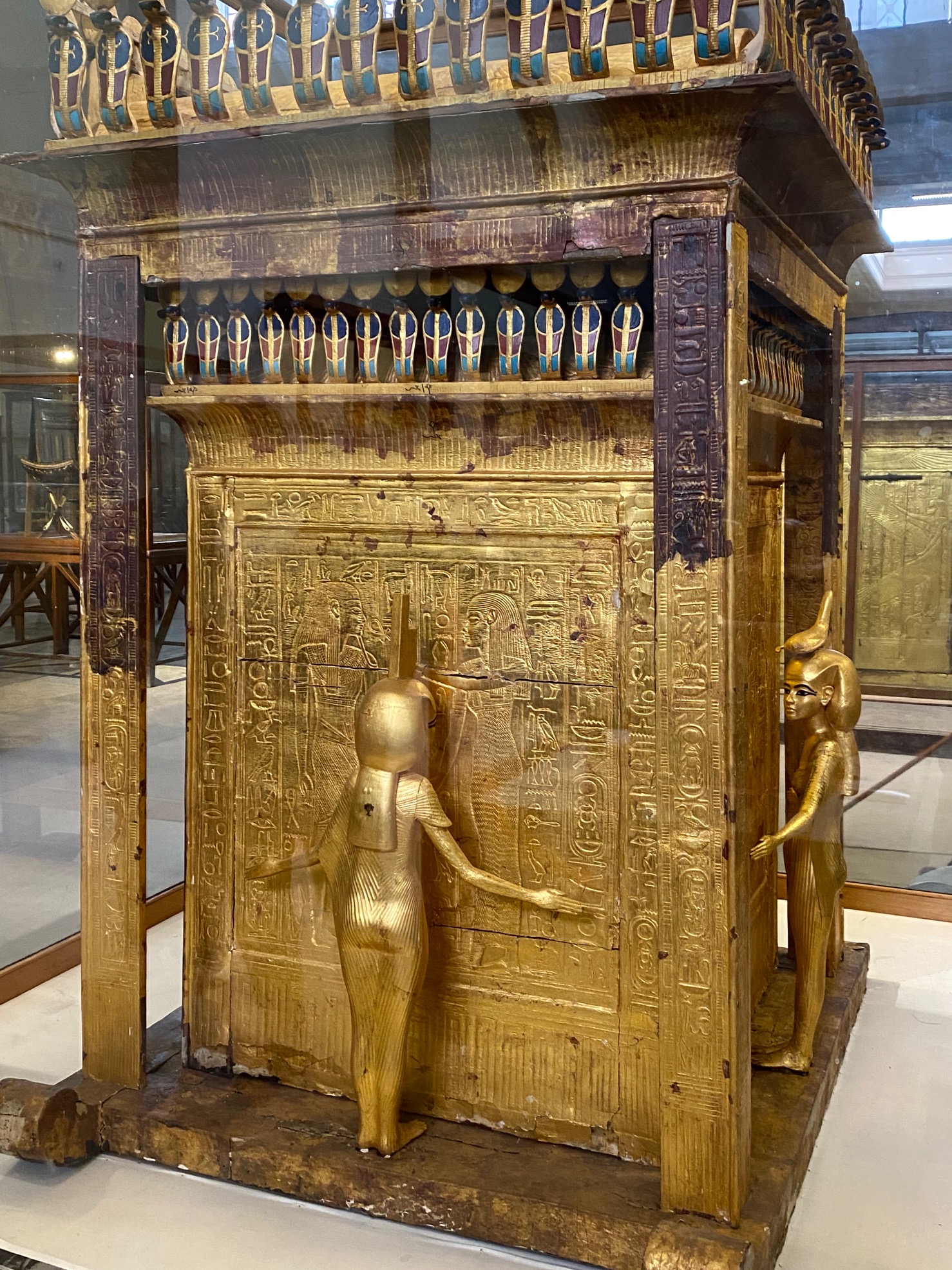
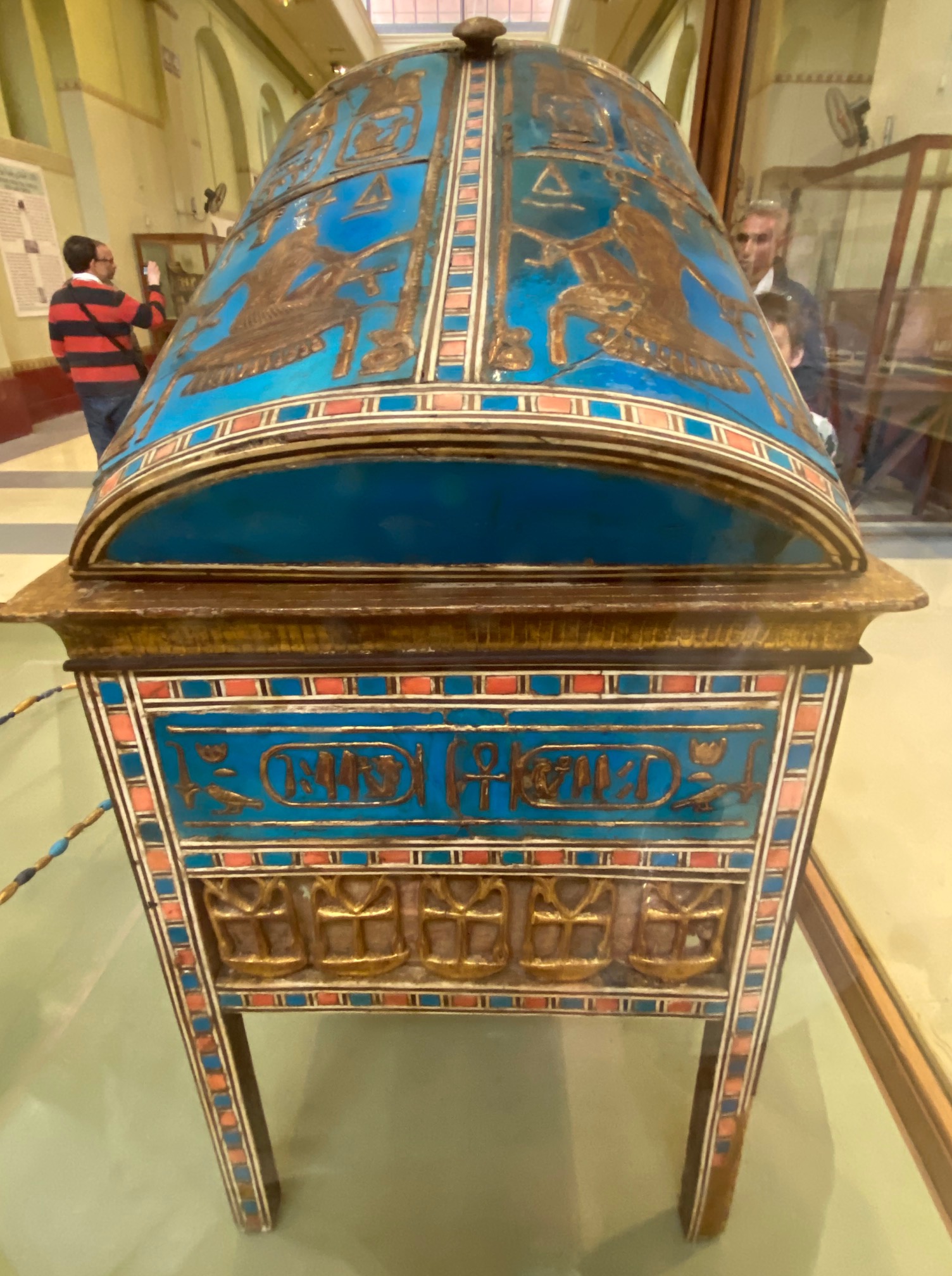
There’s a new Grand Egyptian Museum being built in Cairo that’s supposed to open in 2021. It will be wonderful to have the worlds largest collection of Egyptology moved from the cramped old building in Tahir square. The bigger space will allow artifacts held in dusty storage to finally see the light of day. Here are some highlights:
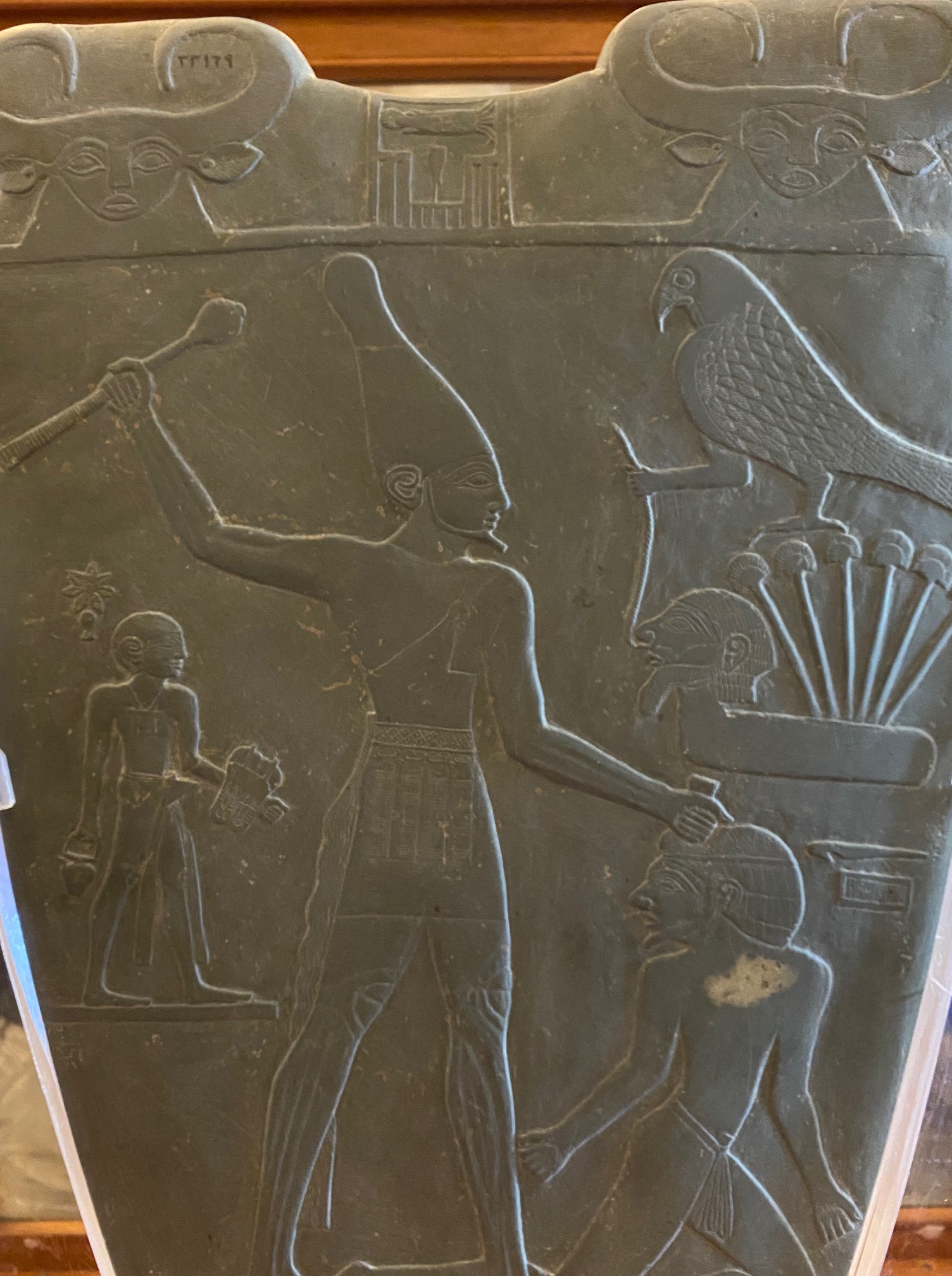
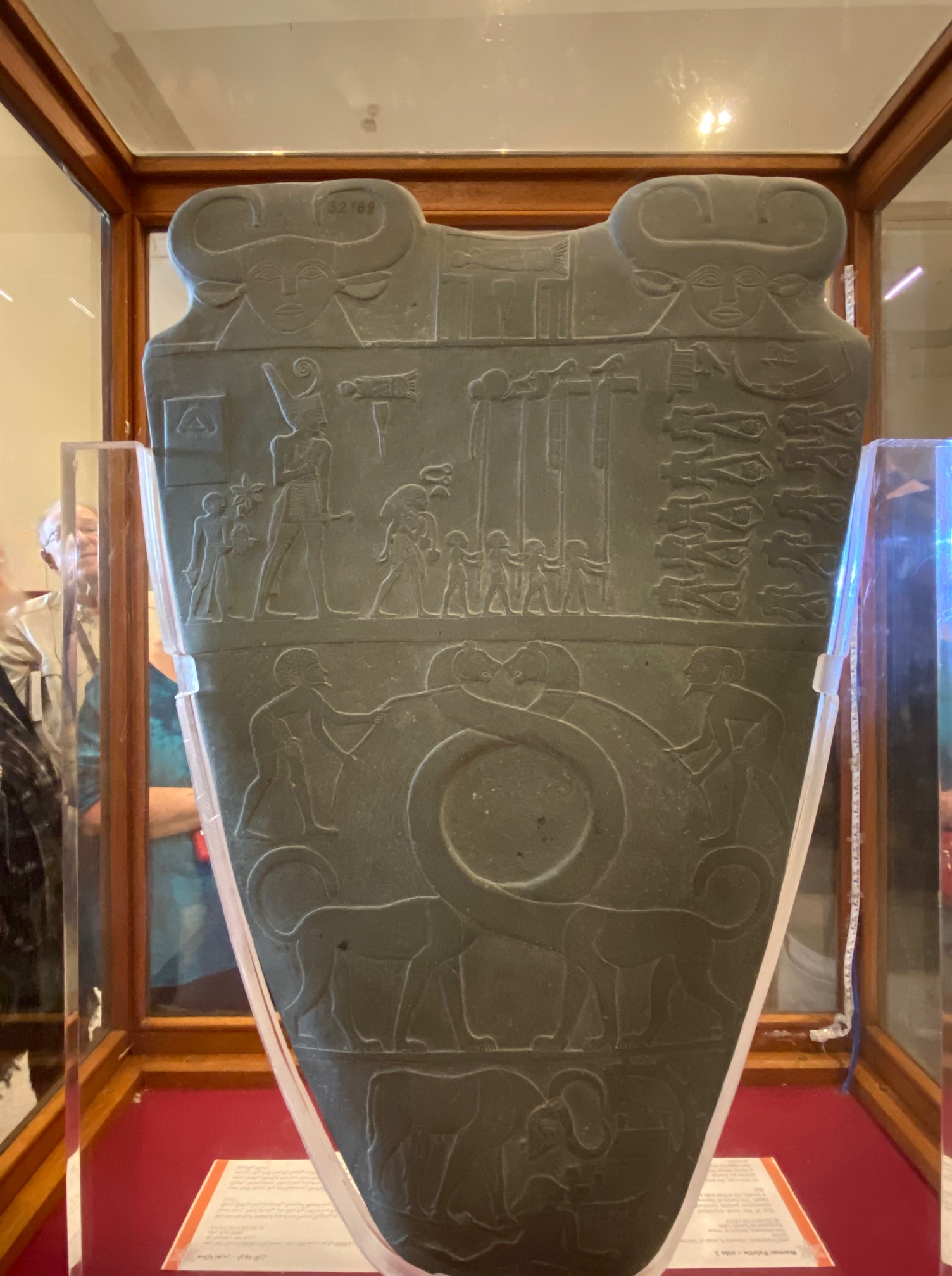
The first pharaoh to unite upper and lower Egypt was Menes (3,000 B.C) and he was a master at political spin and fake news. This carved stone is very important because it sells his story. On the one side he wears the crown of the south. On the other he wears the crown of the north. The captives with their heads cut off and placed between their legs is a mighty incentive to keep lips zipped. This is the first time there’s a united crown that looks like a bucket and a champagne bottle with a cobra on it. the gods at this time were animals and birds and predates hieroglyphics.
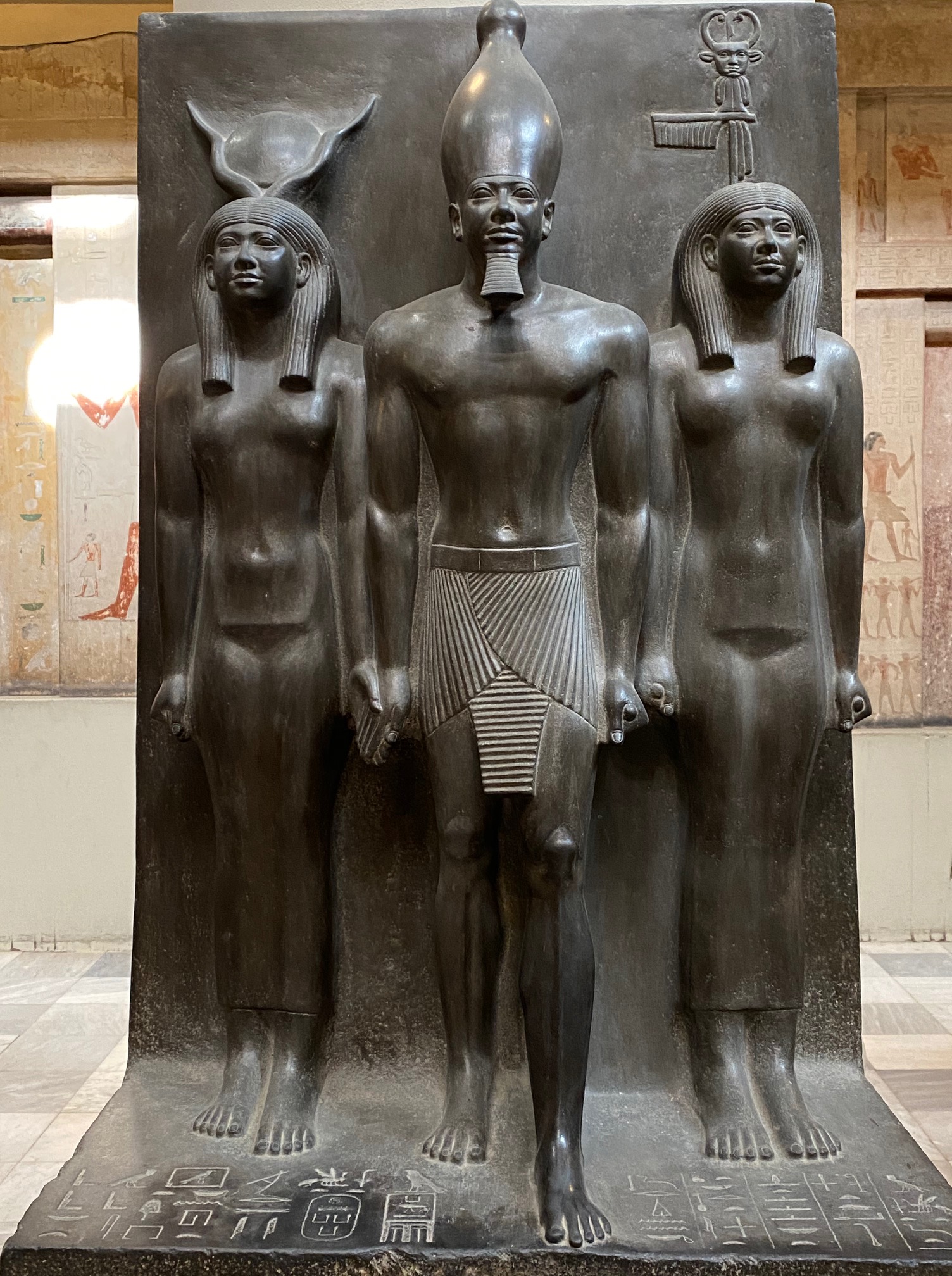
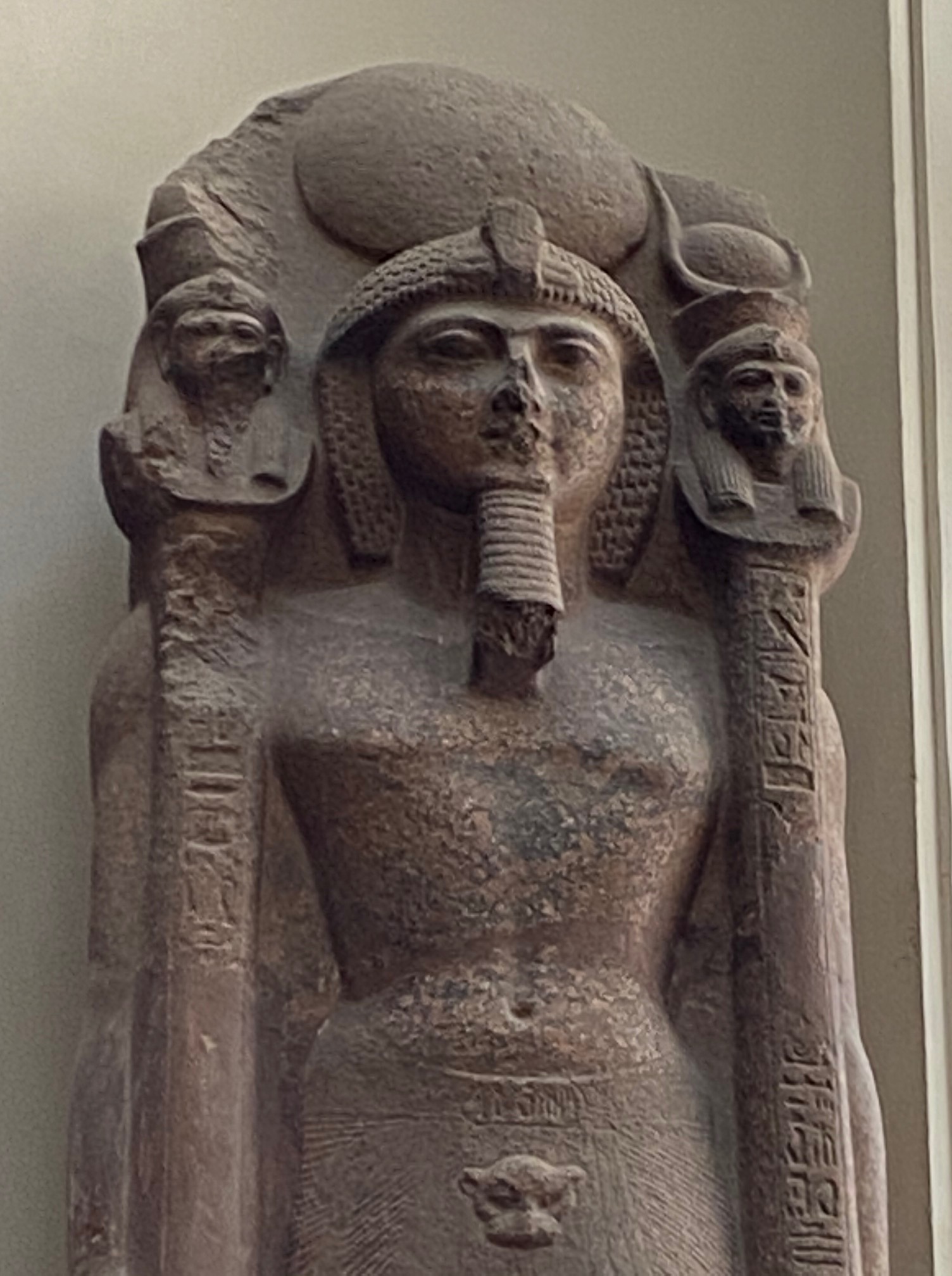
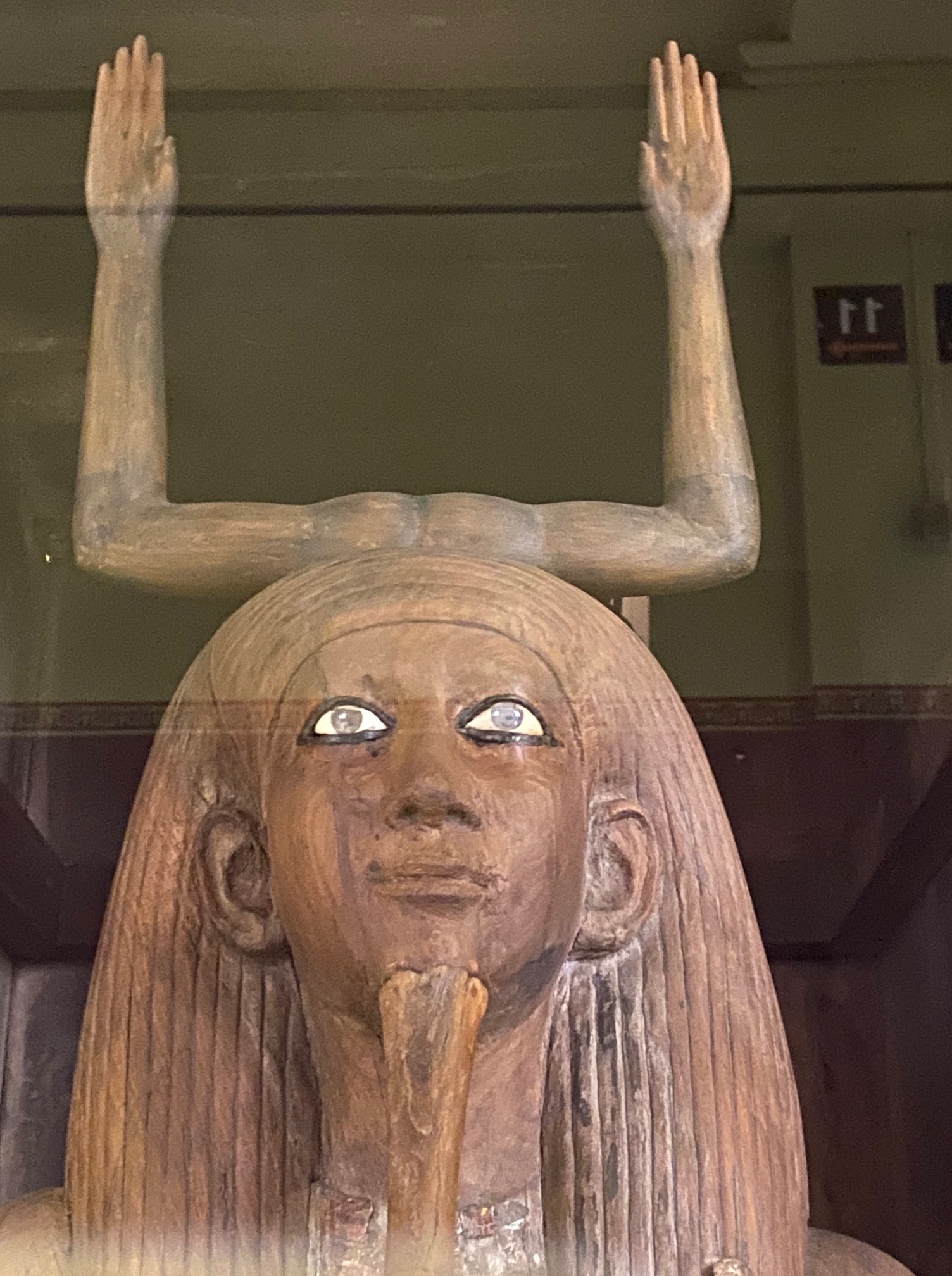
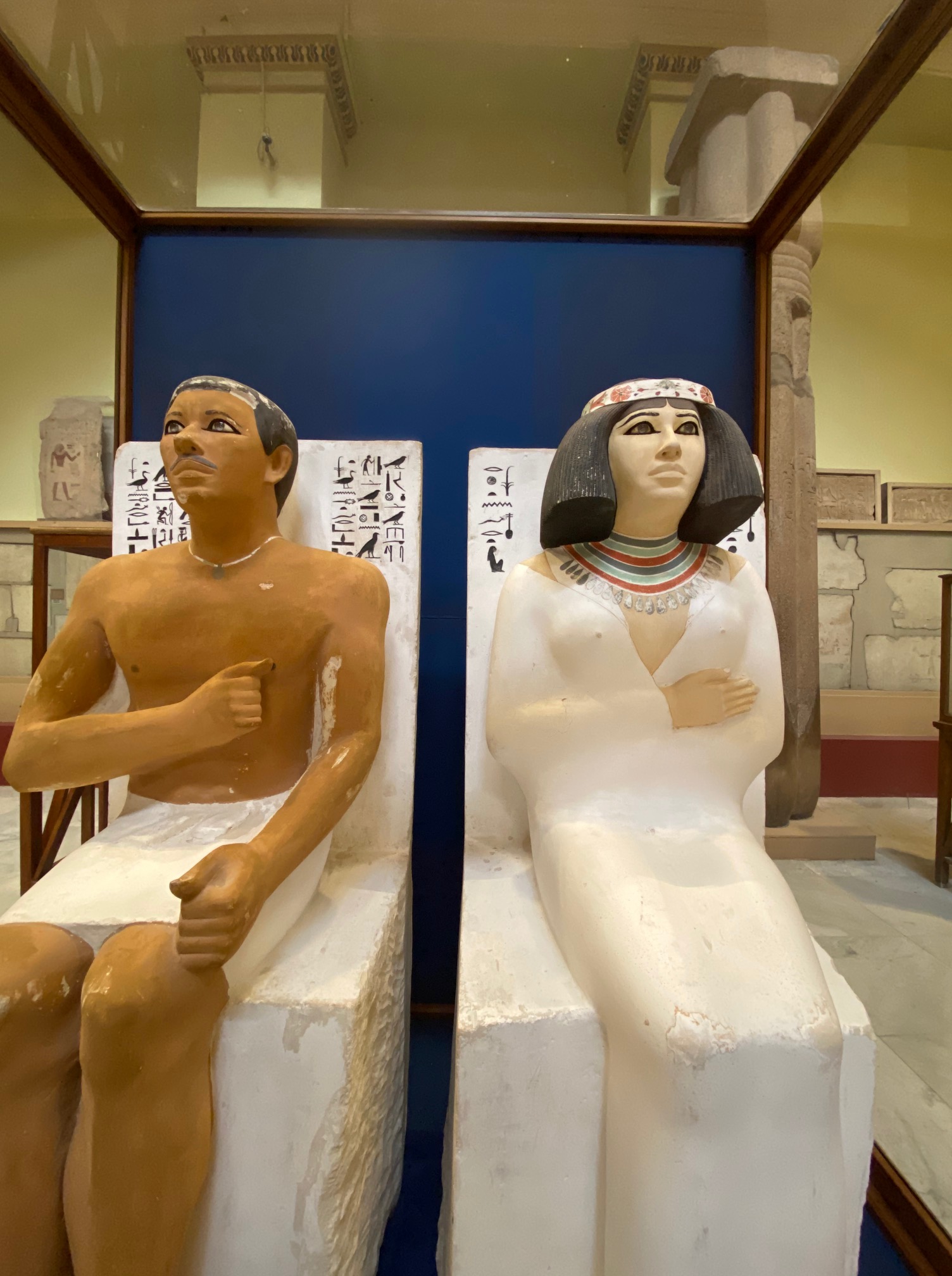
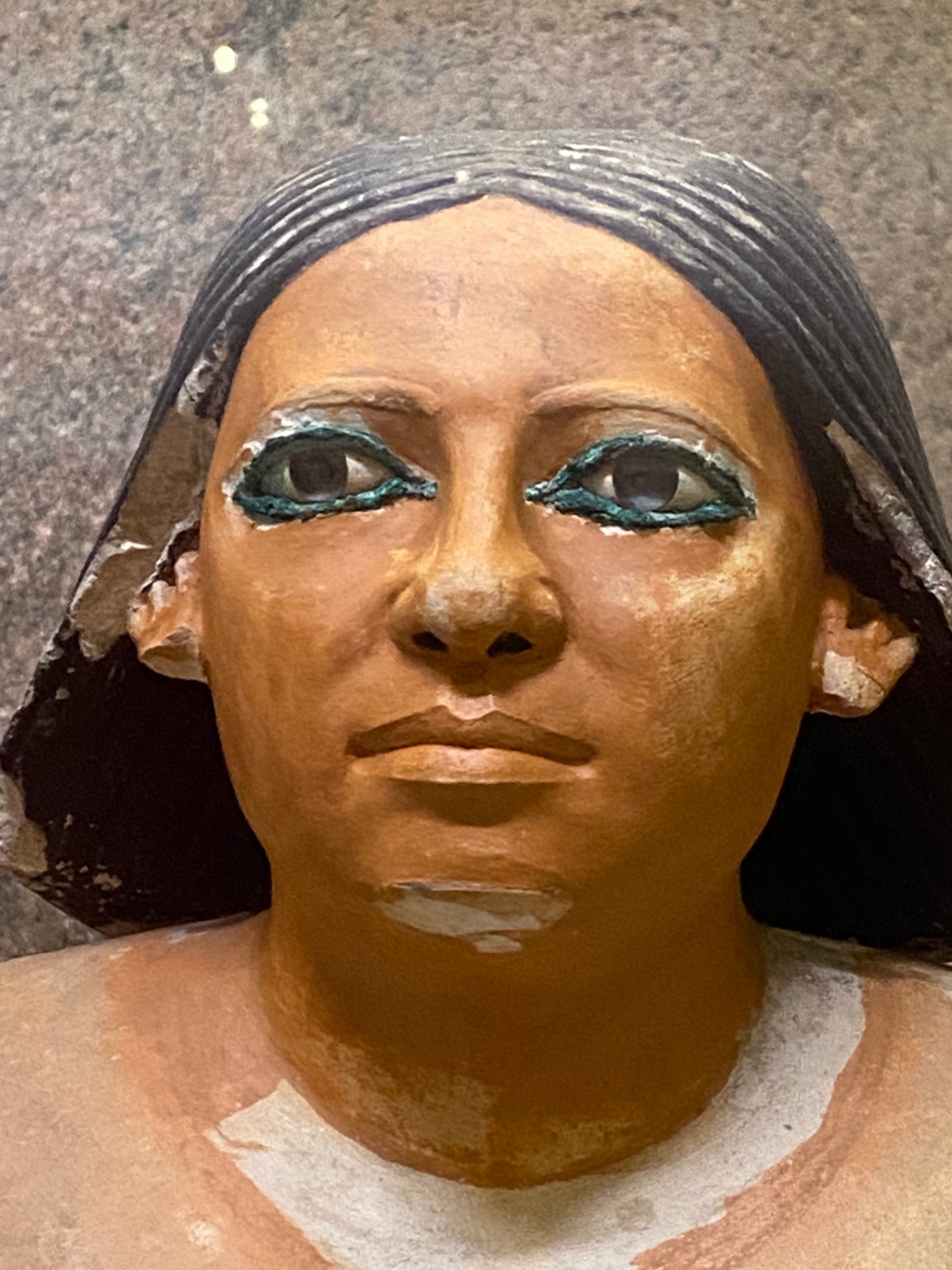
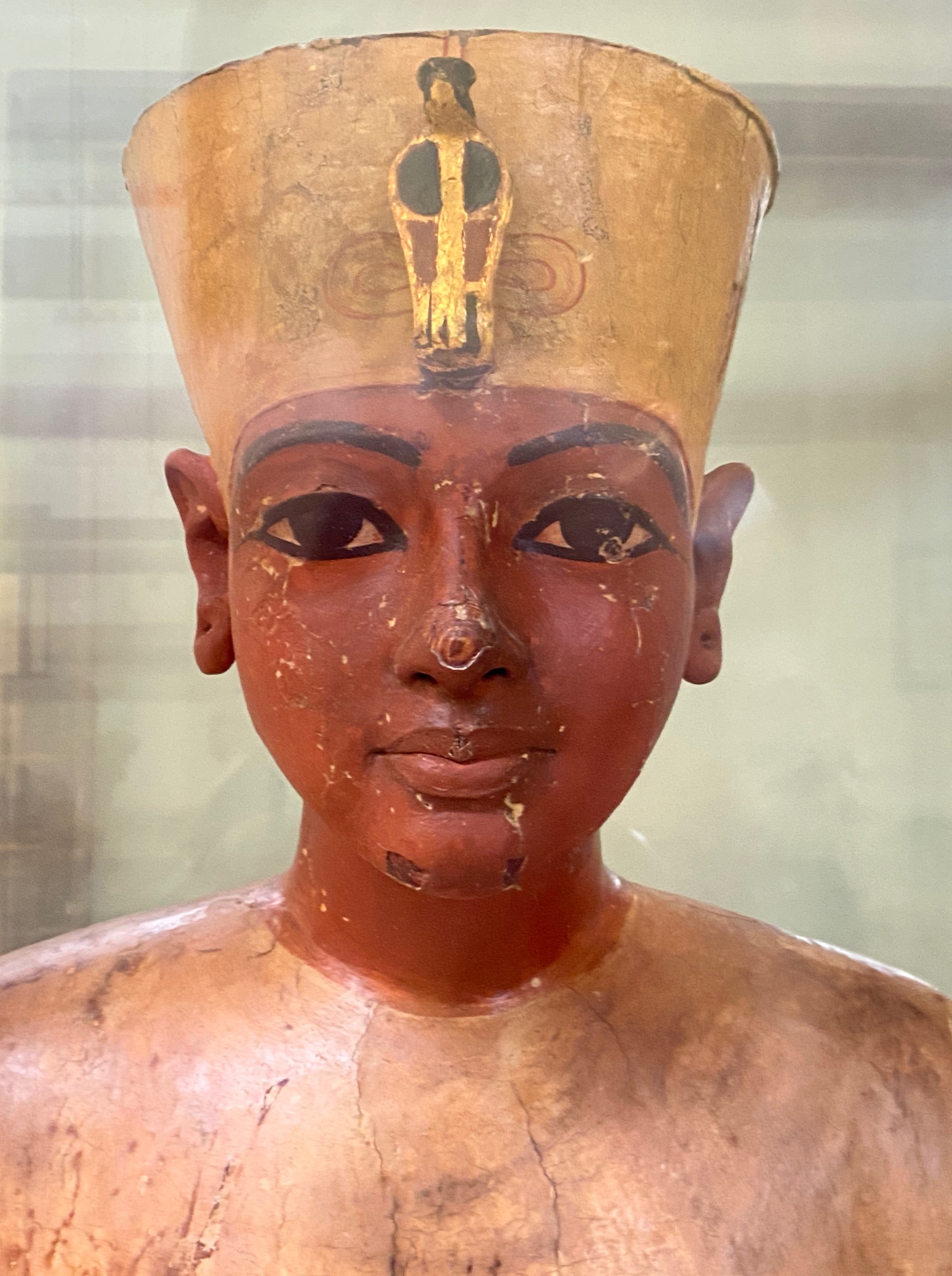
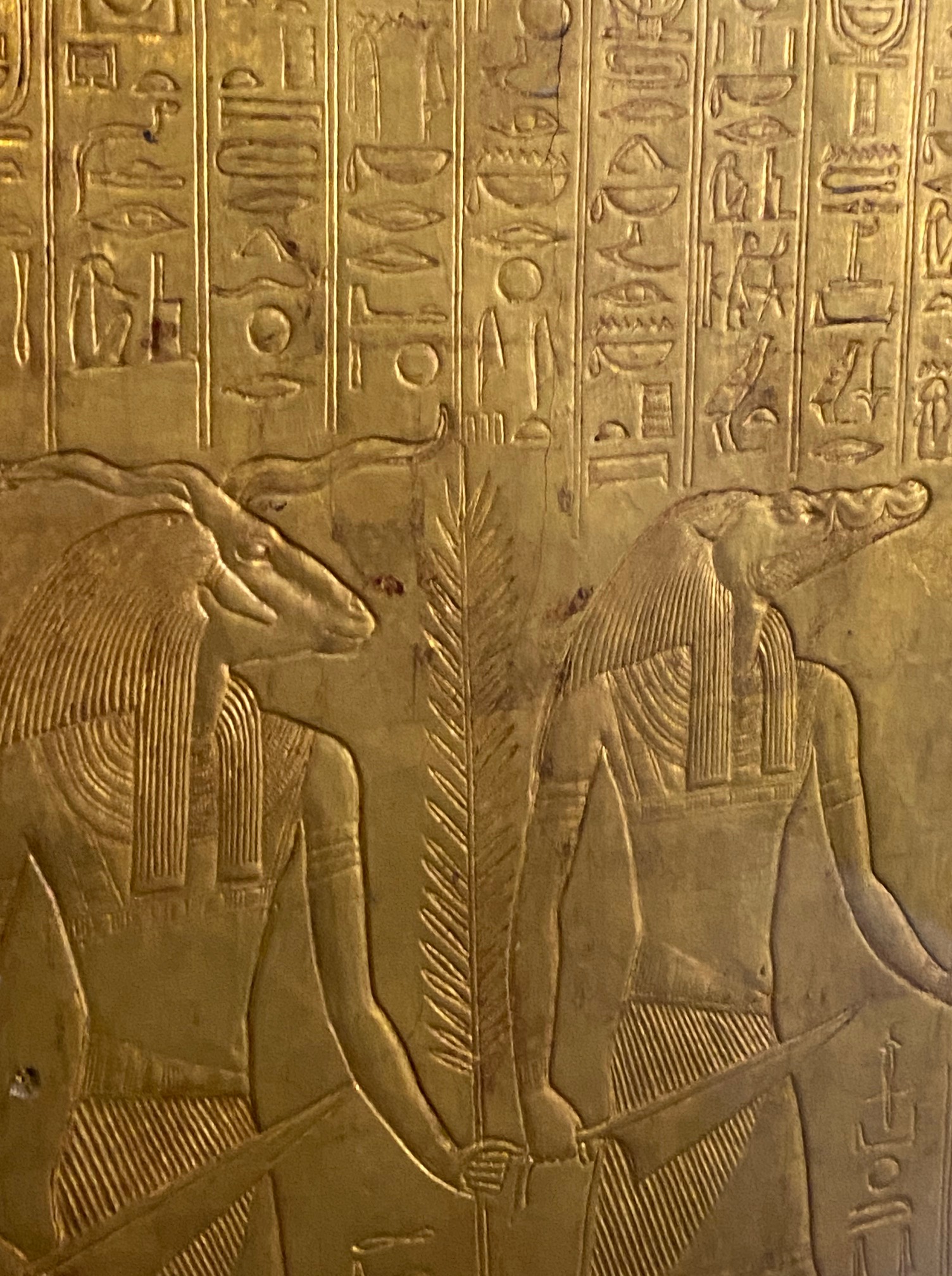
The positions of the stone carved royalty tell a story. Left leg forward means the pharaoh was alive at that time. Legs together means the leader is eternal=dead. All together there were 30 dynasties and seven of them were led by women including the great Nefertiti ( the most beautiful and dearly loved by Akhenaten) and ending with Cleopatra. Statues show children in miniature or behind their parents. Pharaohs and royalty did find eternity by carving effigies that we can see today. Imagine entering a dark tomb with a torch and seeing their eyes glow from crushed malachite and gem stones painted around the eyes!
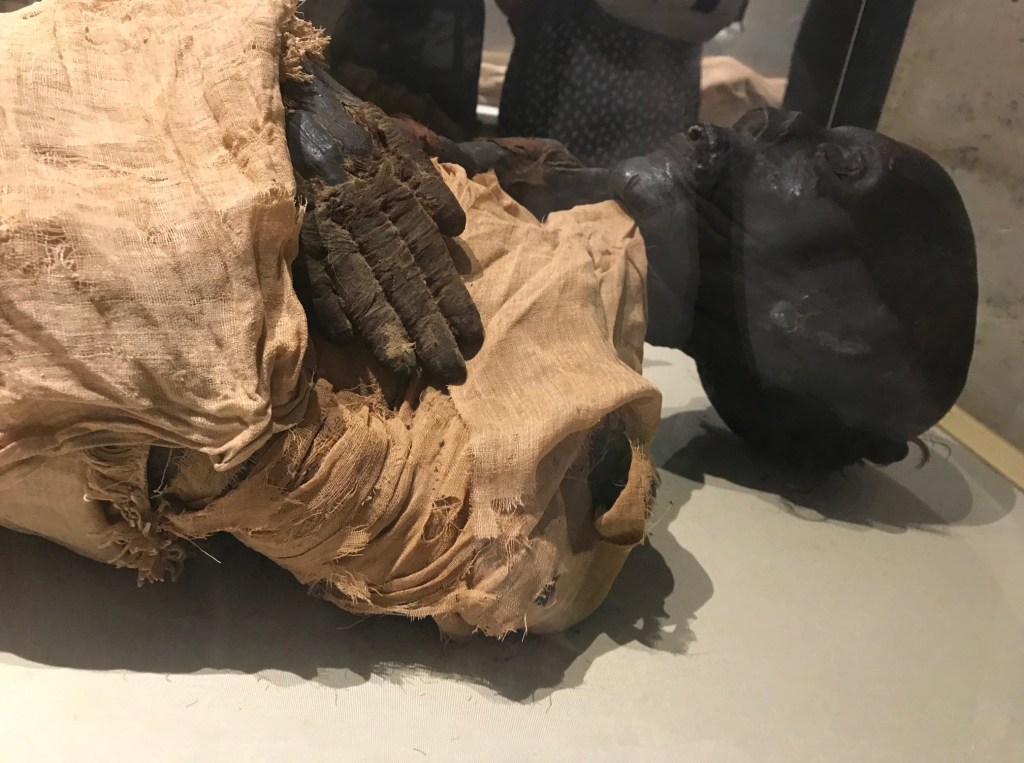
The mummy room is a must, even though it costs extra. Bring cash. These are the most important rulers in Egypt, including Ramses 11 (the great). He took the throne in his teens and ruled until his death in his nineties.
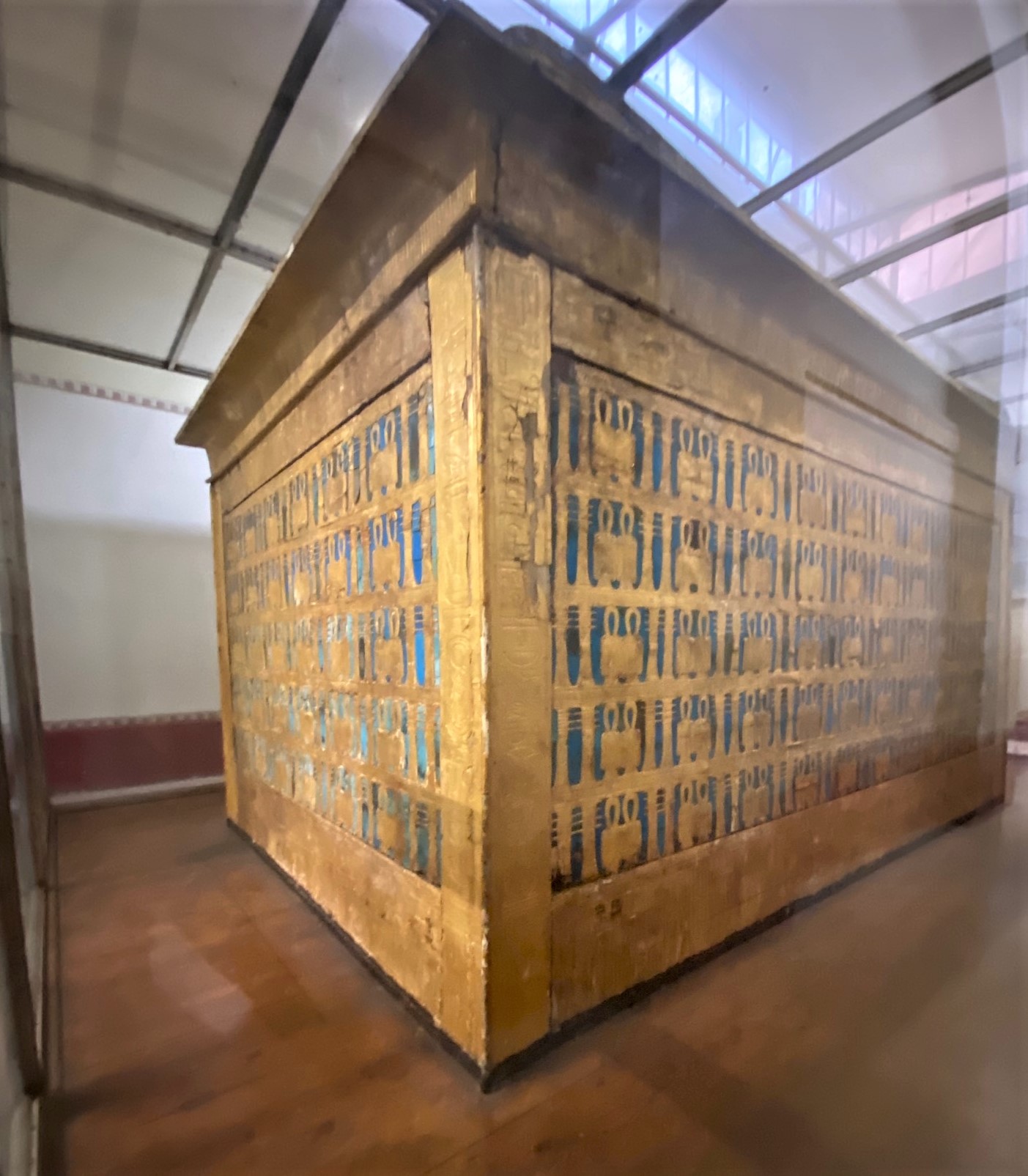
There’s an extensive collection from the murdered Tutankhamun’s tomb. I can’t imagine how exciting it must have been to find three nested gold burial boxes and the many treasures in his intact tomb. King Tut’s mummy isn’t here though. You’ll see him later in the Valley of the Kings.
The Pyramids at Giza
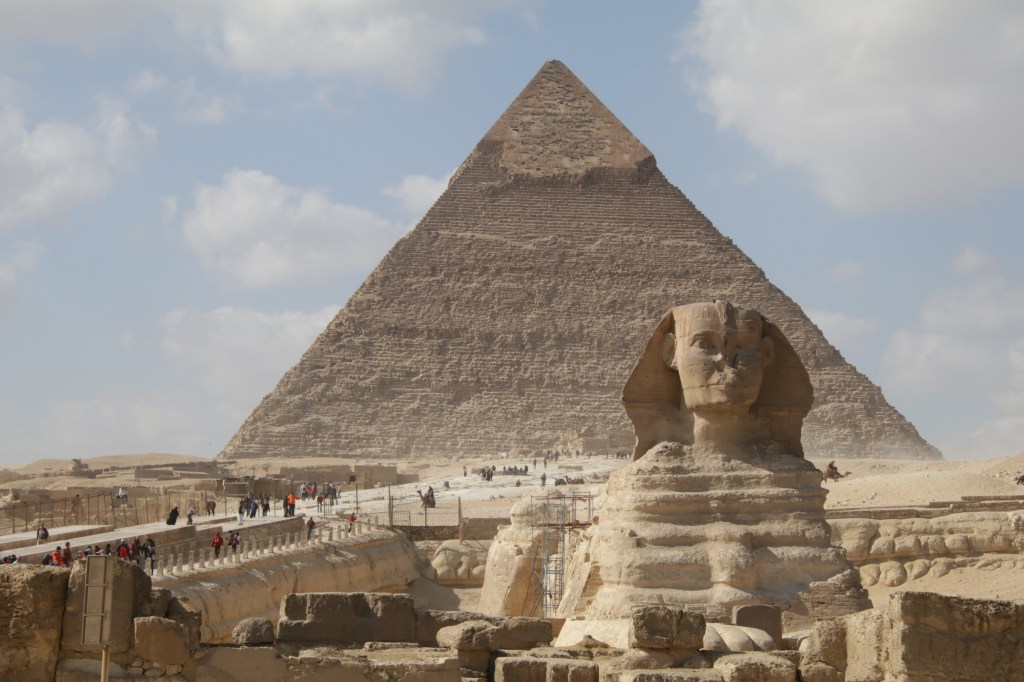
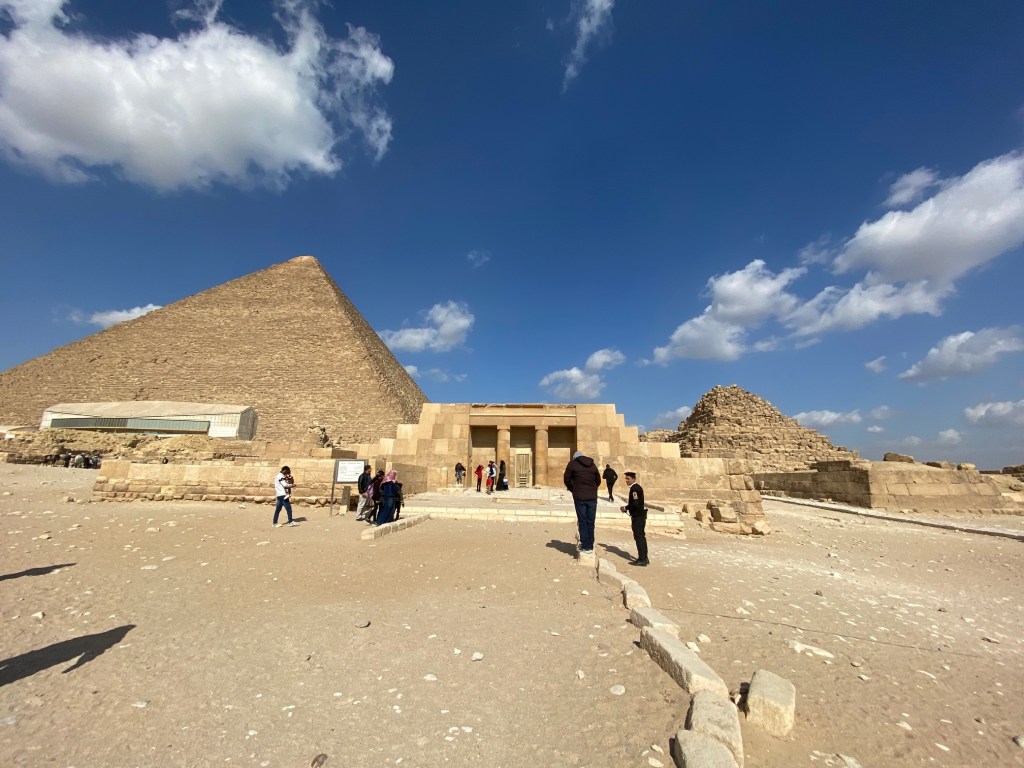
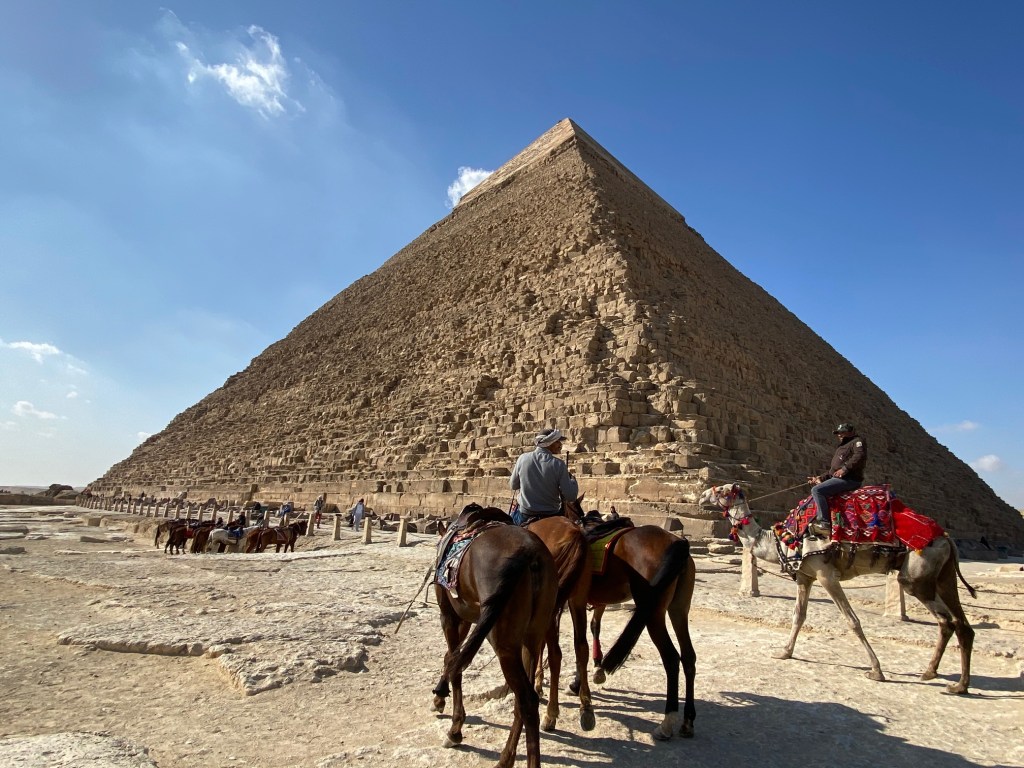
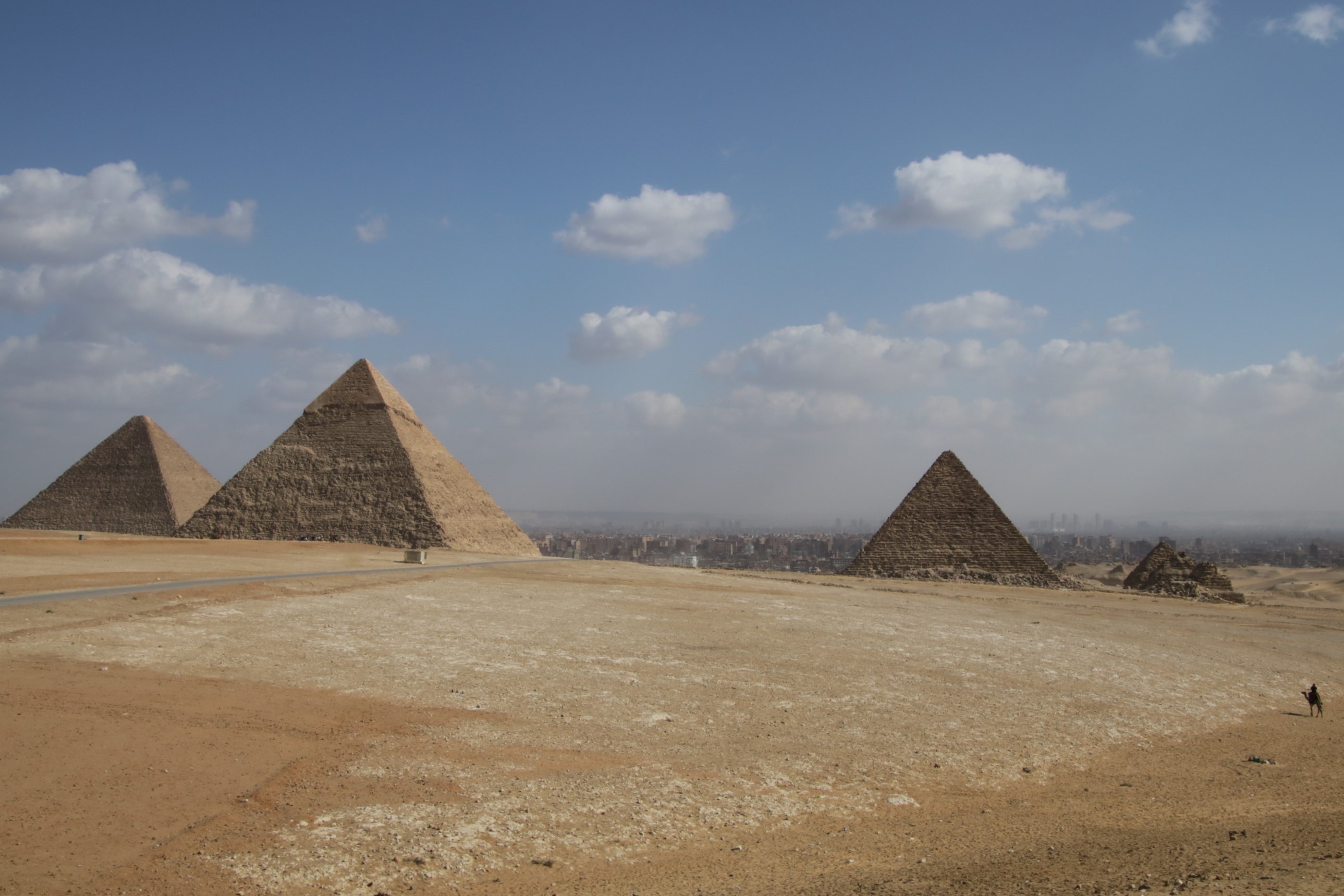
In my last post I told you about the naughty boy Khufu. He is the one who built these monuments over 4,500 years ago. At 780′ by 480′ tall it was the largest man-made edifice for over 4,000 years. There are so many mysteries about the largest pyramids in Egypt. They are perfectly aligned with the compass points. How did they hand cut 2 1/2 million stones with simple metal tools? Work only occurred during the rainy season when the immense blocks could be moved by barges from the quarry. Because of the weight, only one stone was on each boat. Let’s look at the math. It would take 20 years to build if a stone was placed every 4 minutes and workers were on site. Impossible?
Khufu’s funeral boat
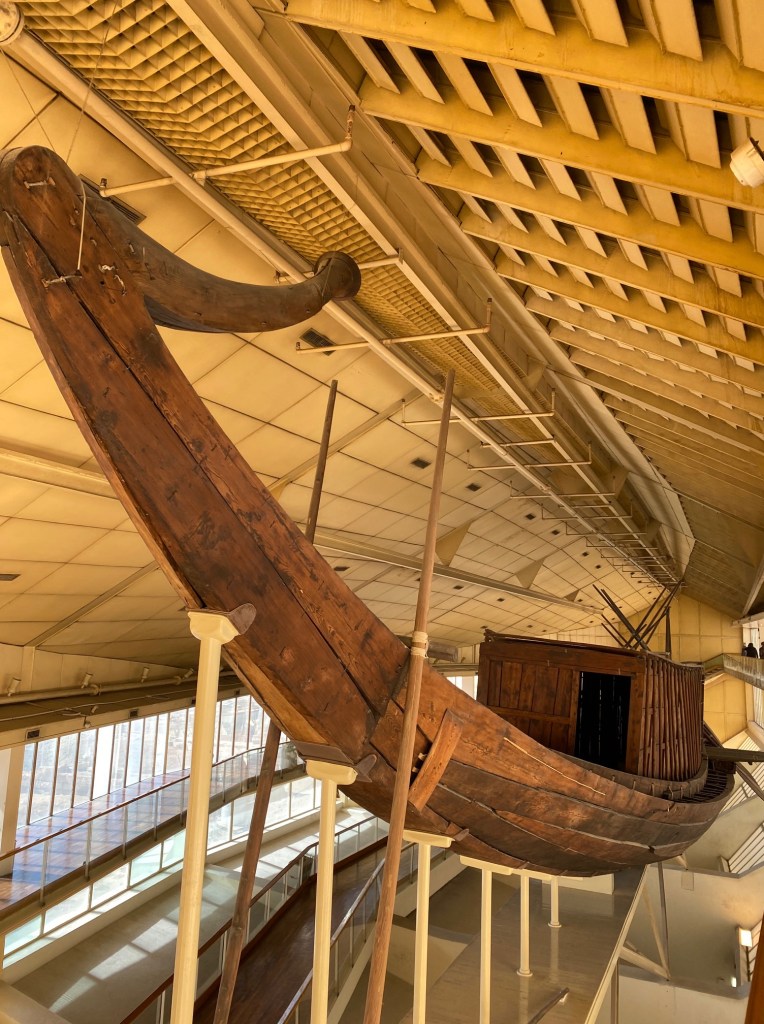
Khufu’s reconstructed funeral boat (43 meters or 141′) is in a building across from the pyramids. It was sailed once in the funeral procession and then taken apart for him to use in the afterlife.
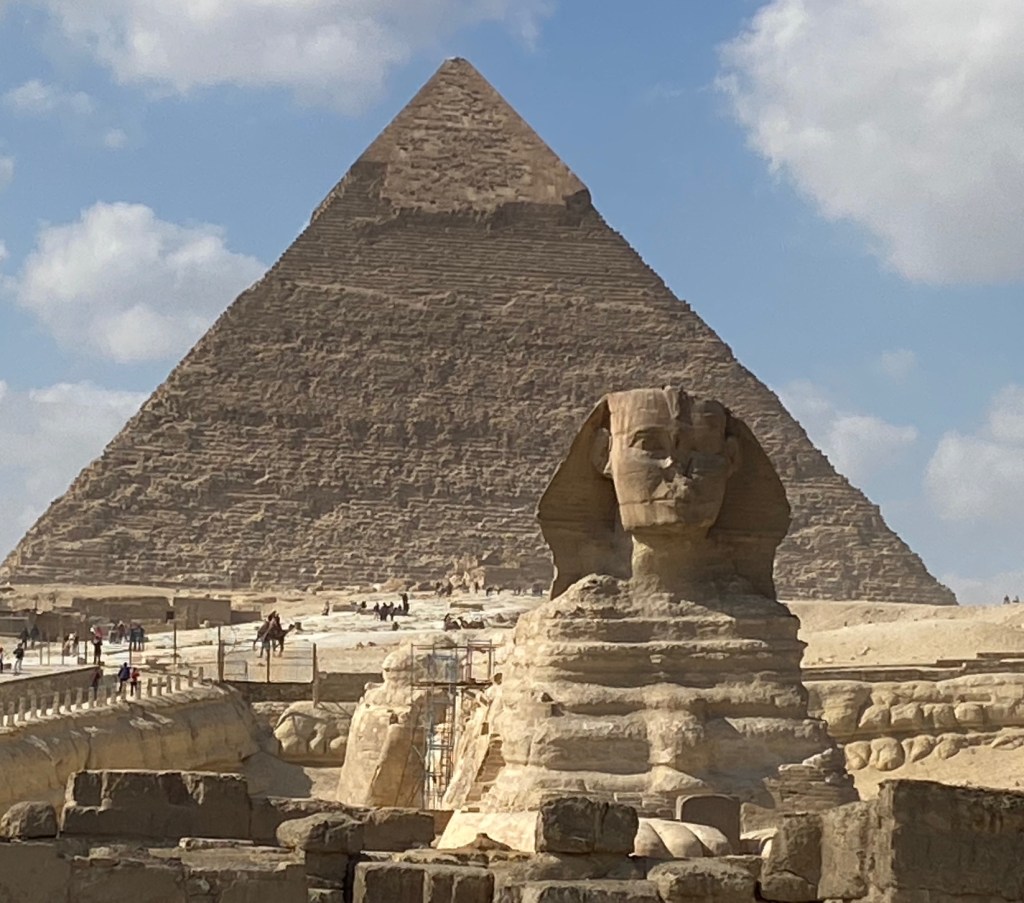
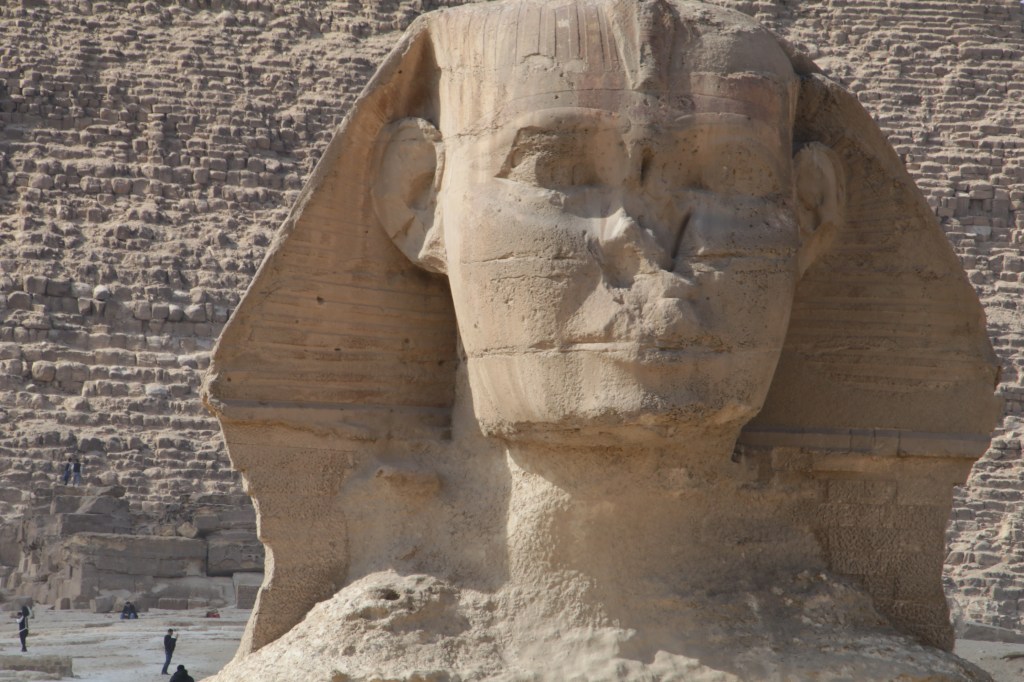
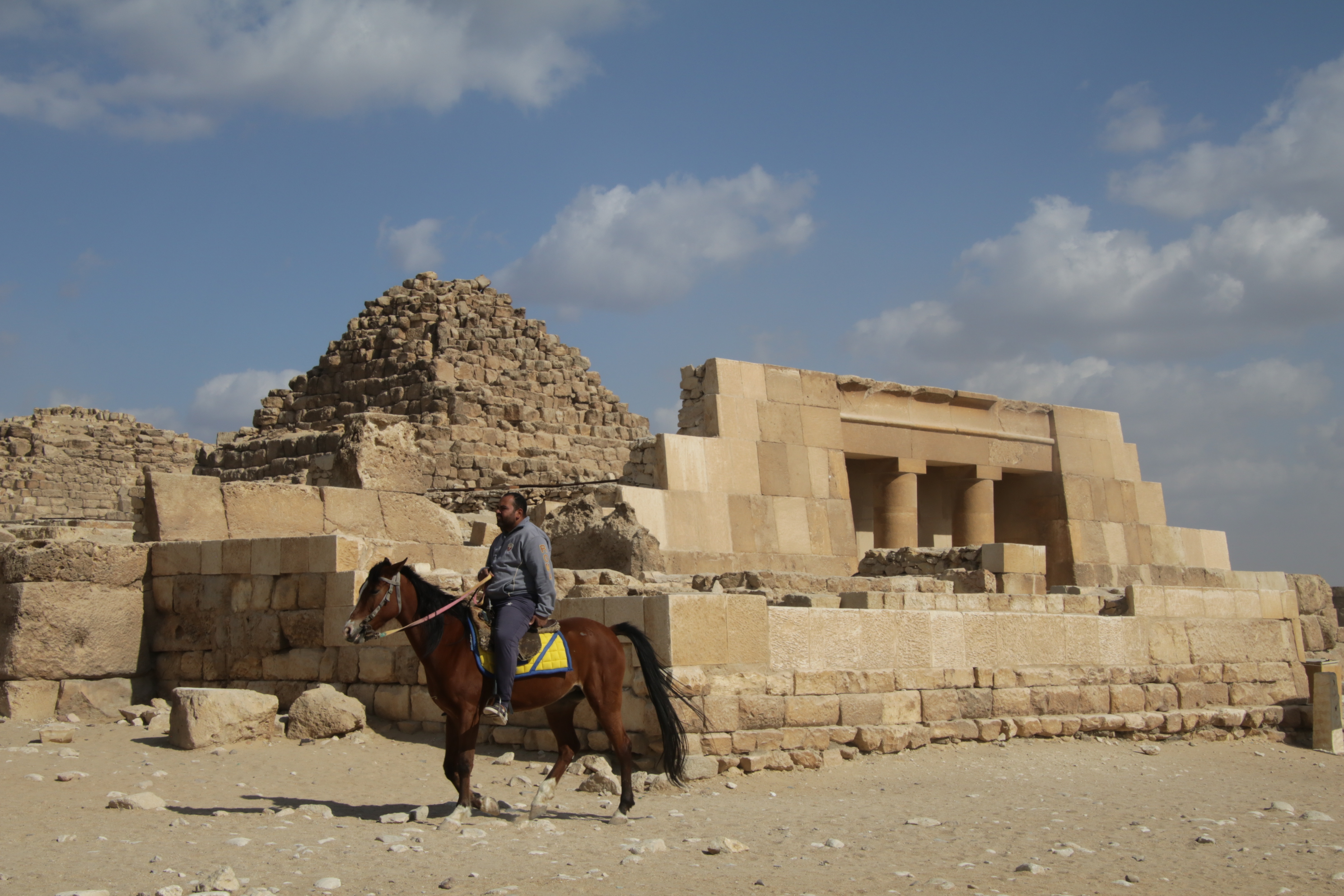
There are more monuments than the great pyramid. The smallest of the three pyramids was for Khufu’s grandson and his mother, Hetepheres. There are other royal tombs surrounding the pyramids. It’s now believed that the water worn Sphinx is much older from a time when Egypt was more wet.
Old Cairo
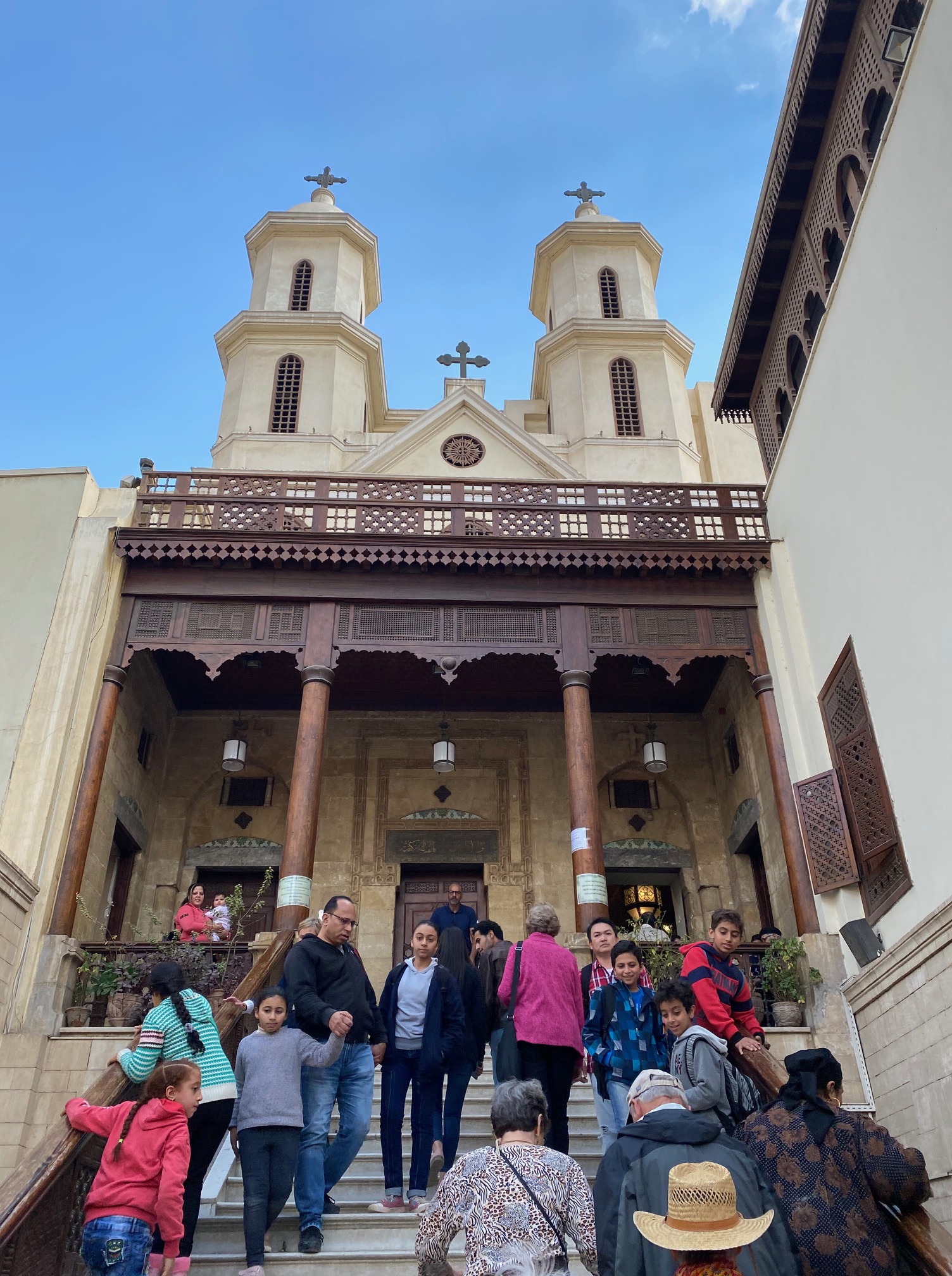
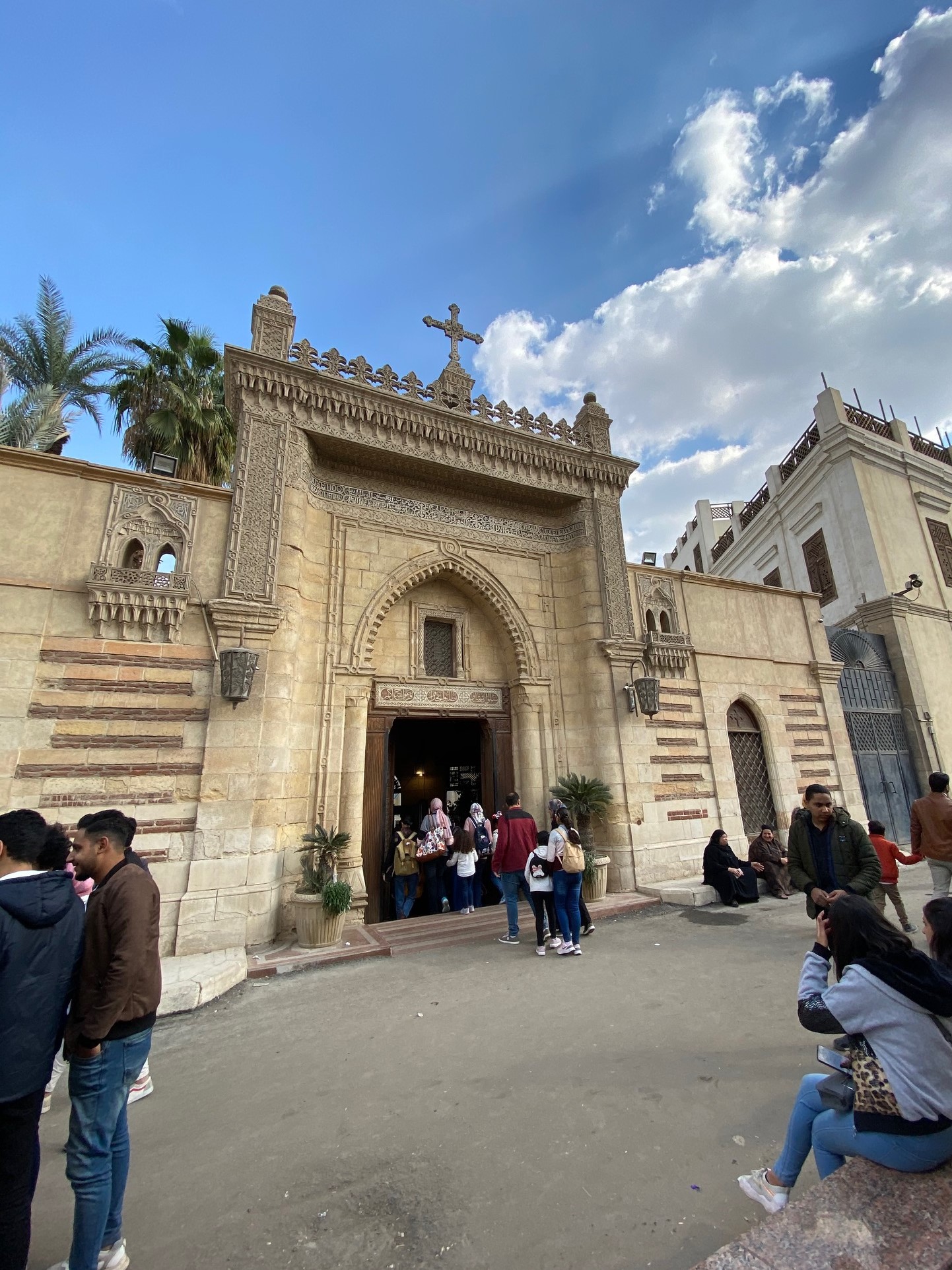
Hanging Church inside a Babylonian fortress and Ben Ezra Synagogue (Oldest temple in Cairo)
Babylonian Fortress
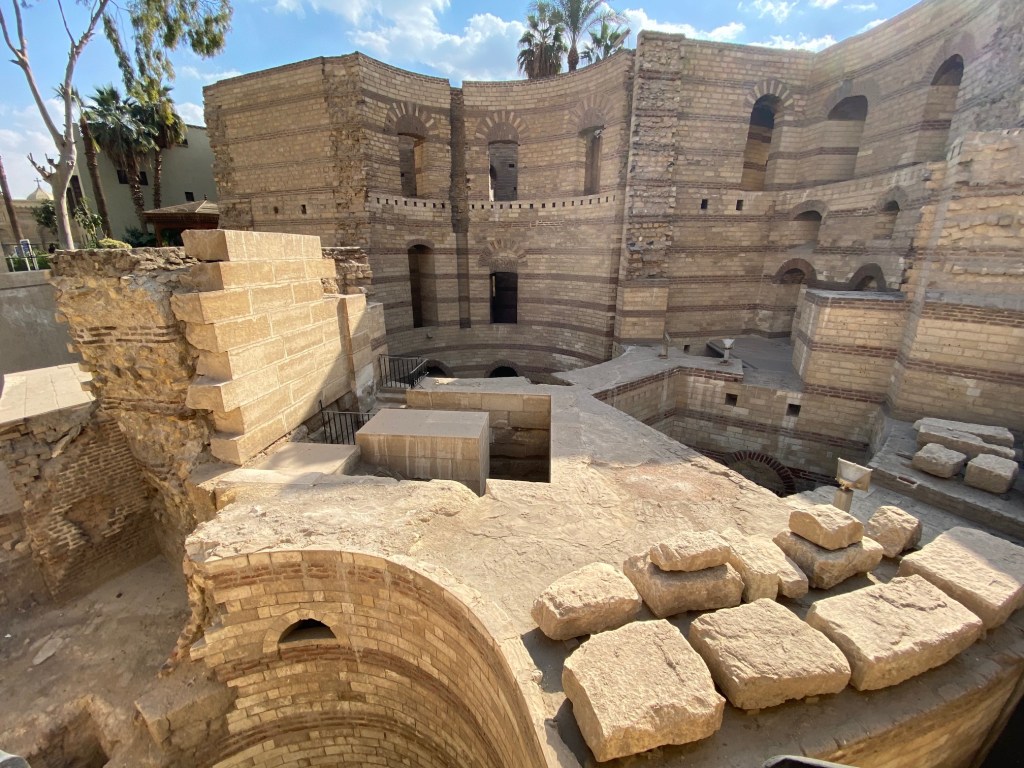
The Babylonian Fortress was built during the 6th century BC some say by the Roman’s while others believe it was constructed by King Nebuchadnezzar, King of Babylon after he captured Egypt. It sat on the border between Lower and Middle Egypt on the Nile.
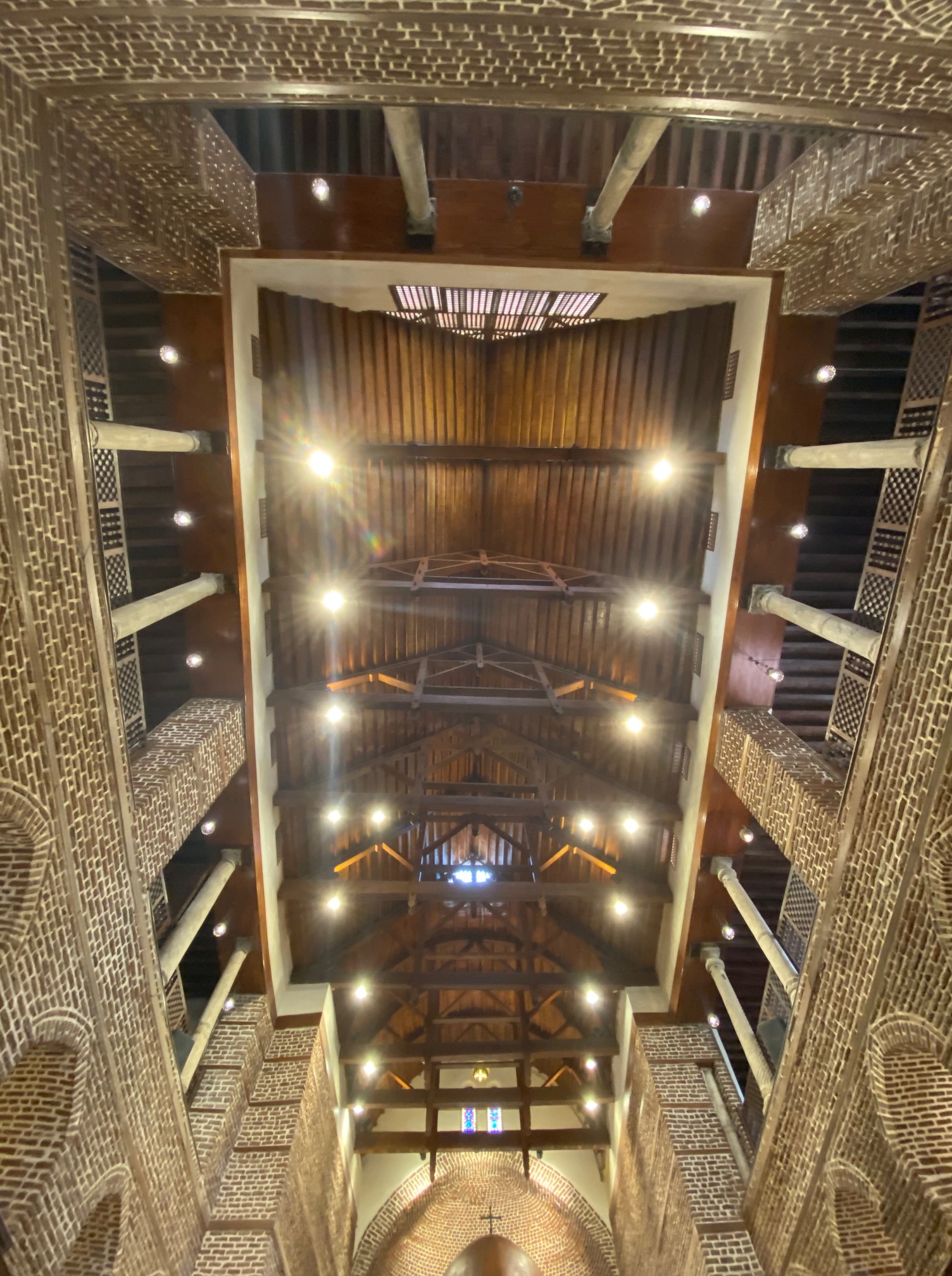
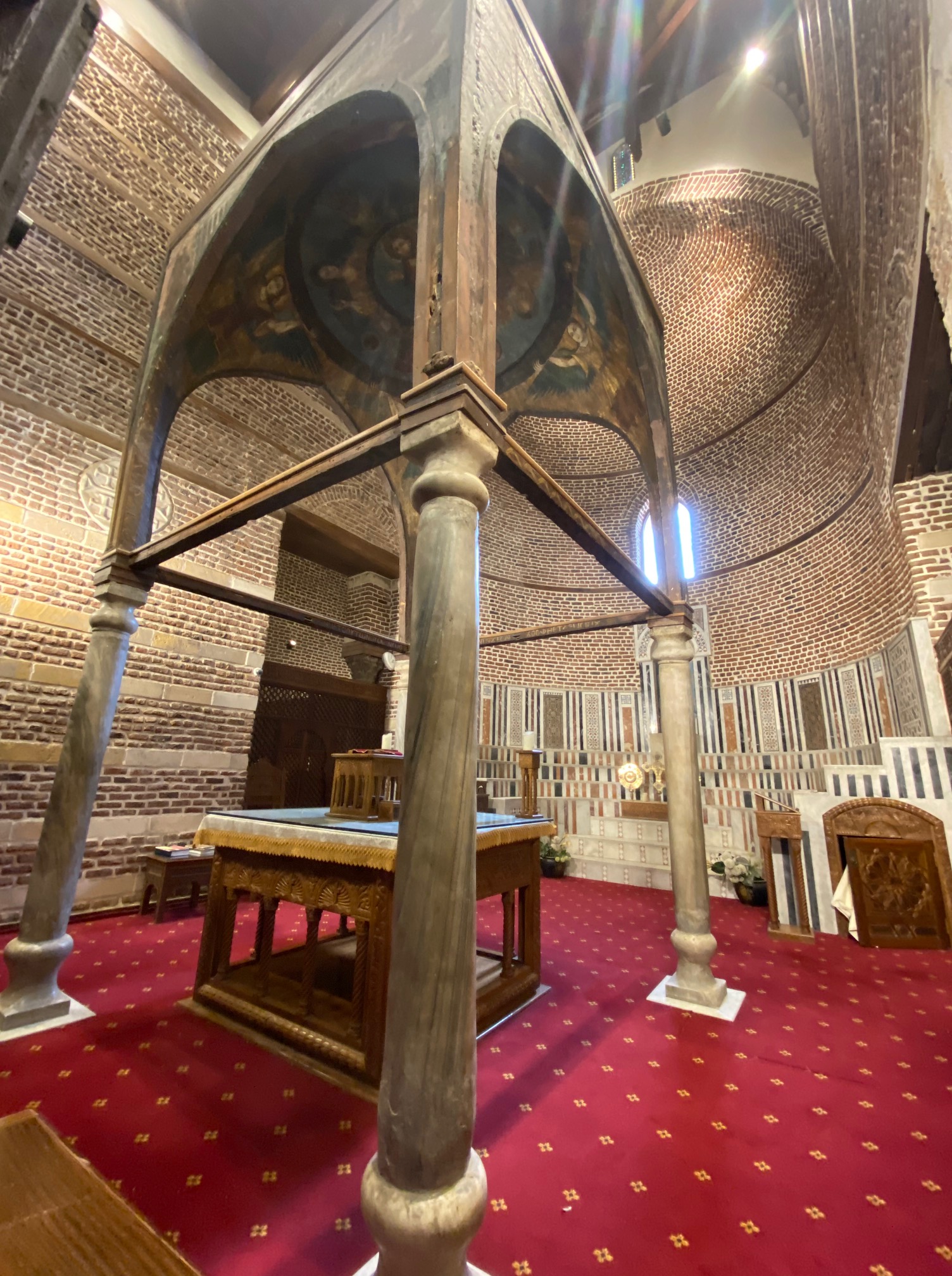
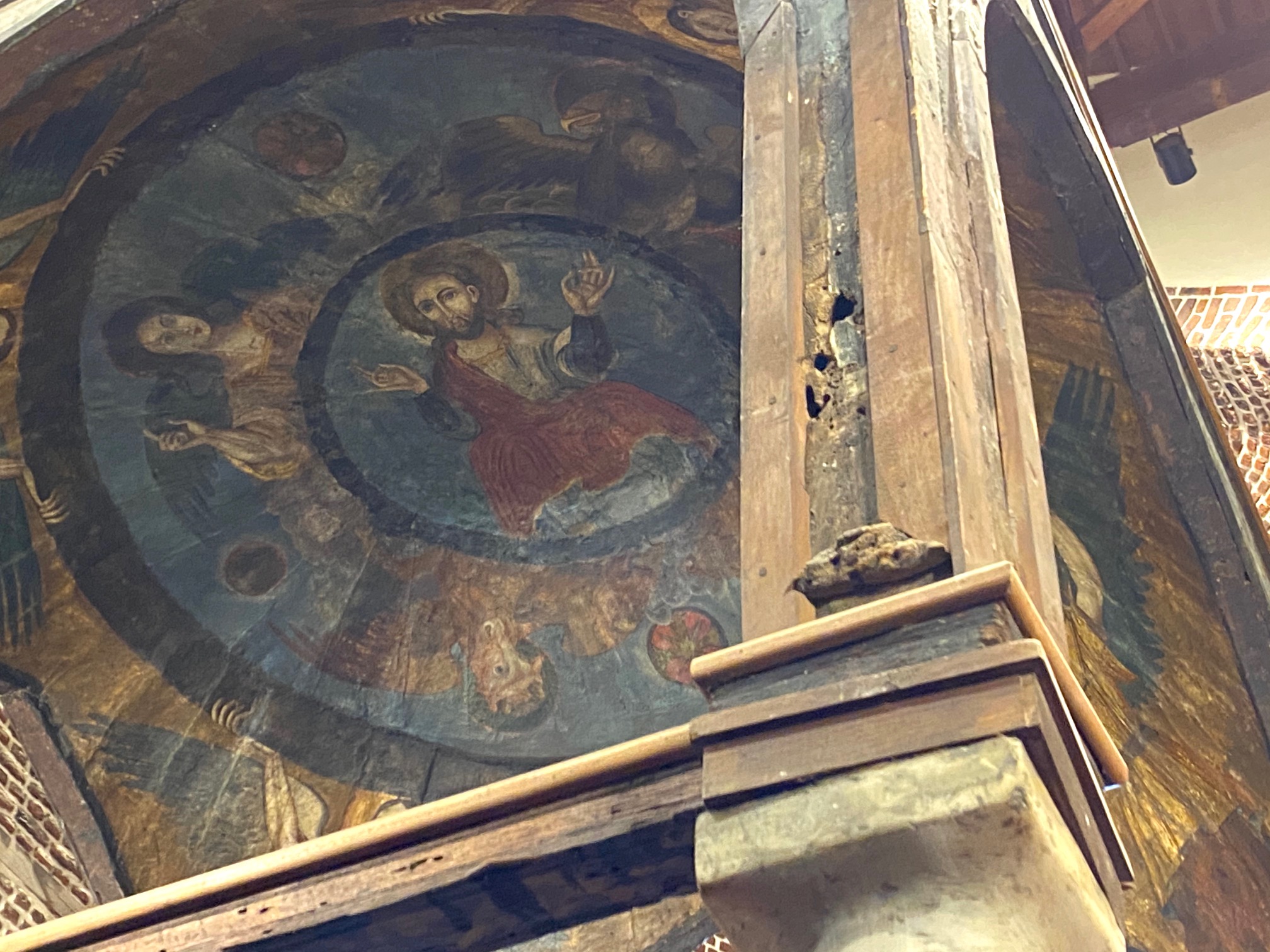
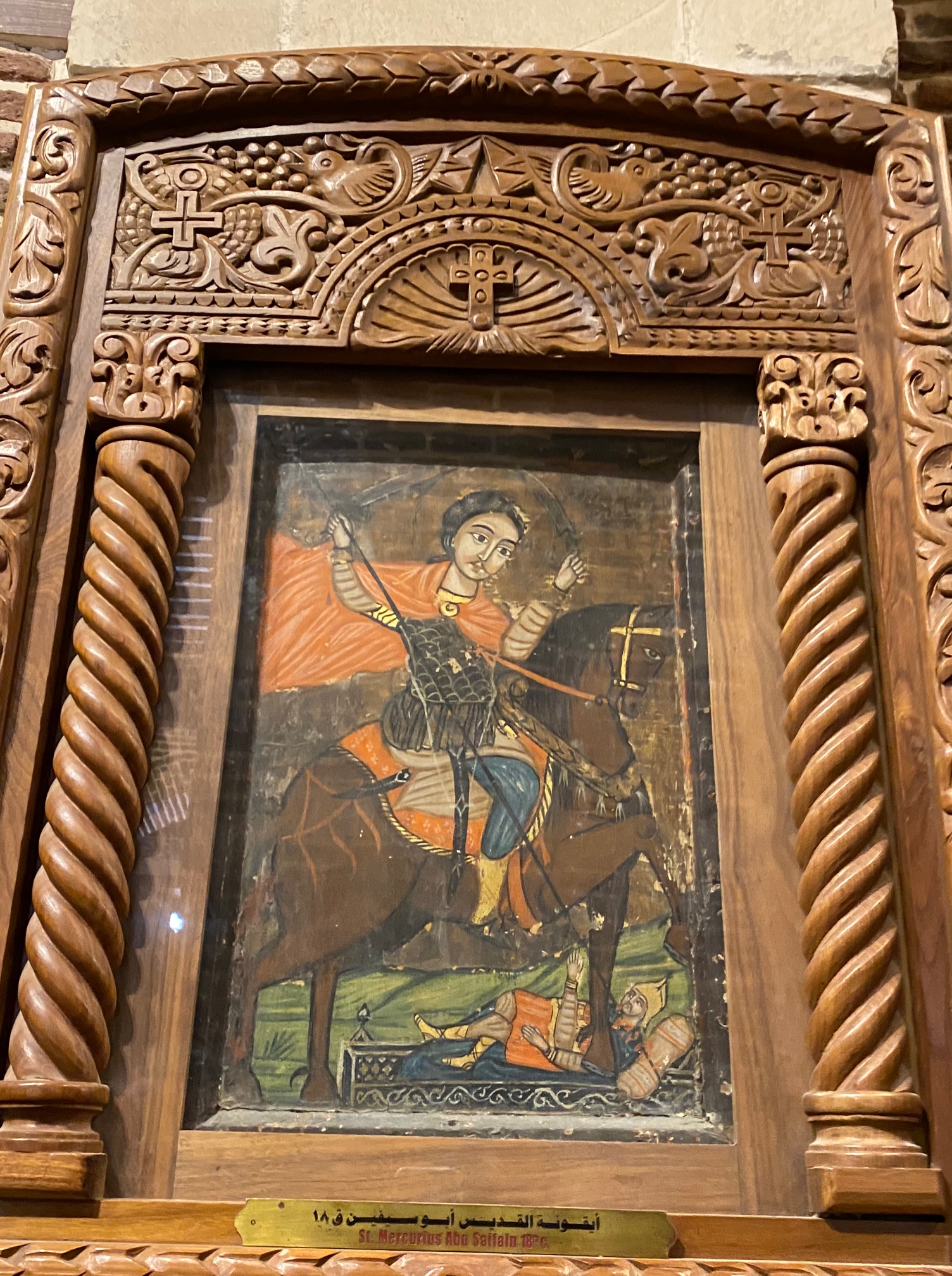
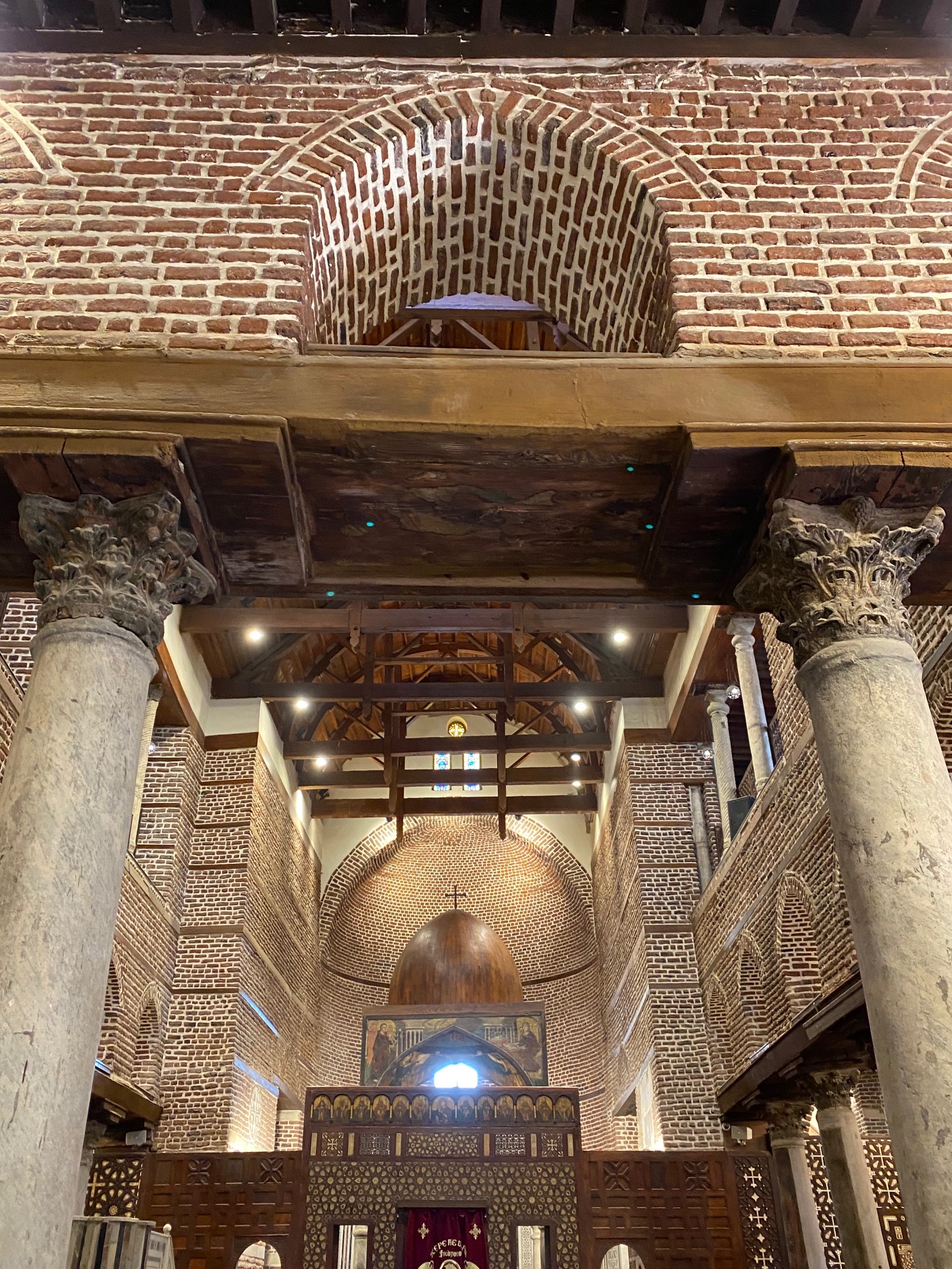
Inside the fortress is a Greek Orthodox church (St. George) and the Hanging Church built on top of the southern gatehouse of the fortress. From the outside it appears to be hanging in mid-air. The main altar and the sanctuary are made of ebony and inlaid with ivory. The timber ceiling is beautiful and was made to look like the interior of Noah’s ark.
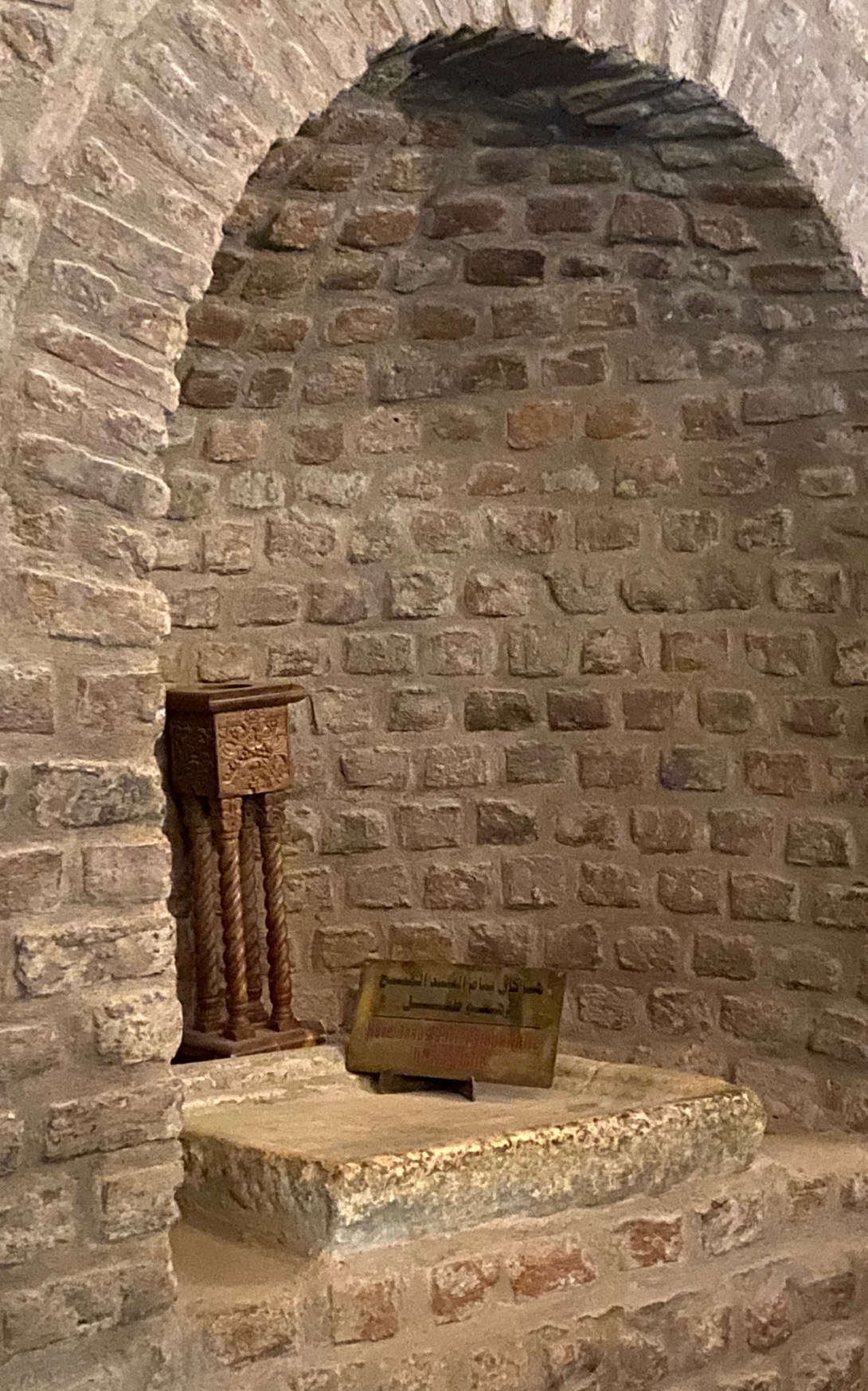
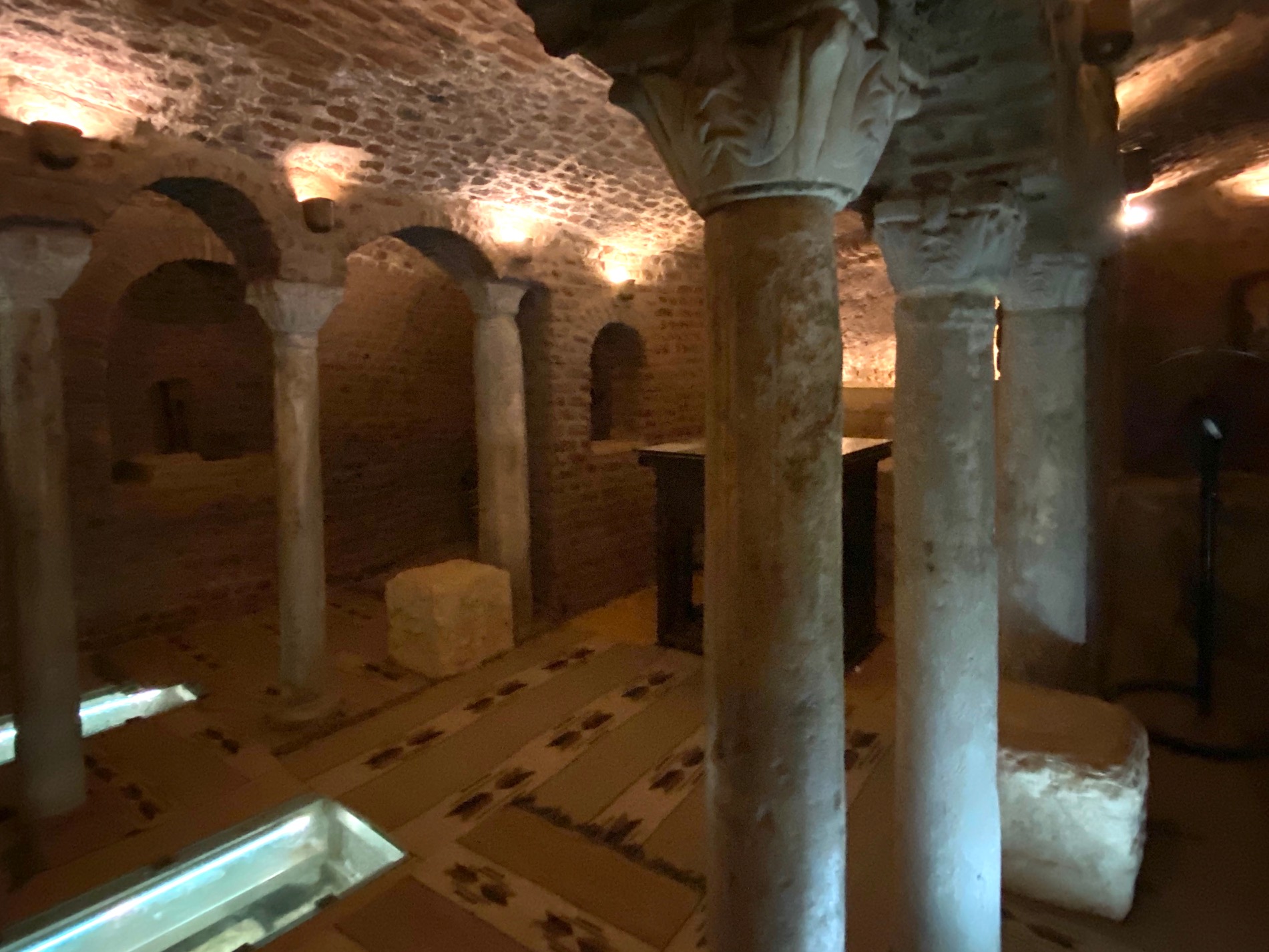
There is an older church below this one where the baby Jesus slept in a cradle and Mary hid. I’m not sure how this time line worked since it would have been a Roman garrison back then. Regardless, It’s a serene and much earlier Christian church in Egypt.
Ben Ezra is also near the fortress and it’s still a Jewish Temple so pictures cannot be taken inside. It is believed that this is where the Pharaoh’s daughter found baby Moses in the reed basket.
My first dreams of Egypt began at my grandmother’s home where my monthly ritual of reading National Geographic Magazine began. There I was–a seven-year-old curled up in an overstuffed chair with my bobby socked feet curled under my Catholic school uniform as I learned about chasing the sun to grasp eternal life. Although the thought of having my brains picked out of my nose during the mummy process gave me pause.
Now older and not necessarily wiser, I searched the risks verses rewards which included negative perceptions in the States about Egypt. My clock keeps ticking and I was done waiting for the perfect time to see these mystic wonders and astounding artifacts. All of us live in an imperfect world. Holding my breath, I clicked the purchase this trip button with Overseas Adventure Travel. Then I went to a book store to purchaseThe Yacoubian Building by Alaa Al Aswany.(amazing look at Egyptian culture and the revolution.)
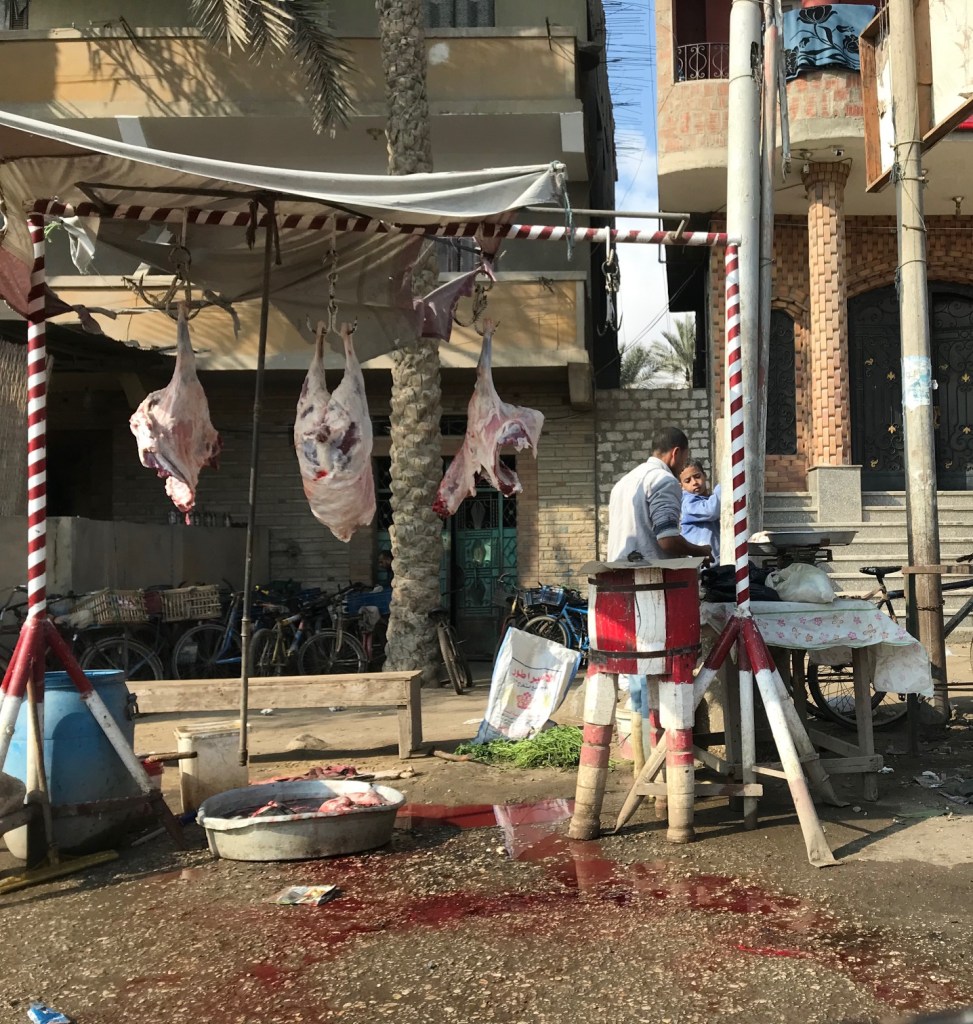
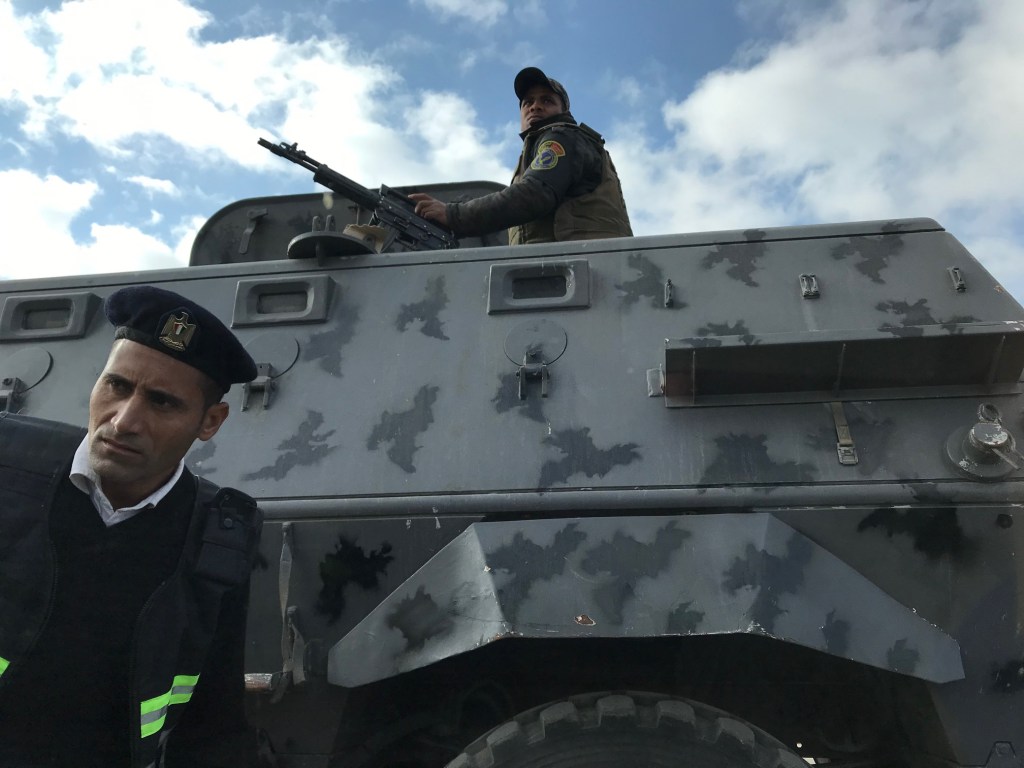
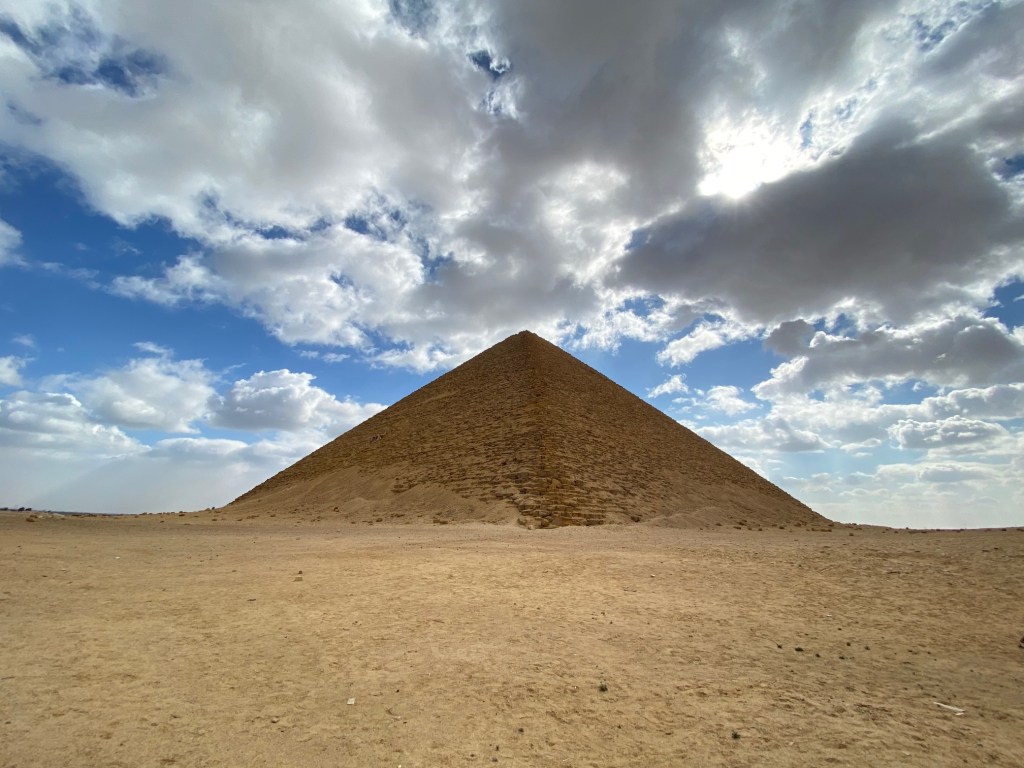
Since we flew in a day early, Bonnye and I booked a driver through the concierge service to take us to the Red Pyramid and Bent Pyramid at the royal necropolis of Dahshur and to the burial city of Saqqara. It was a fascinating drive, even though our driver got lost and we passed military carrying AK-47’s. Luckily, none of them saw Bonnye taking this picture or else we might still be in jail. ( I highly recommend NOT taking pictures of military anywhere in the world)
Bent Pyramid
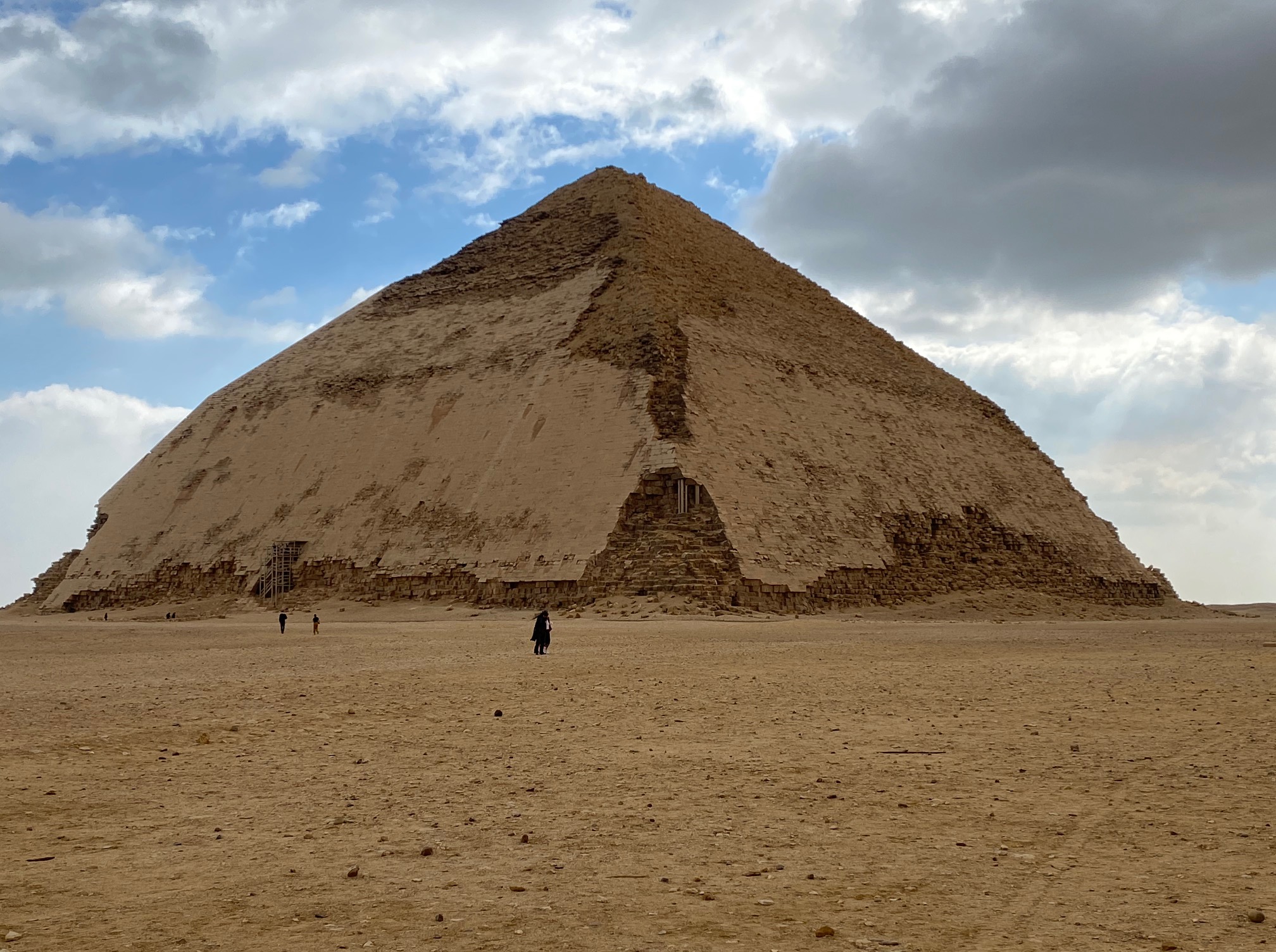
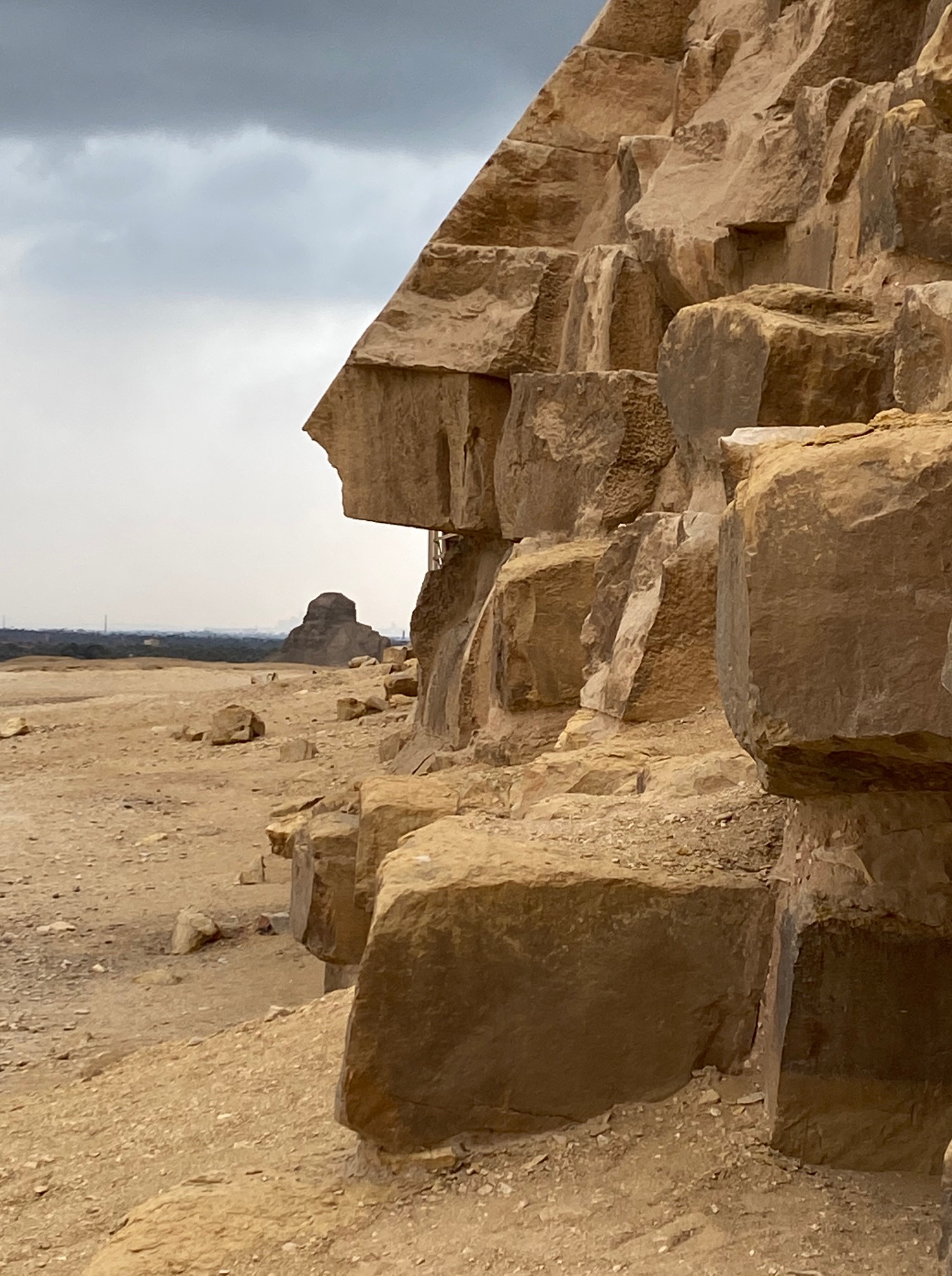
This early transitional pyramid is bent because good ol’ Pharaoh Sneferu couldn’t quite figure out the geometry in his quest for a smooth limestone tomb. See the bend half way up? Before the fourth dynasty, all pyramids were step-shaped. This was Sneferu’s second attempt for a geometric tomb after the disaster of the sinking Black Pyramid that is also in Dahshur. The change in angle might also have happened if the building started to become unstable.
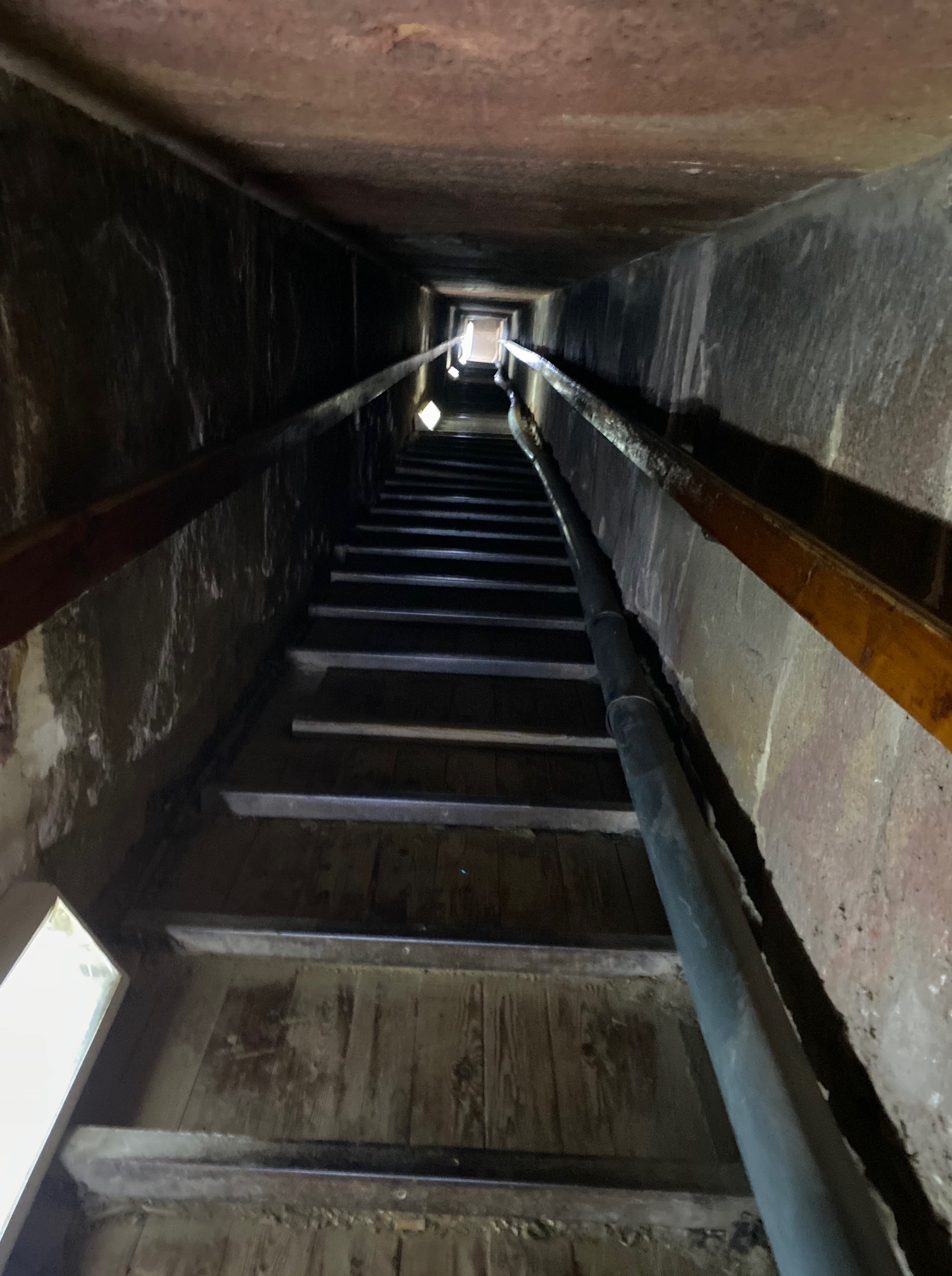
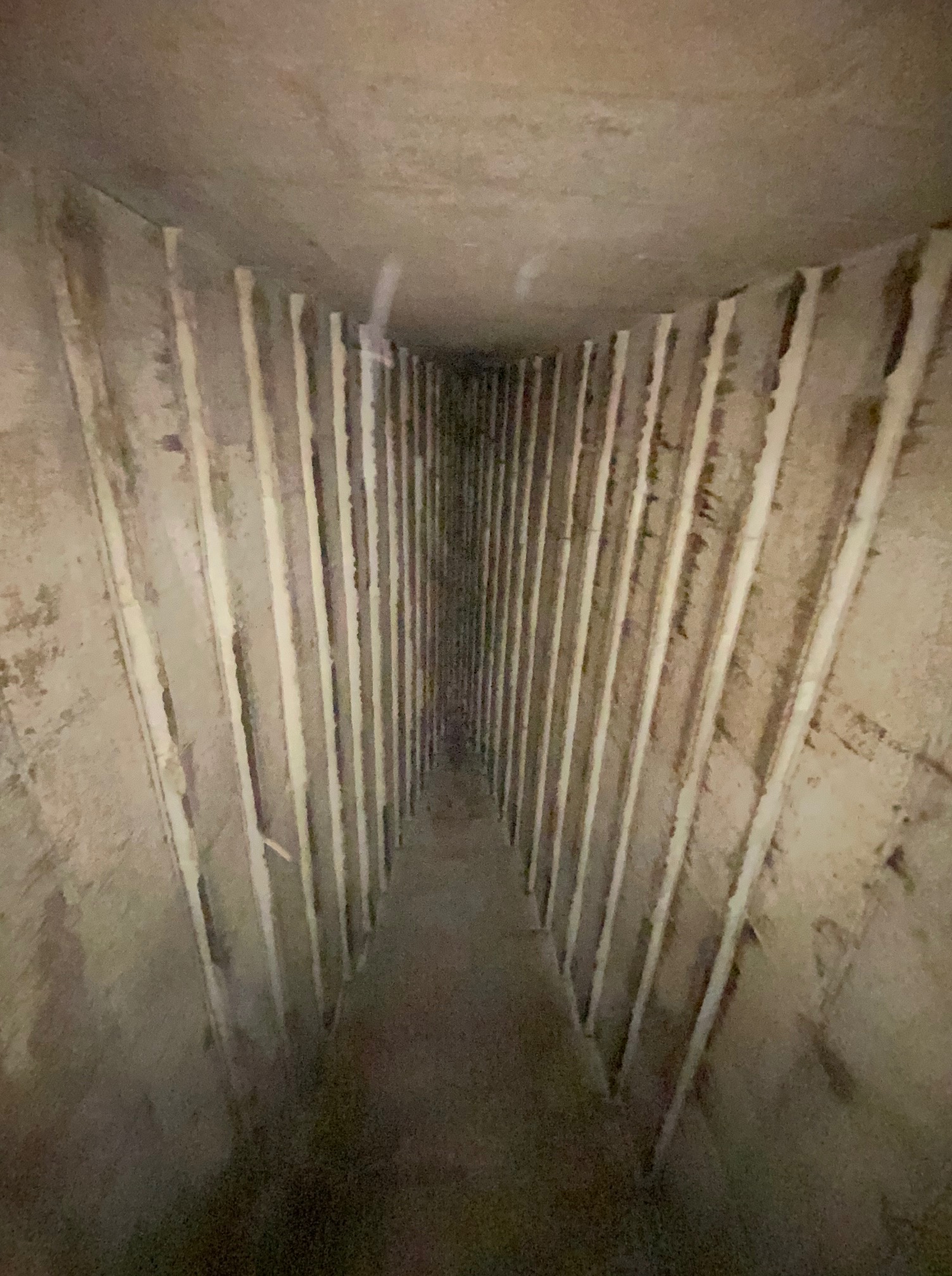
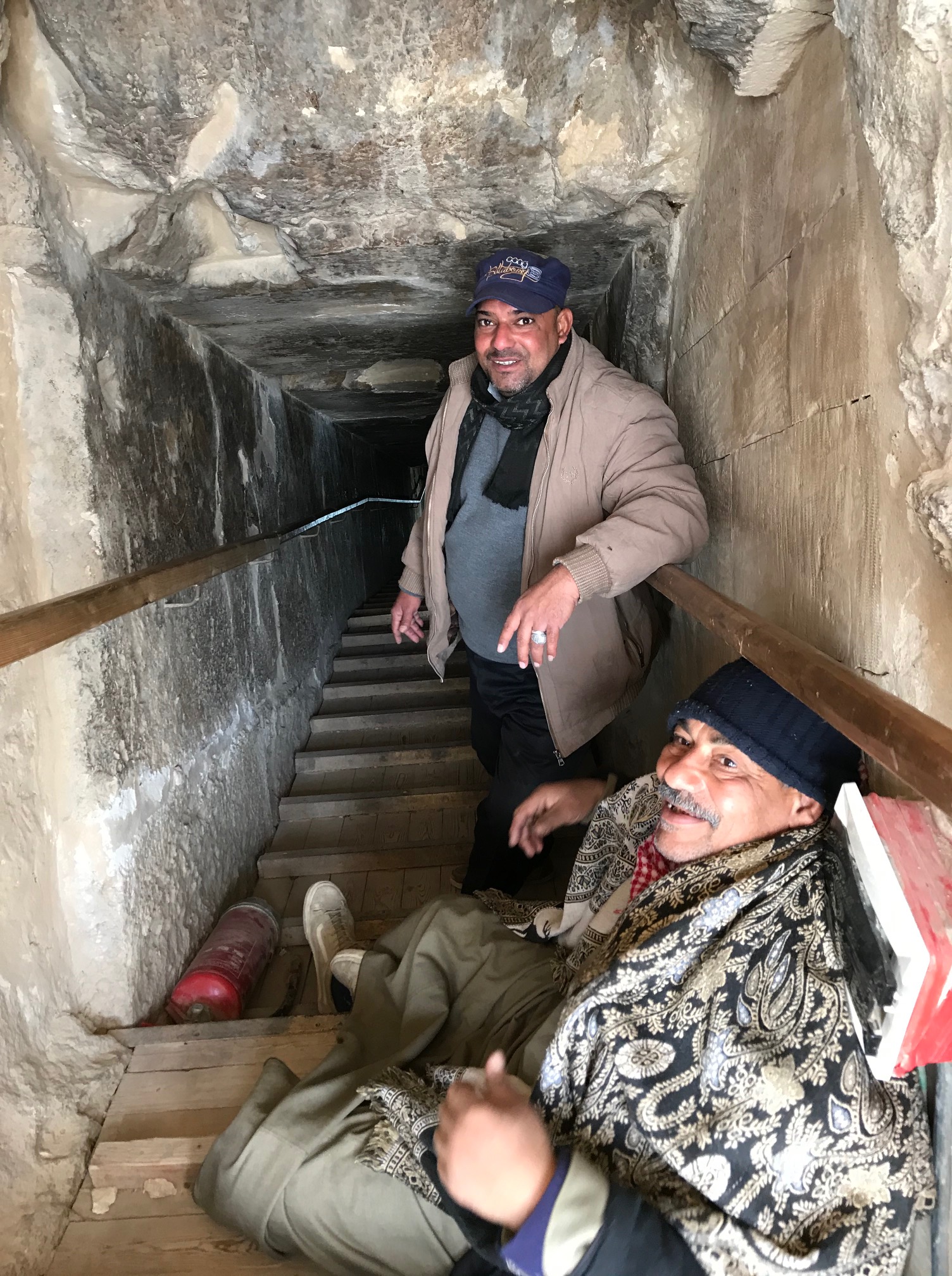
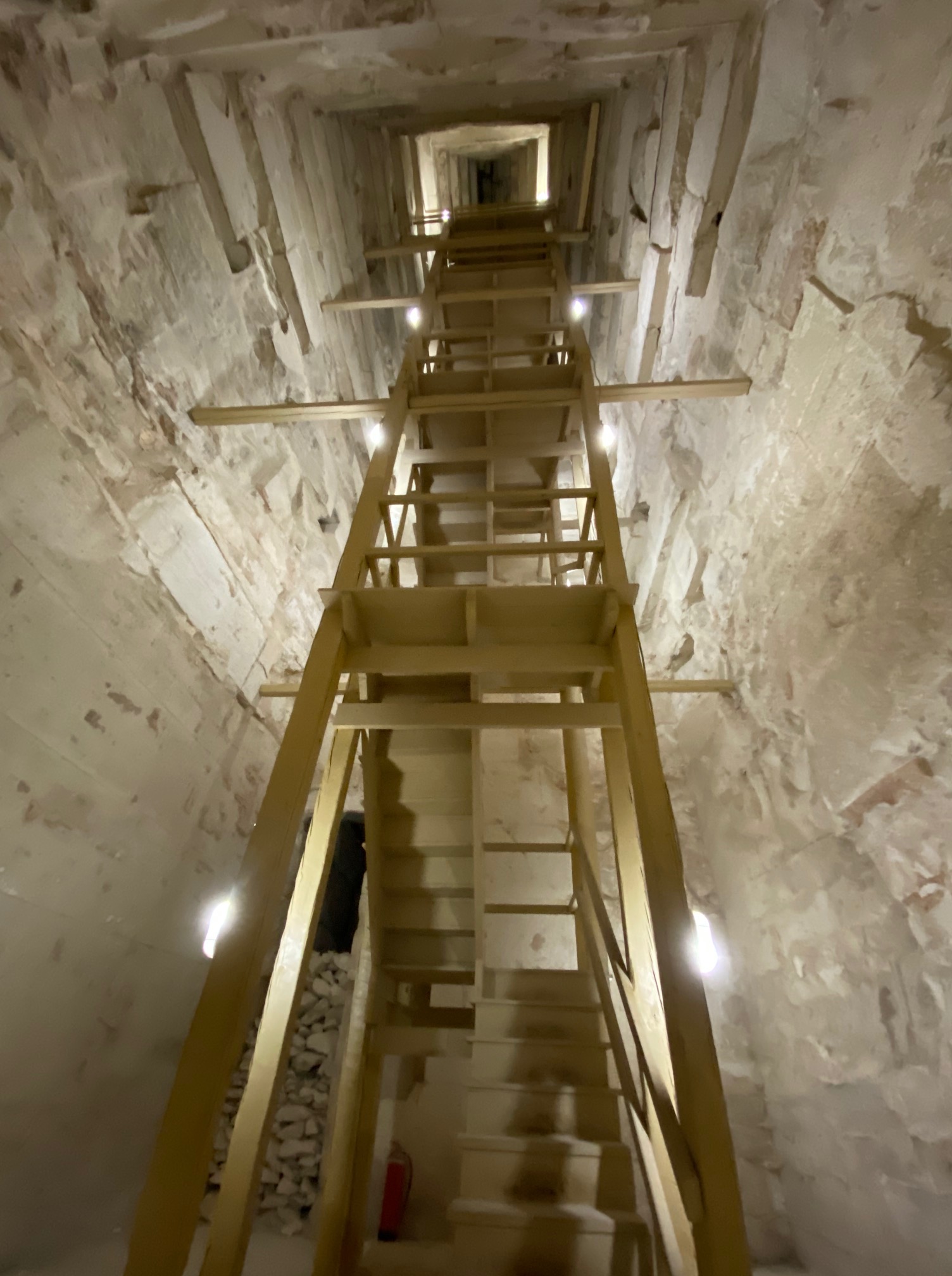
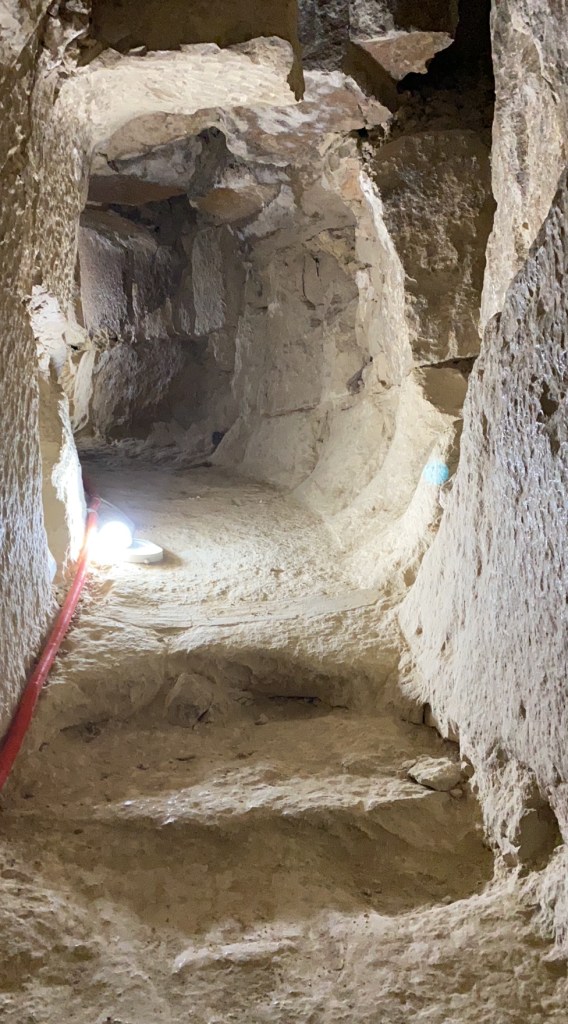
It was a kick to walk (and crawl) through the steep shaft down to the two large corbelled chambers built 4,600 years ago. Let me add that there were few people visiting that day, which was great. Imagine being inside the belly of a pyramid with people moving in both directions. It would be impossible with crowds. The added benefit was being able to feel like a real archeologist discovering an empty tomb. The Bent was closed for 50 years because of a nearby army camp so it was an honor to be able to explore.
*** on a side note–if ticket takers offer to take your picture, you are expected to pay them!!!***
Red Pyramid
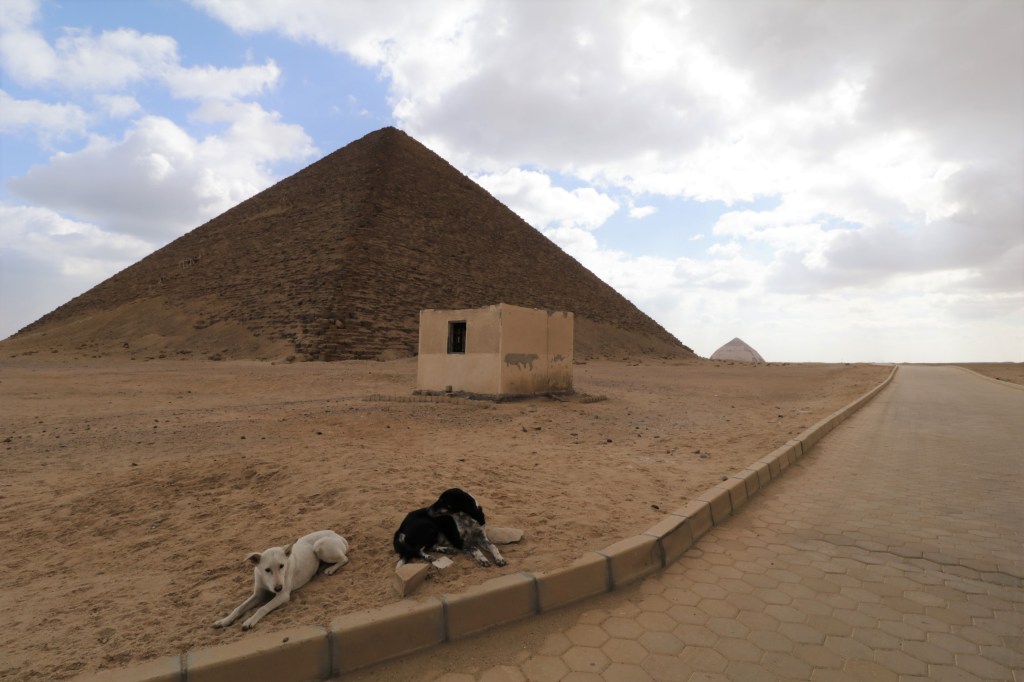
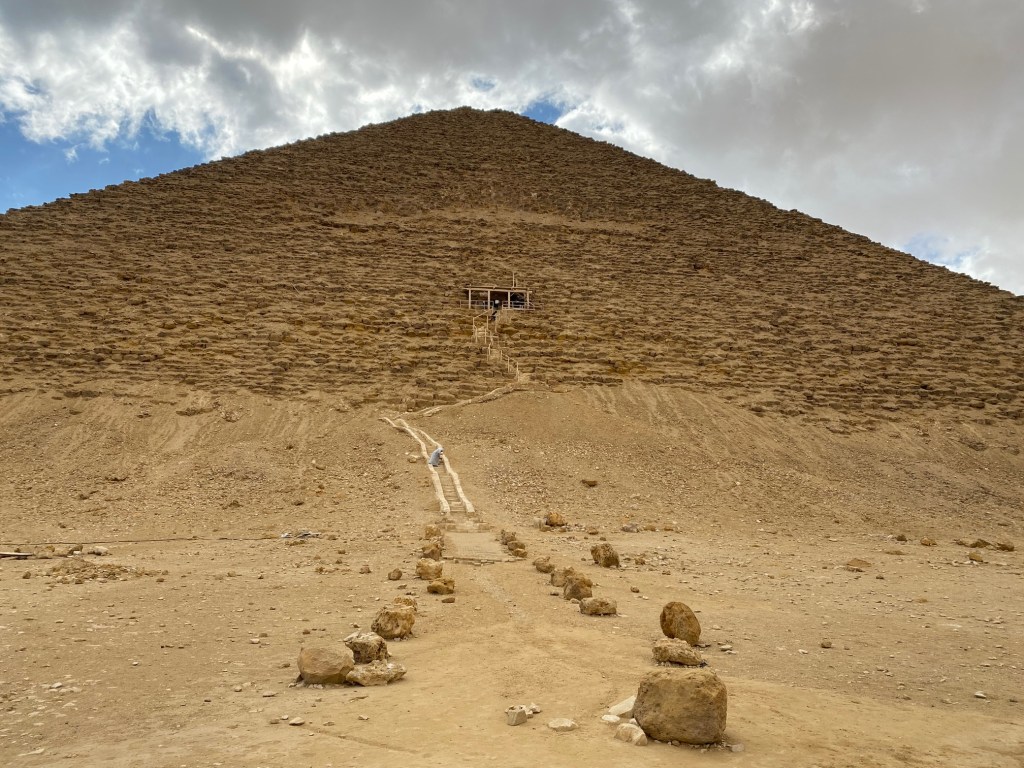
It took Sneferu three times to figure out the right angle for his tomb in Dahshur. The Red limestone pyramid is the first success as well as the third largest such edifice in Egypt. (His son went on to build the largest–more on that later). It was covered in white Tura limestone but people in Cairo took the blocks for their own buildings. It’s thought that the man known as “the good pharaoh” was buried in the three chambered Red Pyramid. A mummy was found there but it disappeared. Keep an eye out for it on ebay.
There have been recent finds from a queen’s tomb nearby and there are at least 11 other tombs that haven’t been explored yet.
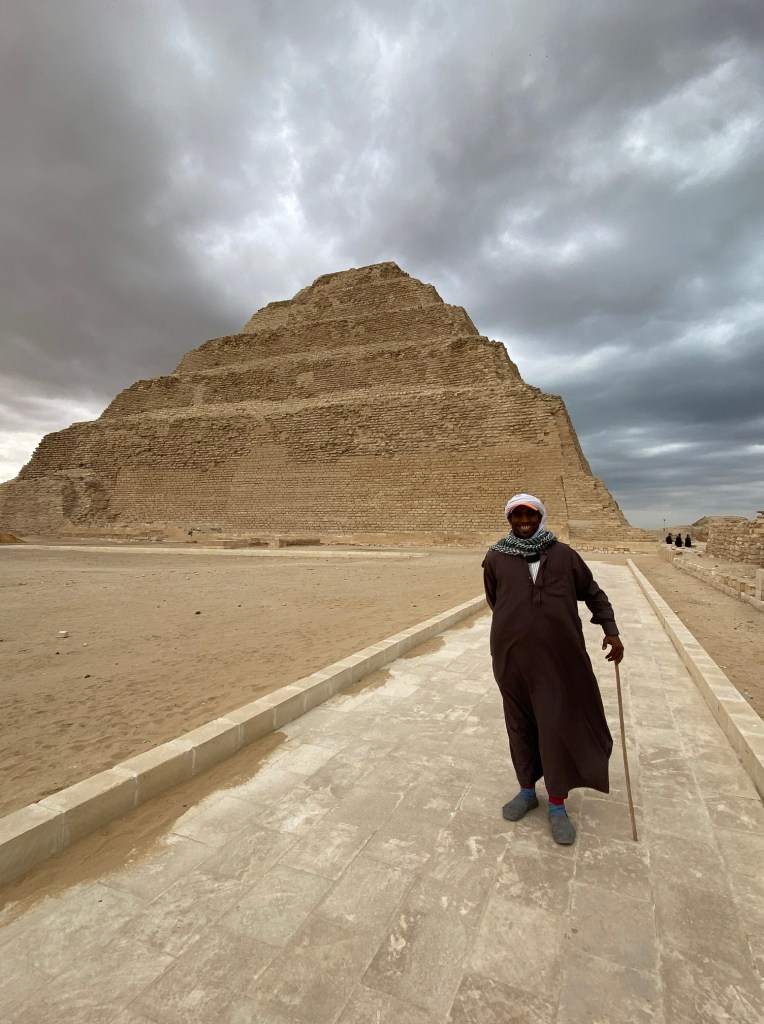
Saggara Necropolis
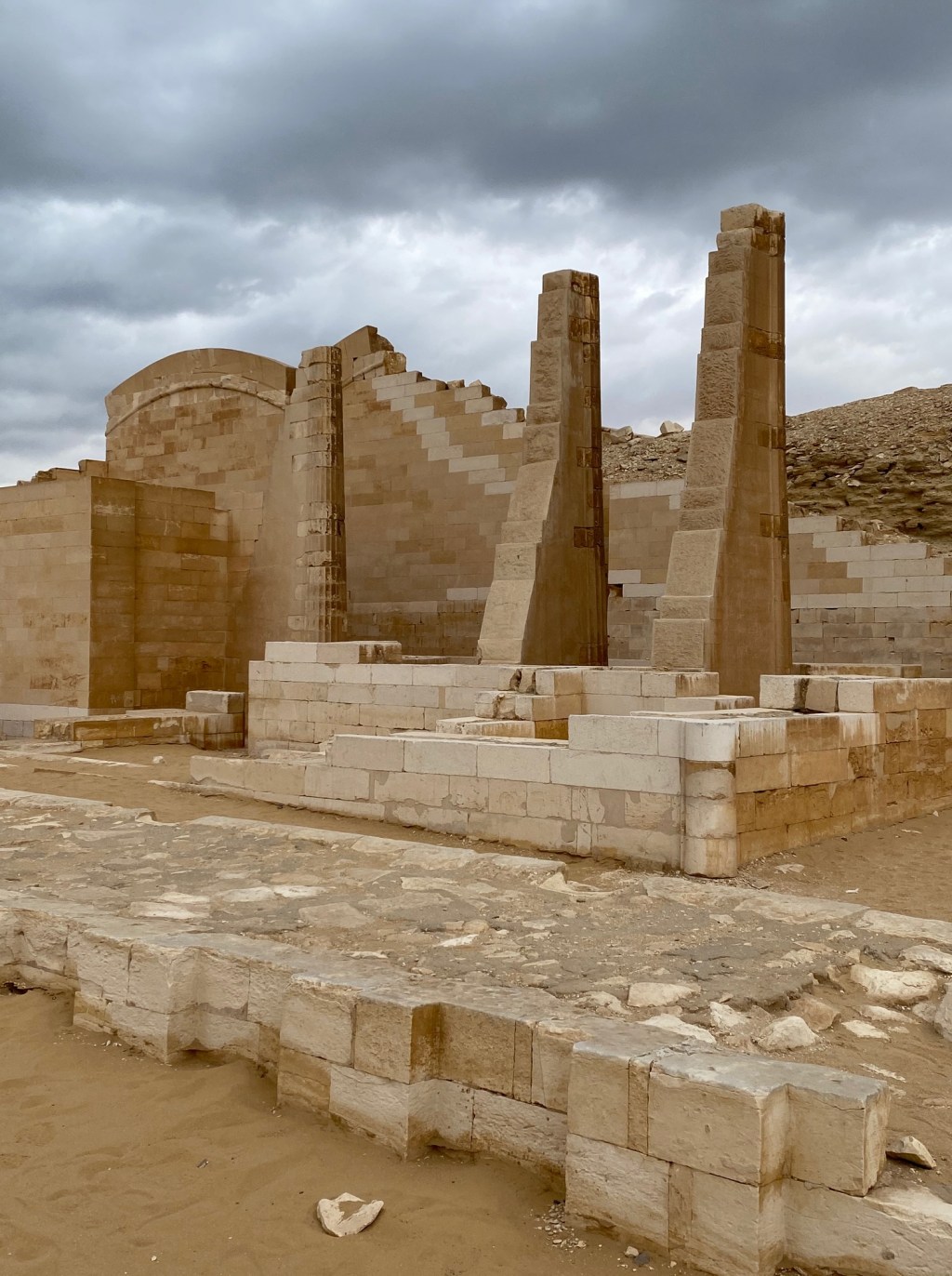
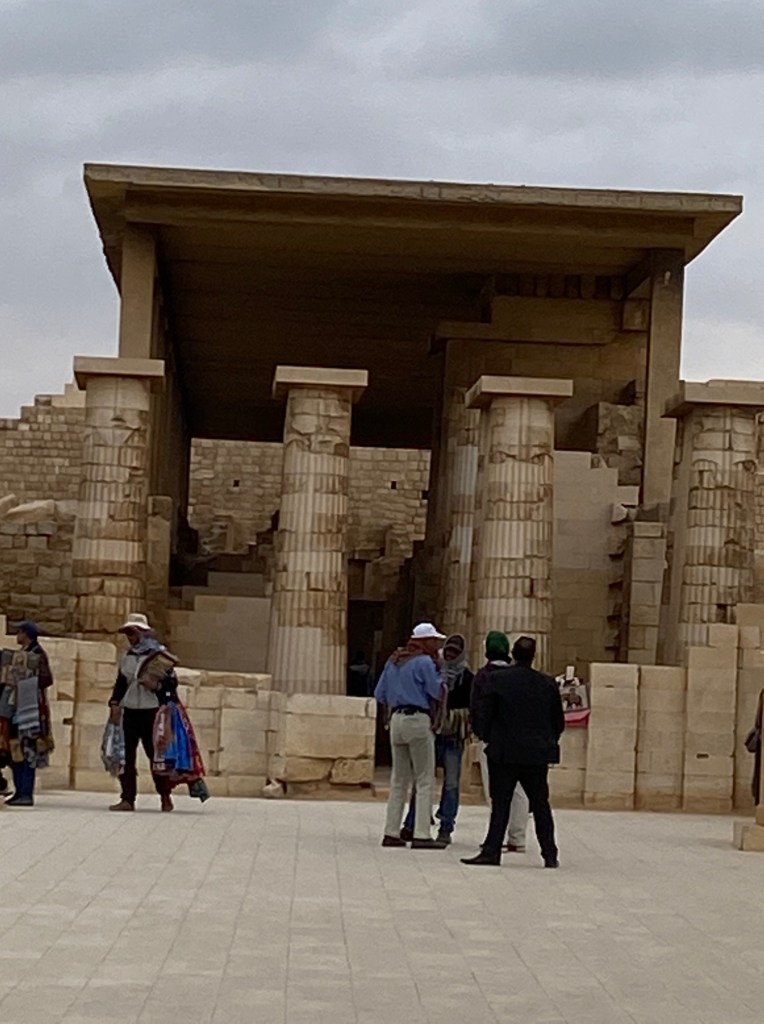
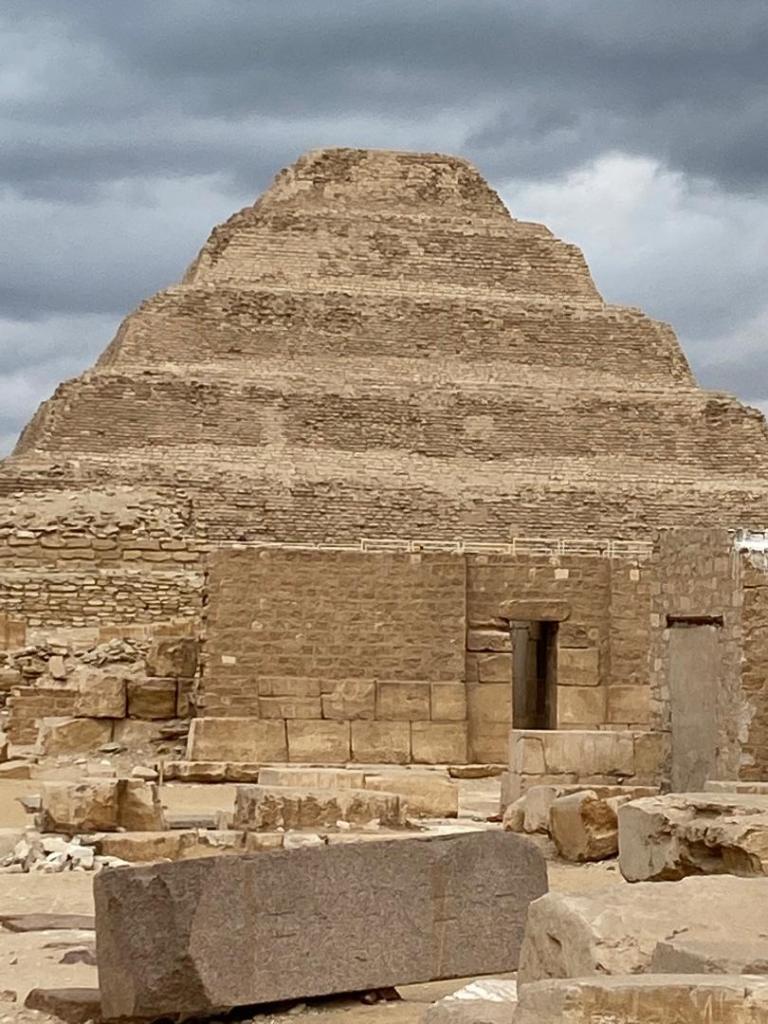
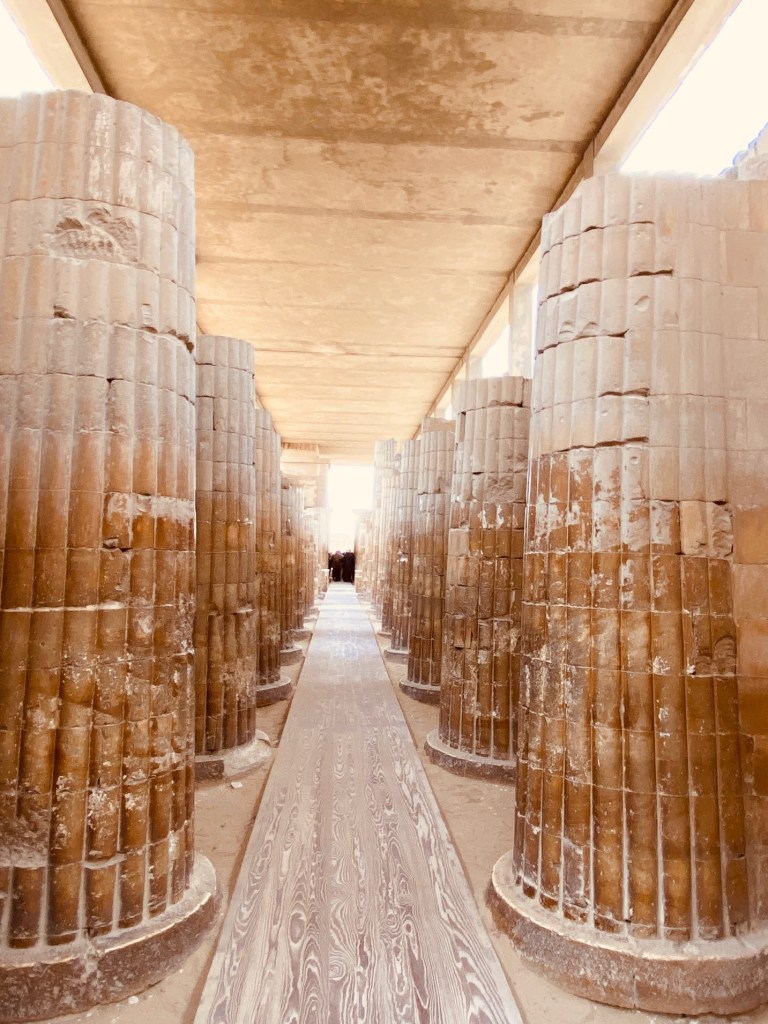
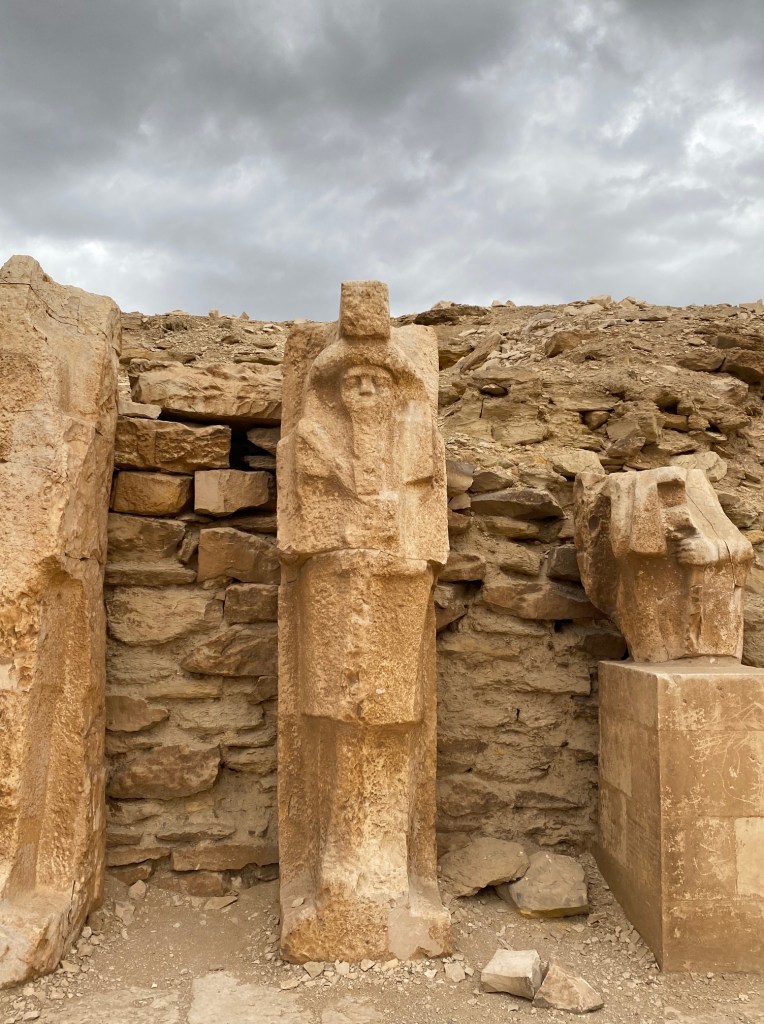
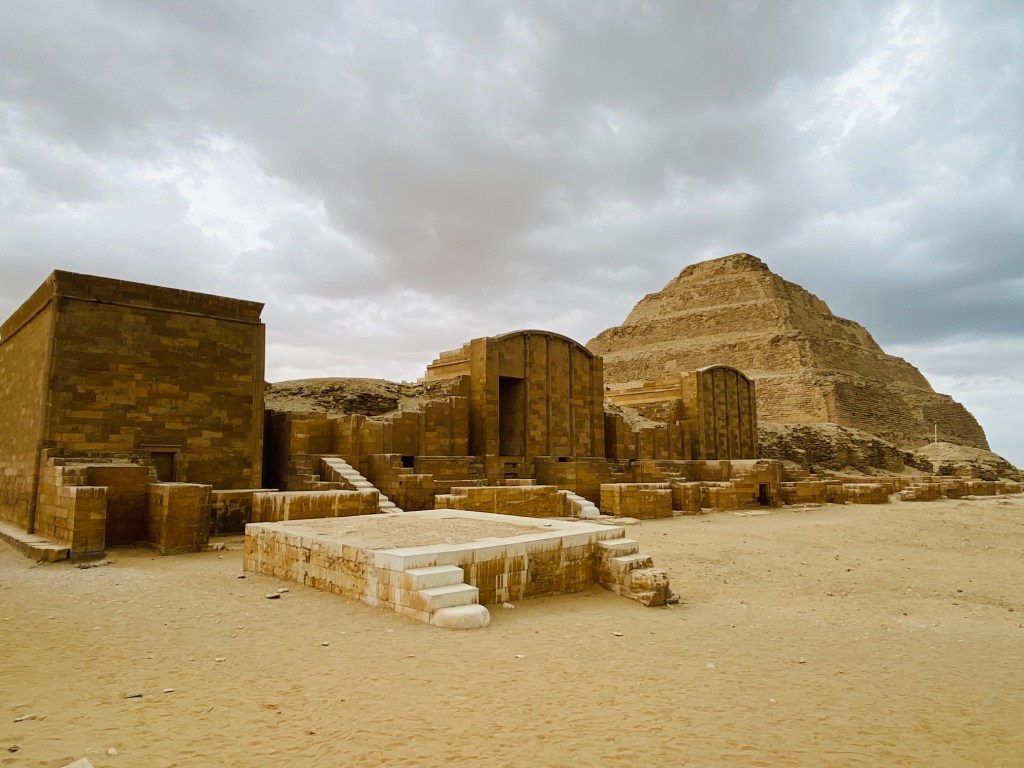
Nearby the Dashur pyramids is the city of the dead for royalty and merchants from the ancient city of Memphis. It covers an area of 4.3 miles by 0.9 and was surrounded by a 32 foot wall. There are some burials from the second dynasty but It all went crazy with the third dynasty step-pyramid (of Djoser). Everyone wanted to spend eternity with the rock-star king’s so it expanded with an entry courtyard, a court of 40 columns, open courtyards and many smaller tombs called mastabas. Rituals and burials happened here for 3,000 years.
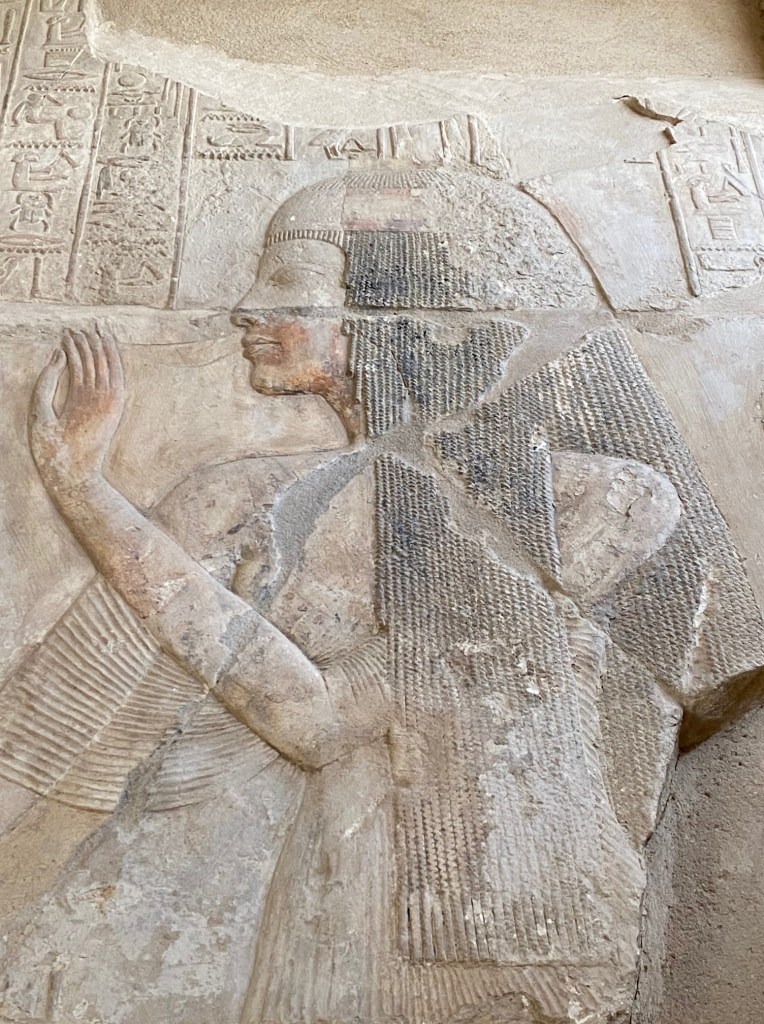
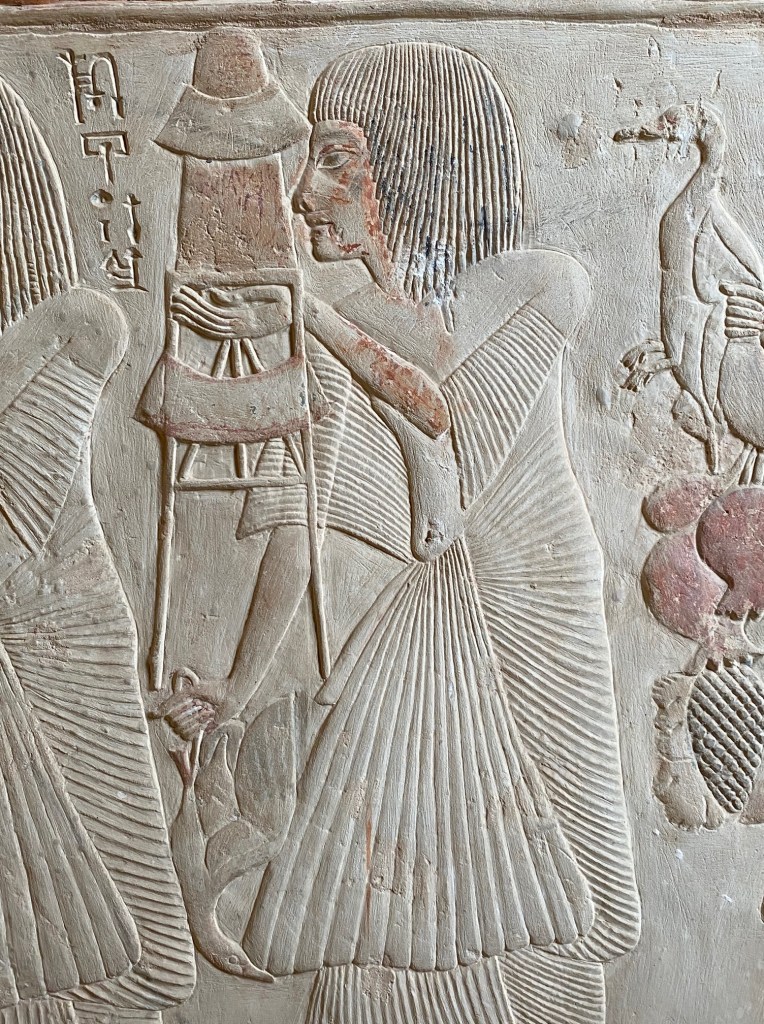
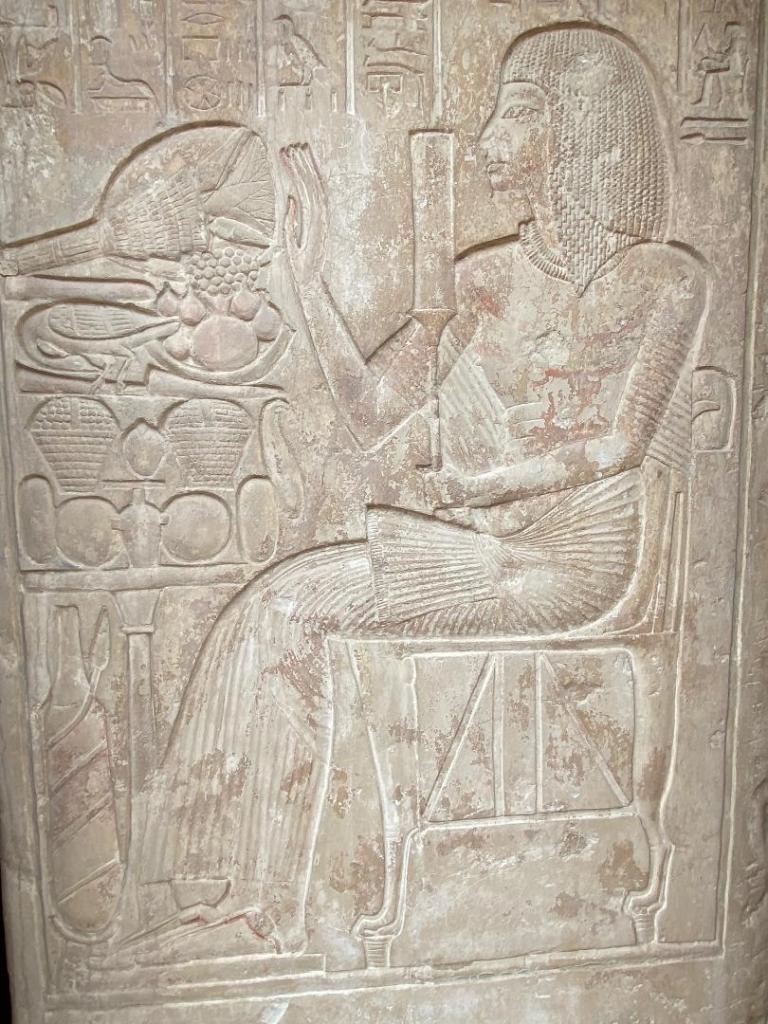
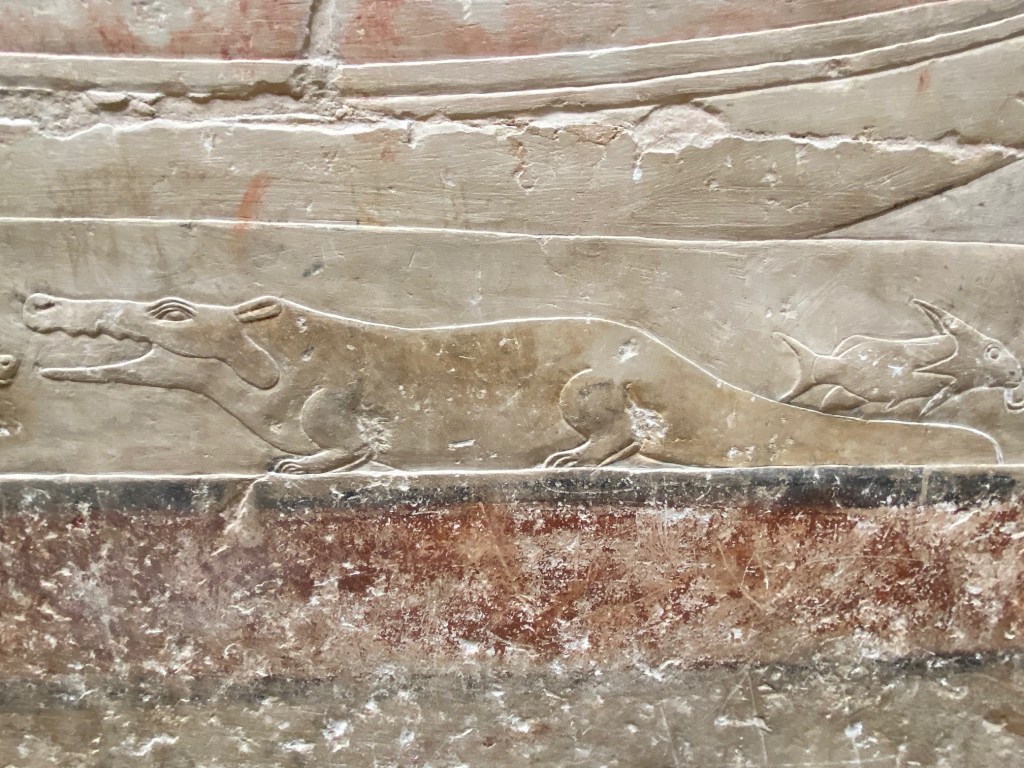
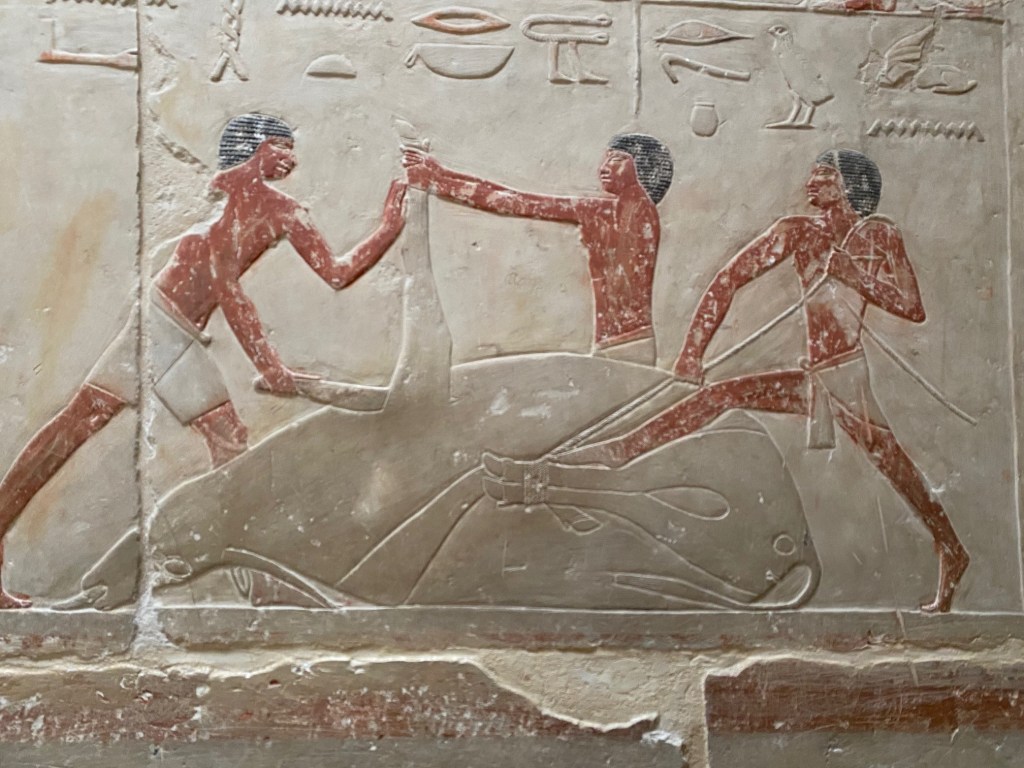
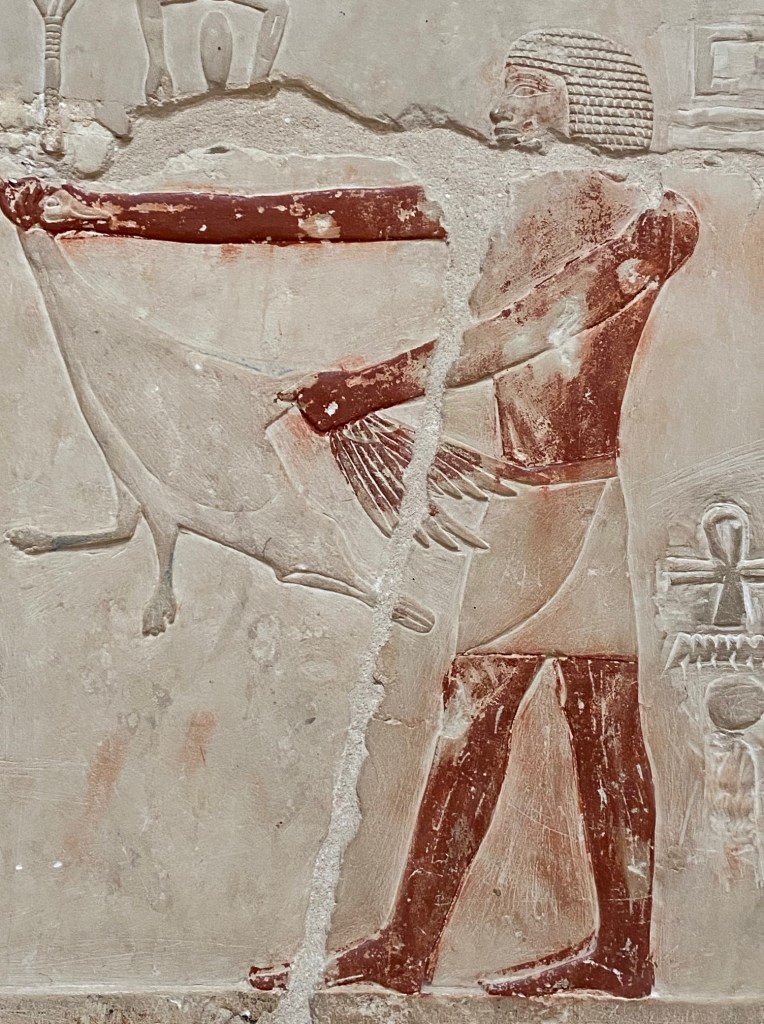
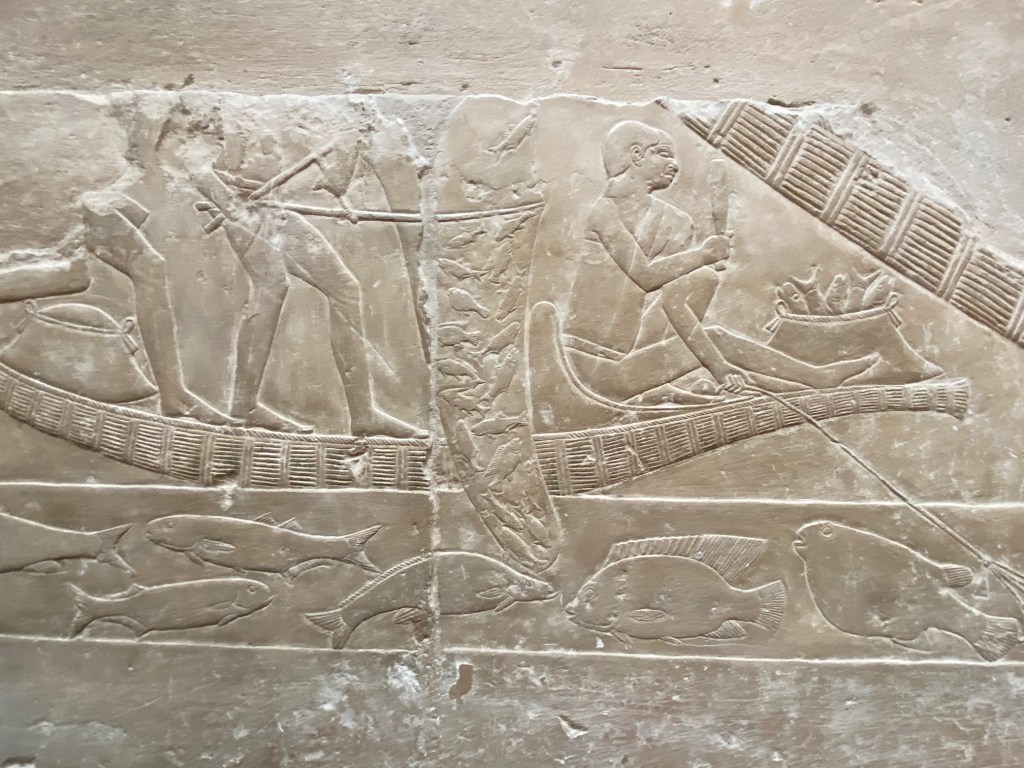
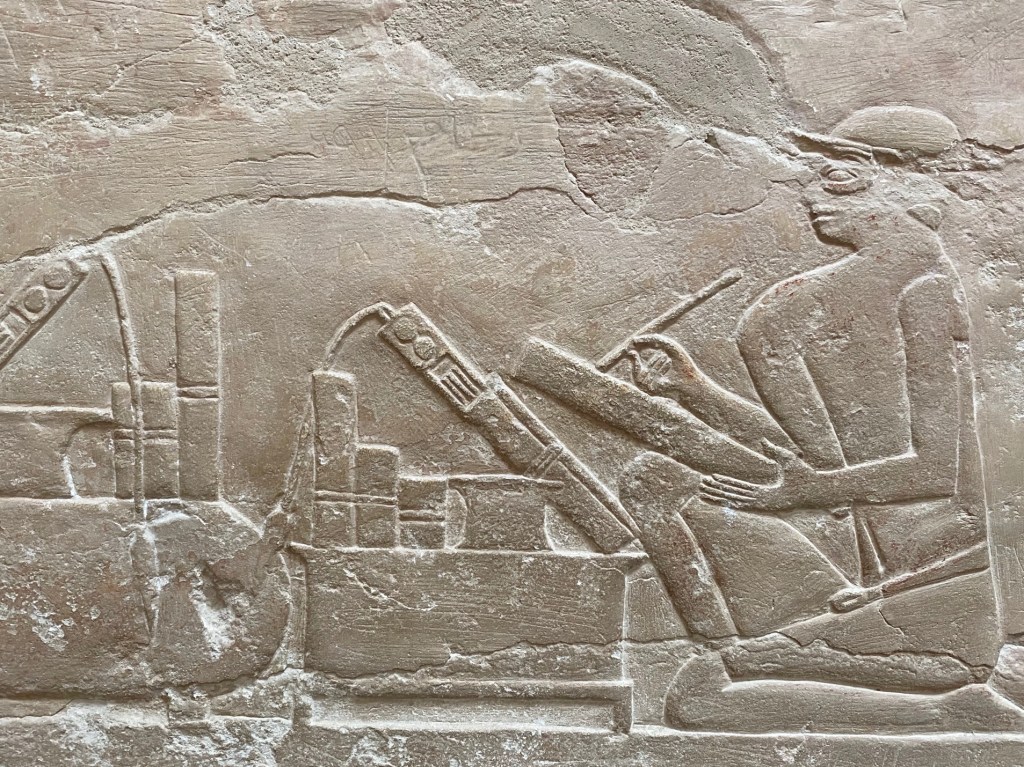
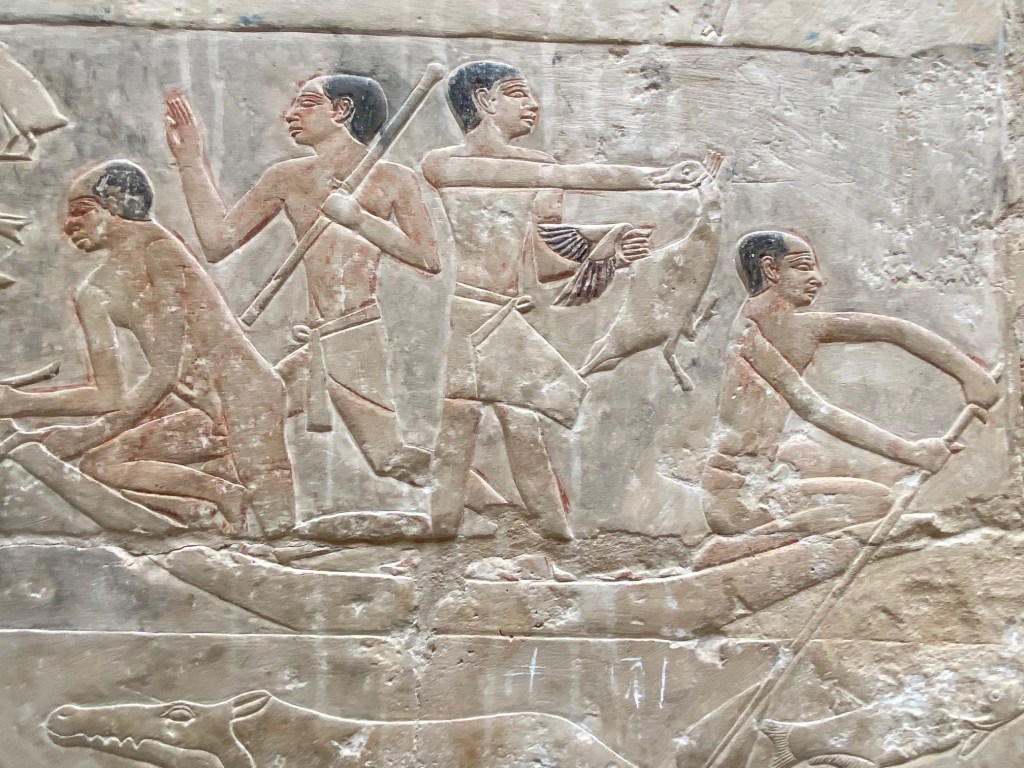
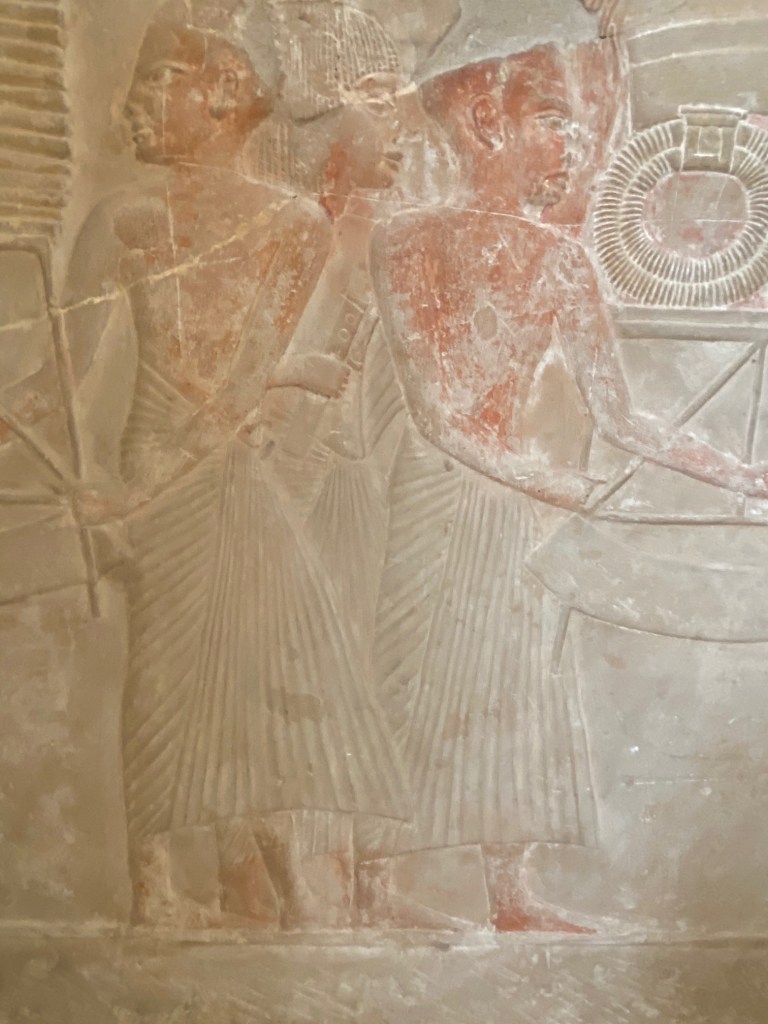
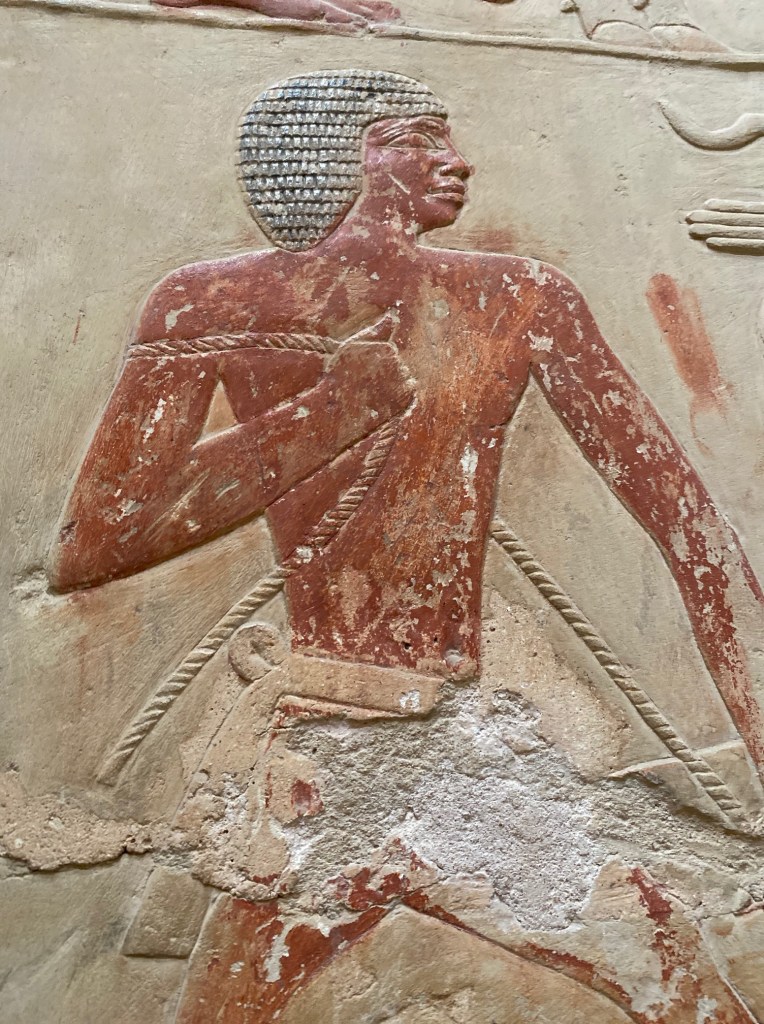
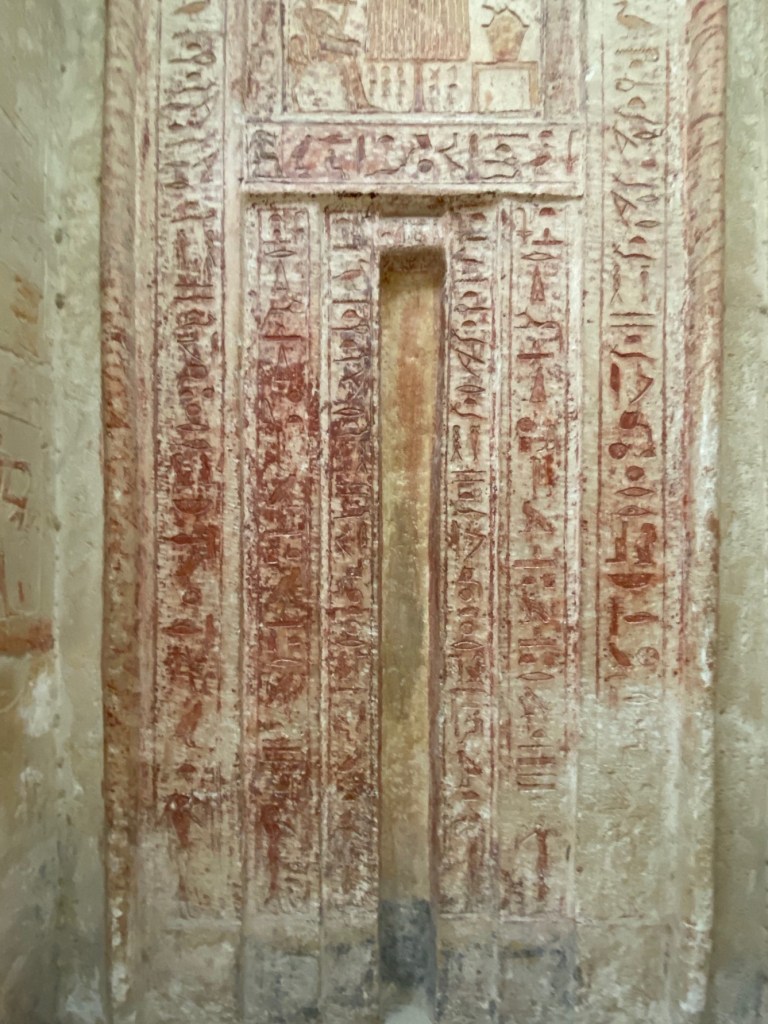
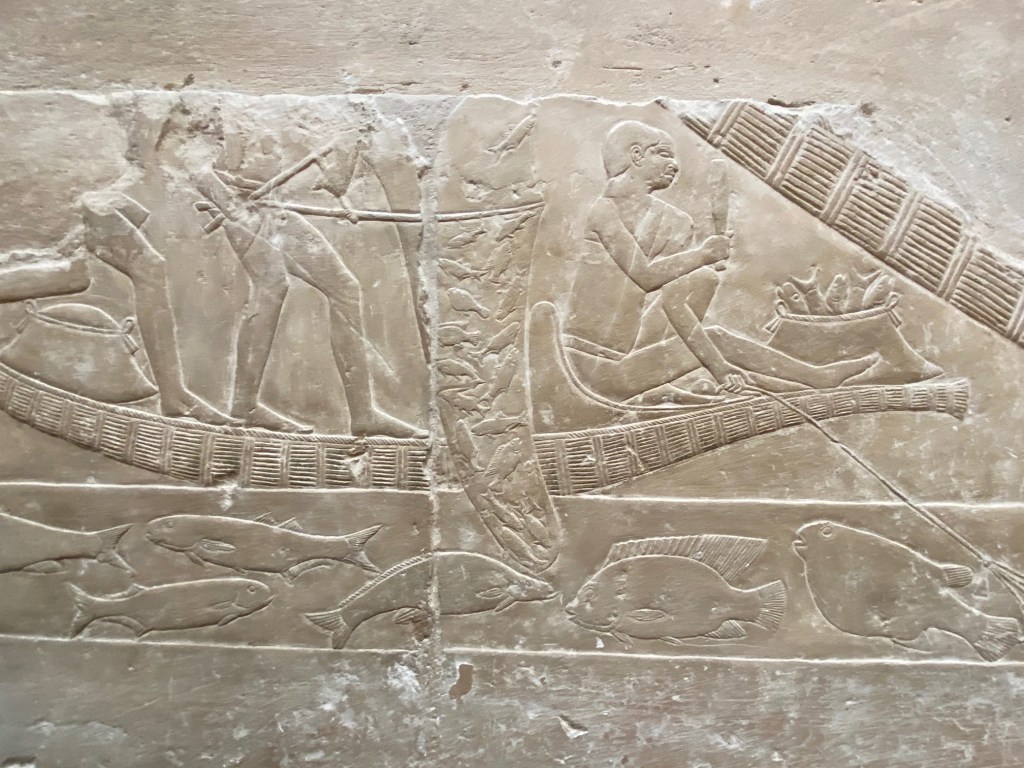
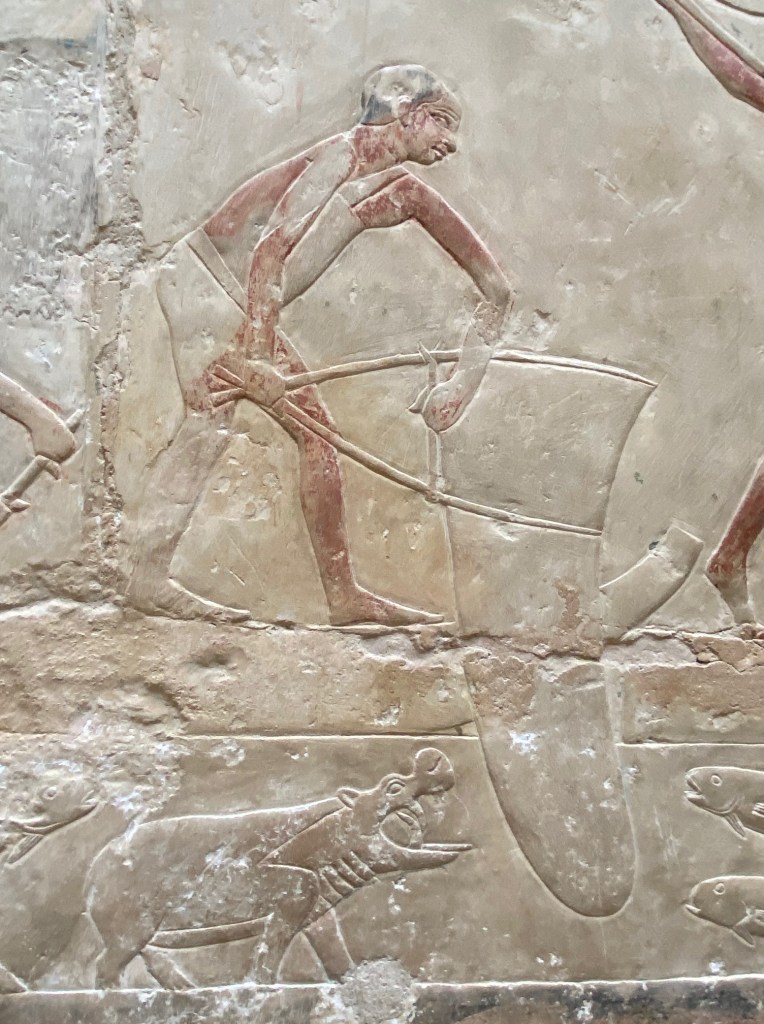
I found several tombs to be very interesting. Idut was the daughter of King Teti (6th dynasty, circa 2,360 B.C.) Her tomb shows every day life with hunters, fishermen, and even a relief of herself carved on the wall. Head west to Inefert’s tomb. He was the prince Vizier and on the walls is a carving of them entering a bedroom with two beds that servants are preparing. The other tomb we tripped on by accident as it’s away from the main complex. Maya, the treasurer of Tutankhamun has beautiful carved walls.
***Be prepared—there are men at the main entrance who act like they’re going to show you around. At first I thought it was included in the entry to the UNESCO World Heritage site. But I quickly figured out that they wanted to be paid. I stopped the man rushing us down the entry hallway and said, “I don’t want a guide. I won’t pay you!” He continued to follow and tried to show us things. I told him at least 3 more times that I wouldn’t pay him before he got snippy and made comments about “you’re rich from America.” I had to raise my voice to get him to leave us alone. It happened again at Maya’s tomb. I again warned the man who ended up cursing me. We were so frustrated we didn’t finish looking at the tombs in that direction. I’m certain that if we had a man with us this would have been handled quickly and quietly.***
Even on this bright sunny day I can feel the dead watching as I walk down the street. The intuition isn’t sinister, although dead criminals from the past did harm others. No one wanted to guard those in jail. There was too much gold to find. Therefore, hangings were swift.
What gives me goosebumps today are emotions saturating the breeze. Regret. Fortunes found and then drained at the saloons or spent on Hurdy Gurdy Girls in the dance halls. Prostitution was rampant and in my mind I hear laughter and the blue haze of burning hand-rolled cigarettes.
Few women were respectable although shining stars graced the gritty environment. Mary Babcock Moore was the first women to practice medicine in Bannock, Montana. Sarah Bickford had been born a slave in 1852. After the civil war and against all odds Mrs. Bickford married a white man before the new state of Montana forbade such a thing. Even more unusual, she became a very successful business woman after her husband’s death.
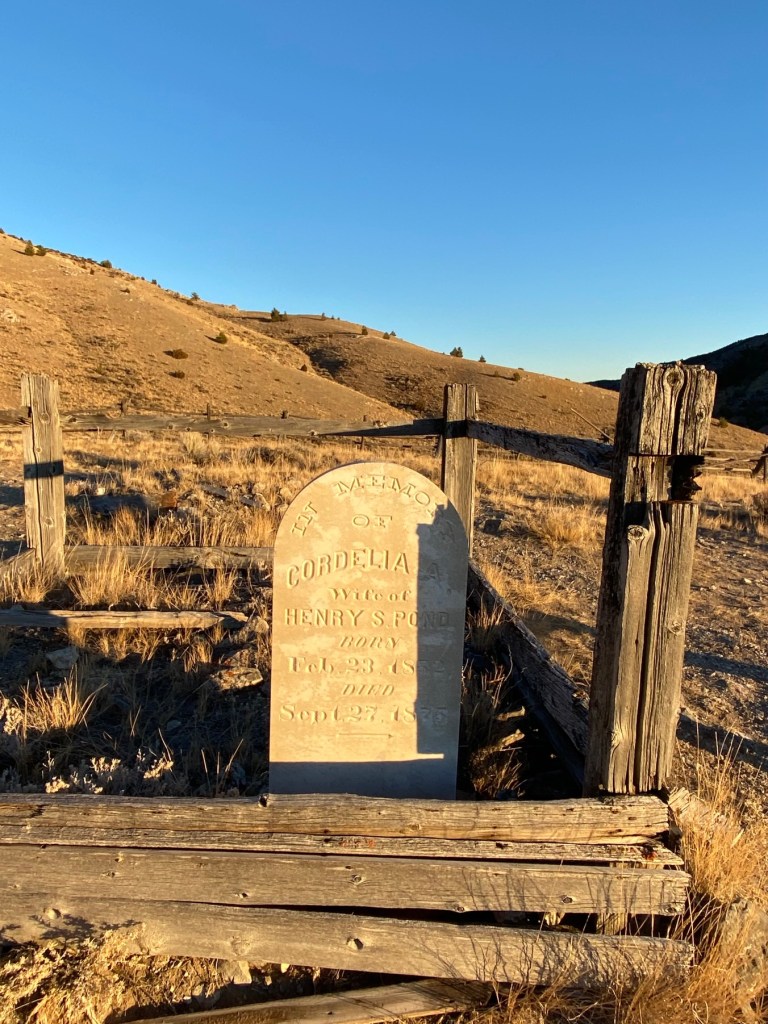
It takes a short walk to the cemetery. There are so many dead children. Diphtheria. Measles. Flu. Whooping Cough and Scarlet Fever. Mourning and hardship left a smothering ghostly atmosphere in the early territorial towns of Virginia City, Bannack and Granite.
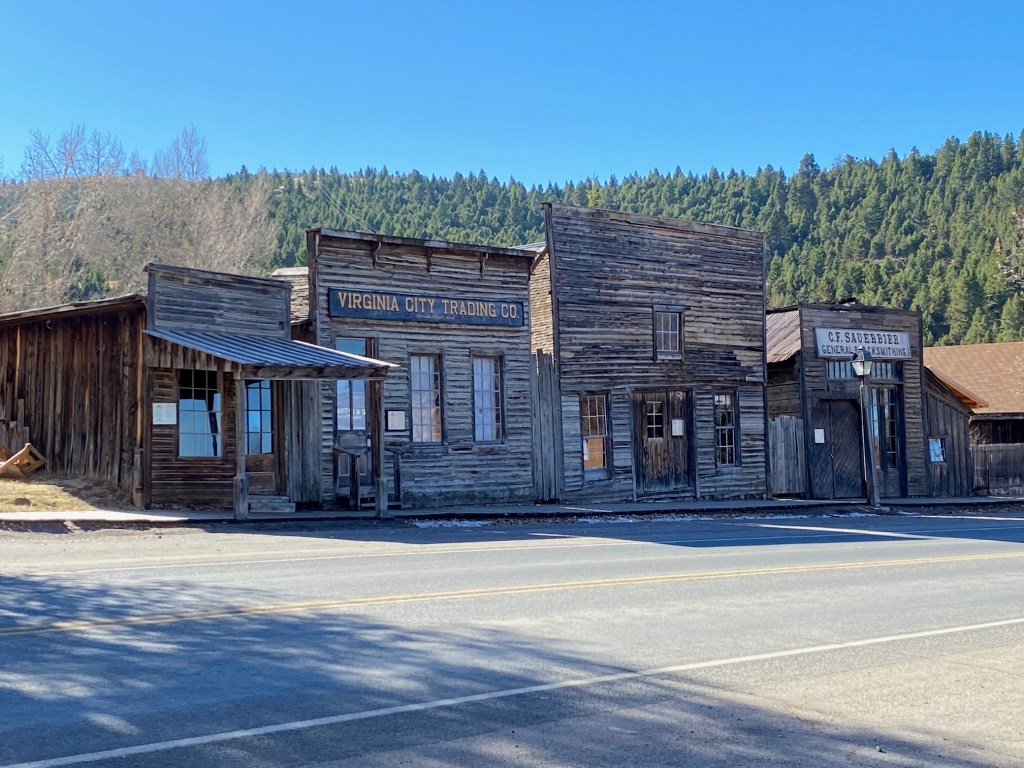
Virginia City –the second territorial capital of Montana
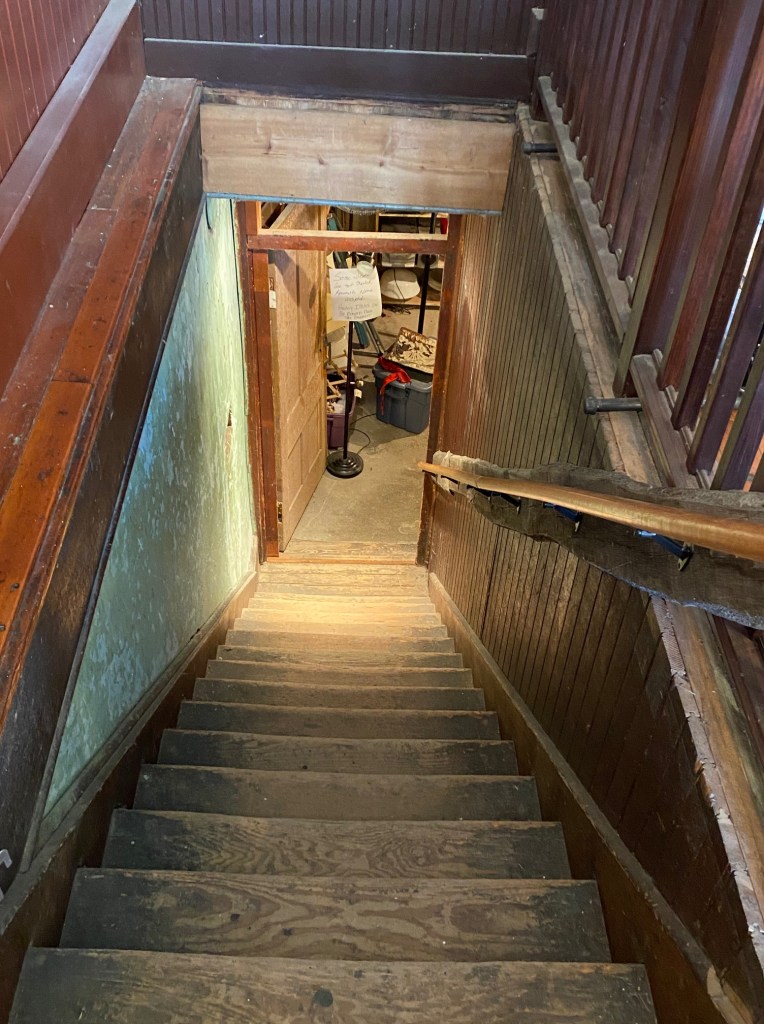
There’s the ghost of a six-year-old girl in the building that was once the Metropolitan Meat Market on Wallace Street. She can be heard laughing from the elaborate mirrored meat cooler where she played on hot summer days. I felt her when I descended the steep stairs into the basement. It wasn’t just the cool breeze rushing up at me but the air pressure changed. Closing my eyes, I felt her broken heart at the loss of her mother. Today, her spirit still resonates with women. Her grandfather tried raising her until disease snatched her away.
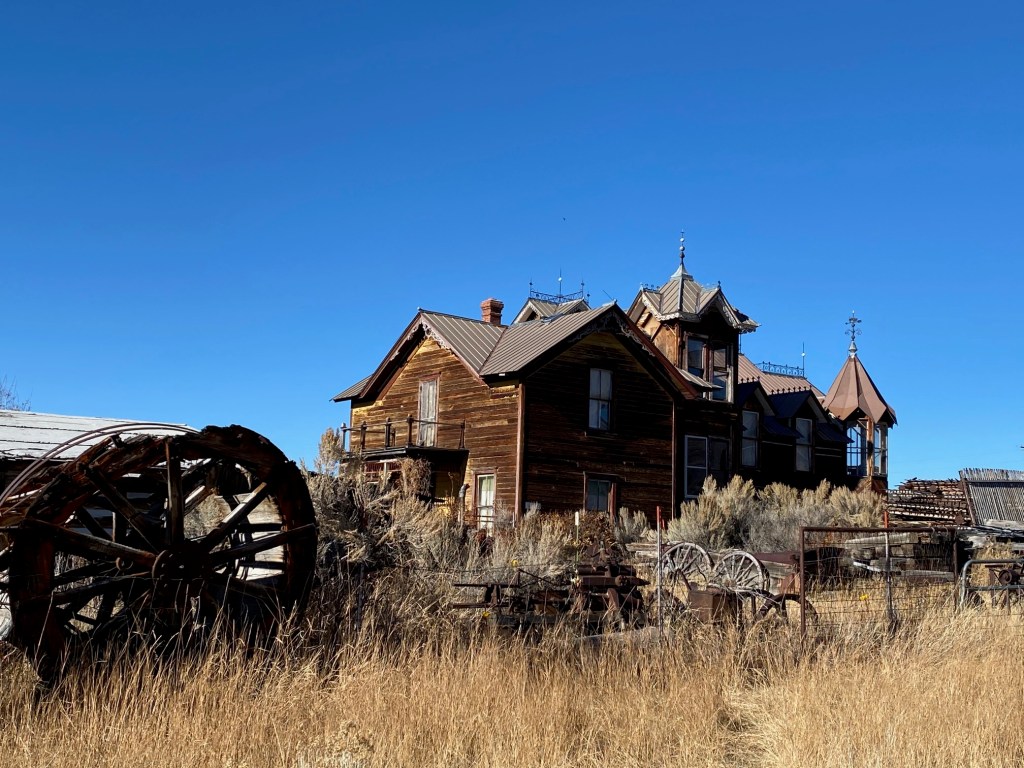
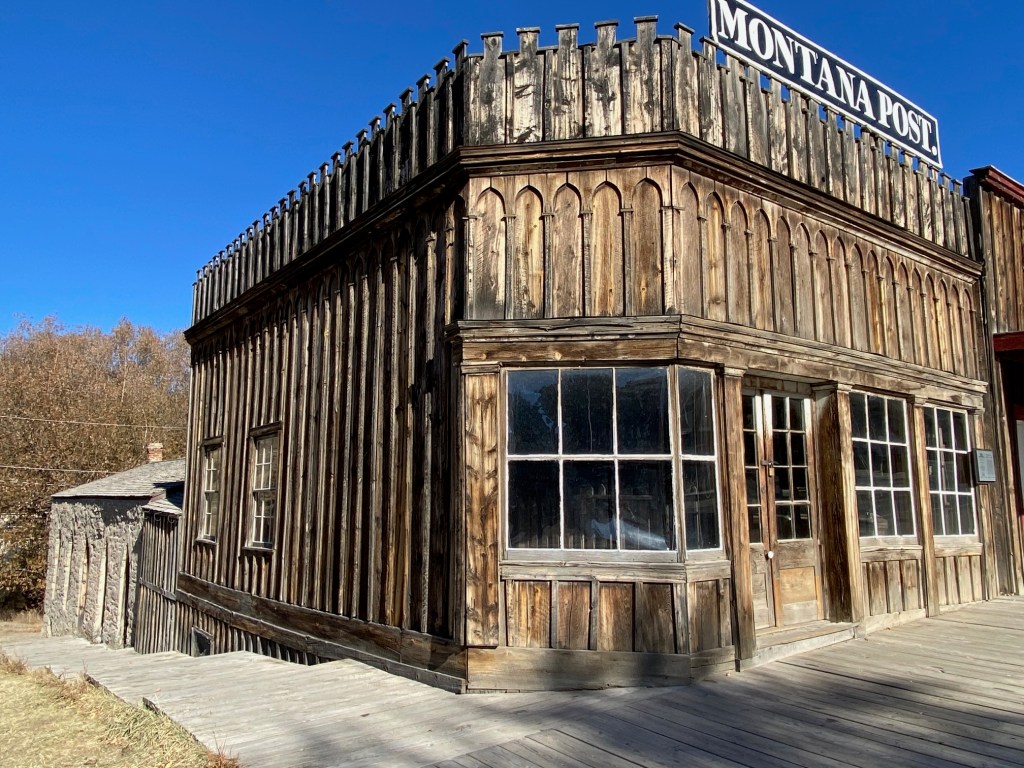
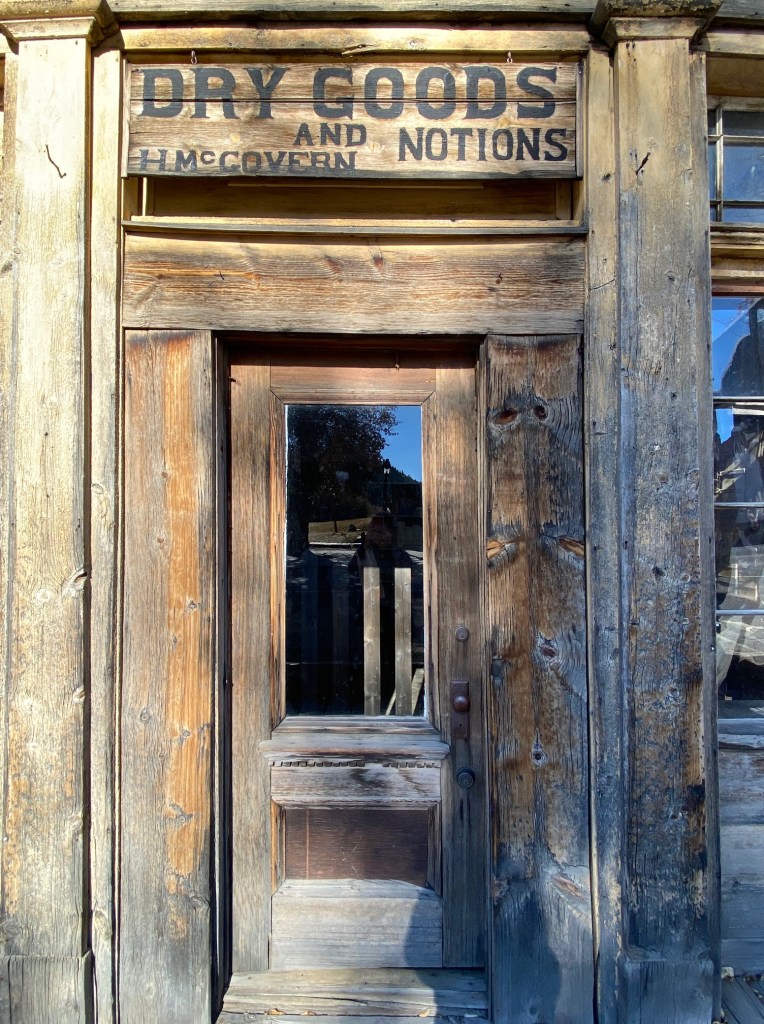
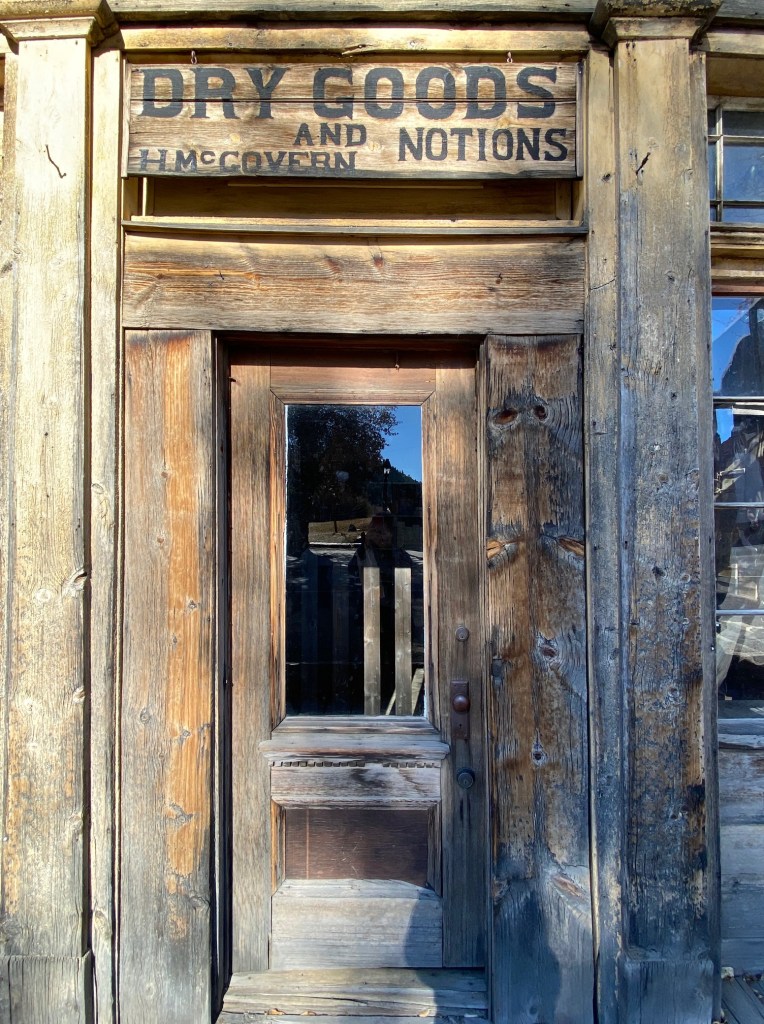
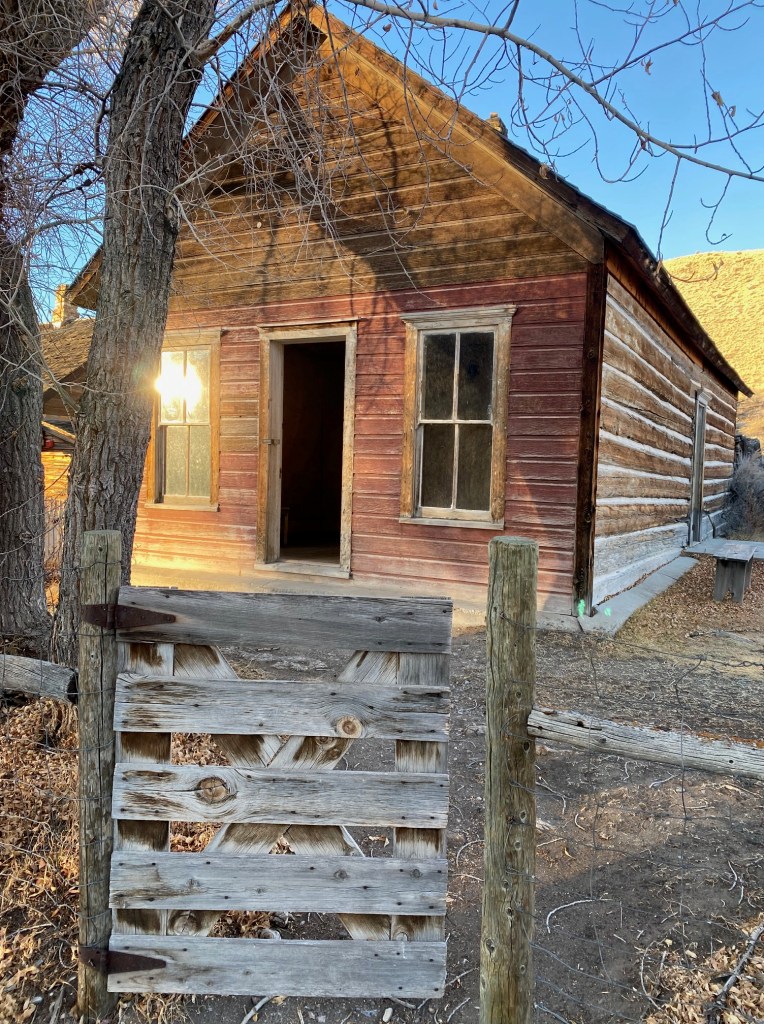
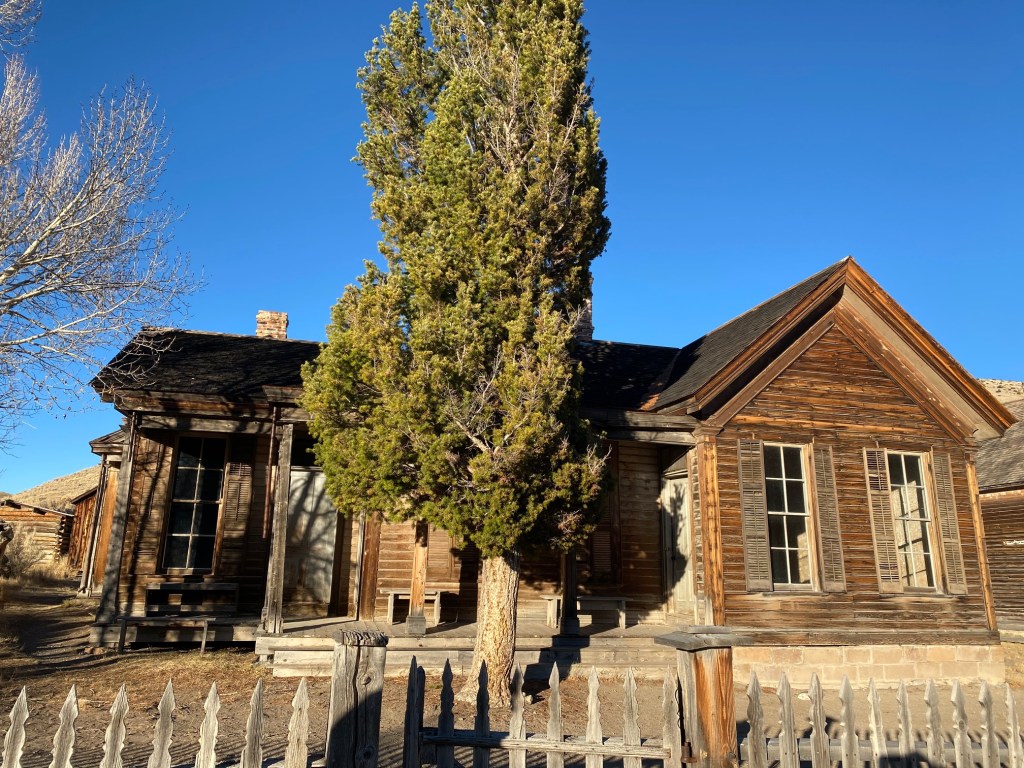
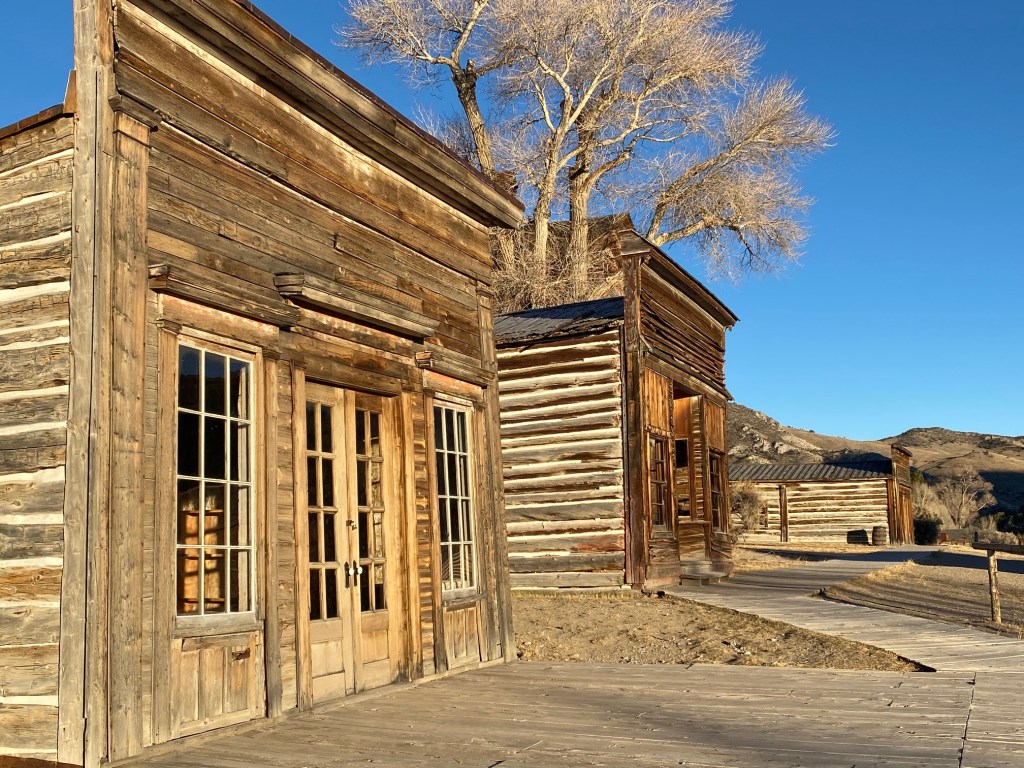
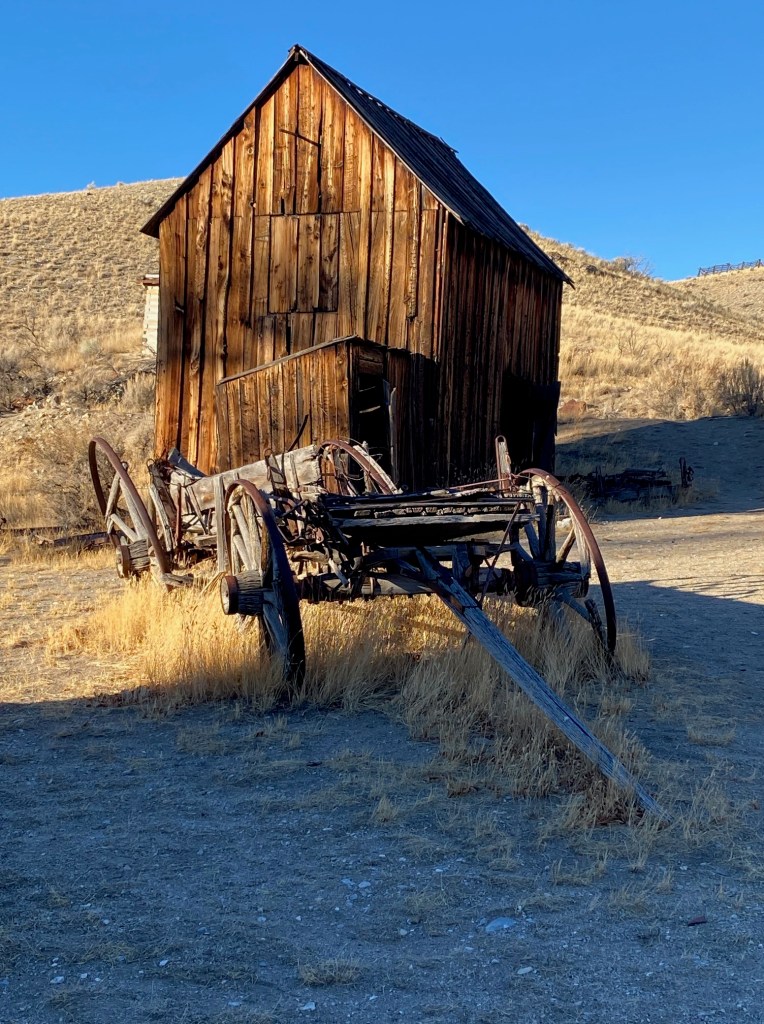
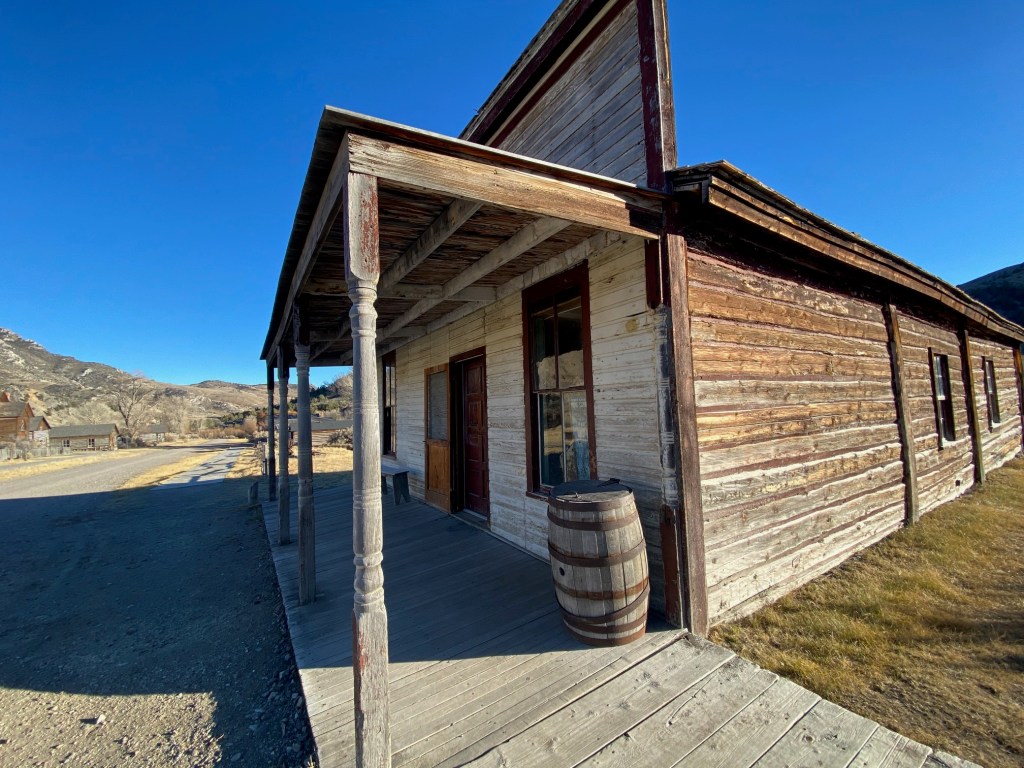
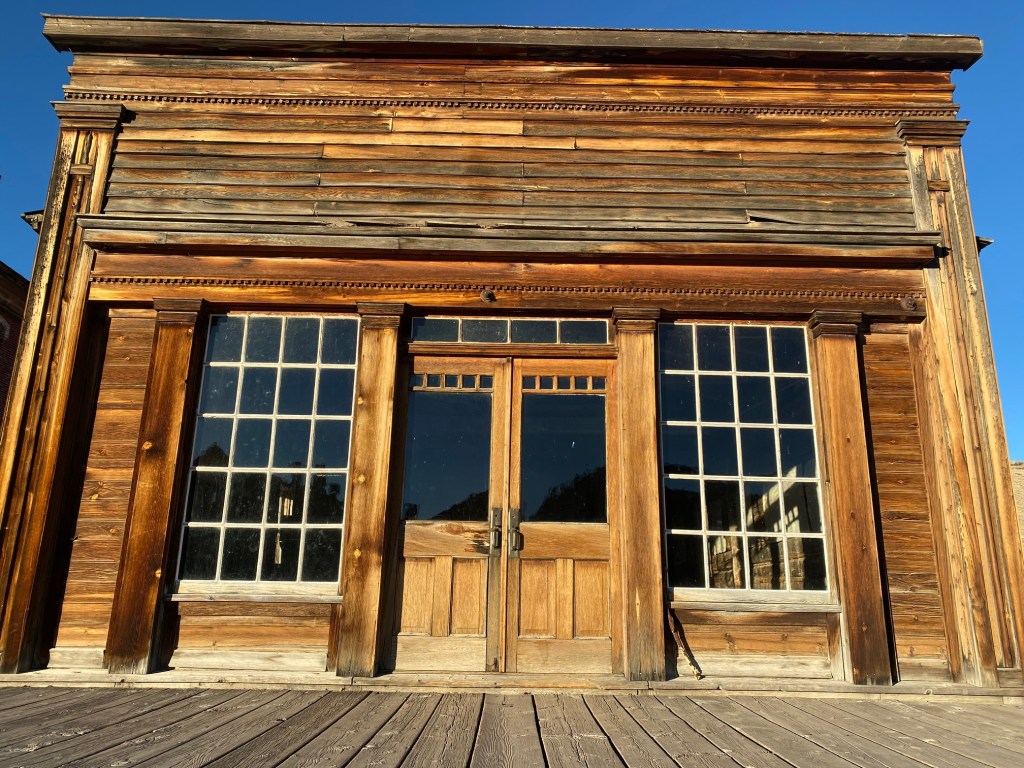
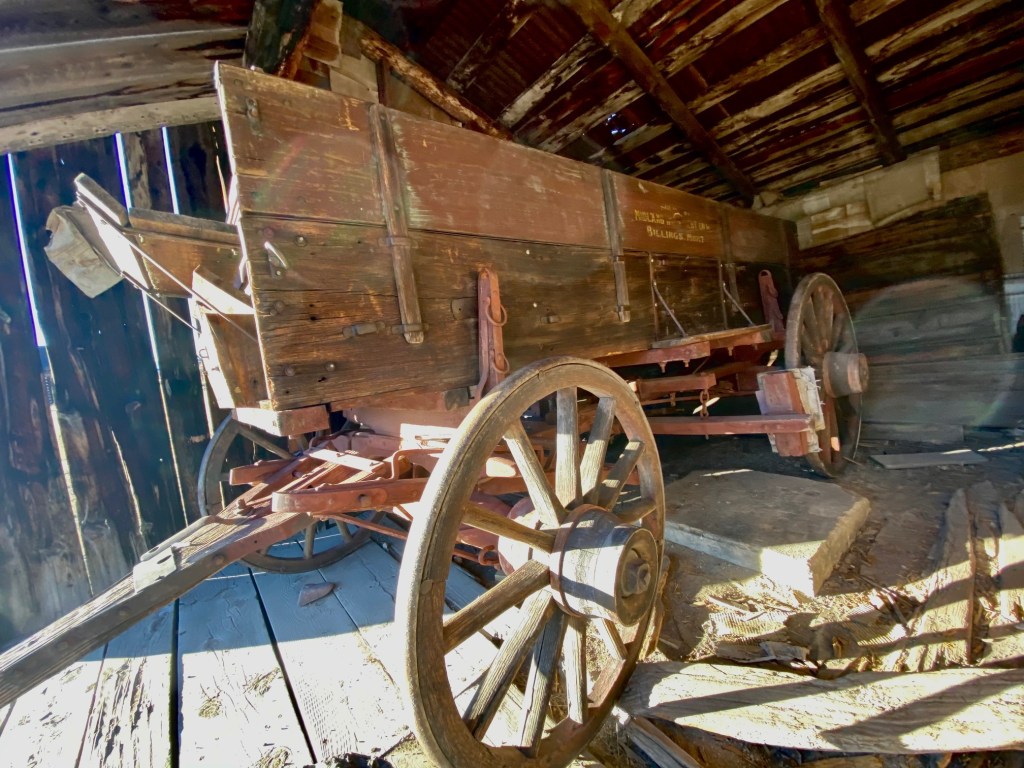
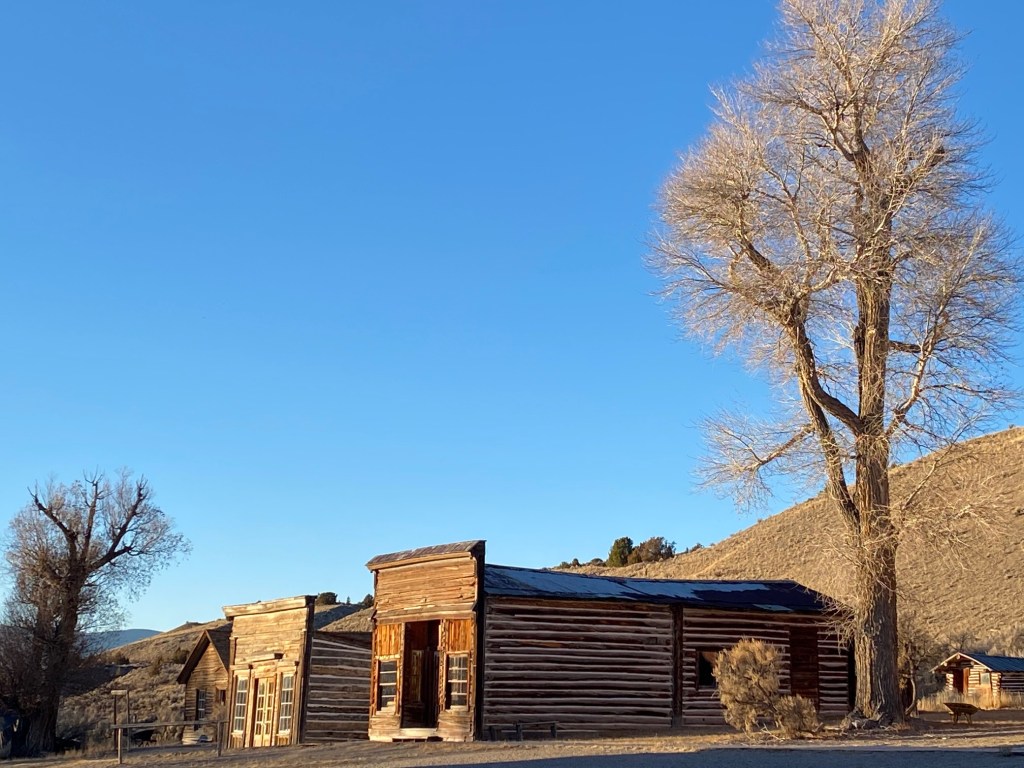
Technically, Virginia City isn’t a typical ghost town and it’s considered to be one of the best preserved sites with a blend of flourishing independent businesses. This was due to the preservation efforts of Charles and Sue Bovey from 1940 through the 1970’s. With over 200 preserved buildings, Virginia City was designated a National Historic Landmark in 1961. It’s a special treat to experience the town and the unique artists and shopkeepers.
Bannack –Montana’s short-lived first territorial capital
Bannack began in 1862 when John White discovered gold in the creek. The town was named for the Bannock Indians, but when the name was summitted to Washington D.C., someone mistakenly dropped the “o” and put in an “a”.
By 1863, life in Bannack was down and dirty. Road agents stole and the sheriff was said to be the ring leader. The gallows trapdoor swung open when vigilantes executed over 20 members of the robber gang in one month. Montana highway police and the national guard sport a patch with the numbers 3-7-77. This warning was painted onto cabins or tents of the next vigilante murder victim. The numbers are the dimensions of a grave: 3 feet by seven feet by 77 inches. In the past, people were proud of those who took the matter to hand. But history casts doubt over some of their choices. Especially for a Chinese man who never received a trail.
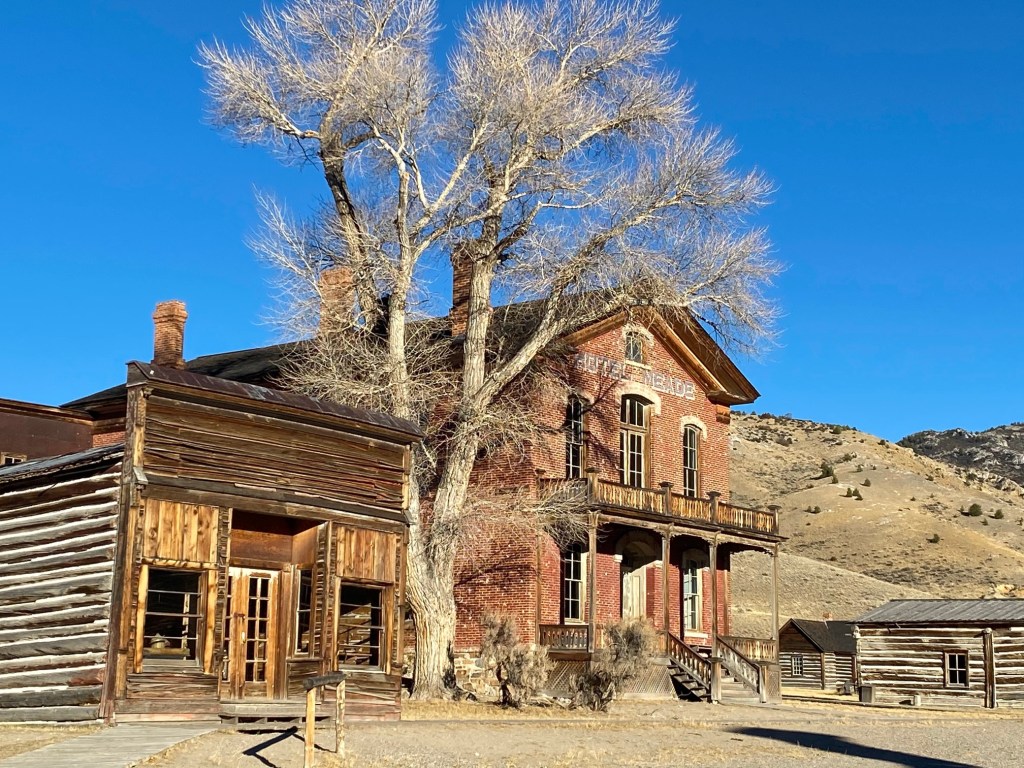
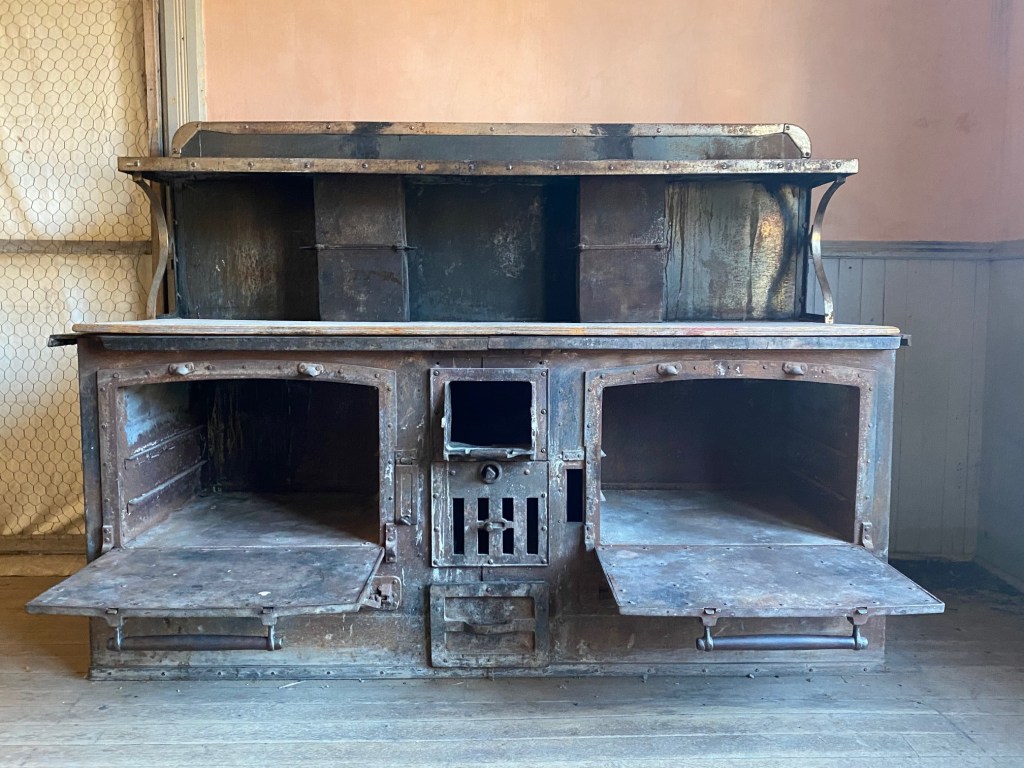
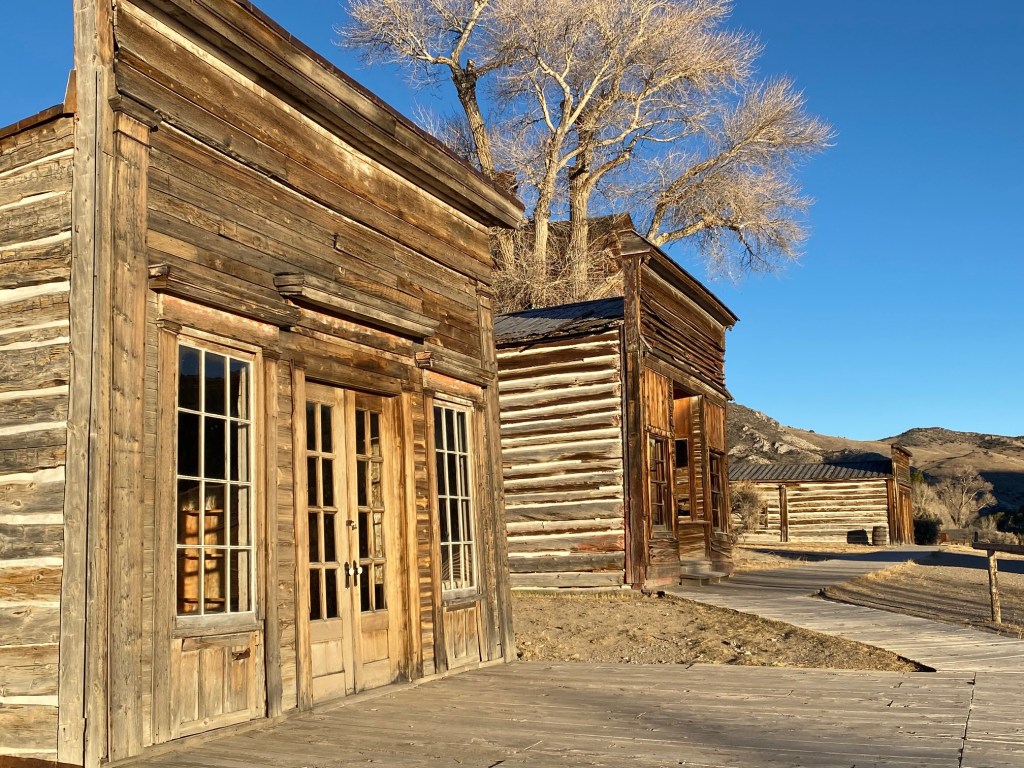
Hotel Meade operated from 1891 until the 1940’s. This was a 5 star establishment with linen table cloths and crystal goblets in the dining room. There are well-appointed rooms (including suites) on the second floor. Standing at the bottom of the sweeping staircase, I could easily imagine men dressed in suits and women in long sweeping skirts. In the large kitchen the wood-fired oven doors remain open. It’s an invitation from the ghosts to get cooking.
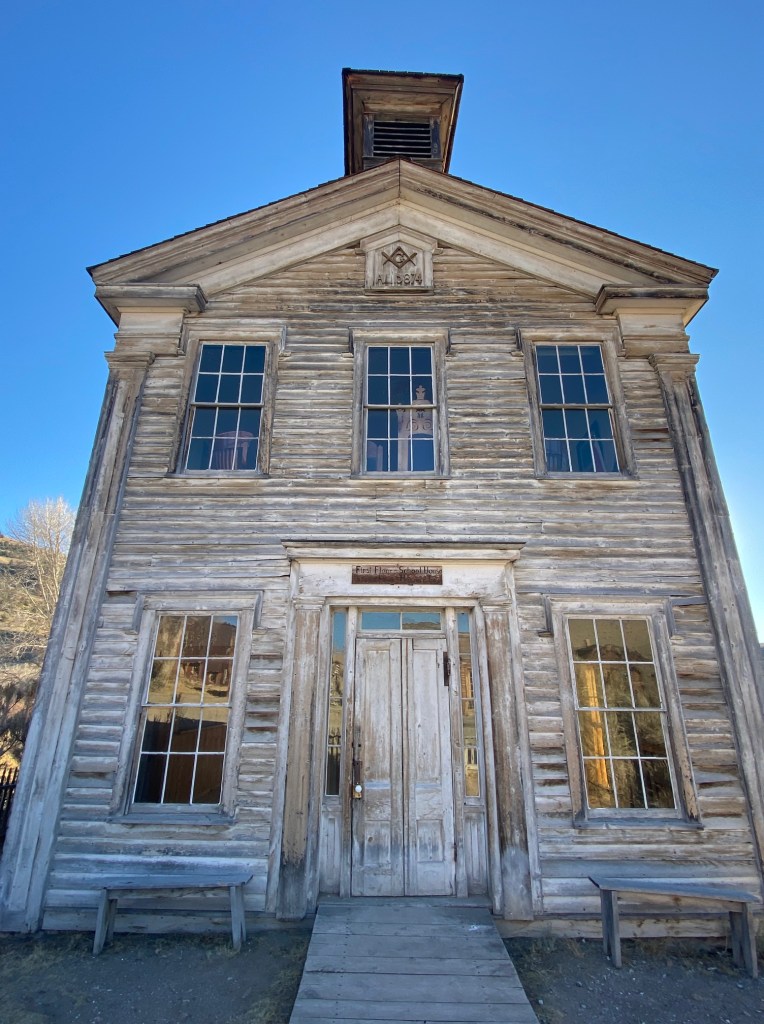
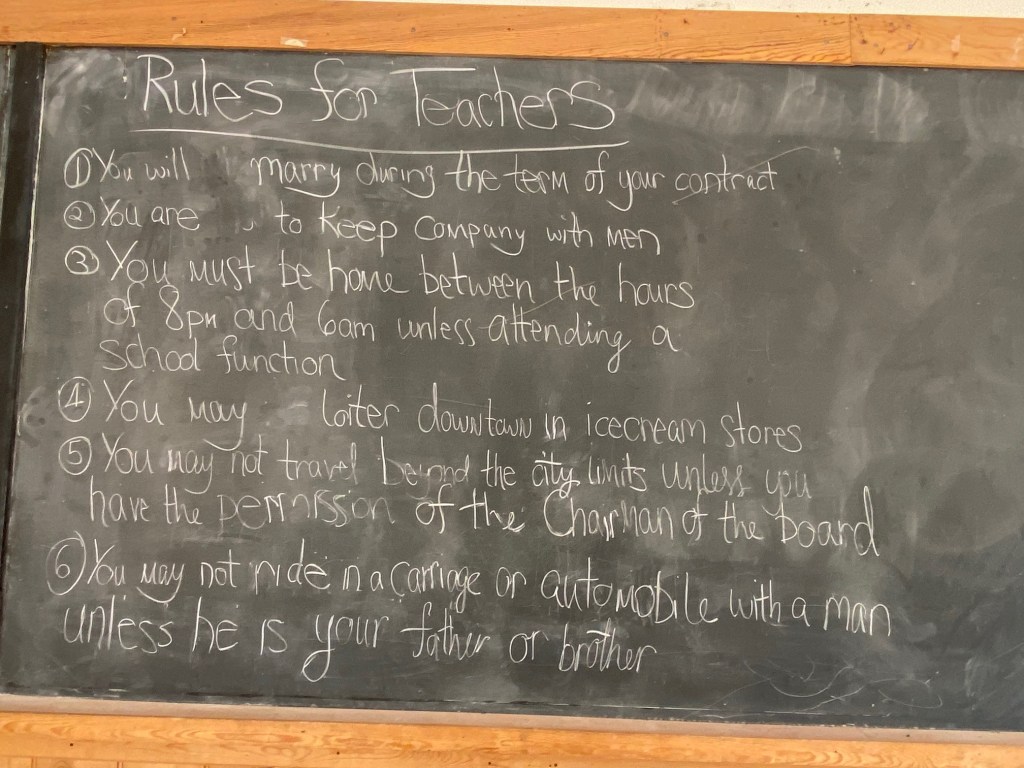
The Masonic Lodge is another exceptional building. The school was downstairs. I loved the “rules for teachers” printed on the board. Especially “You will marry during the course of your contract.” Wonder if any ladies turned a blind eye to that one? The upstairs lodge was not open. My guess is the condition of the building might have dictated it’s closing.
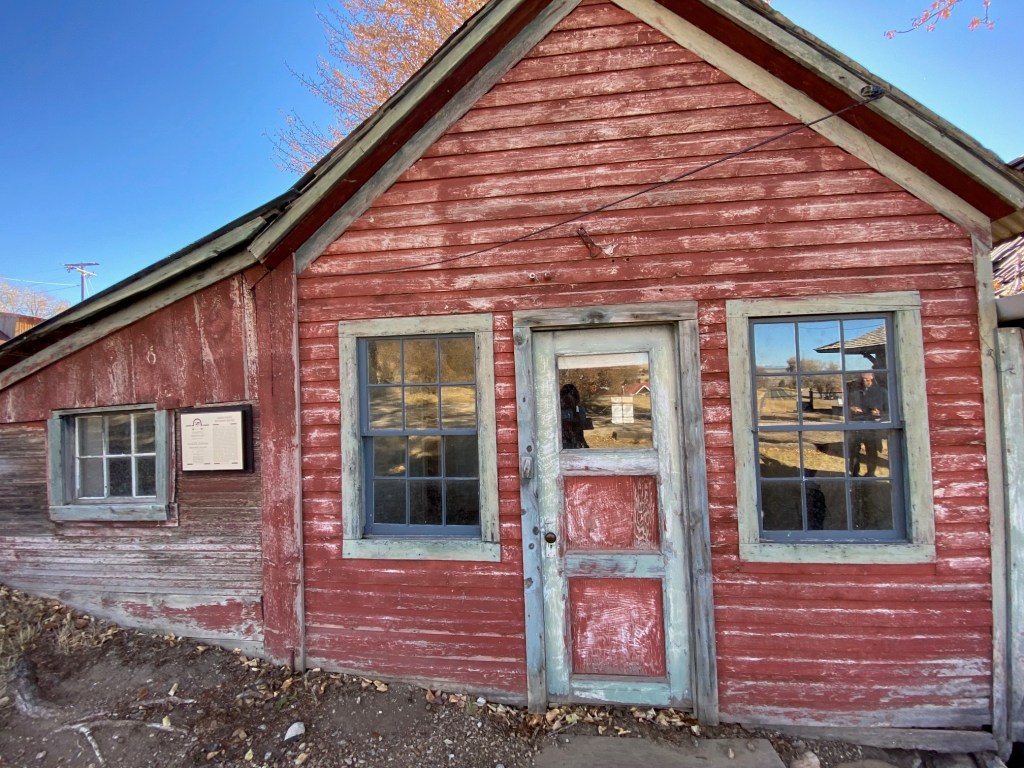
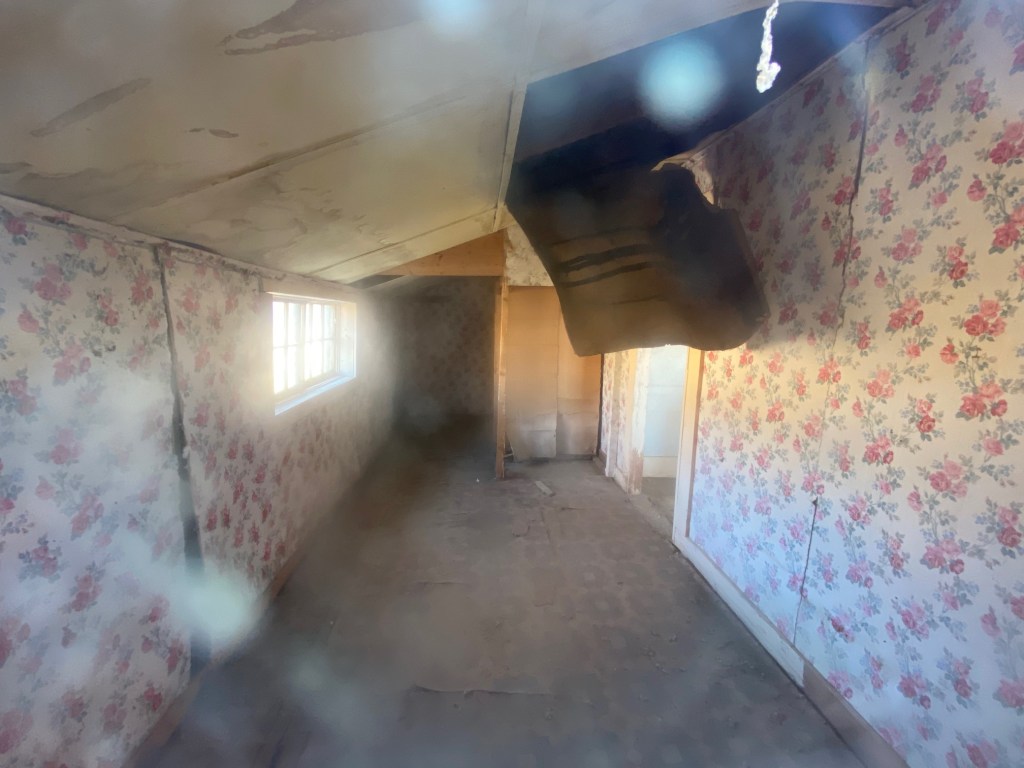
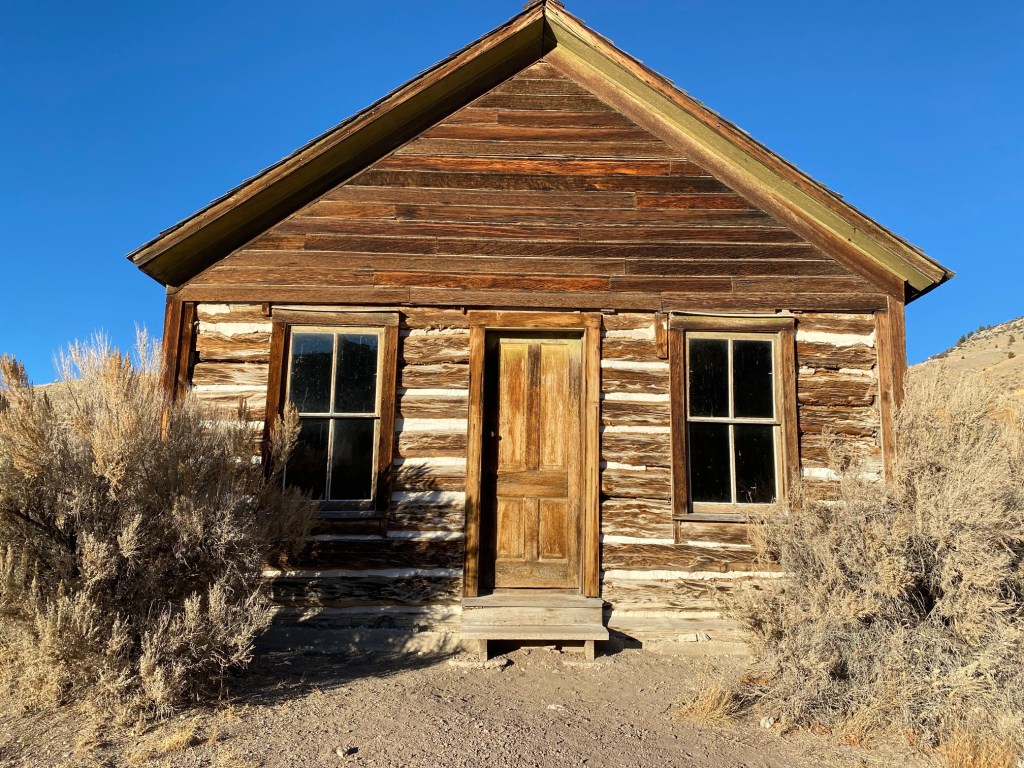
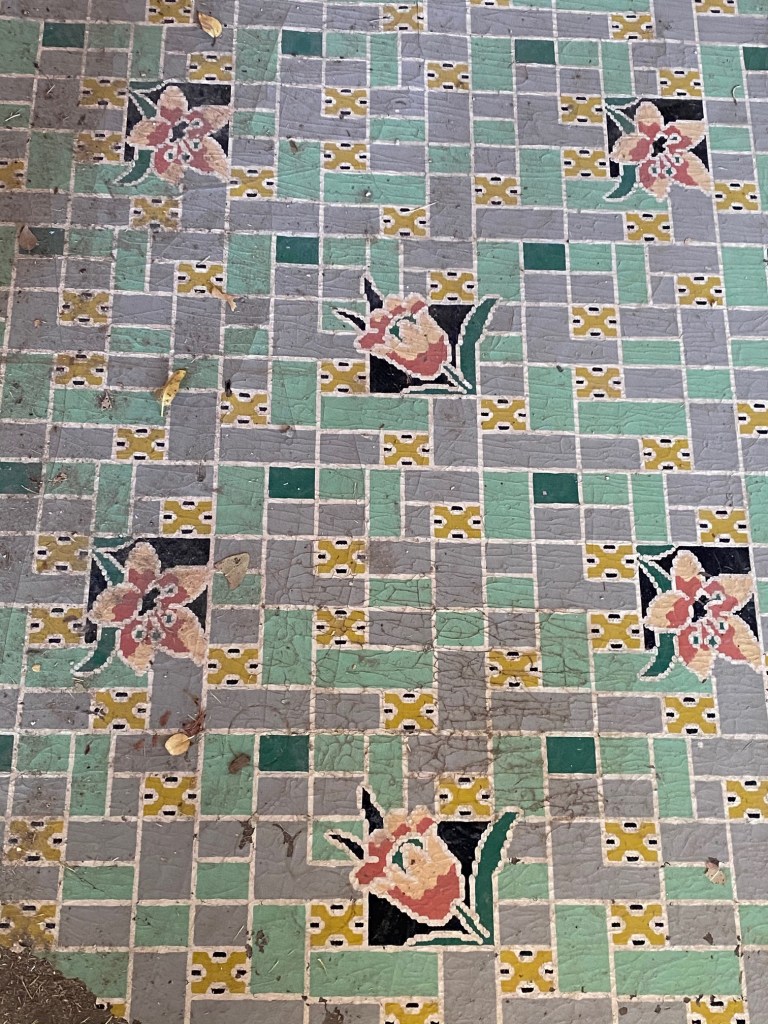
At one time, over 10,000 people lived here. Examples of dwellings at Bannack range from bare-bones bachelor quarters to wealthy merchant, William Roe’s frame home. Many of the houses still have decorative linoleum on the floor and shredded wallpaper on the walls.
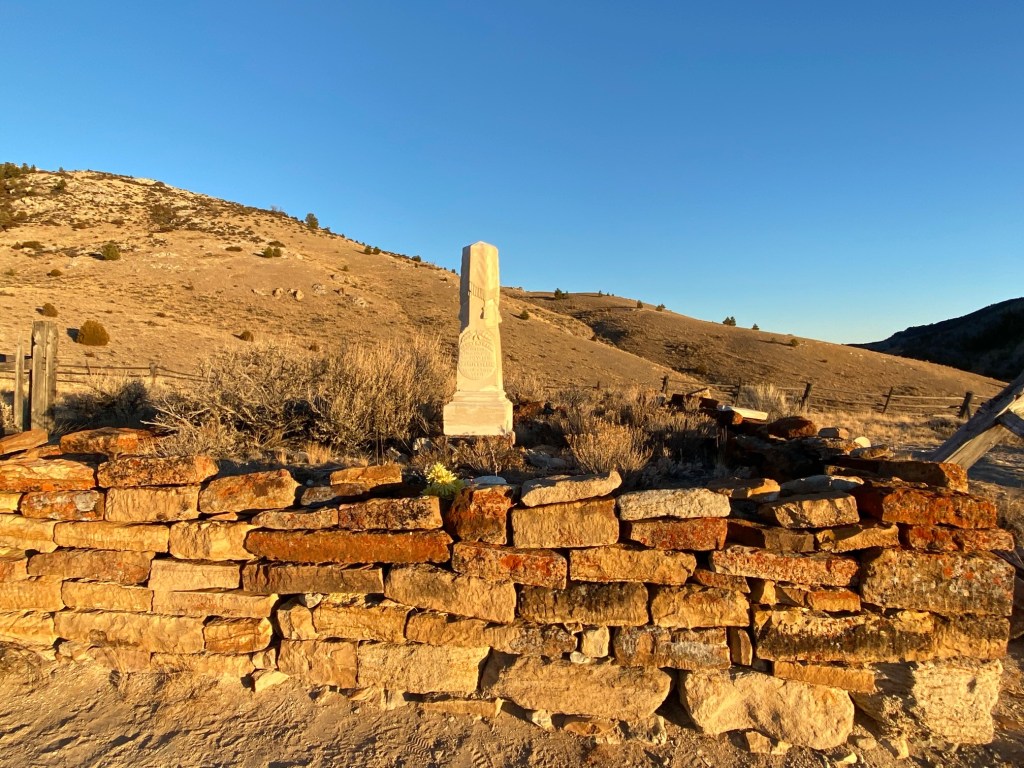
Climb the hill behind town to the hilltop cemetery and the gallows. There’s equality in death. The good, bad and the ugly all buried side-by-side. There’s a second cemetery with more intact grave markers when you exit the park towards the highway.
The silver-lining of visiting during Covid is we crossed paths with only 3 other people throughout our visit. Truly a remarkable experience.
Granite Ghost Town–the silver queen
Granite Ghost Town State Park is three miles (uphill) from Phillipsburg Montana. To visit, it takes courage to gain 1,280′ on the narrow dirt road. A high clearance vehicle is prudent. I’m glad we explored here during Covid because if two cars meet, it requires someone backing up around hairpin turns with steep drop-offs. Getting there was only half the fun.
This is the most rustic and remote of the ghost towns we visited on this trip. That means no services and no cell phone reception. Heed my warning to bring food, water, toilet paper and a good sense of direction.
Nature has reclaimed the site with towering trees and shrubs. At first, it doesn’t seem there’s much here. We decided to just walk down twisty old dirt tracks to see what we could find. 3,000 people used to live here. We were confident we’d find something.
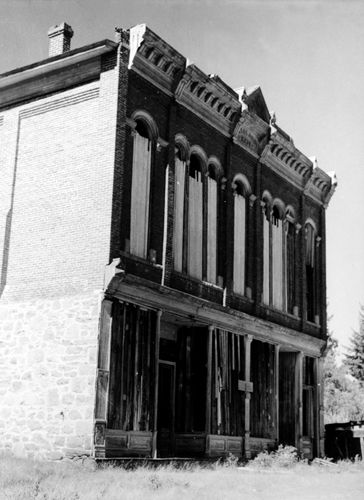
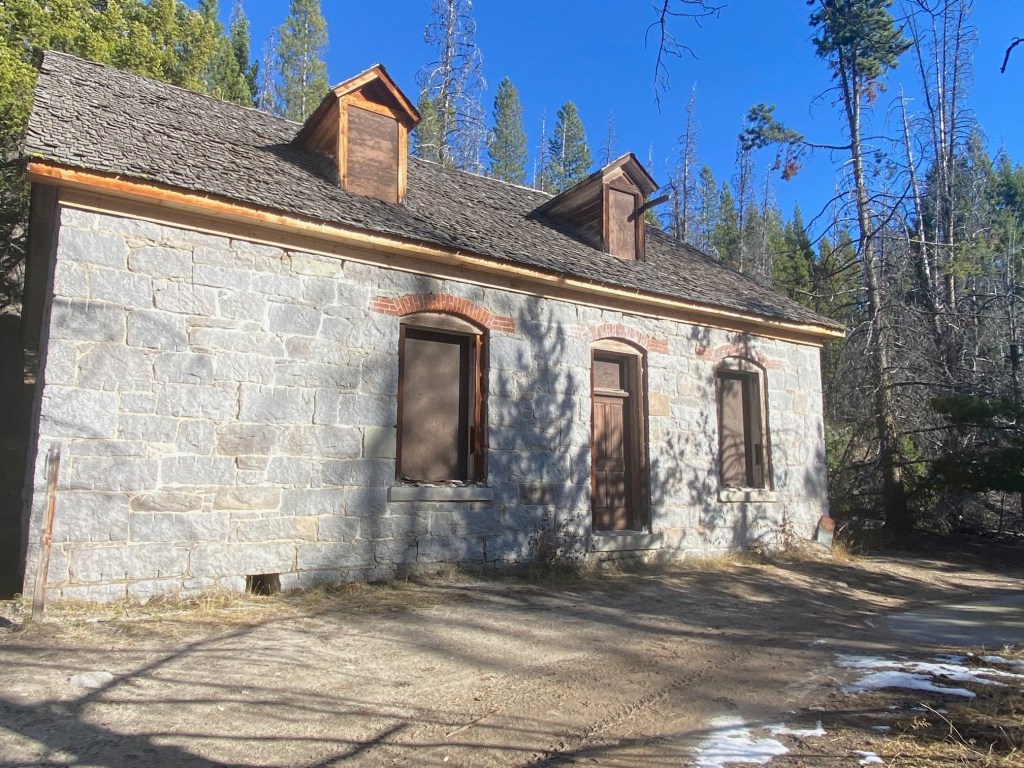
Hyde and Freychlag Bank–the only one in town
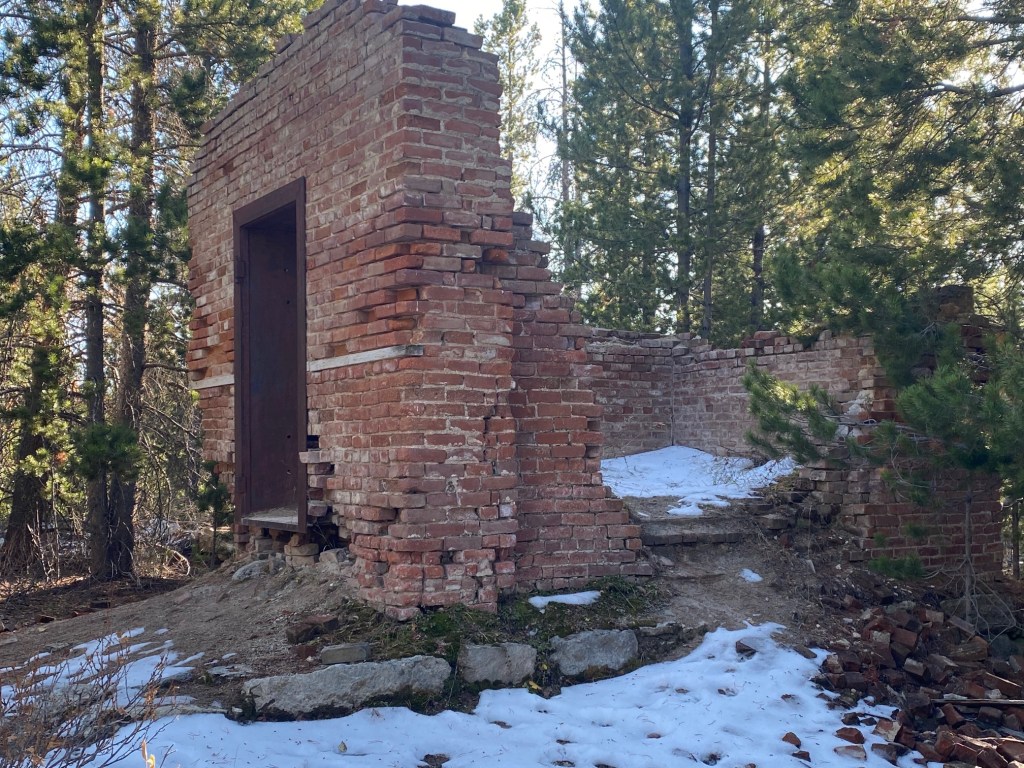
First stop was the bank.
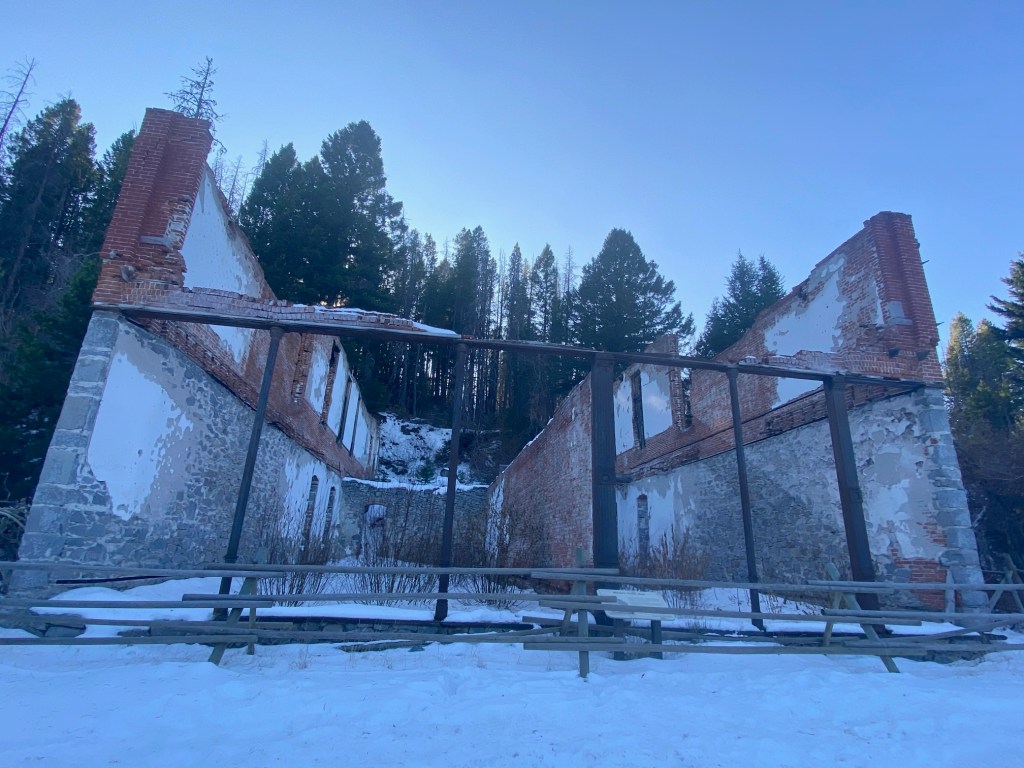
Miners Hall today on left. What it looked like in the middle
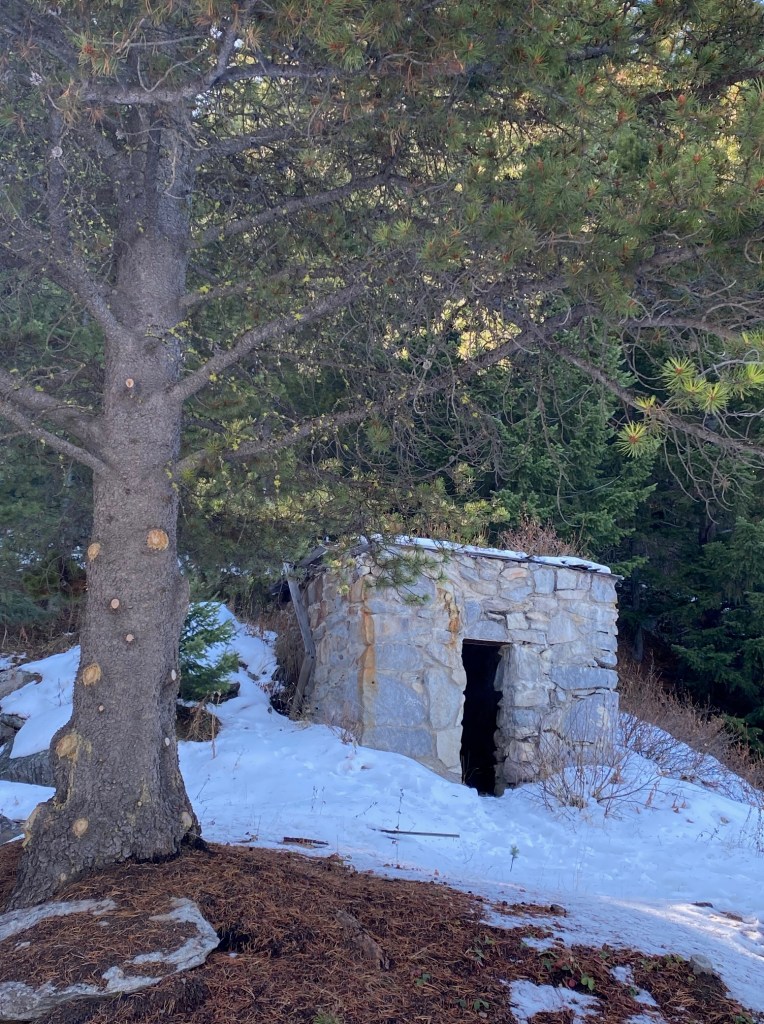
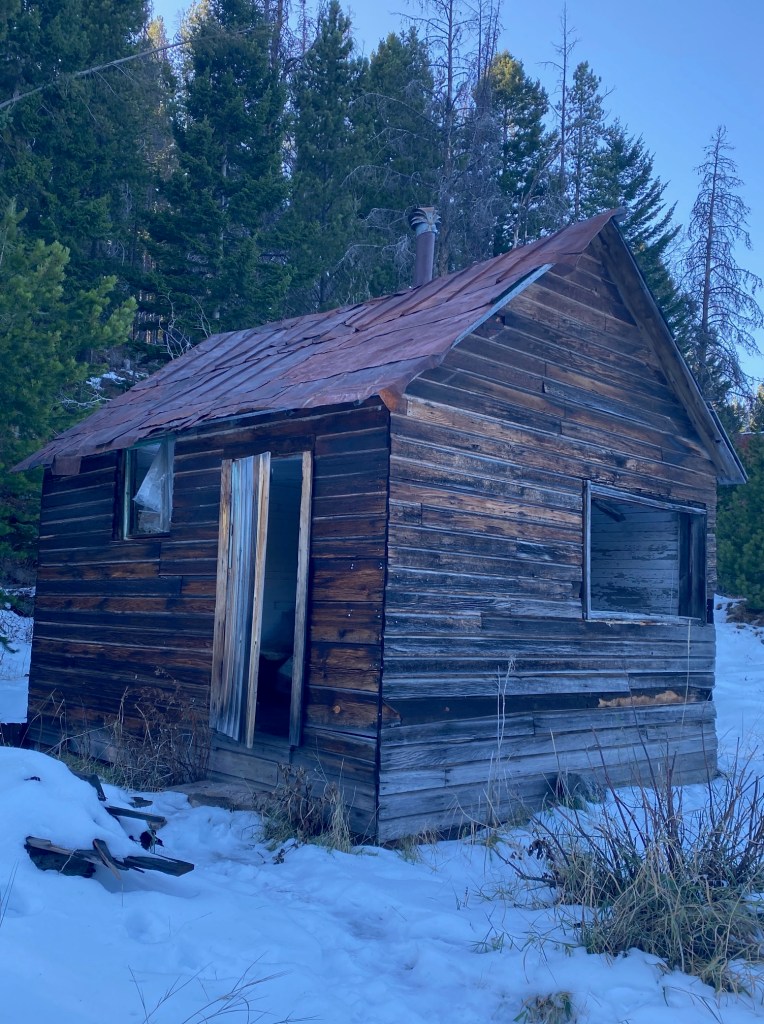
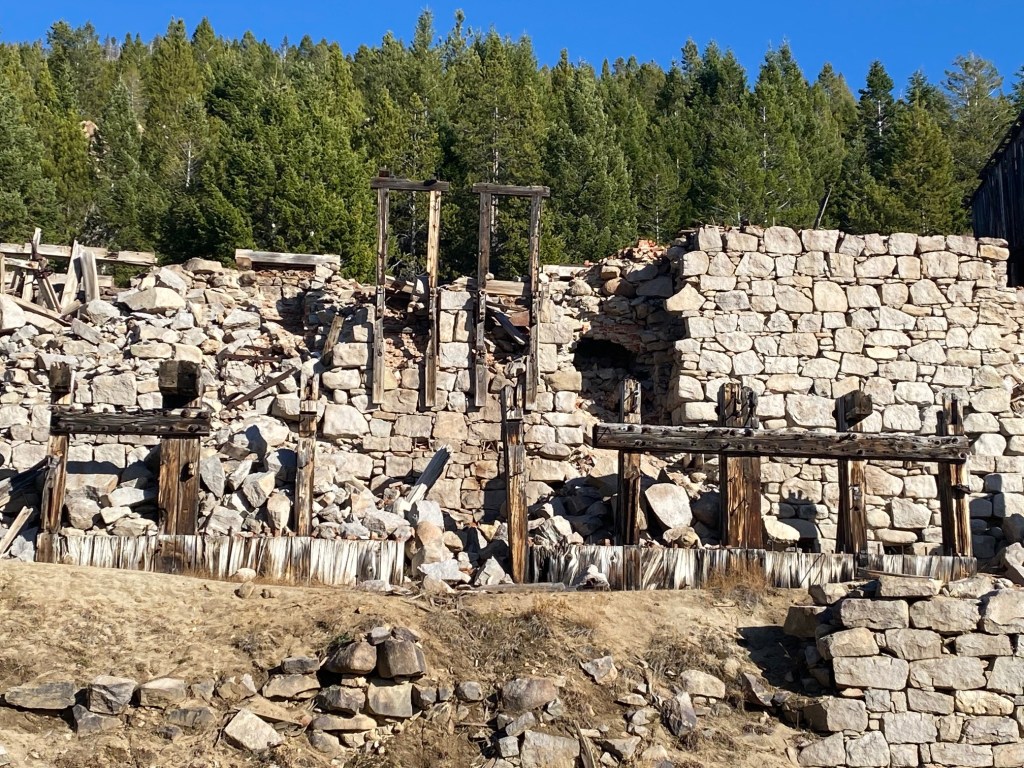
And then the roofless miner’s union hall and a small miners cabin before we came to a dead end. Down in a hollow below us, we could see collapsed buildings sticking out of the snow. I’ve since learned this was the Chinese part of town with the red light district behind.
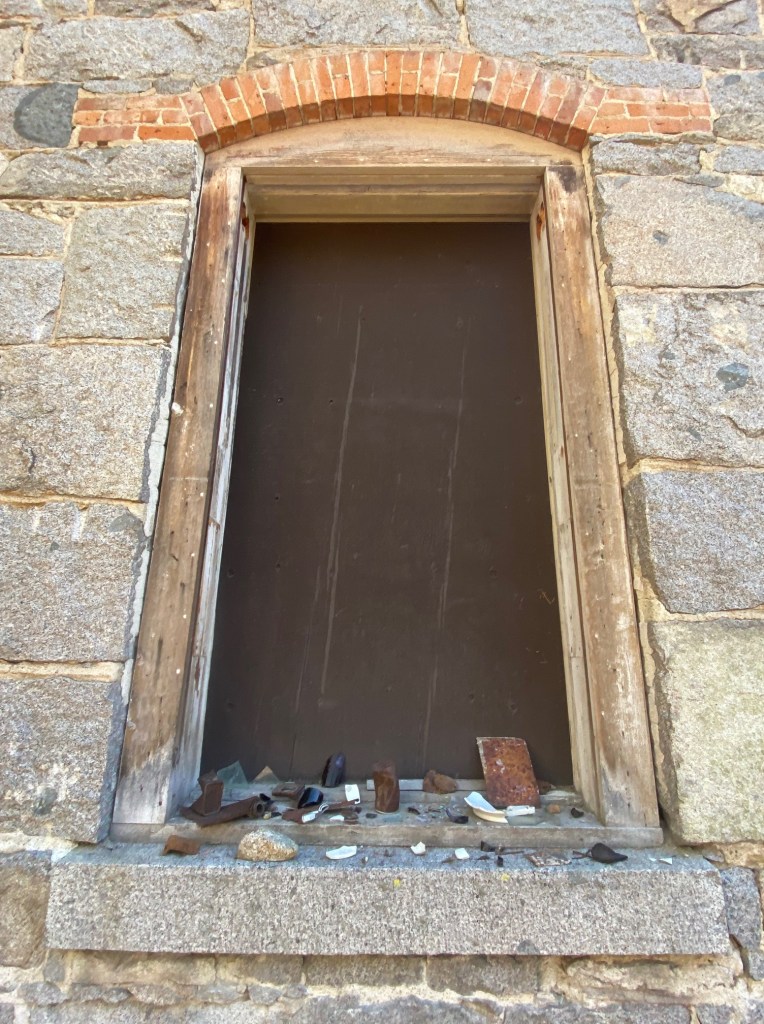
We backtracked and walked uphill on a muddy narrow road. Bob said, “There’s a building to the right.” That’s how we found the mining superintendent’s house.
Superintendents house with artifacts discovered and placed on the window ledge
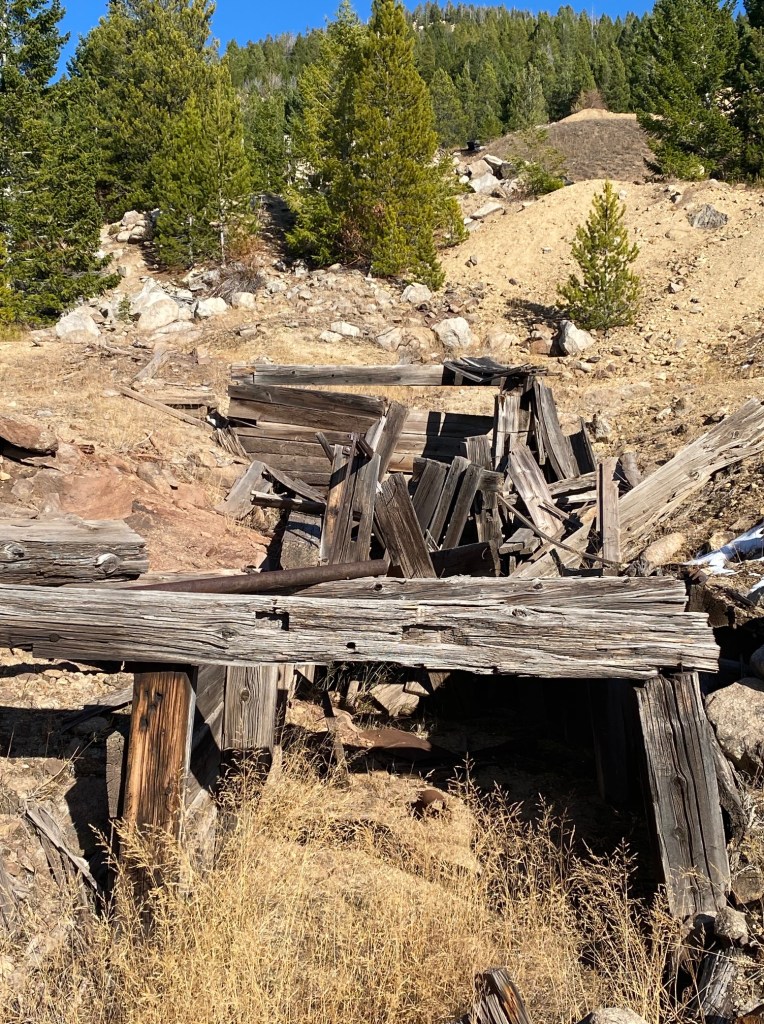
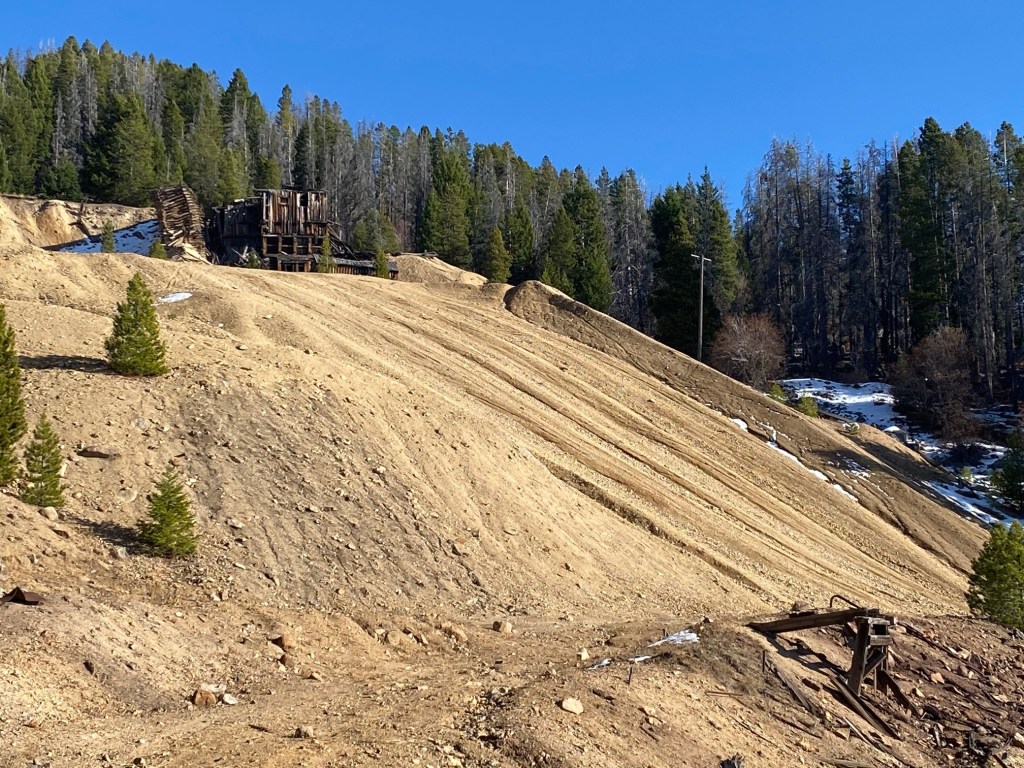
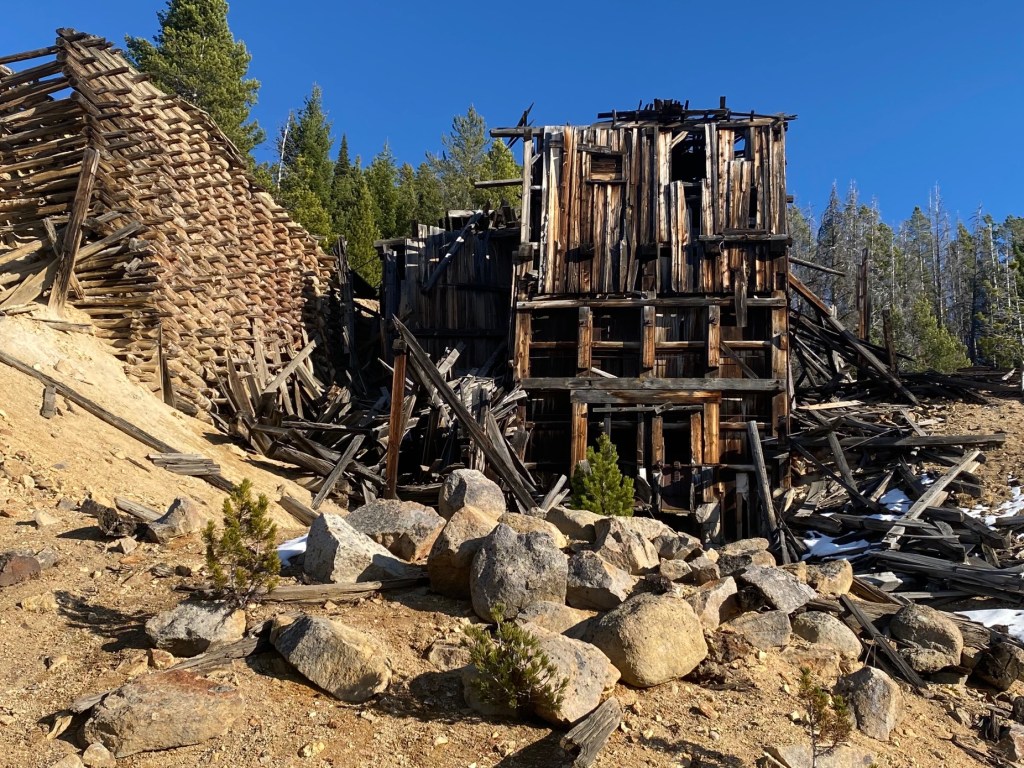
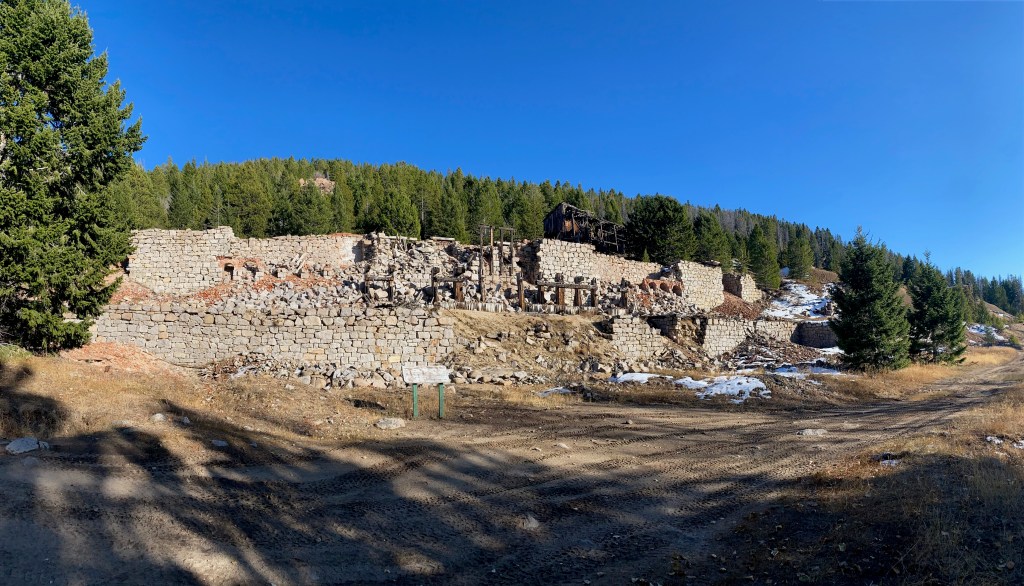
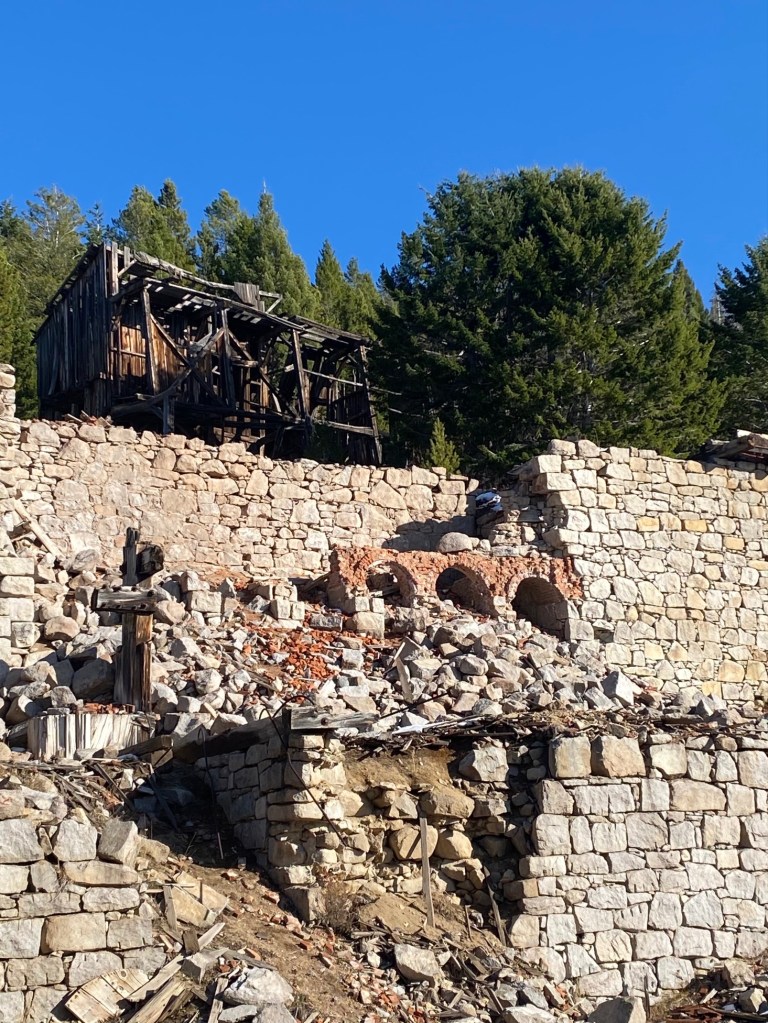
Down below was the hospital in ruins. Walking straight we ran into an old mill, remains of smelting and the Granite mine. Look left and uphill. The Ruby mine shaft is at the very top.
What a treasure to experience this by ourselves. Every corner or twist of road produced something else to see.
Further research showed two interesting details. There wasn’t any water here. It had to be brought in from the valley below. Something tells me that the 18 saloons sold liquid of another kind. Oddly, there’s no cemetery here either. Too much rock. People who died were brought down to Phillipsburg for internment.
When I go back, I’ll stop in Phillipsburg first. I just learned there’s a map of the town at the chamber of commerce.
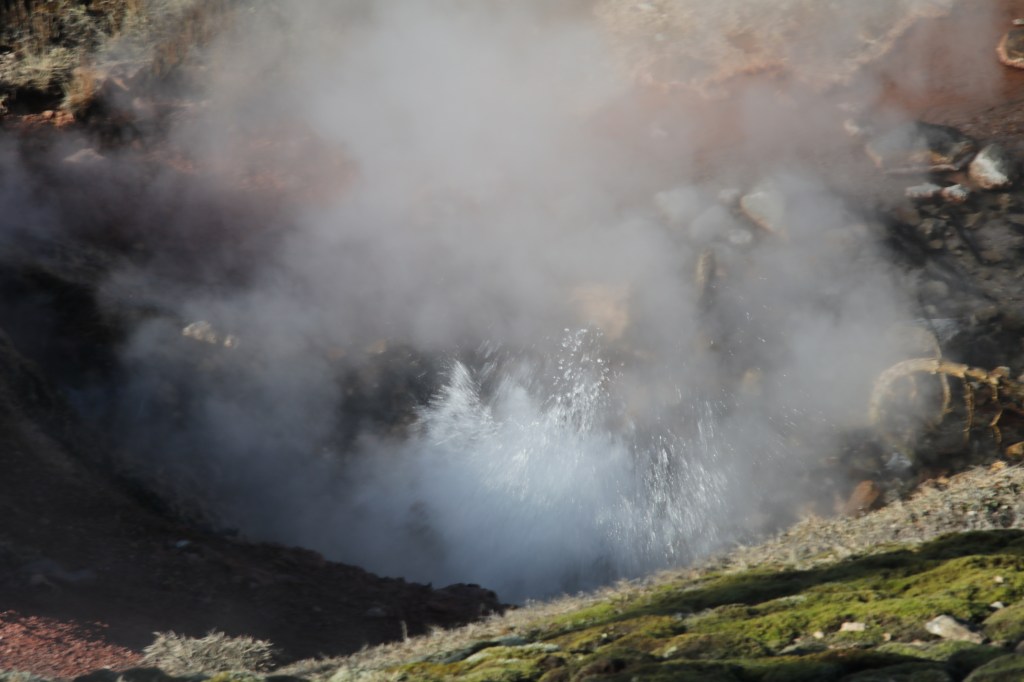
Wyoming is chock full of diverse landscapes. Tectonic plates continue to push and pull mountains, remodeling the terrain like playdough. Earthquakes rattle and shake tons of rock into place. Geothermal pools bubble, pop, and hiss with steam.
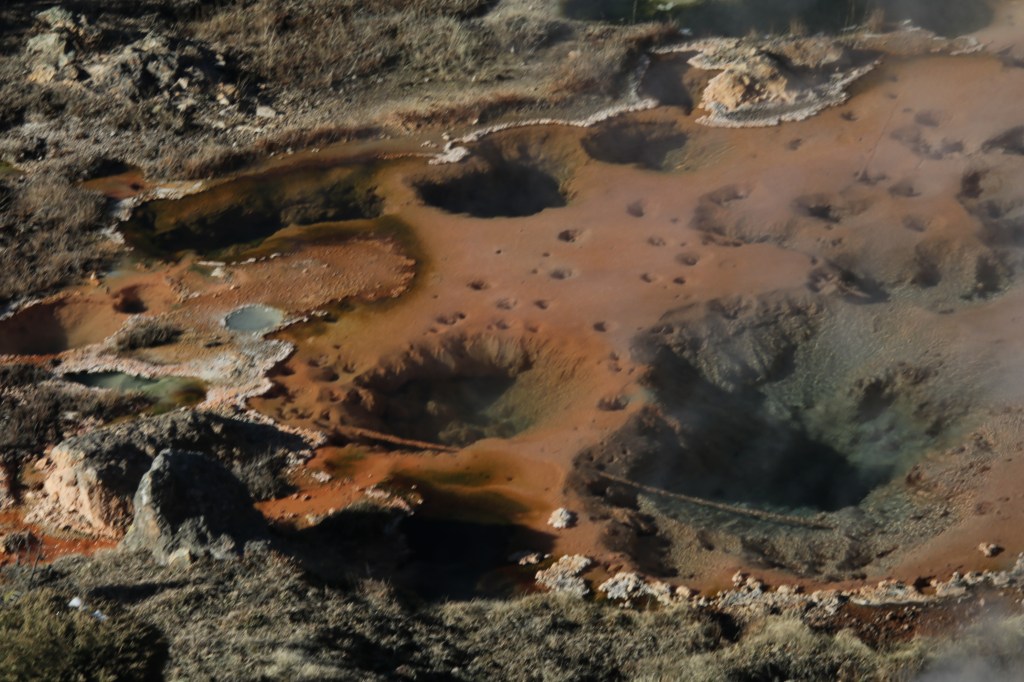
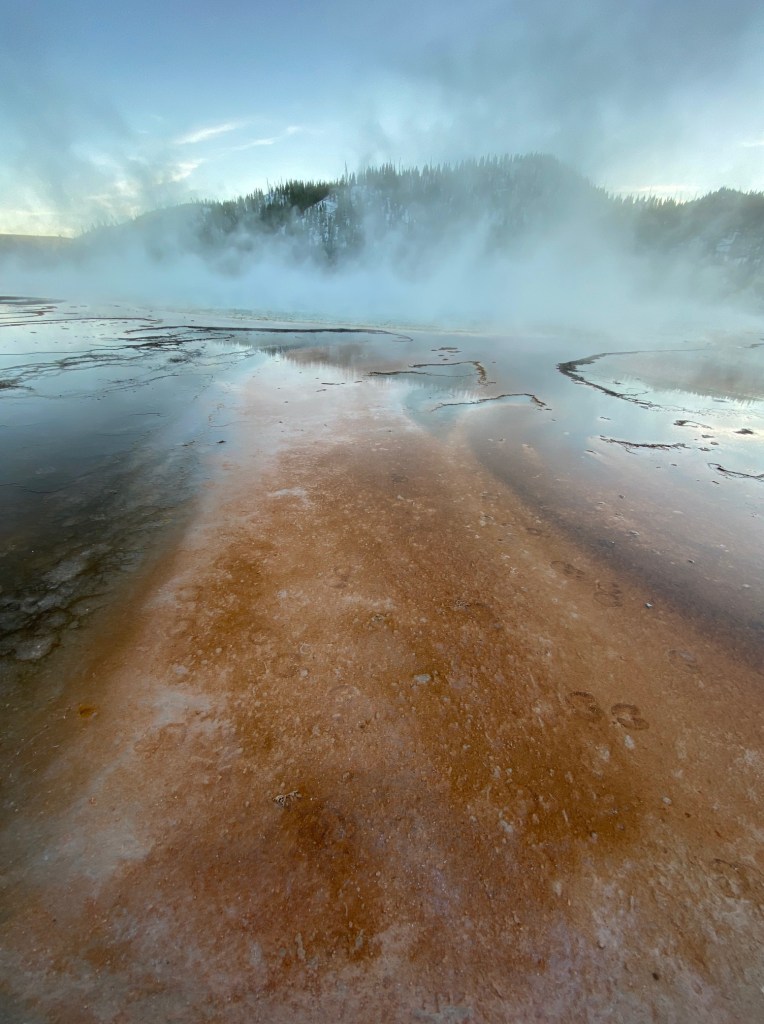
This COVID road trip takes us into the alien landscape of Yellowstone National Park. Earth has never looked so strange and beautiful.
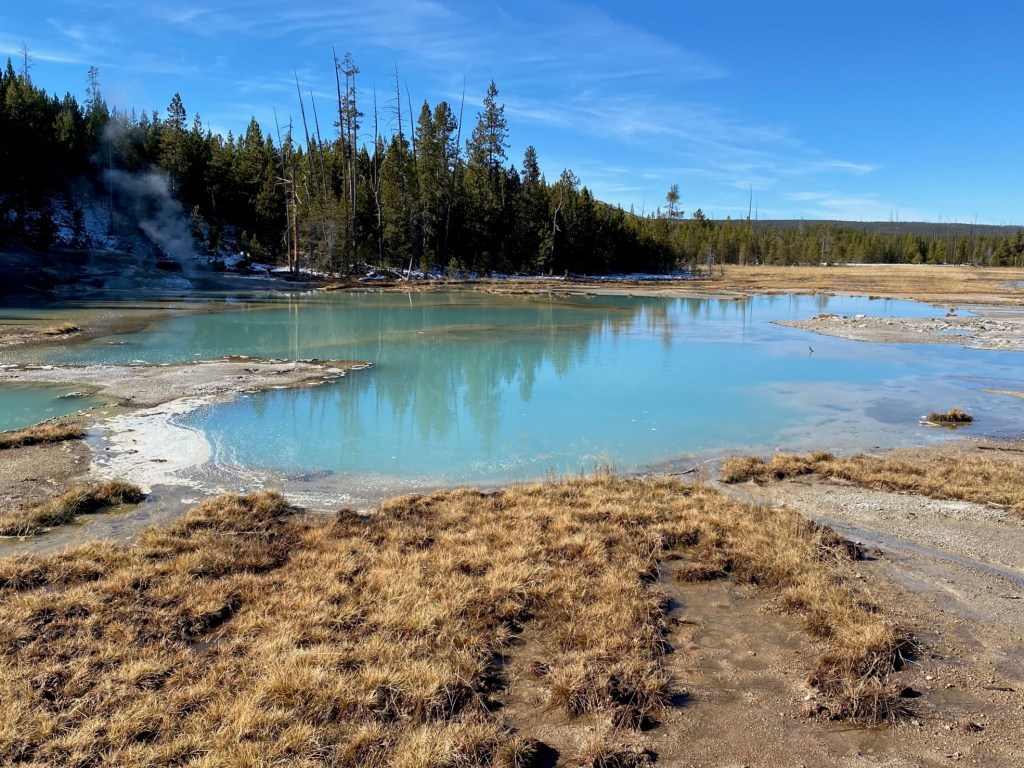
There’s something freaky when you think about driving into the caldera of one of the largest volcanos on earth. The magma chambers have been active in Montana for over 2 million years. What makes Yellowstone extra special is the large variety of hot pools.
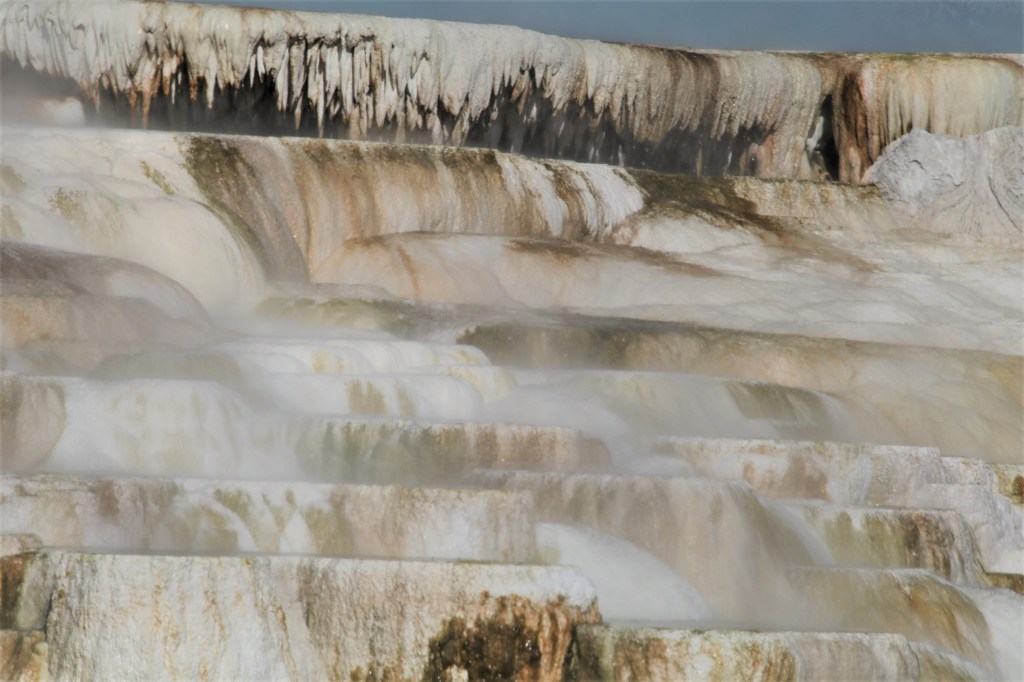
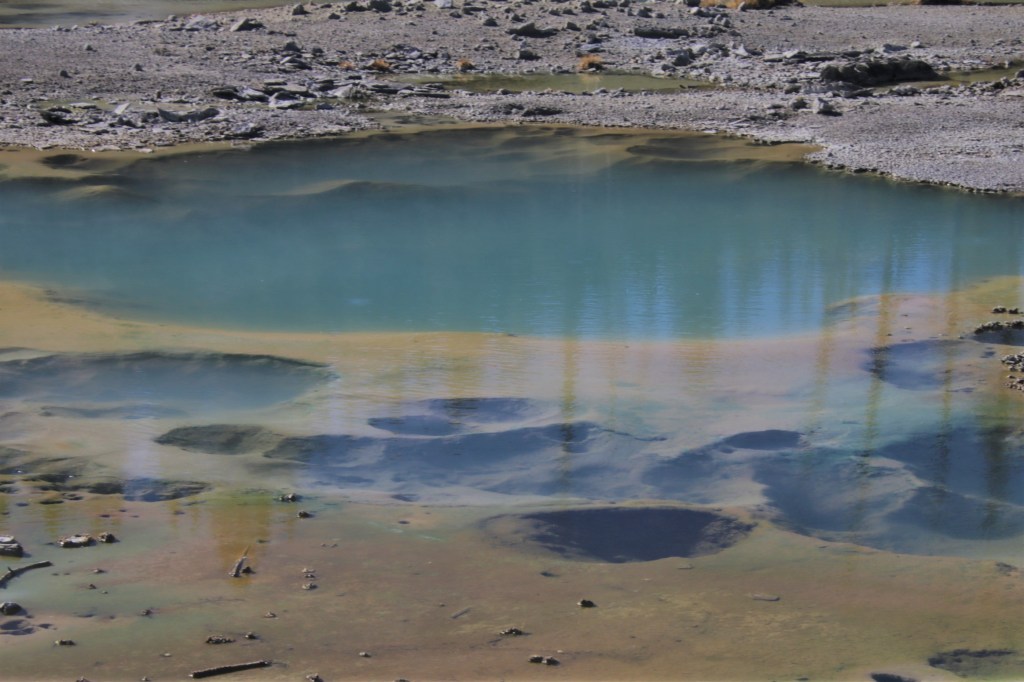
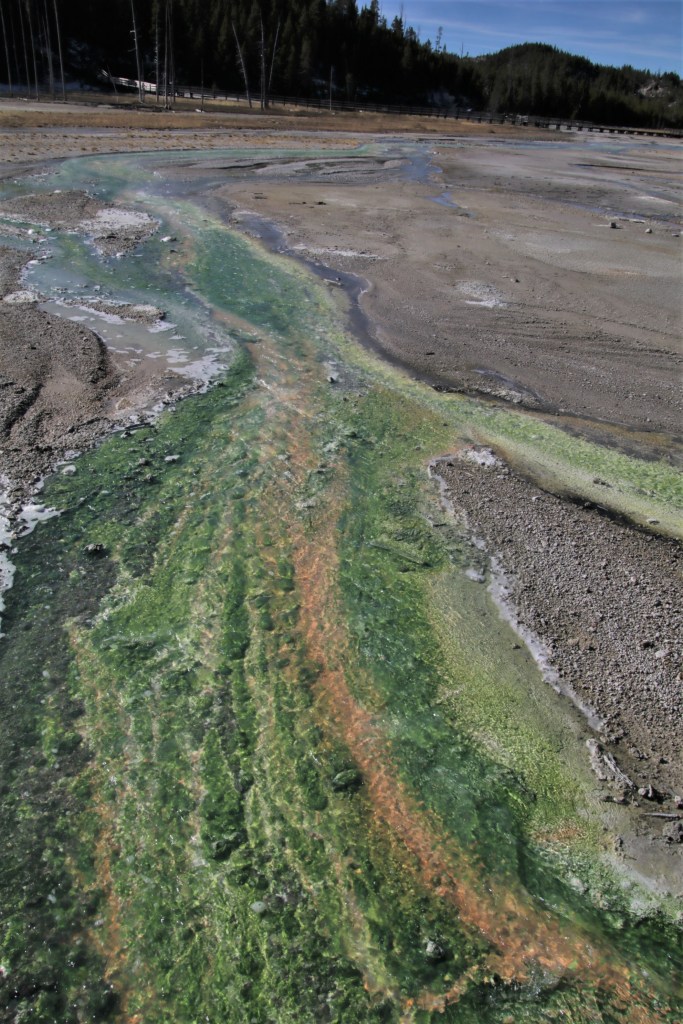
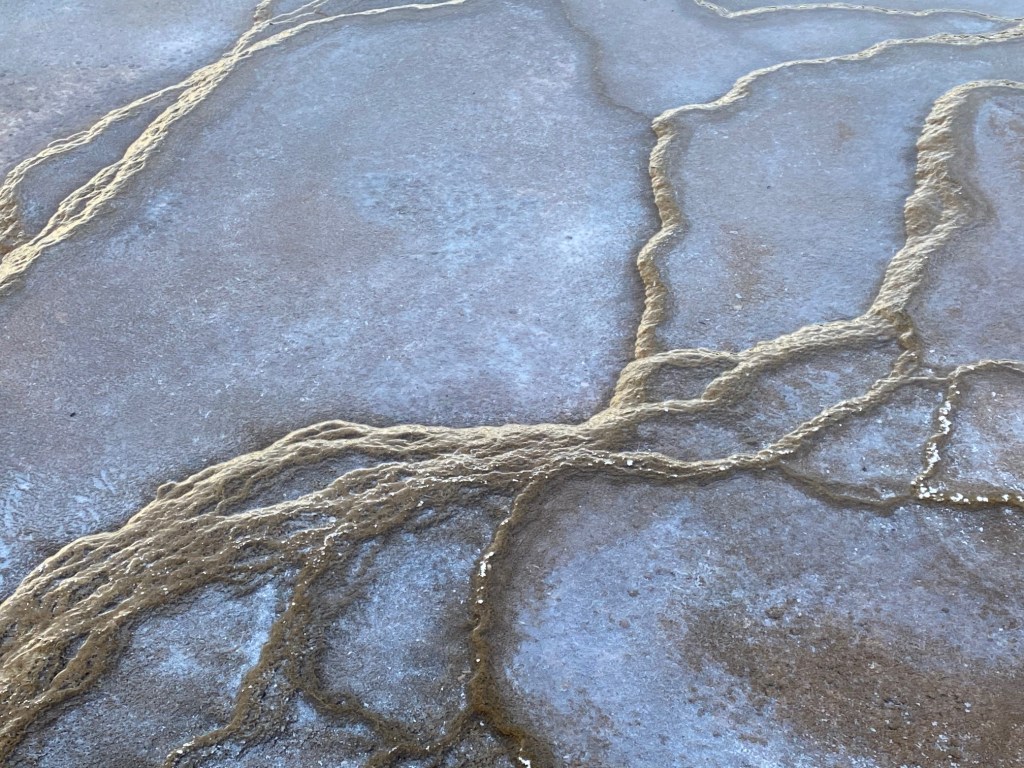
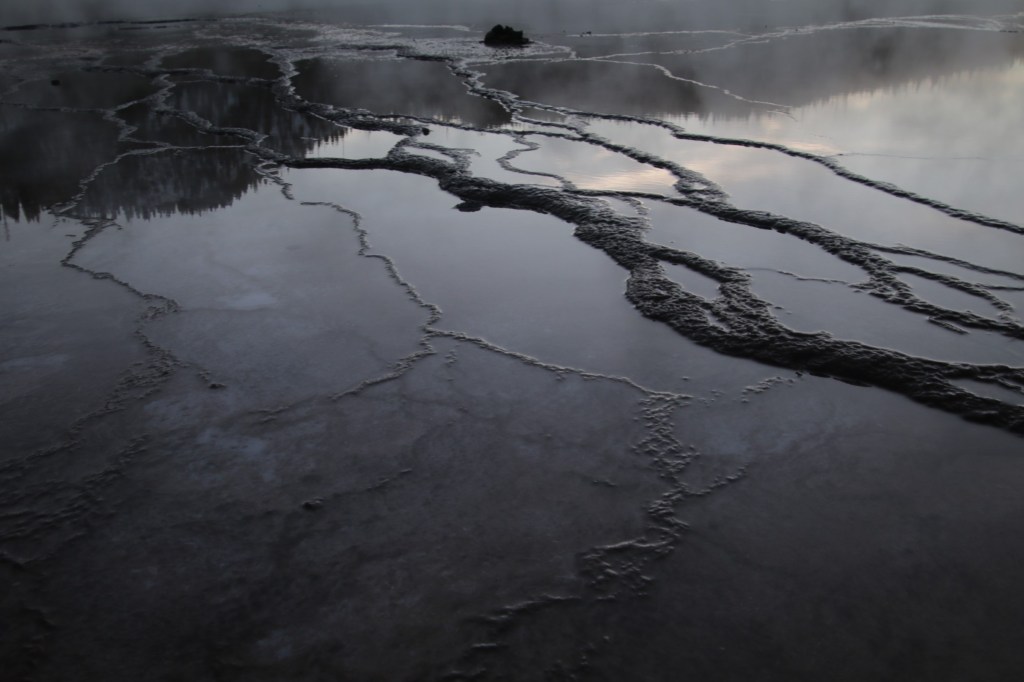
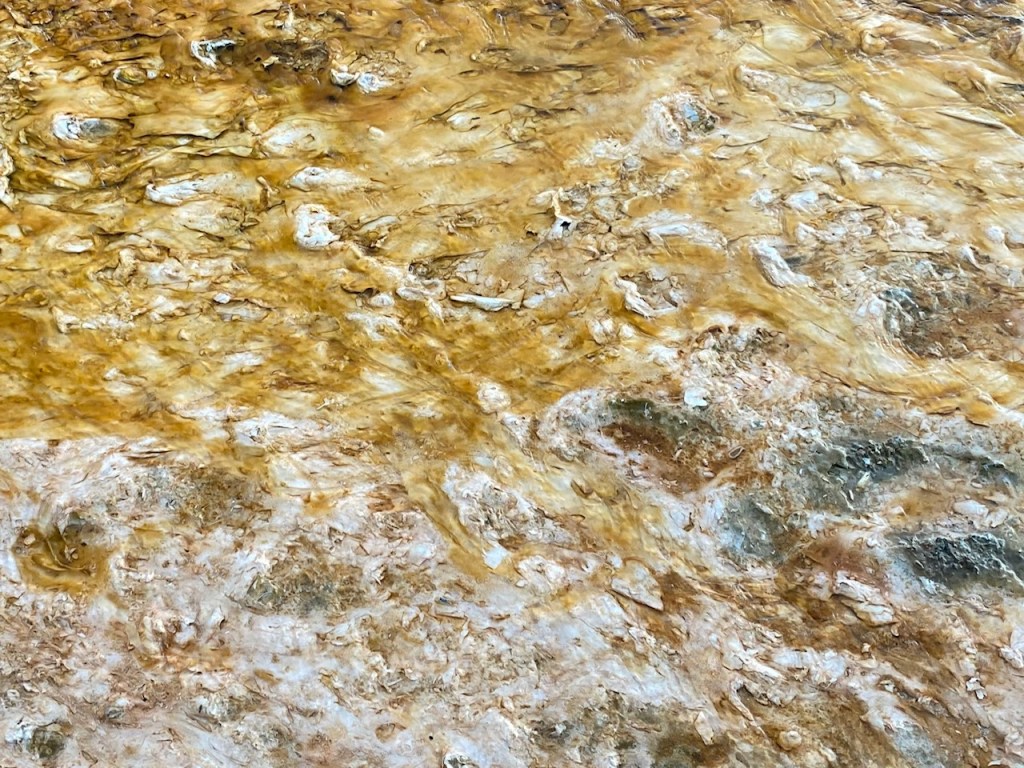
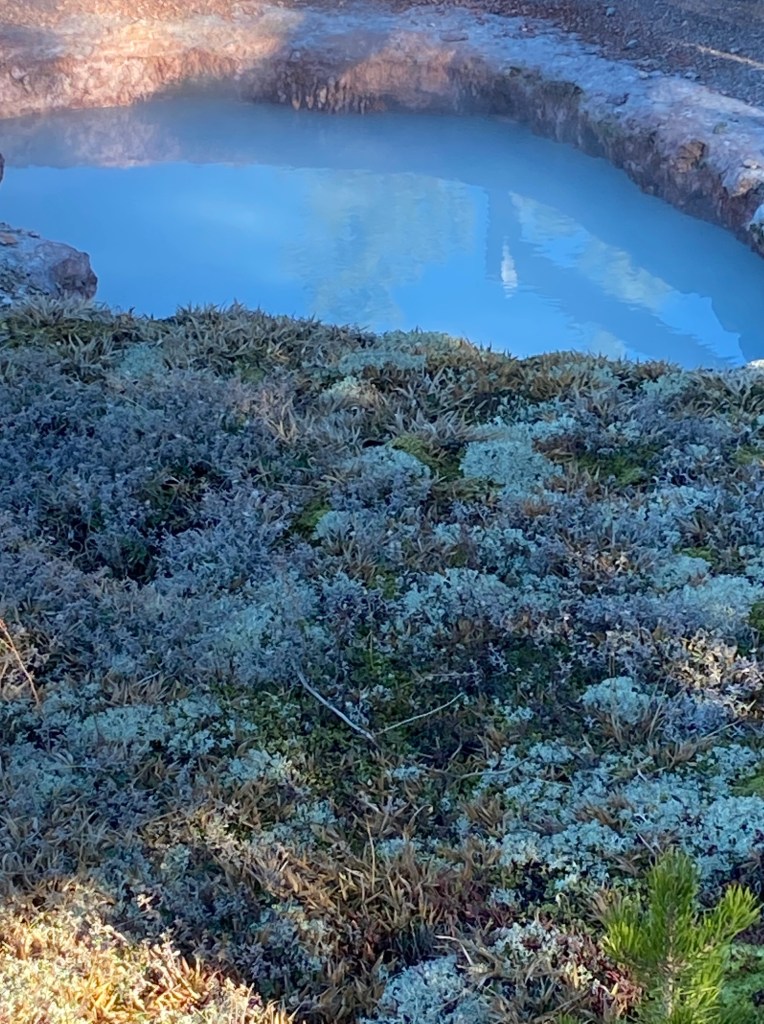
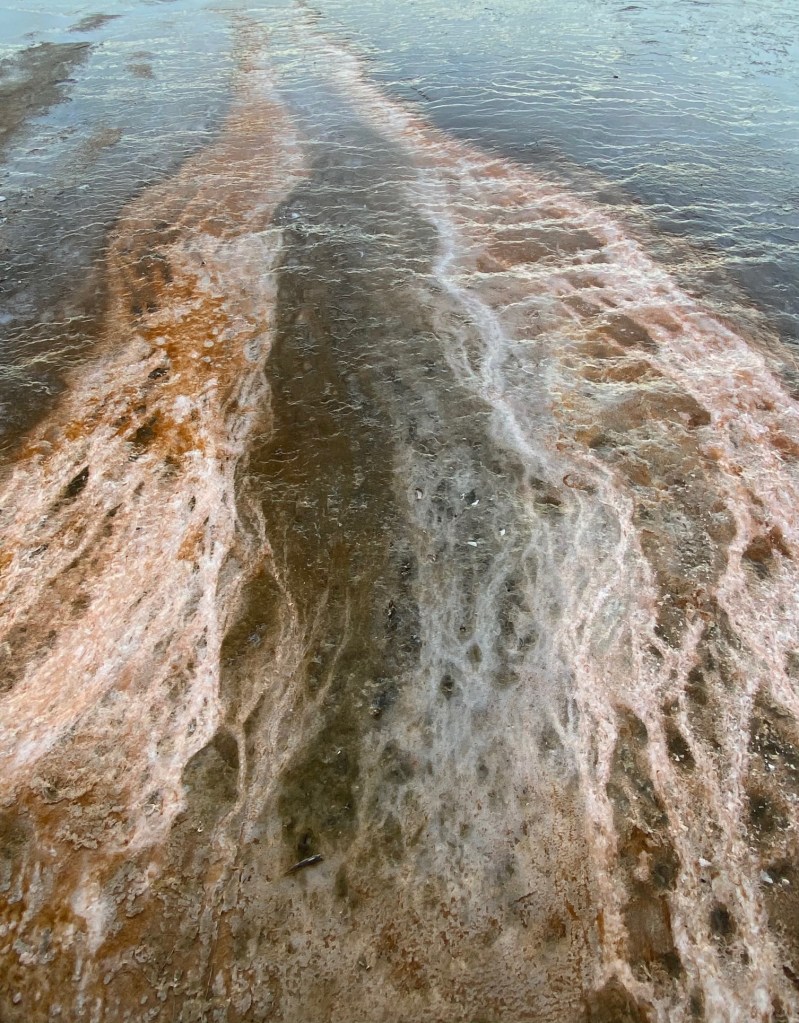
Thermophiles (bacteria and algae) create brilliant colored mats. Each of those colors supports life at a specific temperature range. Blue and Aquamarine are the hottest (up to 189F).
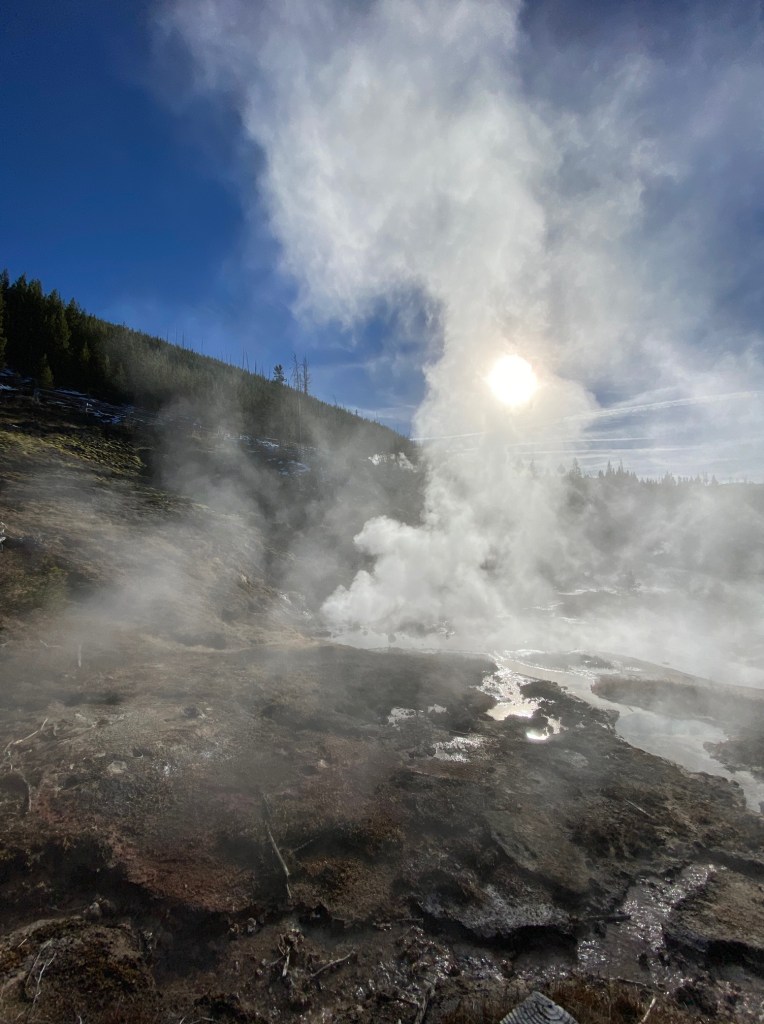
The hottest geyser’s are in the Norris Basin where trapped steam builds pressure 1,000′ below the surface. This boiling water speeds up the chamber and erupts into the air. Temperatures there are the hottest in the park ( 459F)
Norris Basin Geyser on left. Old Faithful on the right
check this neat video produced by Berkley University :
This primeval environment is quite toxic. Groups of bison have been found dead, indicating a quick demise downwind from gas vents that emit flammable hydrogen sulfide and carbon dioxide. Sulfuric acid burns skin and causes difficulty breathing. The animals died from a chemical asphyxiant near the Norris Geyser Basin but there’s other low lying toxic areas in the park. One remote location is called “death gulch”. Rivers and streams in the park are monitored for arsenic, lead, mercury and other heavy metals. One ranger joked that if the national park hadn’t been created, it might be a superfund site. Thankfully, most tourists experience simple water vapor and not these poisons.
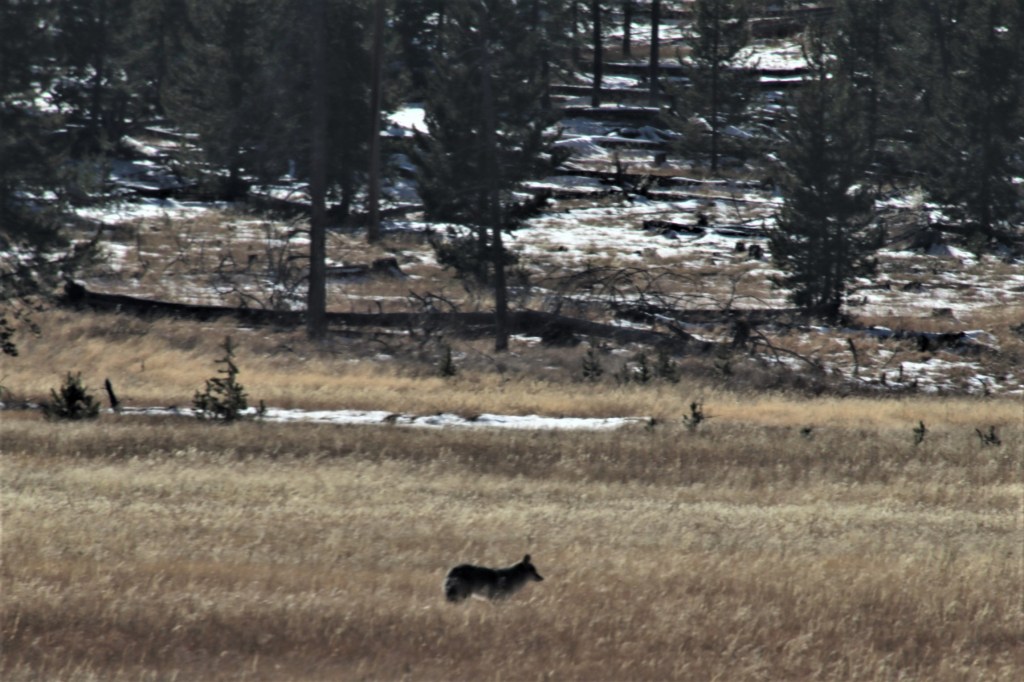
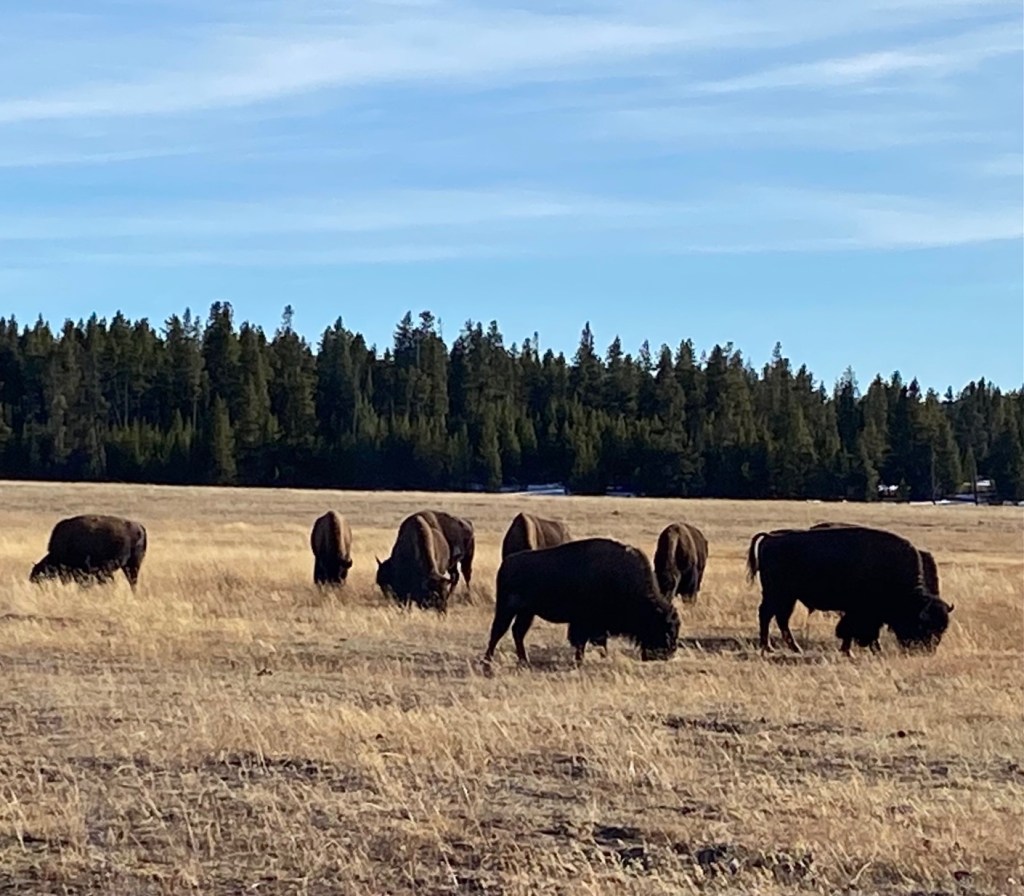
Yellowstone has a diverse animal population due to the thermal environment. Buffalo wander at will. This wolf was just beyond the distance of my camera lens. We saw several fox. Trumpeter Swans flew overhead. Big eyed Elk calmly watched tourists drive by.
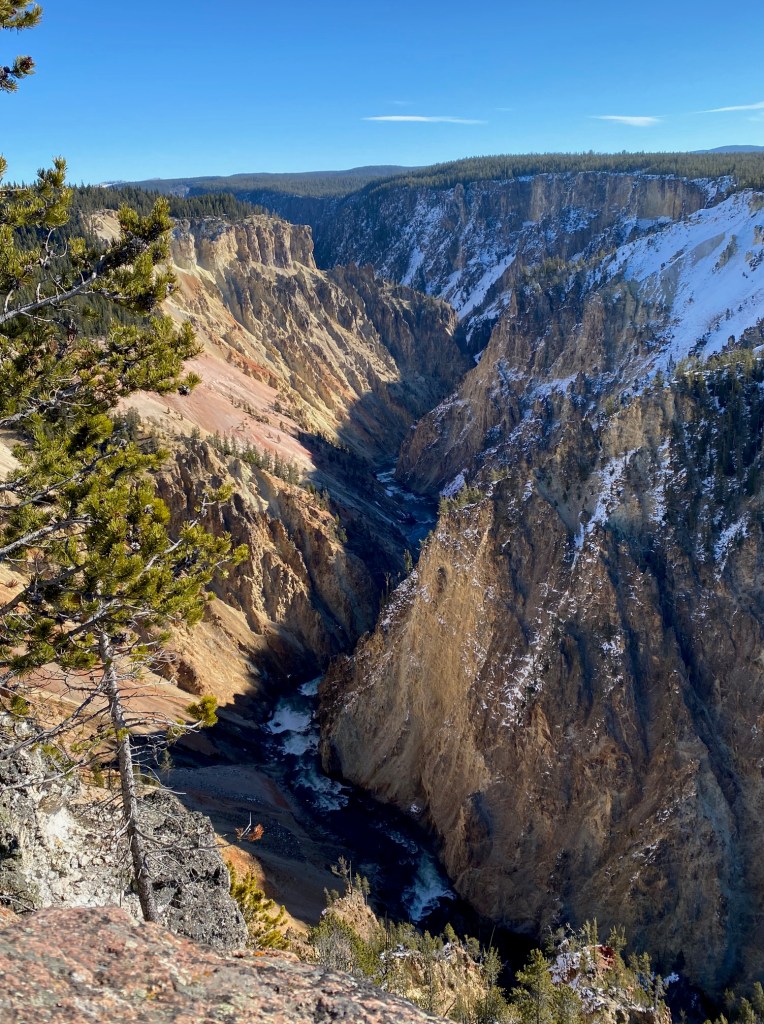
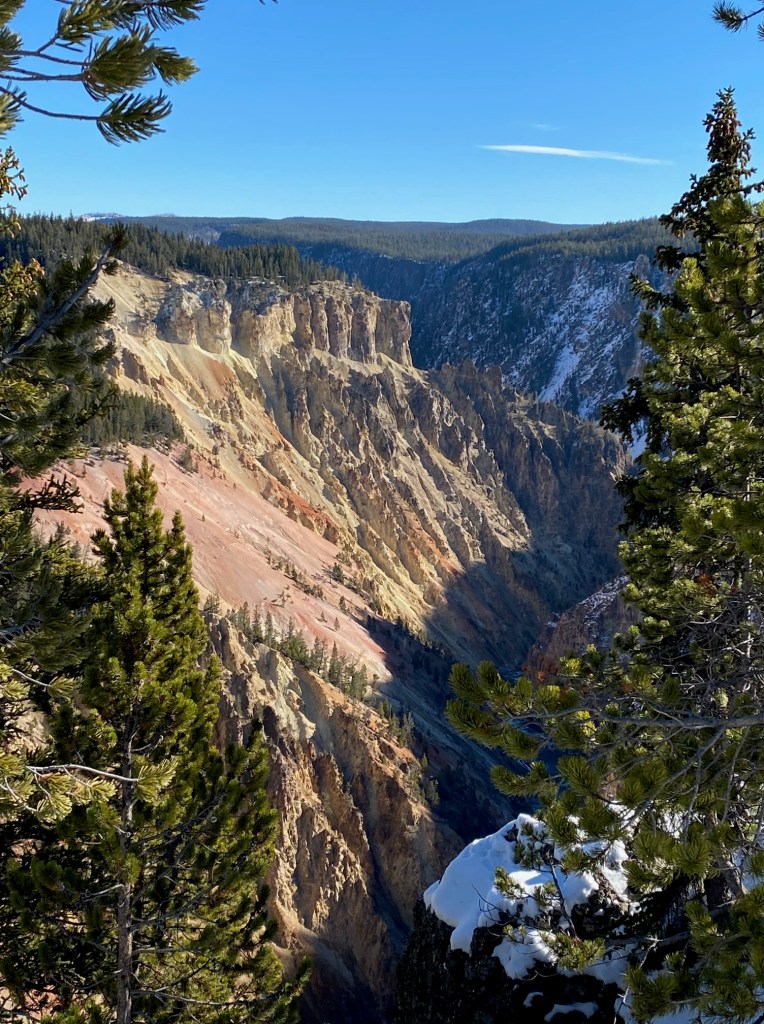
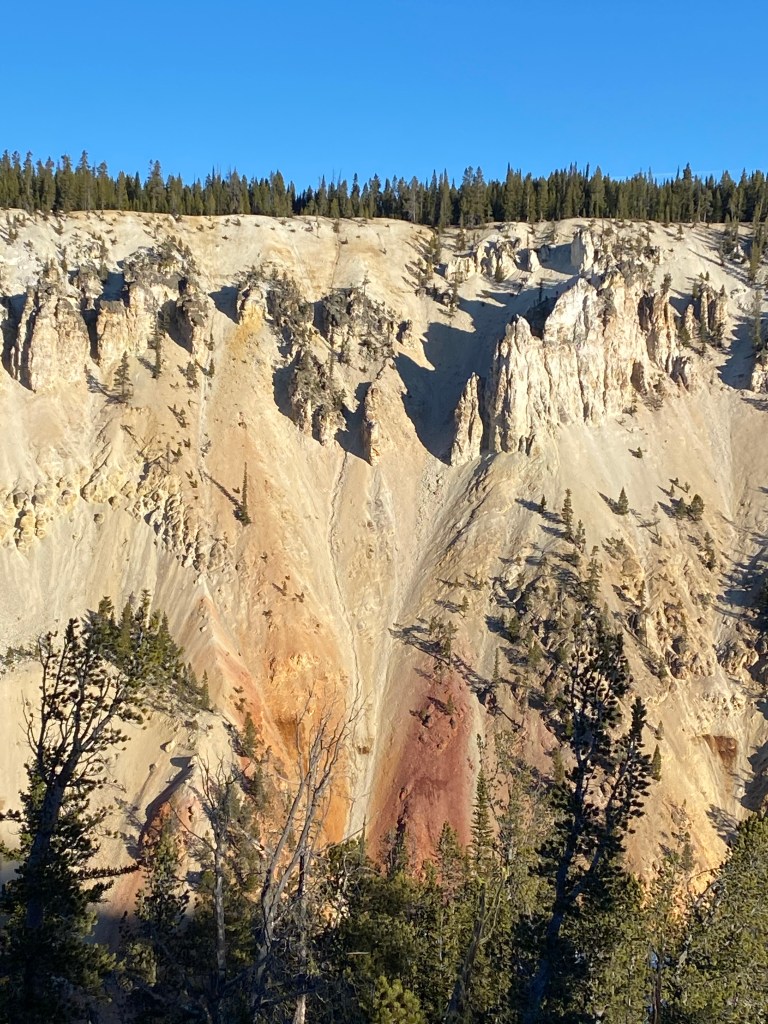
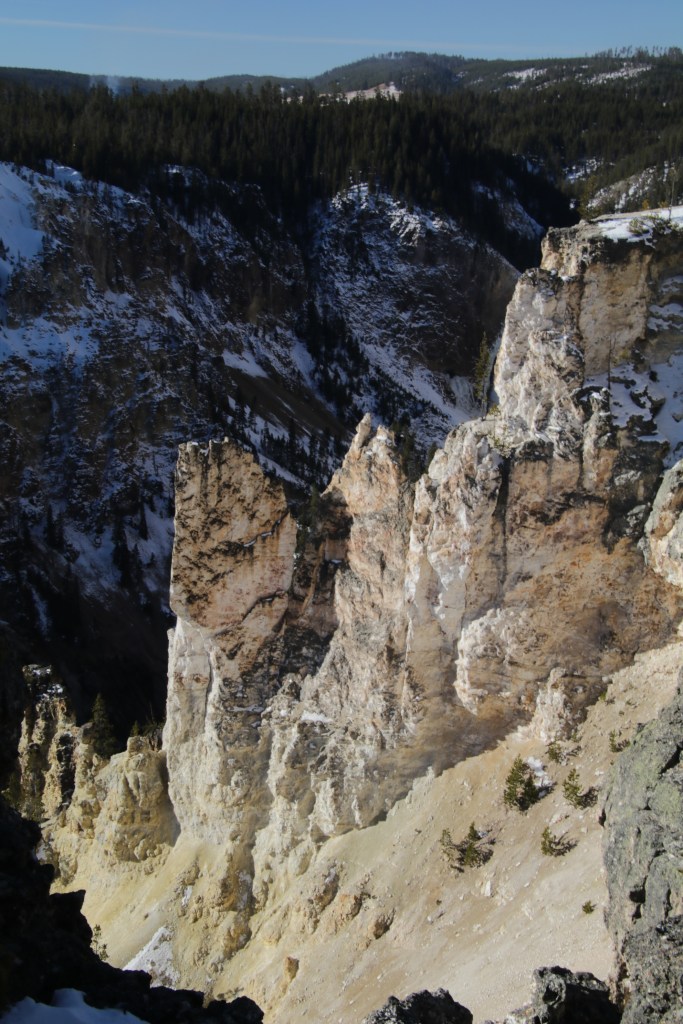
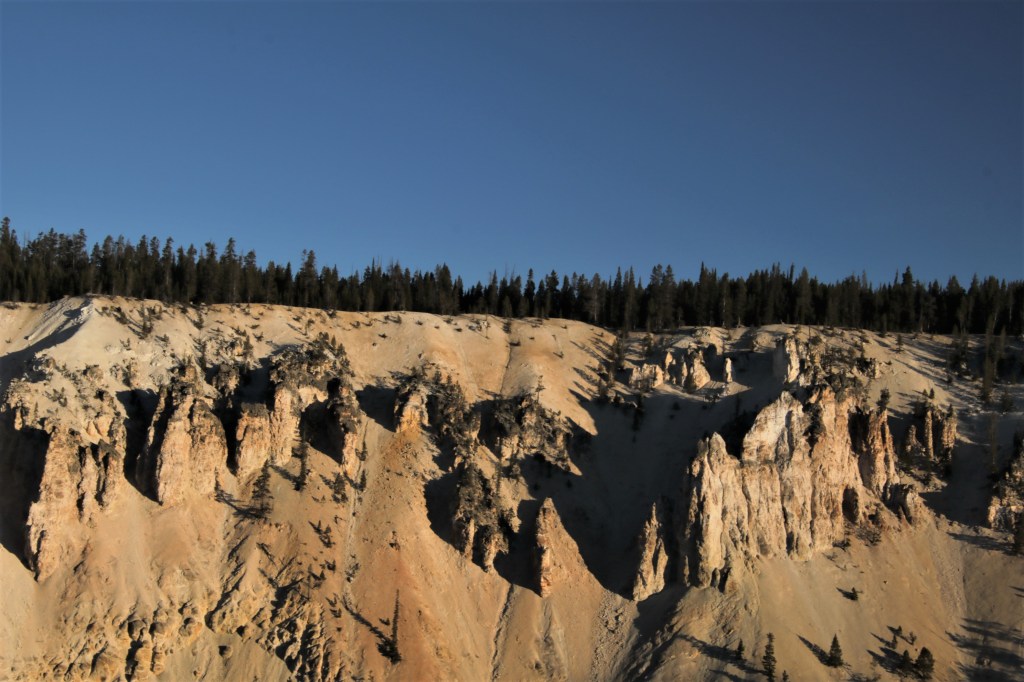
Nothing matches the topography and geology of the park. The Grand Canyon of the Yellowstone is breathtaking in dramatic colors and shapes created by hydrothermally altered rhyolite sediments.
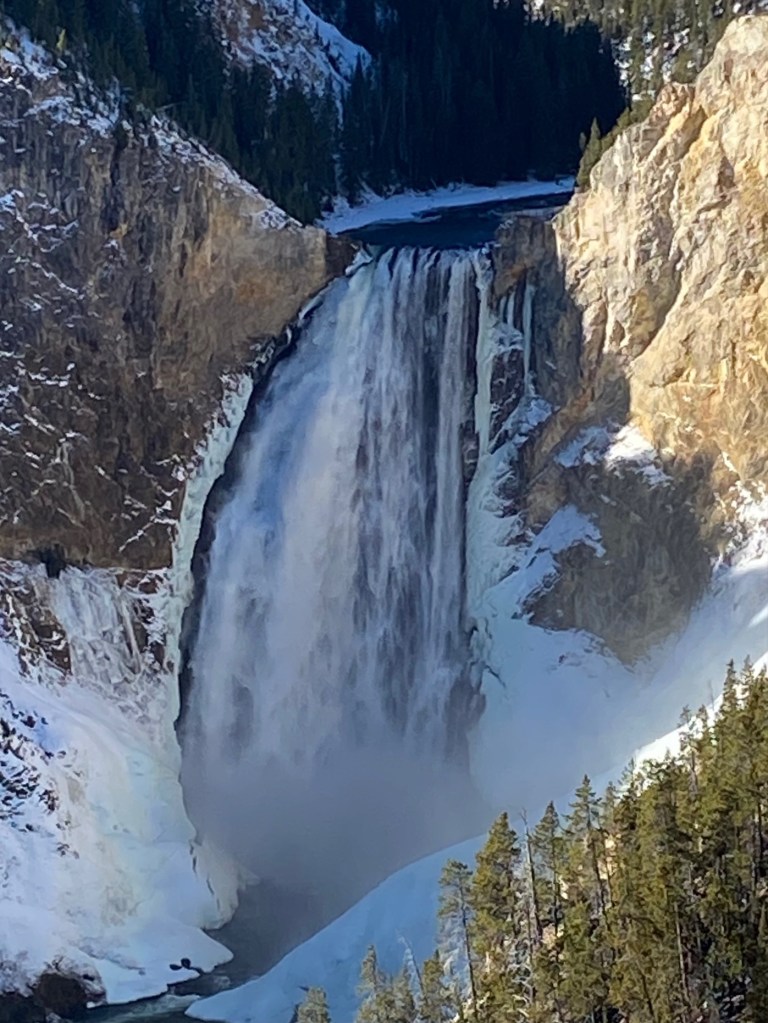
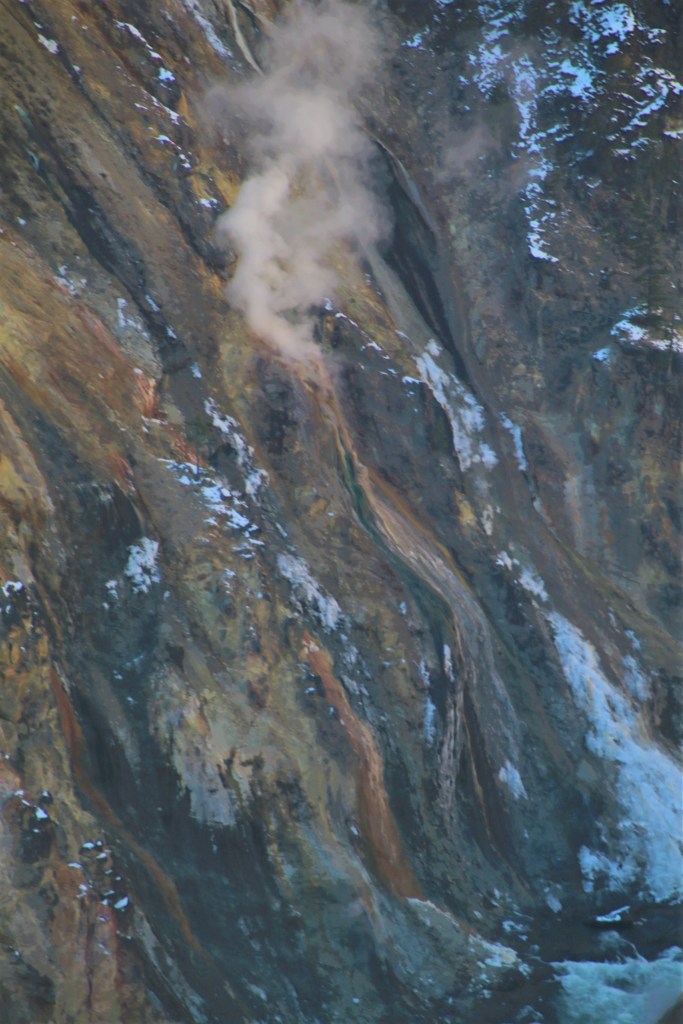
Huge hoodoos dot the landscape. The river flows 1,000′ below in the sculpted gorge and steam vents are pocketed in the walls above. We tried to get to artists point for sunrise, hoping that the lower falls would be illuminated by the sun. It took me 1 1/2 hours to realize that the location of the winter sun doesn’t highlight the falls.
We loved exploring here Halloween weekend. The park isn’t usually open that late, but COVID and good weather were on our side. It wasn’t crowded although goofy things did occur. We heard about 2 men arrested for trying to cook a chicken in one of the boiling pools. They’re lucky they didn’t slip and fall in. The bodies of previous rule breakers dissolved in the acid and were never recovered.
For the first time in sixteen years, I’m spending this Covid summer exploring my backyard (the entire state of Montana).
We headed down the highway with our 5th wheel RV for Camping adventure #3 to the Bitterroot National Forest near Hamilton, Montana. There are three campgrounds at Lake Como: (1) Lake Como lower site has electricity! This is a rare treat in U.S. National Forests, so it fills quickly on first-come-first serve basis. We arrived on a late Sunday afternoon–thinking people would be heading back home since the kids have started either on-line or reality school. No such luck. (2.) Three Frogs campground is just above the lake and is recommended for small RV’s or tent campers. Our rig might have been able to fit, but by that time we were already established at (3) Rock Creek horse camp which has large spots and neat horse related accessories. We had two quiet week nights with only 2 other campers. Mid-week, a group of trail riders arrived with horse trailers in tow. With fire restrictions the evenings were still very quiet.
Blodgett Canyon Hike
10 miles to Canyon lake–in and back. Rated: Moderate/difficult
After driving an hour on mainly washboard roads, I grabbed a soaking wet backpack out of the truck. The water bladder lid had loosened, spilling over a liter of water.
I knew the forecast was for 93 degree F. temperatures. But we arrived early and it was still cool. “Hey Bob–how much water did you pack?” I asked my companion. Between the two of us we had 1 liter and a pint. Not enough.
I’m ashamed to tell you that I ignored one important hiker’s rule. This shouldn’t have happened, because I consider myself experienced and fully understand that ignoring the rules can lead to harm or death
I should have headed back to town to fill up or done the hike the next day, and maybe went kayaking and swimming. Instead, ego as well as impatience led to a misdeed. I stuck with an imperfect plan and talked myself into a dangerous situation. “We can ration water and push through.”
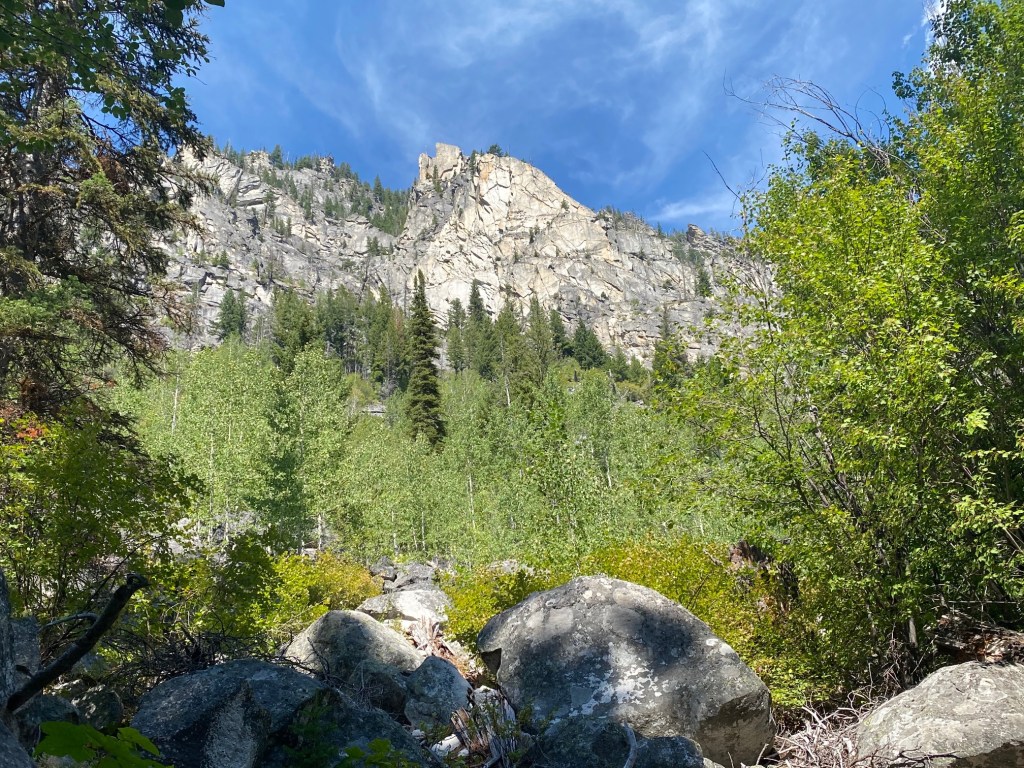
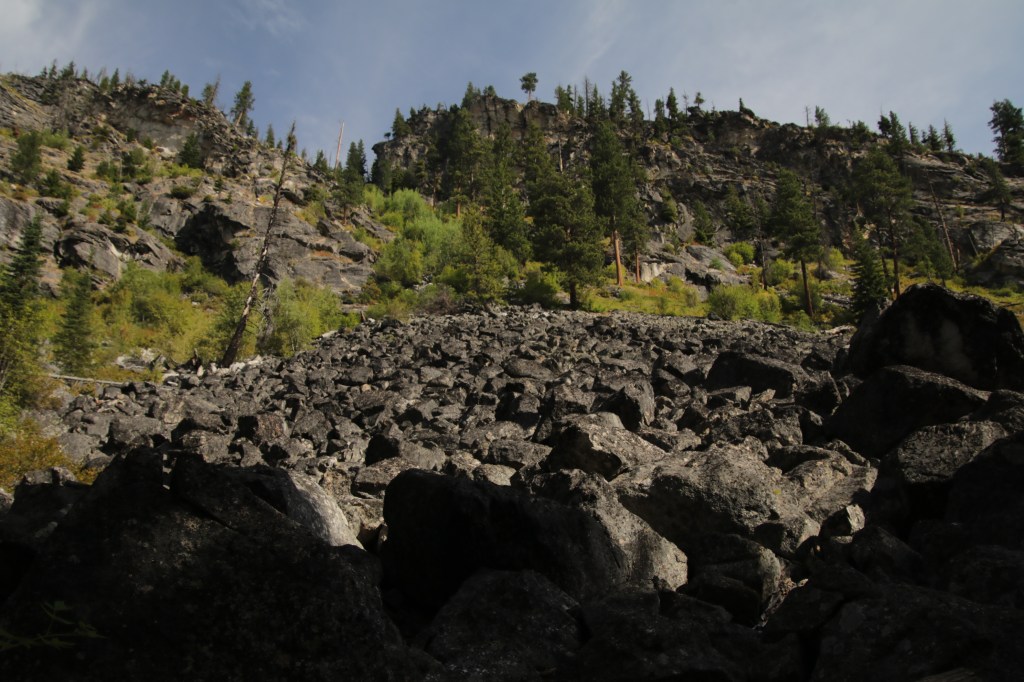
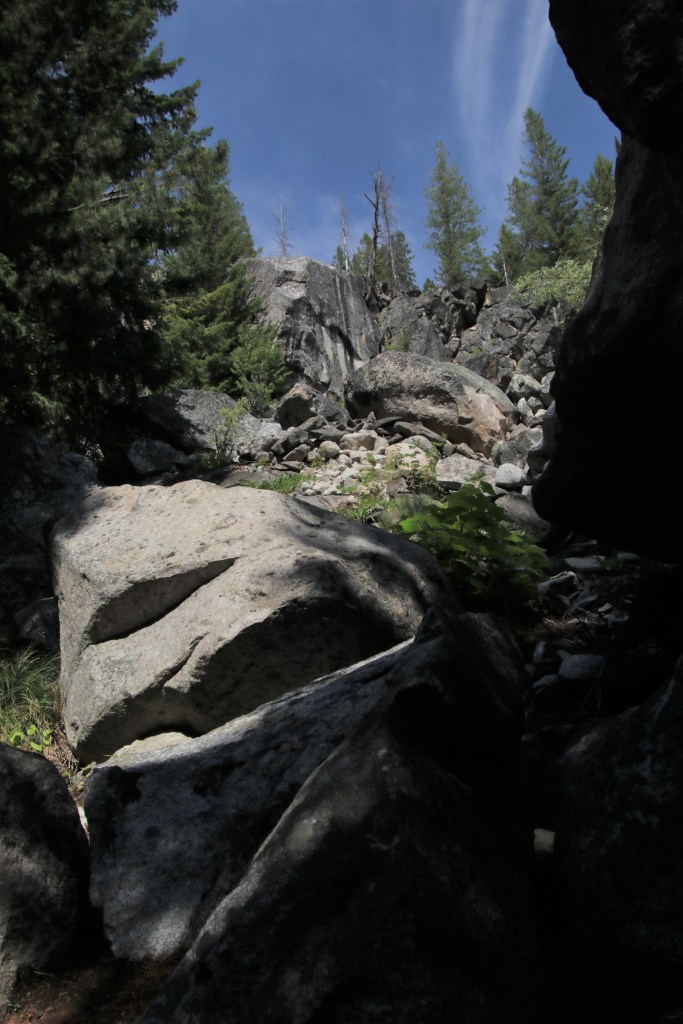
The trail is rated moderate and 10 miles (round trip) to Canyon Lake. For four hours we zigzagged around boulders and walked on glacial remains (uneven footing= toe kicking and ankle rolling). The trail in spots is sketchy and not marked well. Several times I found myself off-trail and in thick brush, requiring back-tracking. As temperatures soared, I got crabby. How difficult is it for the forest service to build cairn markers or nail up some signage?
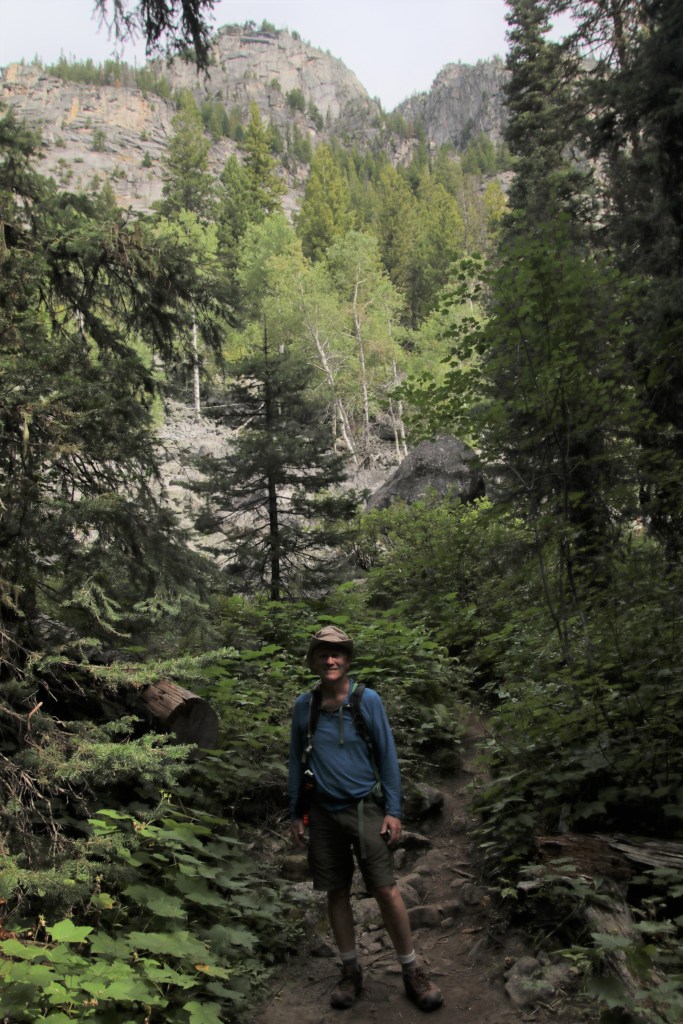
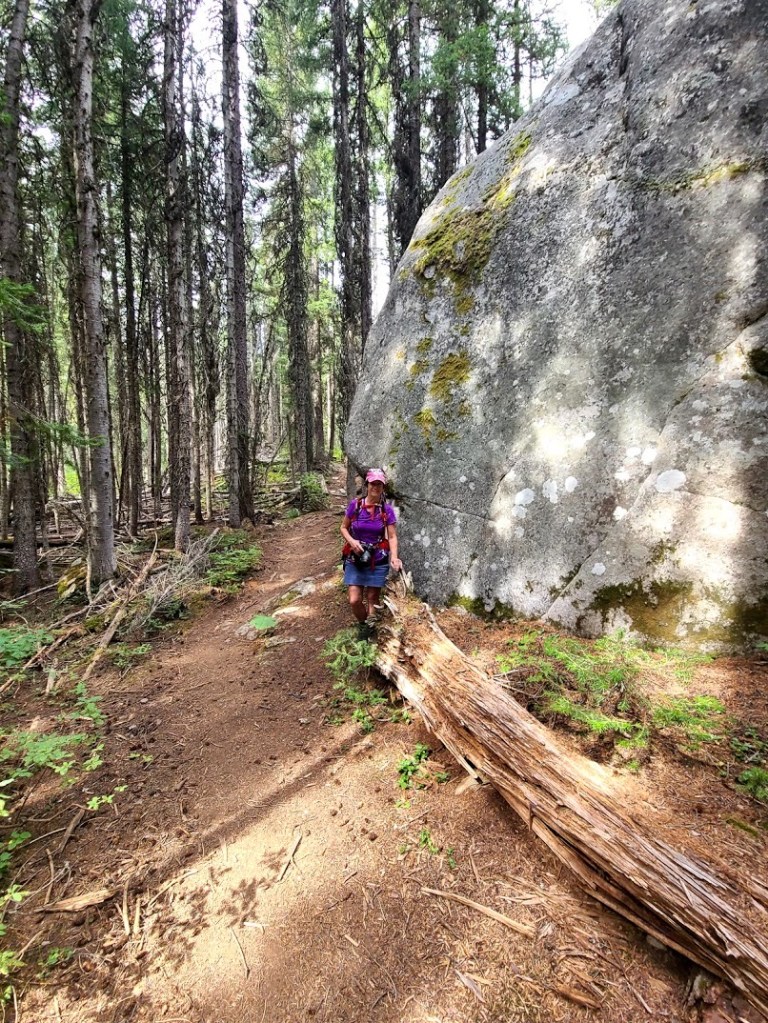
Lt: not my happy face Rt: good trail here. Look at the size of boulders!
The fun part of listening to the roaring creek, viewing soaring canyon walls and checking out all kinds of berries evaporated. Especially when we reached a steep ascent (1,500′ in a short time) to the saddle where the lake is located.
We checked a digital map. Three-fourths of our water was gone and the remaining trek would be 2 miles up and back from this point. But I could see the top of the ridge. Pausing, I finally kicked myself in the backside and suggested turning around.
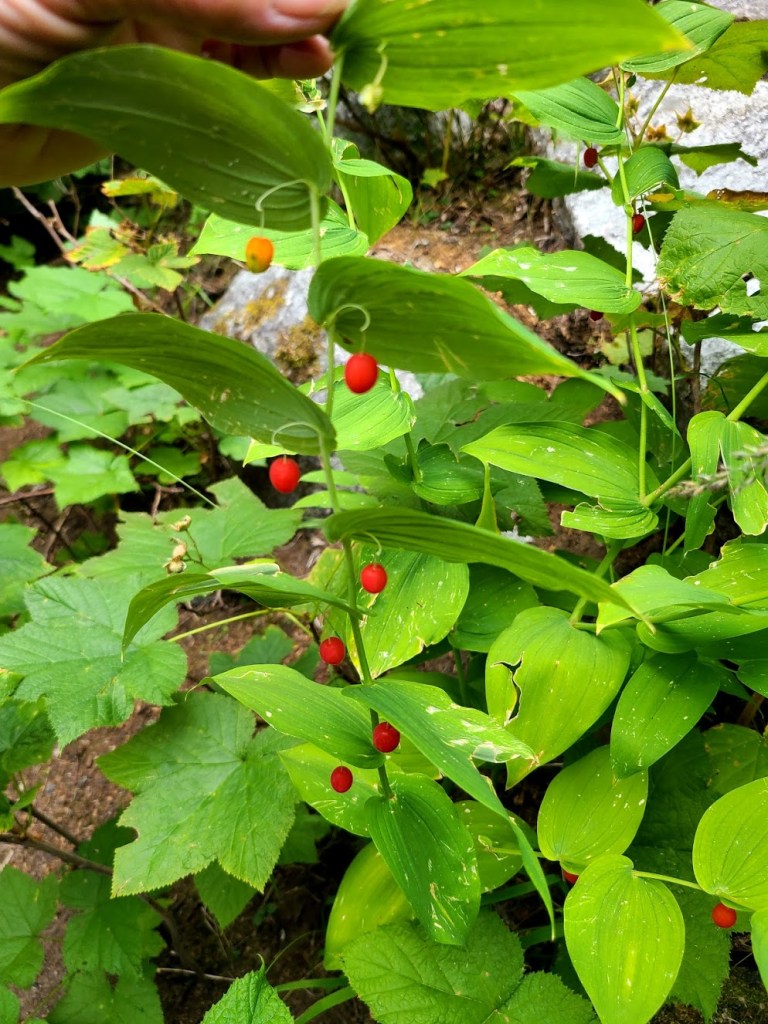
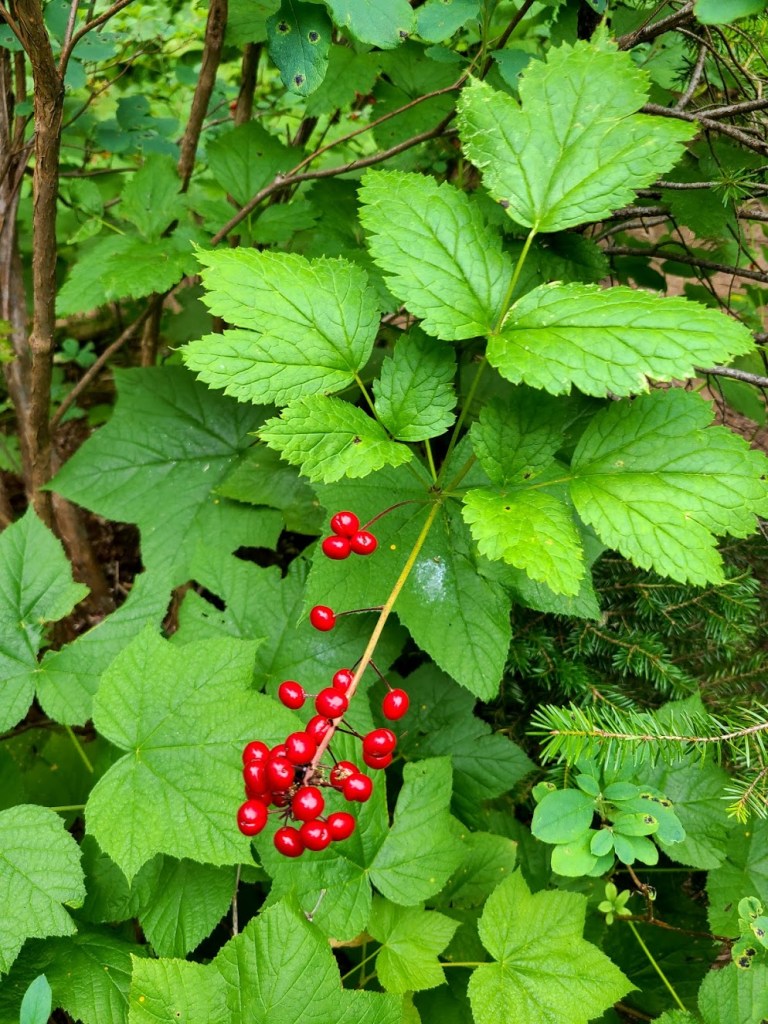
There are many huckleberry and serviceberry plants on this trail as well as these beauties
The last two miles back to the trail head were miserable. Symptoms of dehydration were evident: Lethargy, thirst, dry mouth, dizziness and headache. I hadn’t urinated in over 5 hours. I fell. We ran out of water. What a shit show.
I’ve never, ever been so happy to see a parking lot. I’m telling you this as a lesson. Pay attention to my mistakes. Furthermore, I promise to not be an idiot again.
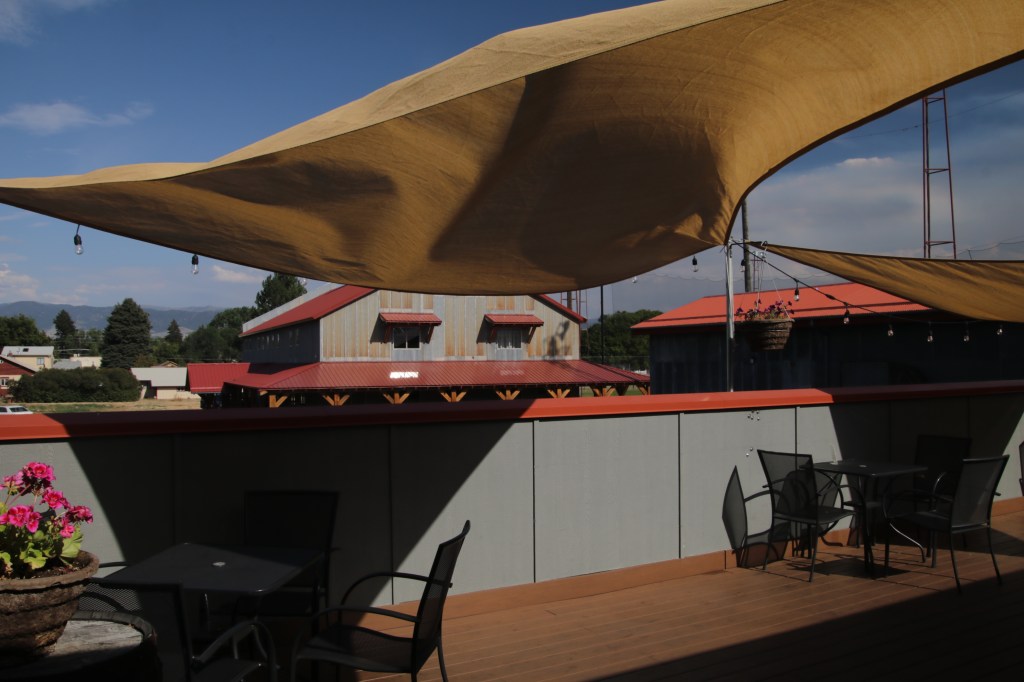
We hightailed it to Hamilton and the Bitterroot Brewery to recuperate and lick our wounds–cold water, super beers, and great food. Two outdoor patios to keep social distance.
Lake Como Waterfall Hike
7.2 miles in and out. Rated: Easy Elevation gain: 571′
Another day of temps in the nineties and I was still feeling physically out of sorts from the previous day’s errors. Instead of doing the loop trail around the lake, we started near three frogs campground on the north end of the lake. This was for two reasons: It’s a bit shorter than the loop and there’s a balance of shade/sun.
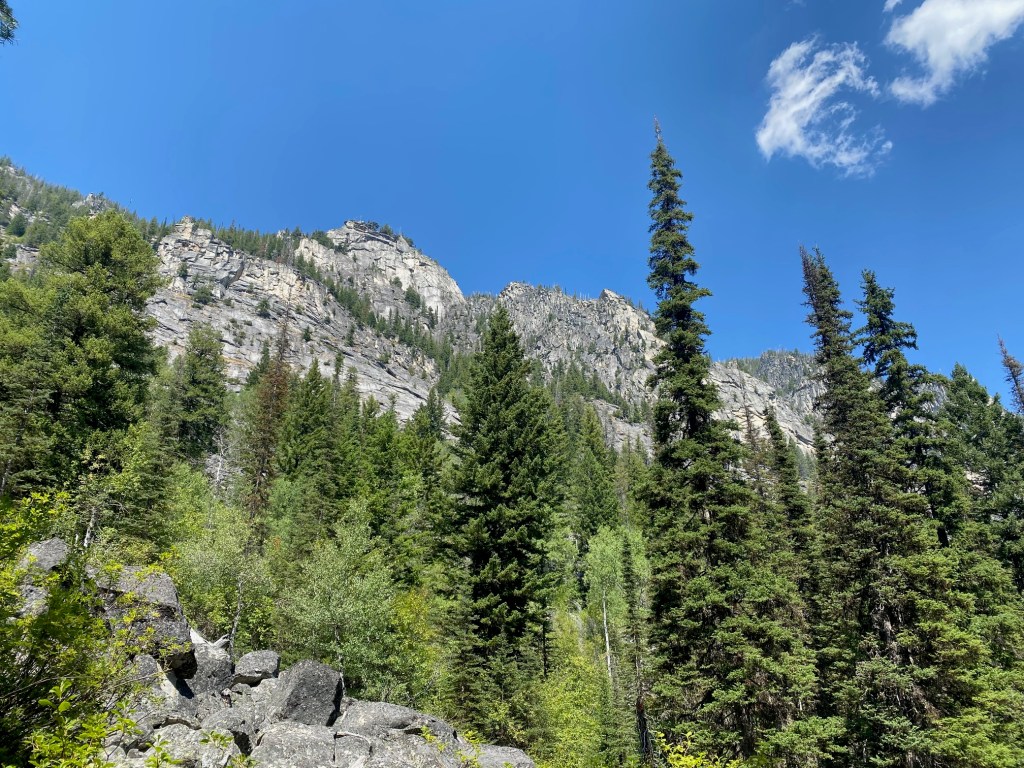
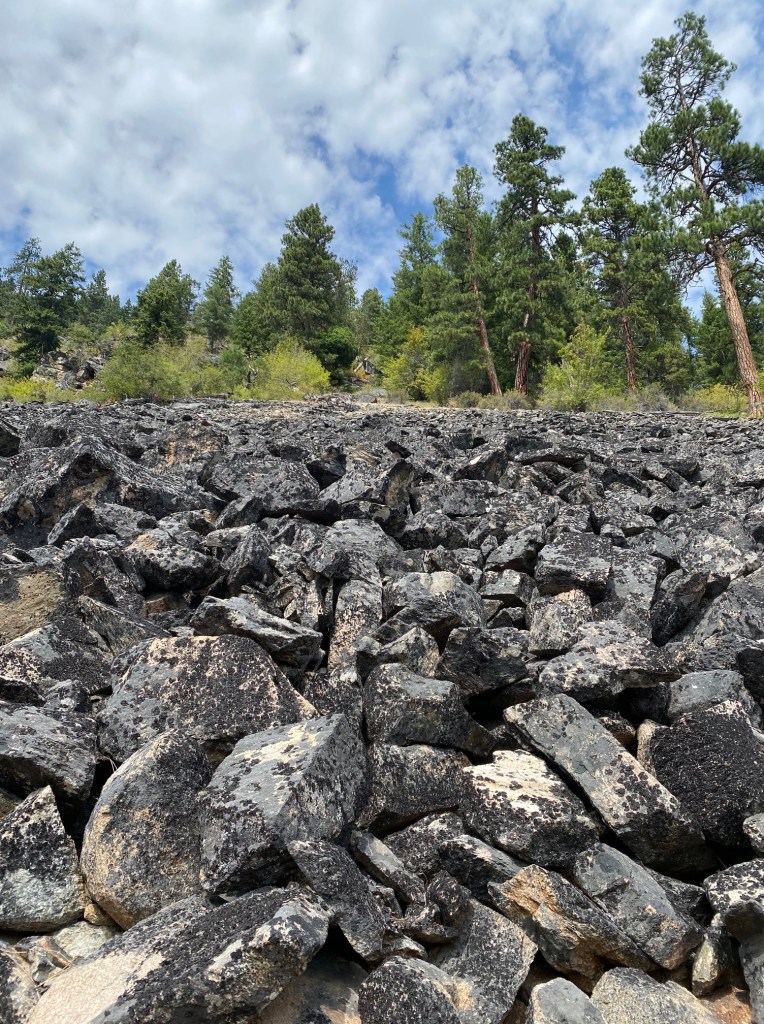
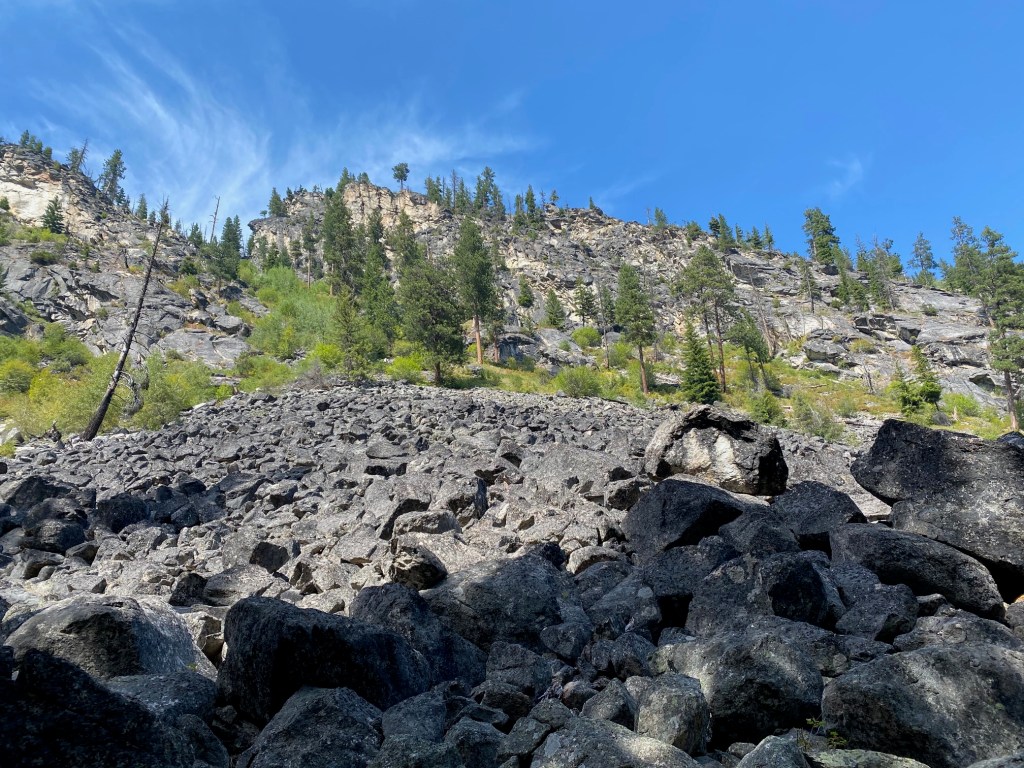
This trail starts on a flat blacktop surface that is handicap accessible. The route then continues single track, packed dirt that runs along a steep slope dotted with beautiful large Lodgepole Pine trees. Rock slides intersperse this terrain. Lake Como was once a canyon before the government built the earth dam that creates the lake.
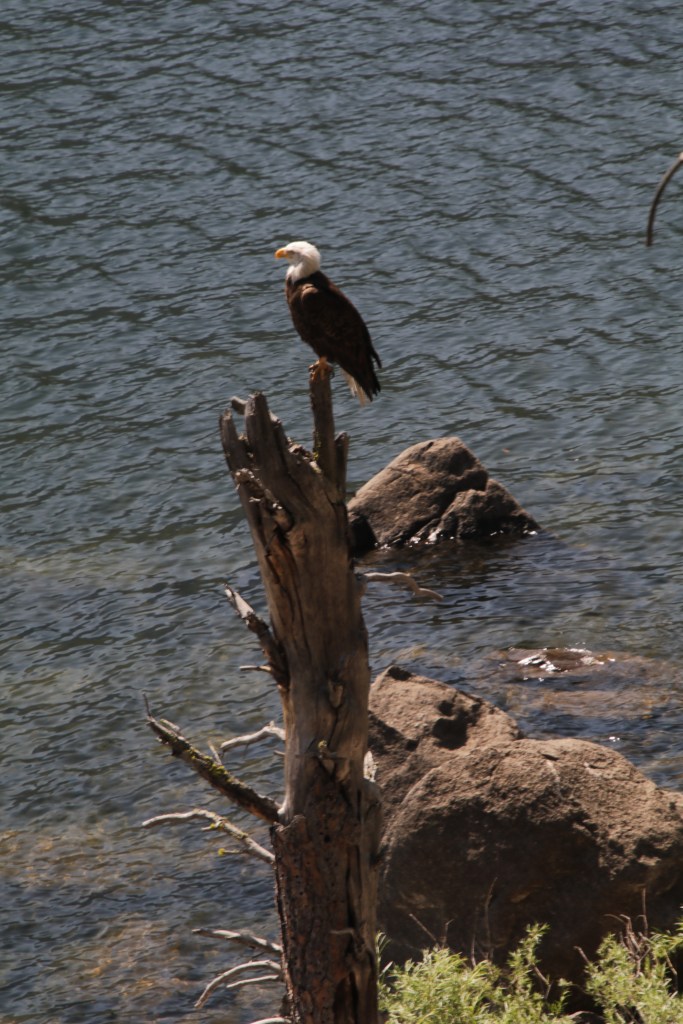
Along the way, we saw an Eagle standing on a dead snag. He looked right at us, acknowledging our presence before scanning the lake for fish.
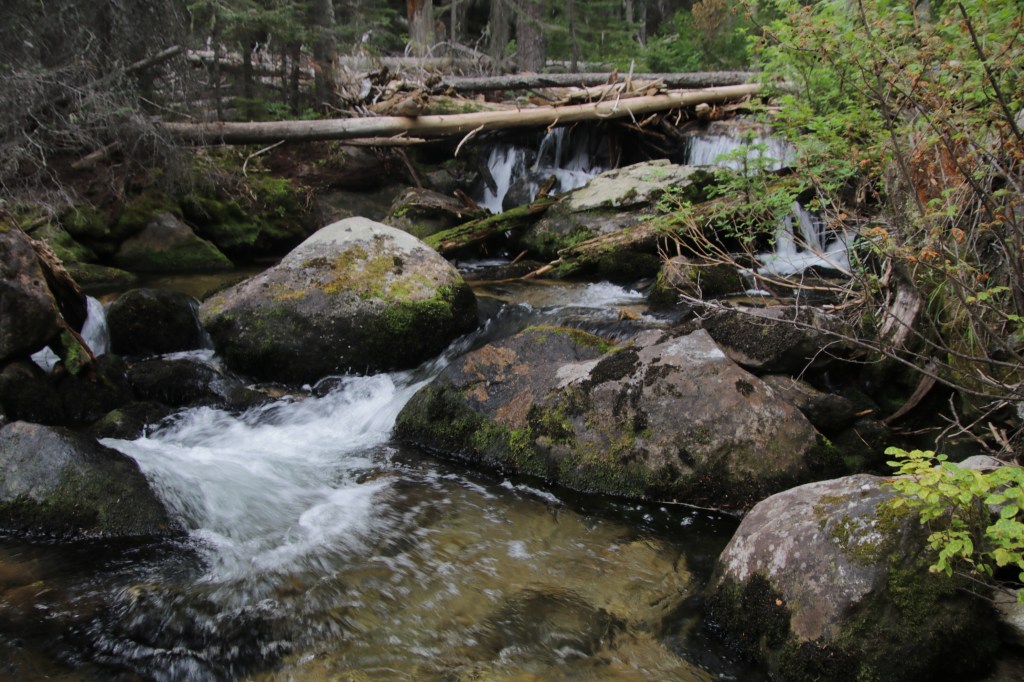
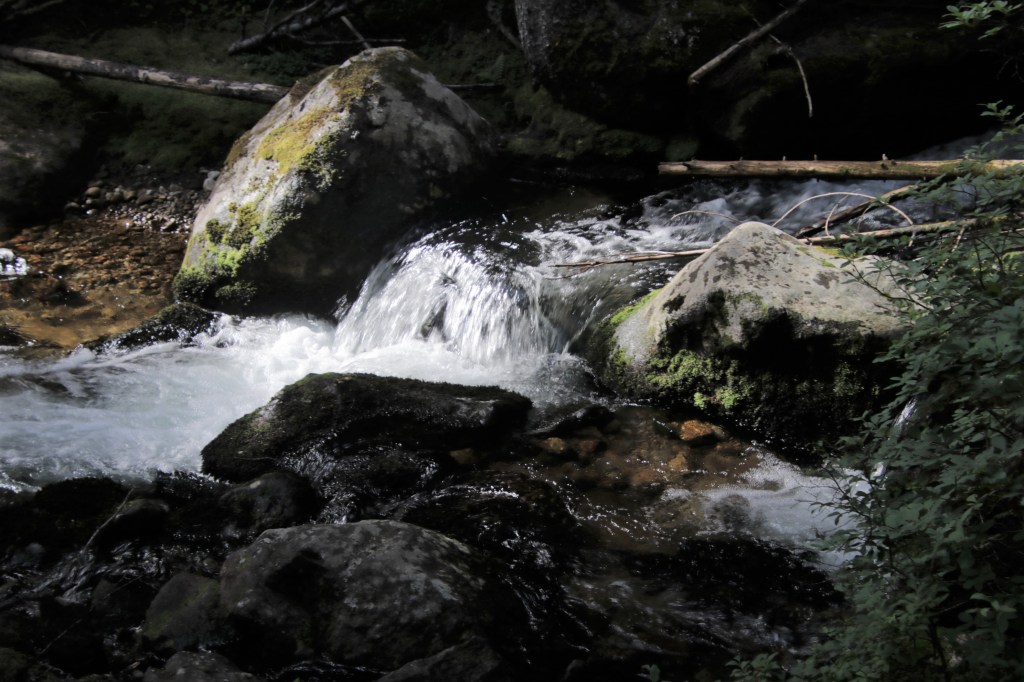
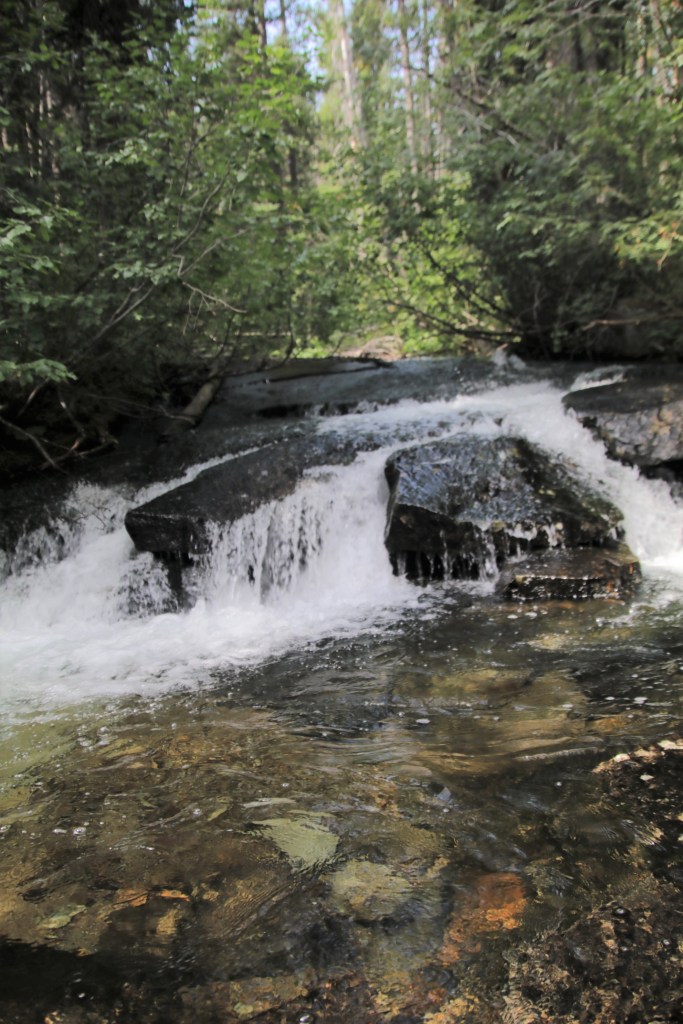
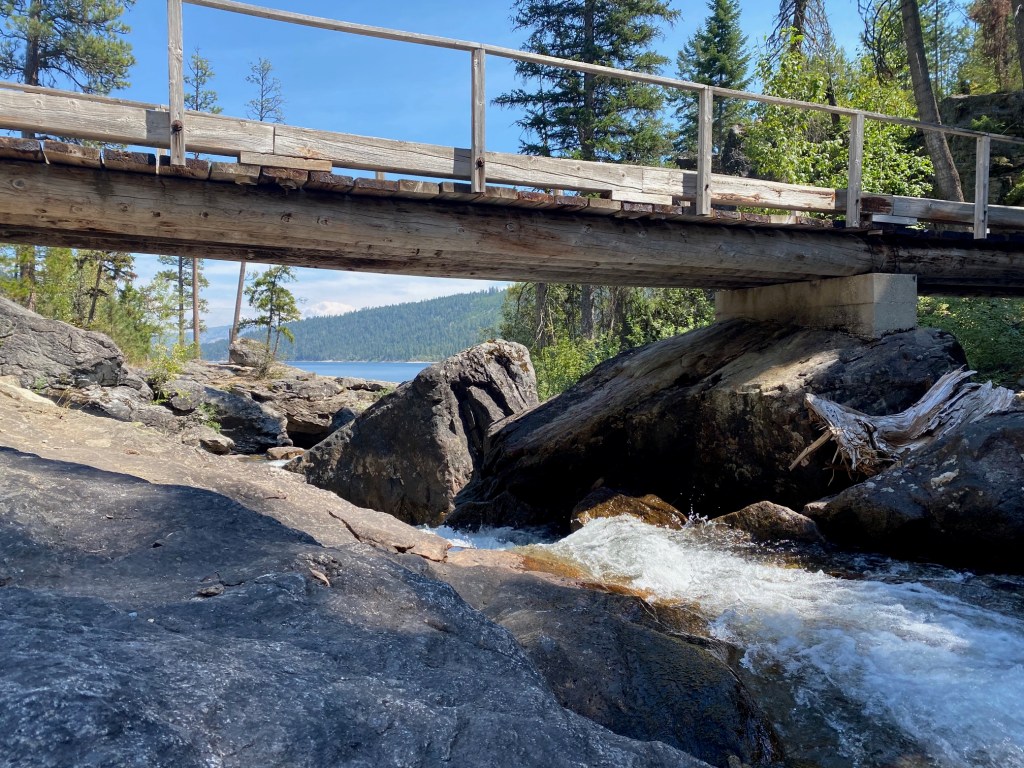
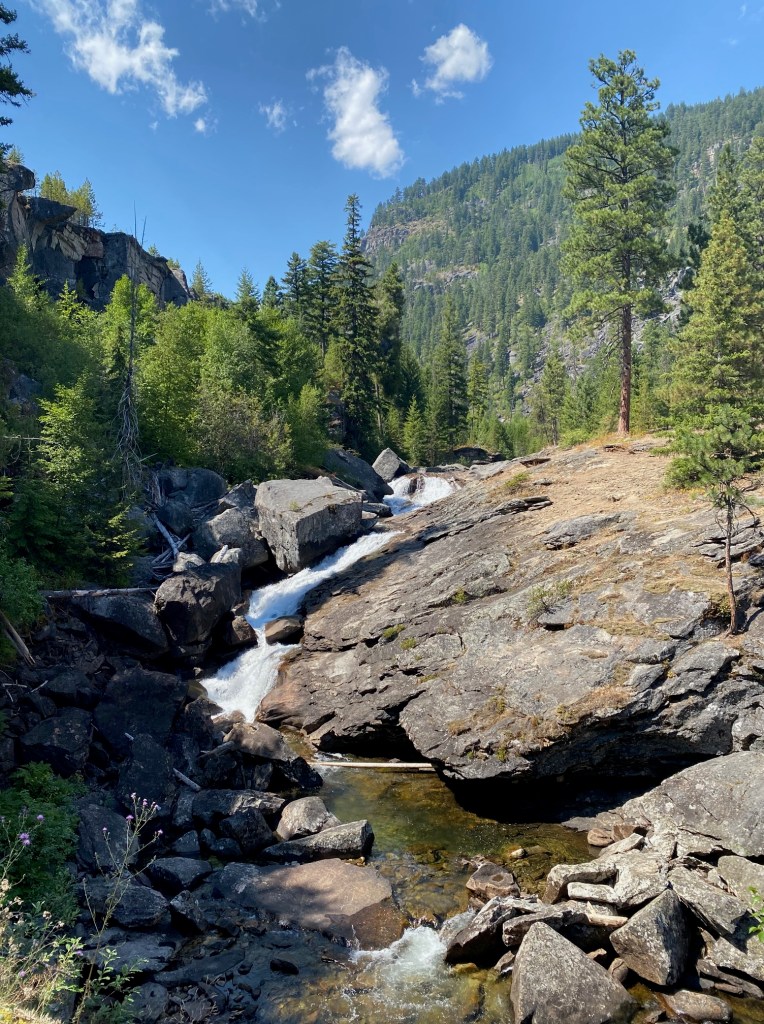
Our lunch spot was below the bridge, next to ripples and small cascades.To see the waterfall, cross the bridge and go up the trail. At the top, look for a narrow path on the right. This takes you to an overlook where you can see the entire falls.
Go back down to the bridge and cross it. Start back on the trail, but keep looking for another narrow but poorly defined trail on the left. It would be worth the time to carry flagging tape to mark your way up (and remove on the way down). Go uphill to another ridge that takes you to a magic place above the waterfall.
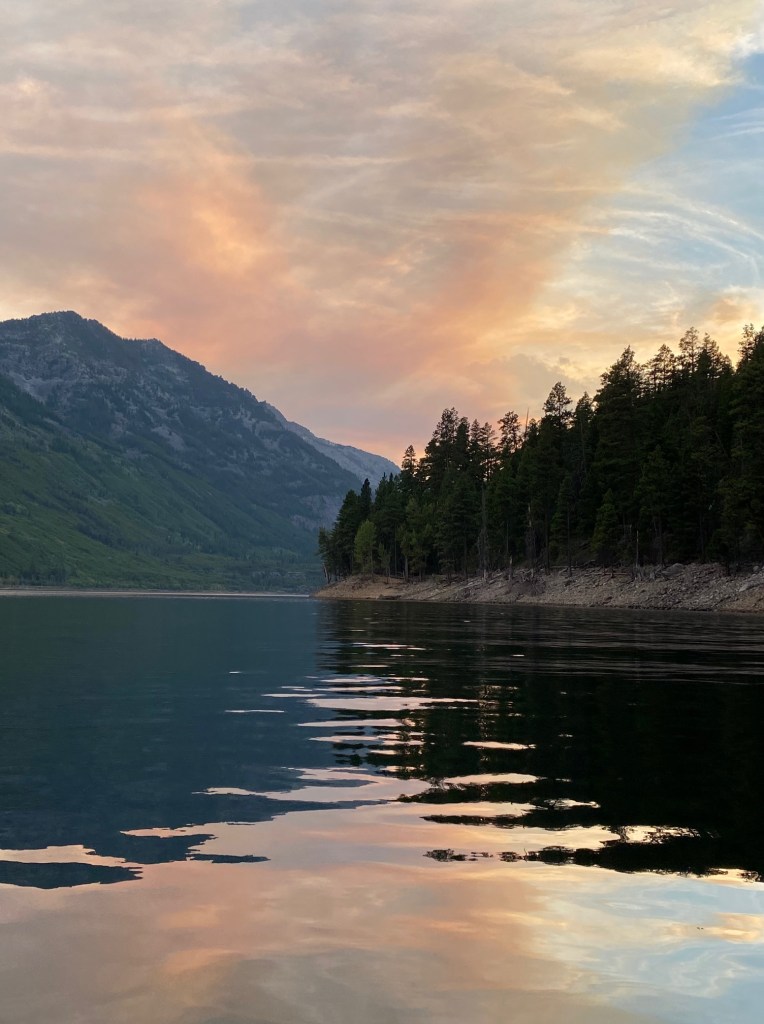
Lake Como Sunset Kayak
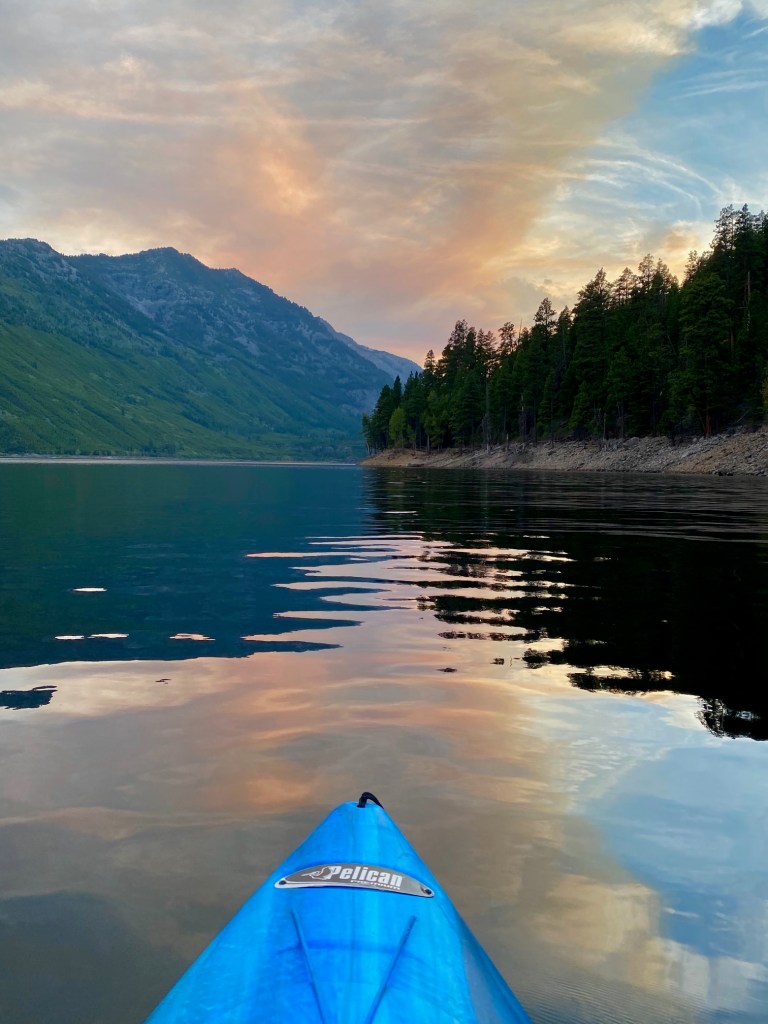
There is nothing more amazing than summer in Montana. On the equinox the sun doesn’t set until after 10:30 P.M. We took advantage of the longer days with a 3 mile after dinner paddle on Lake Como. To circle the lake, it must be about 7 miles.
I’ve lived in Montana for seventeen years and listened to friends crow about the beauty of the 27 lakes in the Jewel Basin, Flathead National Forest. I kept saying, “I’ve got to get there.” But Montana is a big state and this area is just a tick too far from my home for a day hike. Enter Covid and a loss of overseas travel to shoot The Basin to the top of my RV bucket list.
We camped at Wayfarer’s, Flathead Lake State Park, thinking that late afternoon swimming and wonderful sunsets would be an additional bonus. I suggest reservations instead of fighting for first-come-spots. It’s easy to book on-line at montanastateparks.reserveamerica.com
The Flathead National Forest Service office in Big Fork has hard maps for all the Jewel trails. It’s easier to stop and pick one up, since paths interconnect and aren’t always well marked. Alternately, there’s a map posted in the parking lot and you can take a picture of the routes with your phone. But you won’t have elevation markings.
From Big Fork, we drove past Echo lake to the Jewel Basin Road. The majority of trails in the Jewel require driving this washboard, potholed road to Camp Misery. Get there either early or later in the day but expect parking problems between 9:30-2:30. Check sunset times if you plan on going late. There is another way into the Jewel–from Hungry Horse reservoir–but prepare for a steep, hard climb in exposed terrain.
Our next decision was which trails to experience. I asked my friend, Moon National Park Travel Guide author, Becky Lomax, for recommendations for two days: Mount Aeneas and Wildcat Lake.
Mount Aeneas Summit Trail
rated: difficult (I’d call it more moderate) 6 miles out and back
Elevation gain: 1,781′
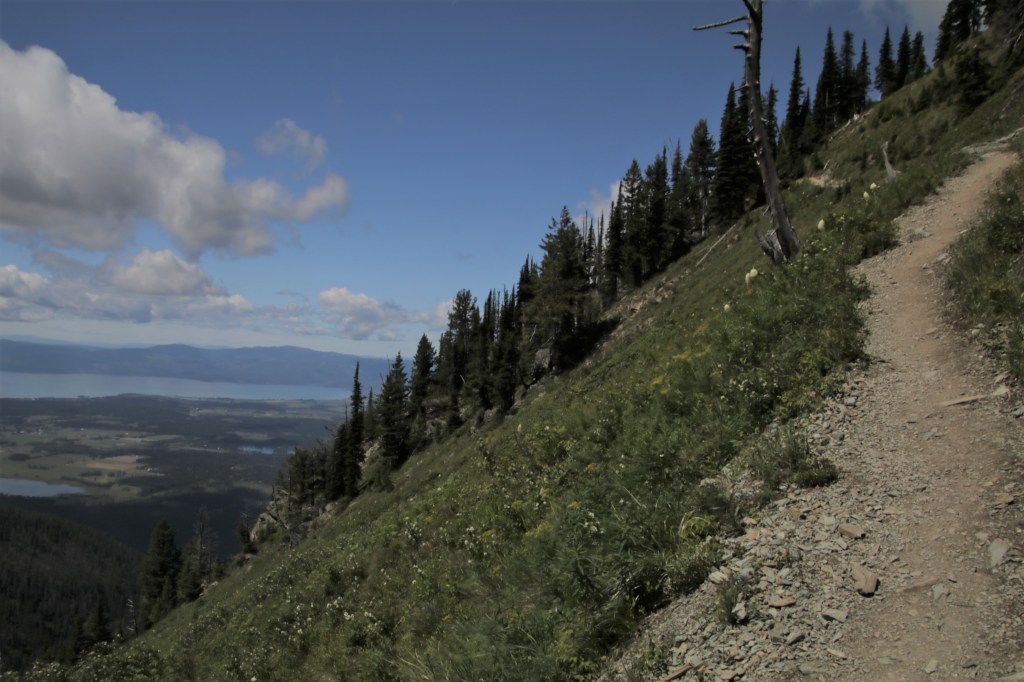
The trail starts along an old jeep trail, wide but definitely uphill at a nice grade. On the way, there are impressive views over the entire valley and Flathead Lake. Clouds seem to float just above ones head, but in reality there’s more to accomplish. (Hello? It’s named Summit Trail.) Of course it’s uphill but I found numerous switchbacks much easier to handle than mountain goat terrain.
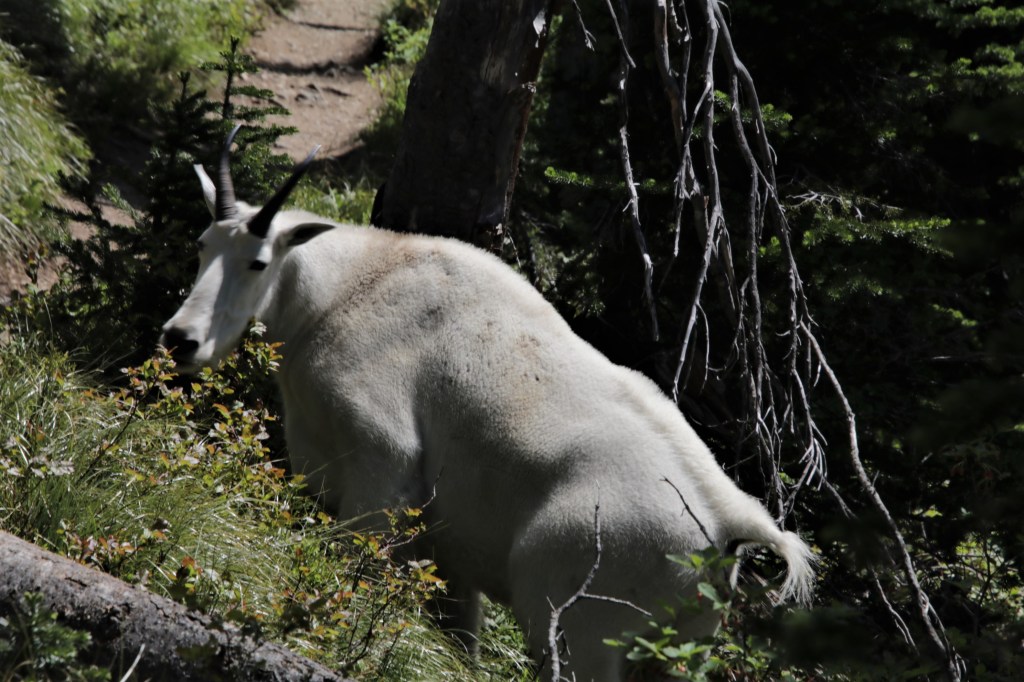
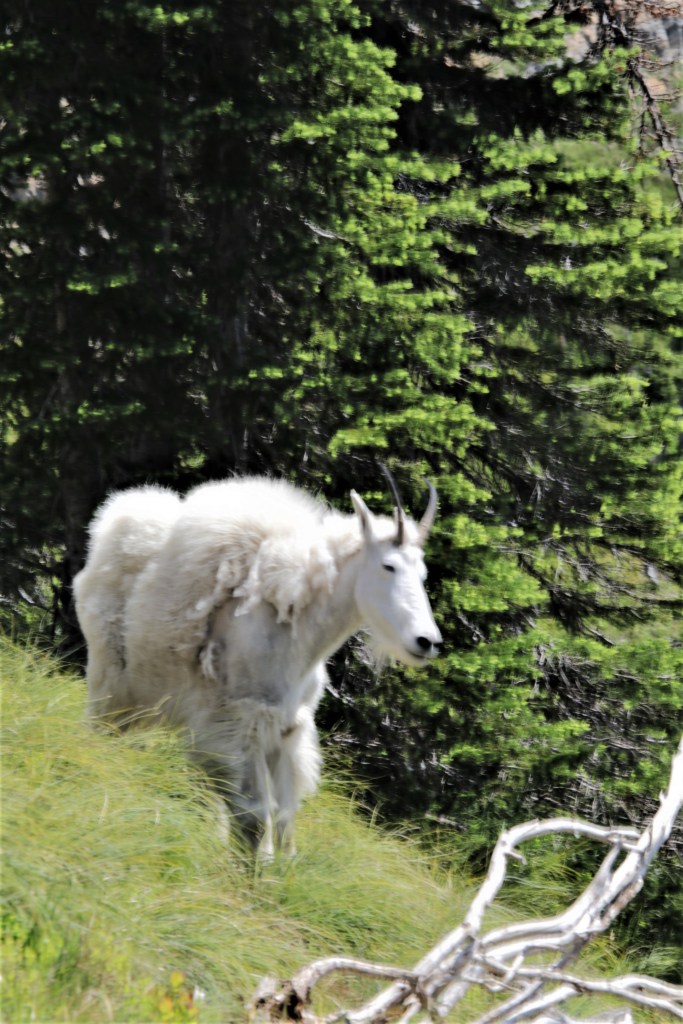
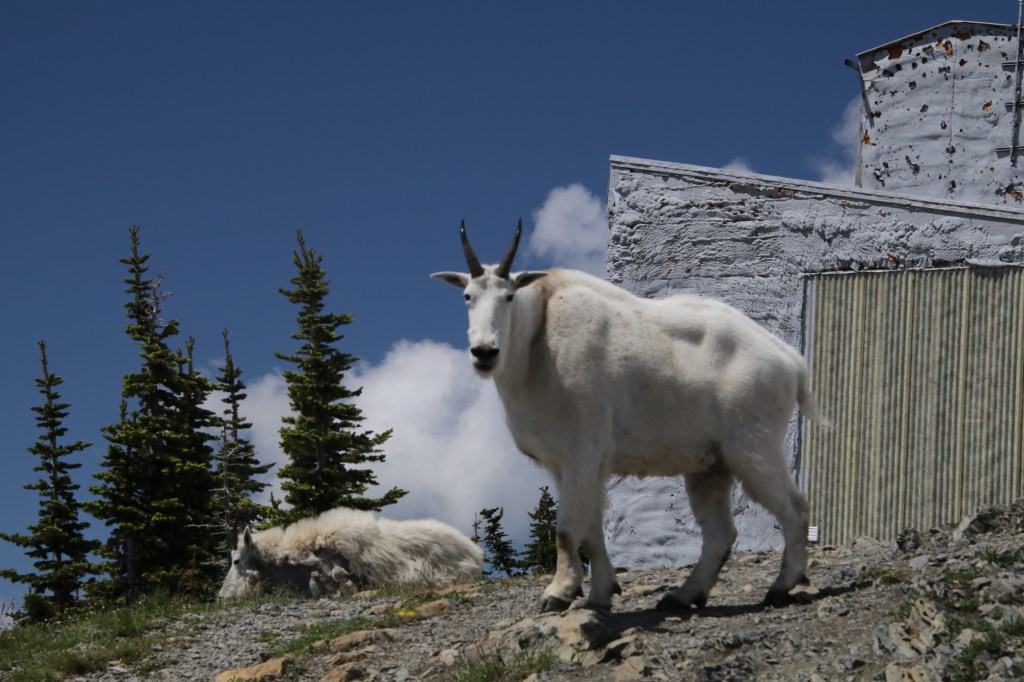
As a matter of fact, there really are many real mountain goats on this trail and they are pretty docile–not that I’d tempt fate on that one. But many people had their dogs on leashes and the goats didn’t seem alarmed by anything.
There is one meeting of trails called “dysfunction junction” where 5 trails come together and the route doesn’t seem clear. The far right trail goes down to Birch lake. The next uphill trail is the easiest one to take to Mount Aeneas.
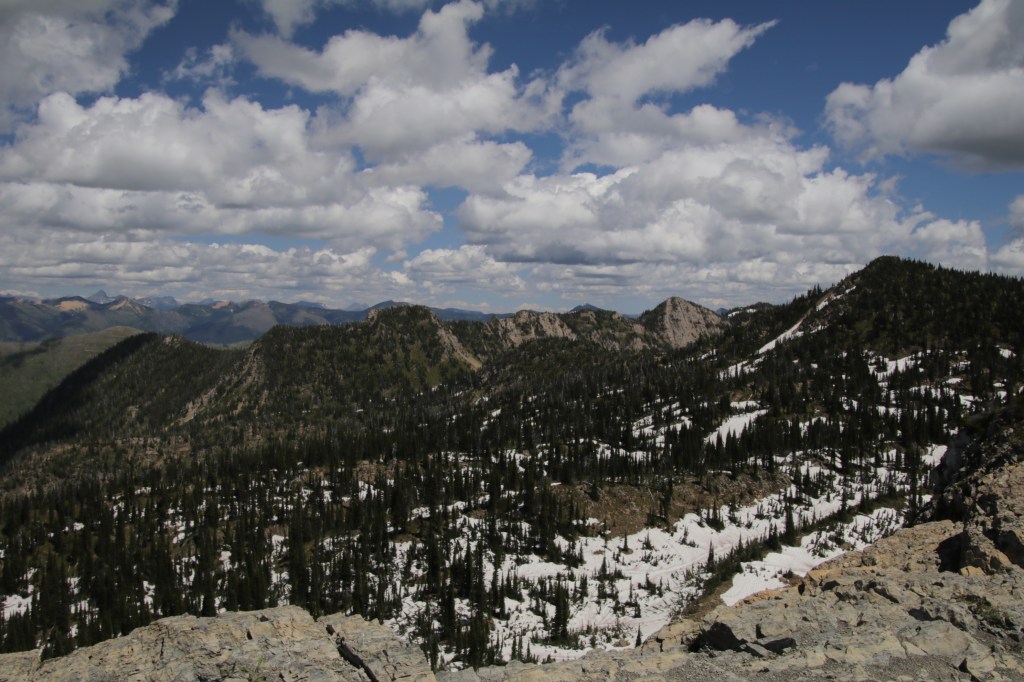
Coming up the last switchback, there’s a weather station and many goats laying around. Continue on the ridge to the top of Aeneas. There was snow still on the peak when we hiked it in July. Views are 360 degrees. Literally takes your breath away and I don’t mean from working too hard.
Wildcat Lake Trail # 8, #7 and #723
Rated: Moderate Distance: 5.2 miles +
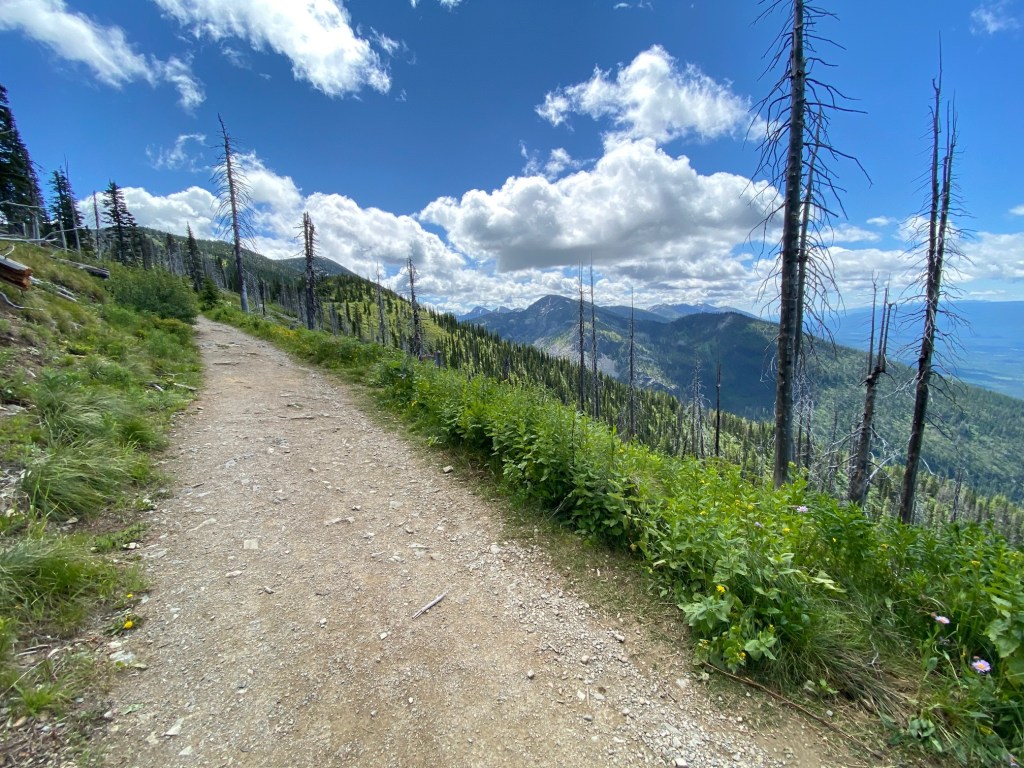
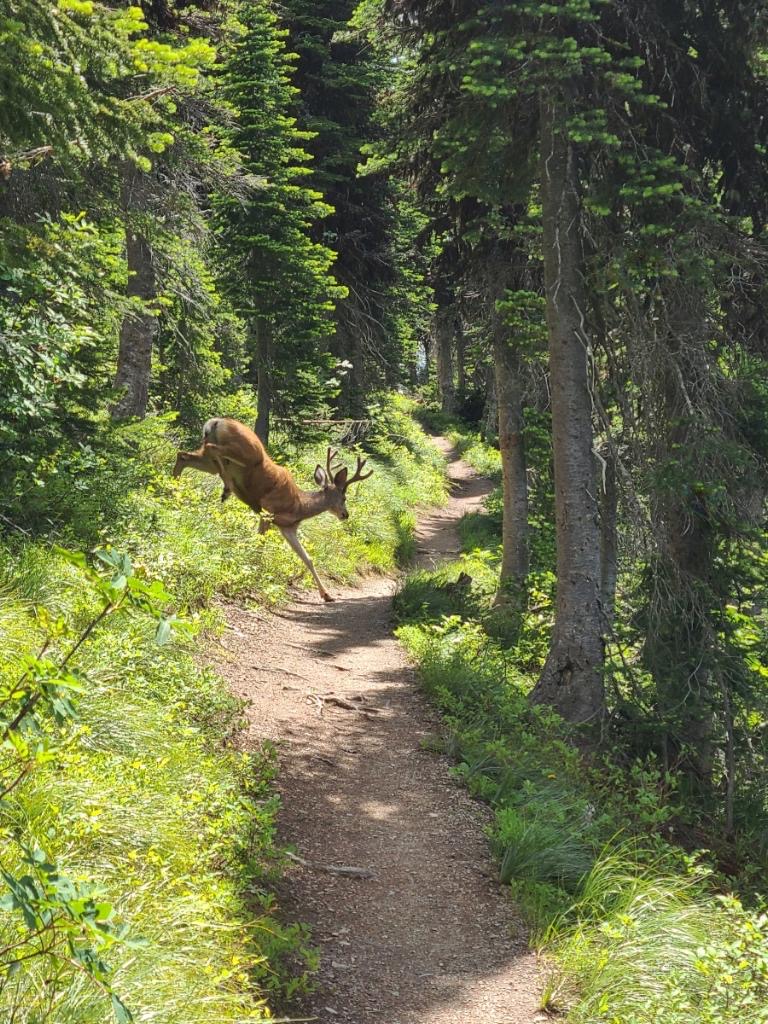
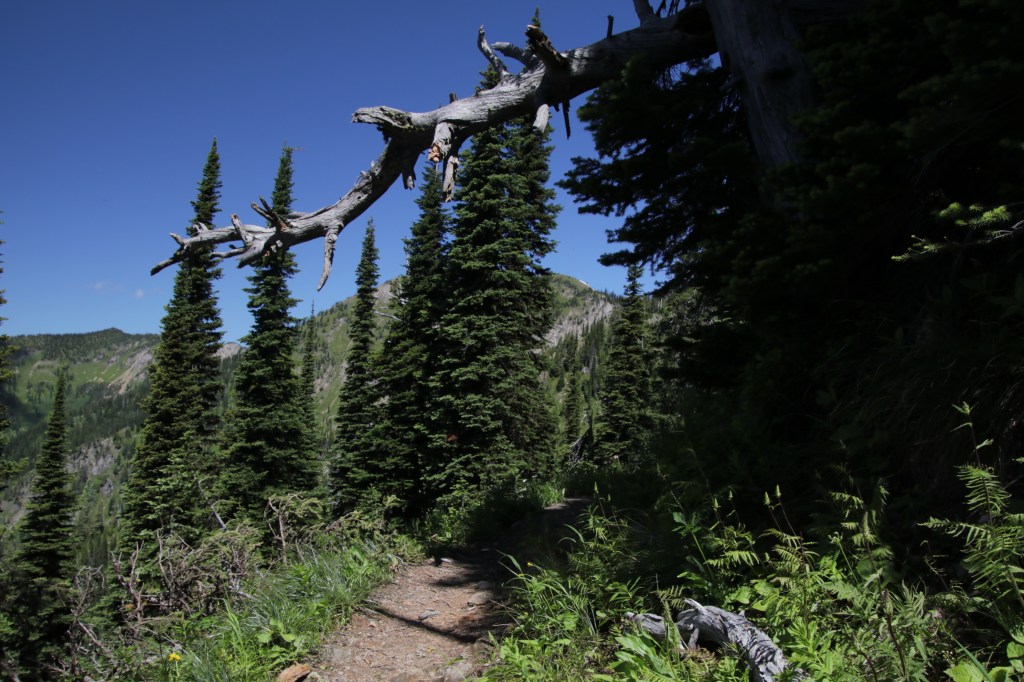
Wildcat Lake Trail starts at the north end of the Camp Misery parking lot. There’s plenty of shade/sun mix as the trail steadily climbs uphill.
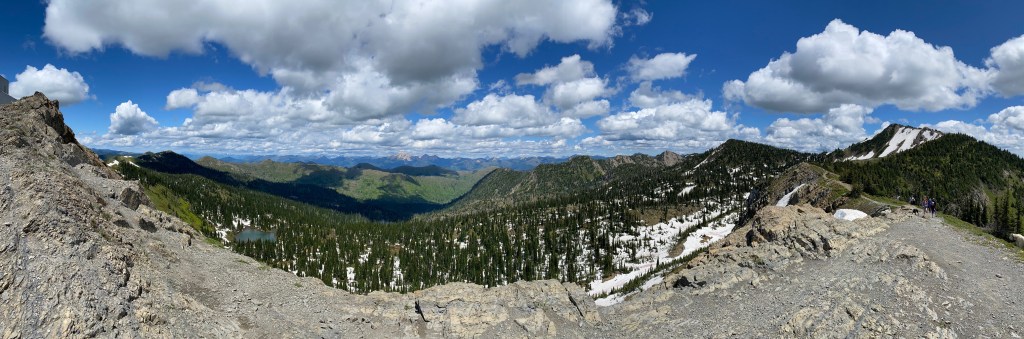
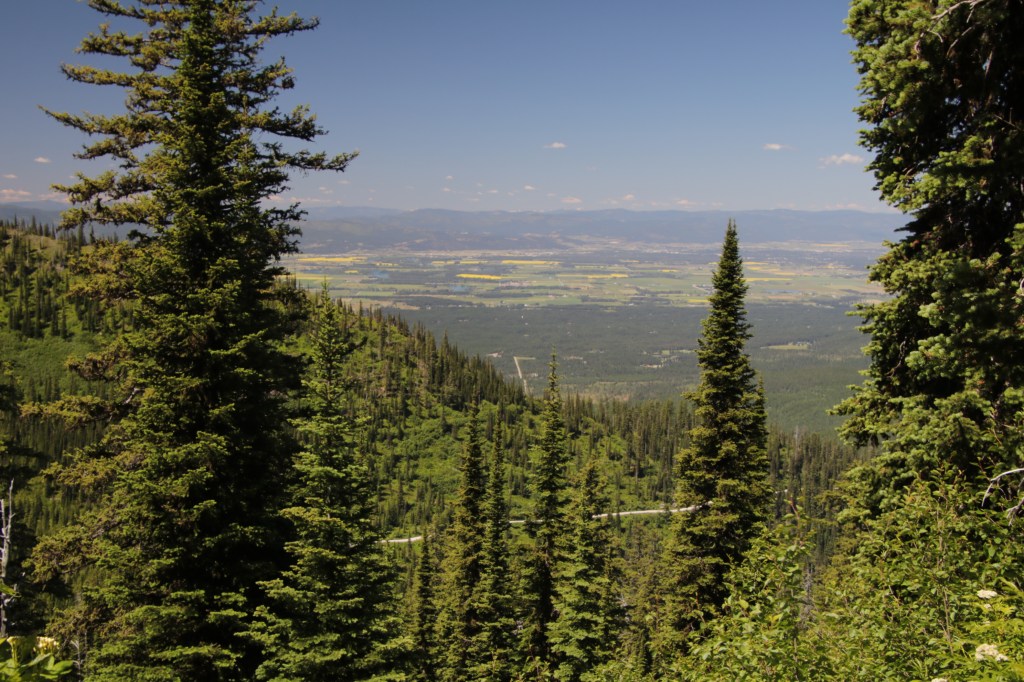
Above the trees, the views are spectacular into the Flathead Valley. Eventually, the path takes a hairpin turn, heading east. Start counting the surrounding peaks. Five of the mountains have names.
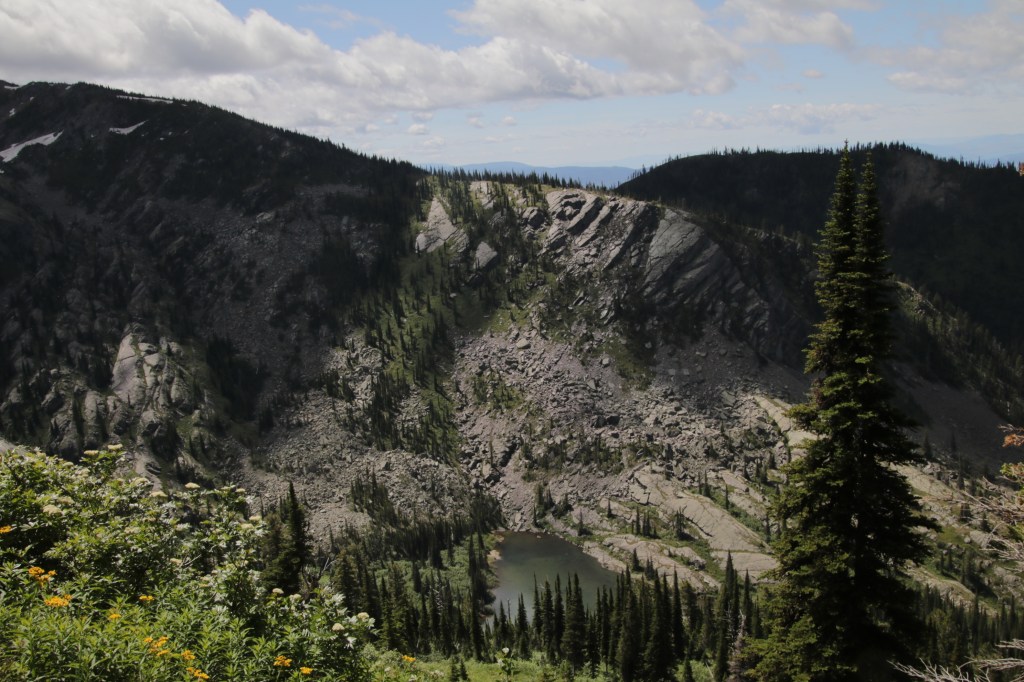
We reached a junction where trails split. To the right is #8 that loops back to Camp Misery. The middle trail heads down to two sapphire view lakes and the left trail leads to Wildcat Lake and Wildcat mountain.
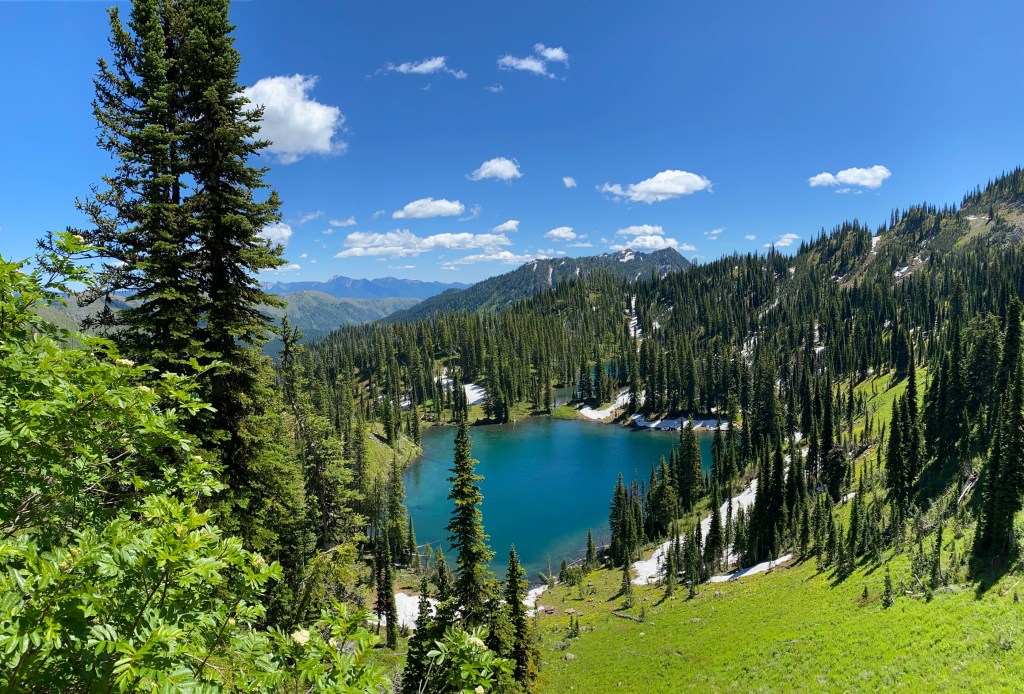
Pass the junction and you’ll begin to see twin lakes down below. In the distance are peaks of the Bob Marshall Wilderness. To the North is Glacier National Park.
When we reached 5.2 miles, the path was blocked by knee deep snow and we didn’t have snowshoes to cross. From there, the plan was to take trail #7 back so we could walk the ridge above picnic lakes. But nature had other plans when we encountered snow again and the trail was obliterated. Back-tracking we did an in-and-out on # 8,























































 Adventure Quest