Floating Market and Mangrove Forests

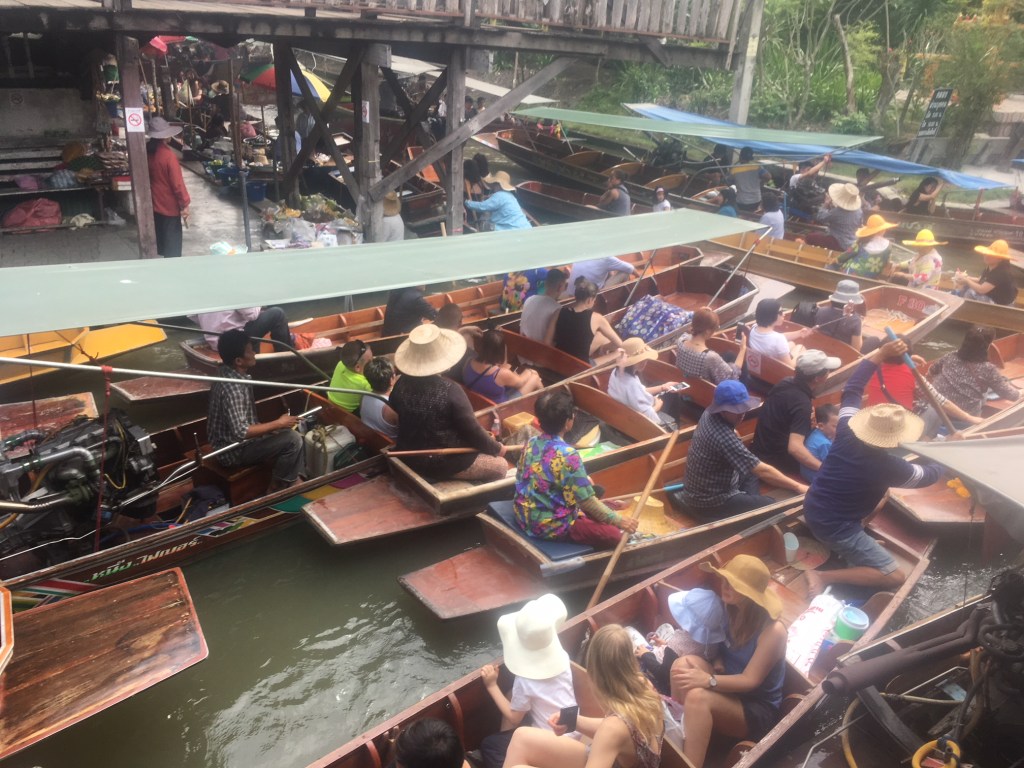
The famous  Damnoen Saduak floating market,  located sixty-two miles southwest of Bangkok, Thailand remains a blast from a past when river traffic was the only way to trade.

The main canal was built in 1866 by King Rama 1V to connect two rivers, but many  side canals were dug by hand. Today, these twisty mazes offer vistas of beautiful temples with gold dragons adorning steps down to the water to house boats where people live and work.

There used to be markets like these across Thailand, but as roads were developed, many of them closed. Damnoen Saduak retains its history, chaos and charm.

Very early in the morning, farmers sell vegetables and fruit before a quick turnaround to ply the tourist trade in an irresistible and colorful tourist trap offering t-shirts and low-cost indigenous clothing, Buddha figures, and carved wood items with a few hidden spice dealers or local artists amongst knock-off purses.

Other sellers cook noodle soup or hot bbq inside their boats and I wondered how they kept afloat. A kaleidoscope of vendors voices join the long tail boat’s smoking engines that whine in a strange orchestra of sound as crowds thicken and jostle for space.

I bought saffron. But you need to know what color it should be (bright orange and red, not brown). A large bag would selling for $40 at home, set me back $5 US. Old spices sold cheaper–be wary. Everything is negotiable, and I suggest aiming for 50% off asking price. Cute traditional cotton pants should cost $3-$5. Fix an amount in your head and stick to it. Competition is fierce and a seller won’t let you leave without announcing their bottom line.

Close by, there is a mangrove conservation area in Khlong Khon district of Samutsongkram province. These forests grow in salt water, providing a green wall of defense against coastal erosion. The health of an ecosystem is determined by the vigor ( or lack) of the mangroves that can grow up to forty feet tall.

When fishermen noticed a depletion of harvest, a serious effort began to replant and protect this sensitive ecosystem. There are hundreds of shrimp-eating monkeys who ran after our boats looking for bananas. Some of them are cute, while others reminded me of the Witch of Oz and her army. It was fun to watch them, but be sure to keep them off your lap and watch your fingers!

The sea-side communites farm-raise fish, mussels and oysters. Some residents make shrimp paste (which is really krill) used in Thai cooking.  I asked about sustainability of harvesting krill with the Arctic and Antarctic oceans warming, resulting in the reduction of the mighty protein required by all mammals, including the largest whales.

I got a confused look from the local vendor. Seems like a little education is in order for both of us. I’ve googled that there are eighty-nine known krill species and all of them should have harvesting limits.

Edible cricket farming is on the rise too, and I recently learned about a high protein cricket flour that is being exported around the world. Thai farmers make more money on this high protein commodity than in harvesting rice, sugar cane, palm sugar, or coconut sugar.


Phoenix Rising From The Flames

On my SE Asia trip, I confess to being hesitant to visit places like Pol Pot’s killing fieldsIMG_0652 and the CuChi tunnel outside of Ho Chi Minh city. The “American War” (Vietnamese name) brought up memories of friends killed and protests at home. I didn’t want to revisit anger over my government’s lies. My peers, those with a bright and promising future, signed up because they believed in the honor of that war. How do you justify top brass without the cahones to admit they were wrong? Those men who delivered our young to the slaughter house instead of doing the right thing? Frankly, it’s happening again in Afghanistan. History repeats itself, and we’d be wise to revisit these places of horror.


I felt helpless facing so many ghosts and told our guide, KC, that I didn’t think I could handle the encounter. He encouraged me. “Dawn. You need to come. I’ll make sure you don’t have to see anything that’s too difficult. Please come.”  KC kept an eye on me throughout, and now I must admit that he was right.

IMG_9346

This old school became the high security prison and torture center for the Khmer Rouge from April 17,1975-January 7, 1979

Chum Mey is one of only seven adult and five children survivors of the Tuol Sleng high security Prison and torture center during the Khmer Rouge regime in Cambodia. Mr. Mey doesn’t know why he lived, other than he knew how to fix machines and his captors needed him. He was arrested on Oct 28,1978 and was tortured in ways that I will not speak out loud for fear of evil revisiting the world again. Mr Mey’s entire family was murdered, even his 2 month-old son.


In January, 1979, Vietnamese liberators followed the stench of decaying flesh to free the Cambodian people after half of the population was forced to dig their own graves and were then bludgeoned to death in 388 killing fields.

IMG_0664

It was an honor to hear Chum Mey speak, not only about survival but also about forgiveness for his jailers who he felt would have also been killed if they didn’t follow orders. His testimony at the Khmer Rouge Tribunal resulted in the lifetime imprisonment of Duch, the man most responsible for genocide at Tuol Sleng.

CuChi Tunnels


It was a privilege to visit with Mr. Nam, a Viet Cong soldier who lived and fought every day in the tunnels for over fourteen years. He stood before an illuminated map showing military control zones and I held my breath, not certain of what he might say to the Americans sitting before him.


His first sentence was, “I never wanted to be a soldier. I never wanted to kill anyone.” He proceeded to tell us that his village was destroyed by US bombs and that he had to move underground. He met his wife, a nurse who took care of him when he lost his arm, and his children were born in the tunnels. He feels that he was protecting his family as US forces continued to bomb and tried to destroy where they lived. At the end of his talk, he said, “There are no winners here.” I asked him what made him the happiest and what was the saddest from that time. His answer was, “There wasn’t happiness and it made me so sad to see my friends killed.” The most heartwarming moment was when our veterans joined Mr. Nam in a moment of forgiveness.

How to Survive Peace?

IMG_9303

sculptures made out of unexploded bombs at the Vientiane, Laos Rehabilitation Center of COPE

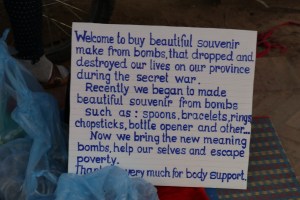
Since 1996, COPE has worked in Laos with disabilities caused by UXO (unexploded ordnance or cluster bombs) as well as clubfoot deformities. 260 million tons of payload were secretly dropped over Northern Laos during the Vietnam war from 1964-1973. The airplanes couldn’t land with live bombs on board and the government in Laos asked for US help in trying to control pockets of communism along the Ho Chi Minh trail that ran the long border between Laos and Vietnam. The American public never knew.


Thirty percent of those bombs did not explode and remain today, waiting for one little mistake. There are still 300 accidental detonations resulting in 46 deaths each year. The war ended over 43 years ago. Because cluster bombs destroy a large area, the increase of collateral civillian damage is huge. The live ammunication can be dormant over many generations. There are hundreds of little bomblets in just a single casing.  In 2008, the United States refused to sign a ban  and we continue to use clusters in Afghanastan. (On a side note: In Afghanistan, the bomblets were painted yellow and so were the relief food packages dropped for civilians. Children thought the yellow balls were something to play with.)

Bombs and mines have hurt everyone in Laos. Our guide’s father built a fire near his field to keep warm. The heat was just enough to explode the hidden casing buried below him. There are instances of children finding cluster bombs the size of softballs and in innocence don’t know they are deadly. One toss. A child’s life taken.


These survivors picked up my broken heart and rebuilt it through their stories of heroism, grit, and courage. Their message was clear: Never forgot those who died at the hands of evil. Be vigilant that this never happens again. Forgive those who were manipulated, terrorized or lied to. We are all the same–we want peace and a chance for good health and prosperity for our families.

When do we stand united and simply say “No” to war and conversely, when there is a great evil like Pol Pot and Hitler, when does the globe unite to make sure genocide of an entire race doesn’t happen again? Are we paying attention in Syria and Mynamar?
 

Venice of the East (Ayutthaya, Thailand)

In 1350, a king of Siam relocated to a conflux of three rivers, 53 miles north of Bangkok, and called the royal city Ayutthaya. It’s believed he was escaping a smallpox outbreak in the old capital.


Imagine hundreds of temples and stupas sheathed in gold covering 9 square miles. By 1700, over a million people lived in Ayutthaya, making it the largest city in the world at that time. An amazing number (thirty-five) Kings ruled from here. Surrounded by water, the island was called Venice of the East.


Wat Mahathat means temple of the great relic and is one of the oldest (early 1350’s) constructed from cantilevered brick and once sheathed in smooth materials. It is surrounded by towering cremation and meditation stupas. This wat was also home to the supreme patriarch of the Buddhist monks.


In 1767 The Burmese army destroyed the royal city, murdering and raping the population and hacking hundreds of heads off the Buddha statues. This decapitation showed their power but also had a reason— gold and jewels were often hidden inside.


A tree grew around one Buddha head, creating this eerie scene within the ancient complex of Wat Mahathat.IMG_0011The entire ancient site isn’t under UNESCO preservation at this time. Touring the city requires a bike, a hired cab or jambo for the day. If you want to step back in time, you can even ride an elephant, just like royalty of old.


City of Angels (Bangkok, Thailand)

Bangkok was a sleepy fishing village until the early 15th century when the Ayutthaya rulers left the ransacked remains of the royal capital and resettled at the Chao Phraya River that flows to the Gulf of Thailand.


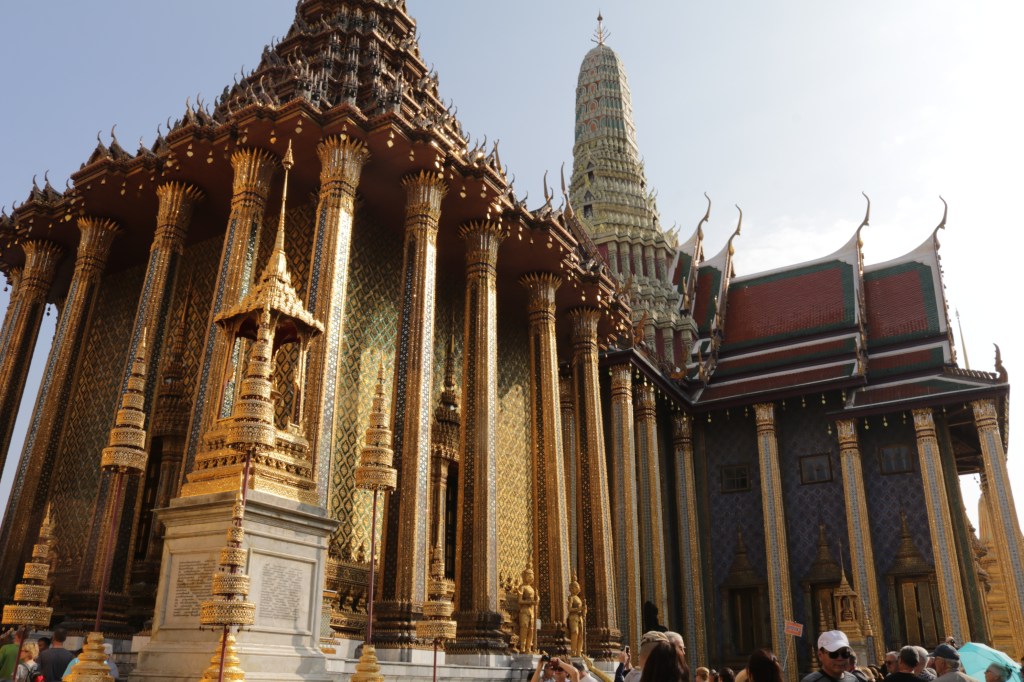
In 1782, the King of Siam began construction on the grand palace. The mighty splendor of ordination halls, temples, stupas, and phras can be seen today.


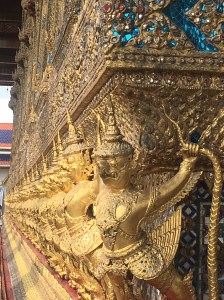
Every surface is covered in gold, glass or ceramic tiles. The 15th century Emerald Buddha (really semi-precious jasper) is the most important piece of art housed in the temple here. This icon represents the heart and soul of Thailand. There are three golden and jeweled outfits for the emerald Buddha, changed in great ceremony by the king with each season.IMG_0122 Outside, the temple is held up by 112 Garudas (King of birds) holding Nagas Serpents.IMG_8902


The surrounding gallery has murals, many coated with gold, depicting the Ramakien story about the battle between the demon Tosakanth who kidnaps the beautiful queen married to human King Rama. He unleashes a mighty monkey army in a tale younger than Helen of Troy but older than The Wizard of Oz and saves the goodly queen from rape and mayhem. Mesmerized in the art work, I got lost in the tale.


In the late 1700’s, Rama 1V ruled from this palace and became famous in the play The King and I. Governess Anne did come from England to tutor his children and harem, but sadly, everyone agrees that a love story is a gross exaggeration.


Flash forward to WW11 and Japanese occupation, resulting in Bangkok being bombed by the allies and a post war United States presence. Later, US bases in Thailand bolstered the Vietnam War and became an R+R destination for our fighting men. With that came a flourishing sex trade and many a watering hole, especially in the red light district.


Remember the 1984 song: One night in Bangkok? It was banned in Thailand for giving the wrong image of the largely Buddhist nation.

The bars are temples

But the pearls ain’t free

You’ll find a god in every cloister

And if you’re lucky,

Then the gods a she….

Everything is for sale on the streets of Bangkok: from trivial to magnificent. From the profane to the profound.


Crossing the road safely with speeding vehicles requires a blindfold or formidable courage. A green light means Indie 500. A red light does not mean stop, but a running roll, dodging pedestrians like a pin ball game. Don’t look for safety on the sidewalks.


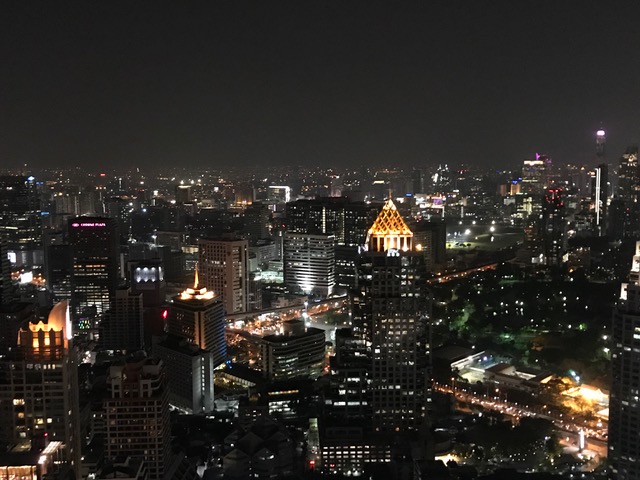
If all things that glitter are gold, Bangkok at night is priceless. Stop counting the high rise cranes and modern architecture. Concentrate on the lights. The multi-layered roof of the Banyan Tree Hotel offers 360 degree dining or a special seat in the moon bar to see the city shine. Be sure to have a credit card and a reservation! https://www.banyantree.com/en/thailand/bangkok. photo courtesy of Bonnye Frostbonnys photo

Match Game in Southeast Asia

Thailand, Laos, Cambodia, and Vietnam have more in common than differences. All were part of the ancient Khmer dynasty, the rulers of Angkor Wat fame through the 1400’s. The rulers intermarried with Chinese. Today, each country is financially bound to modern China with an influx of foreign money for infrastructure and expansion projects in large cities while little changes in the countryside.


Cambodia, Laos and Vietnam suffered long periods of war (genocide),

leaving the people beaten down and wanting peace at all costs. Unexploded bombs and mines continue to maim and kill. IMG_0564Each country teeters on a political sword with either military dictatorships or communists who effectively crush any emerging opposition. No one has freedom of speech. Voices suggesting change often disappear.IMG_0729

This isn’t your grandma’s form of communism or socialism. Marx is rolling over in his grave with Vietnam, inparticular. What kind of hybrid animal is this? Although the law decrees compulsory primary education, the lack of funding for books and supplies blocks the poor from attending. There are no services to support the elderly or infirm. With distinct social groups, the growing middle class understands greased palm economics.

All of these developing countries have a high population under the age of thirty. In Cambodia, Pol Pot murdered half of the population (1975-1979) and current demographics show 50 percent under the age of twenty-two. None of these kids have experienced the carnage of the past. The new battle cry is “access to better teachers and a quality education.”

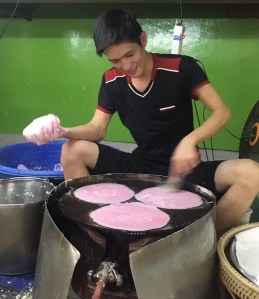
Ironically, Vietnam provides a cheap labor force to Thailand and there’s no silly talk about erecting a wall. This young man works “per piece” making more money producing these edible shells than working as a skilled mechanic. Get this–he spoke to me in English! IMG_8817

The future of Southeast Asia is not a match game for the faint of heart. The new generation likes technology, gadgets and material status. Capitalism resonates with their beating hearts. What will happen when the aged military dictators, Khmer Rouge generals, and Vietcong fighters pass away? Won’t be long. Stay tuned.

Ancient Crossroads, Patan & Bhaktapur Nepal

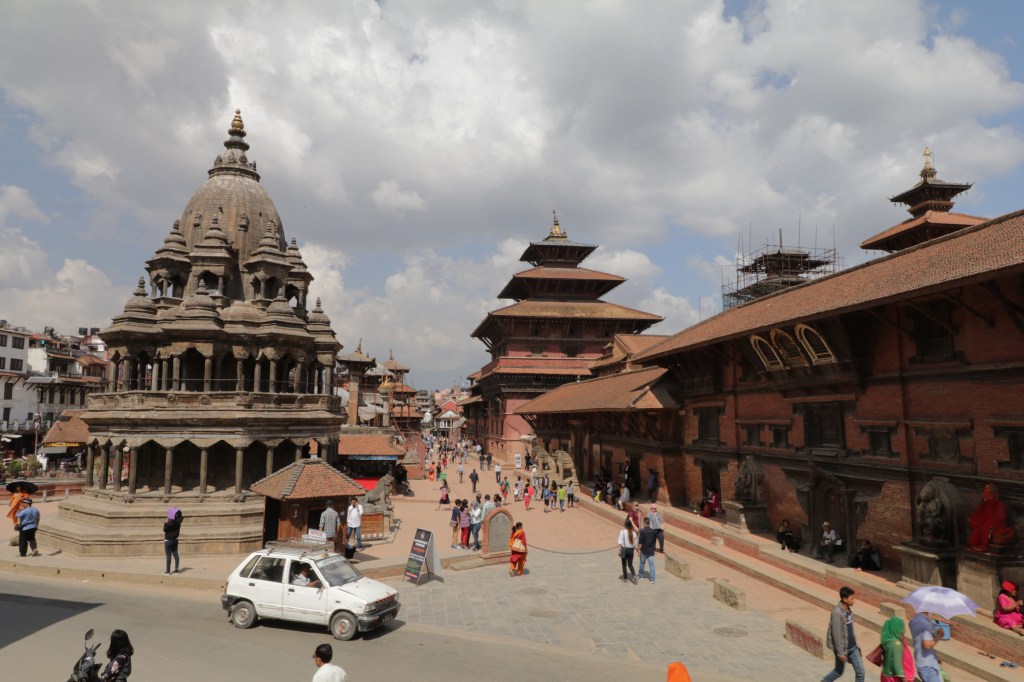
Patan is known as the Royal City or City of Beauty and is located five miles south of Katmandu on the southern side of the Bagmati River. It is one of three settlements of the ancient Kings of Nepal with over 1,200 monuments. Another UNESCO site is eight miles from Katmandu, named Bhaktapur or place of devotees with the best preserved ancient city center. It’s also known for the best sweet yogurt, so you must try some.
 

Patan and Bhaktapur are important religious centers for Buddhist and Hindu faiths.

The first historic records show Emperor Ashoka arriving in the valley near Patan with his daughter in 250 B.C. He established the geographic outlines of Patan with four holy stupas. This makes the shape of the UNESCO world heritage site into the symbol of a Buddhist Wheel of Righteousness.

The royal palace of the Malla Kings was first built in the 3rd century B.C. by the Kirat Dynasty and is now a museum and an architectural wonder.


although the majority of Durbar Square is from Medieval times. Evidence of severe architectural damage remain from the 2015 earthquake. Scaffolding and bracing of buildings precariously hold walls from collapsing as reconstruction follows a snails pace.


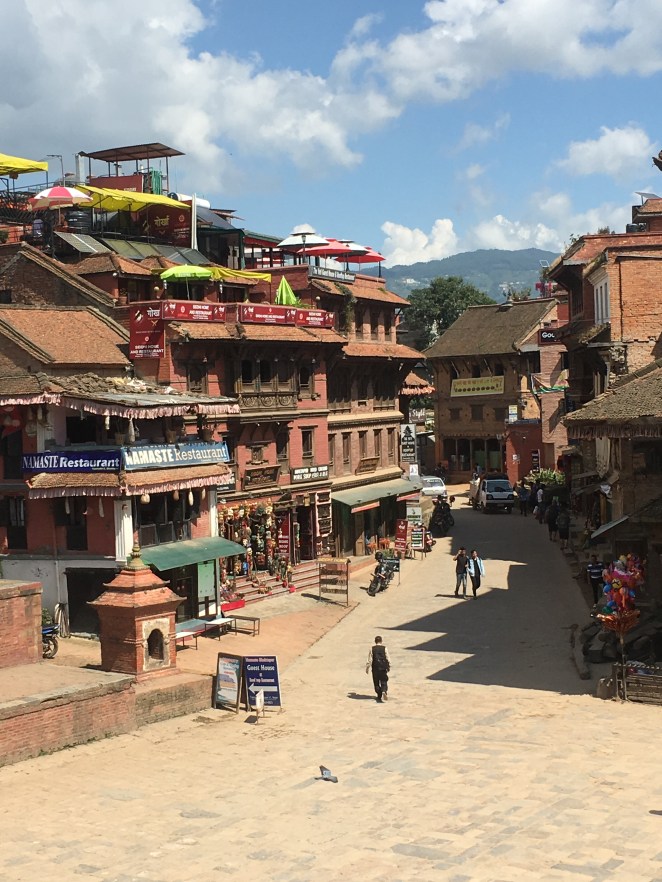
It’s not hard to imagine camal trains carrying salt along the twisting streets of Bhaktapur.

IMG_7900

Not hard to imagine Bhaktapur in Medieval times with the intact city center.

It was also a royal city with craftsman in Medieval times and the provenance continues today. Artists work in shops carving wood, metal work, stone, clay, and jewelry.


I loved both cities from the history, architecture, and shopping.  I felt sorry for our very patient guides as the ladies kept creeping into doorways. I would have loved to wander with my camera for another round about both places.  This is a photographer’s dream location, because you don’t know what you’ll see from one moment to the next.


K-K-K-K-K Katmandu

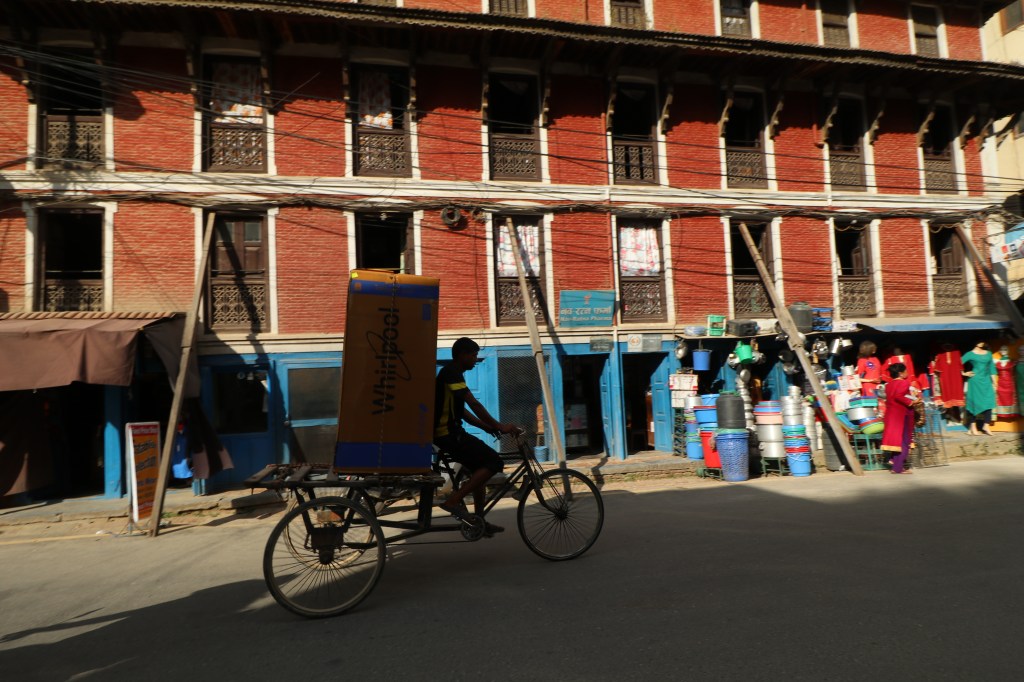
Bob Seeger wrote the song Katmandu when he was tired of his profession and wanted to escape. Hippy days are gone, but an observant person will notice marijuana growing wild in empty lots and alleys. Let me emphasize that you don’t need drugs to be high in Katmandu, because this city overloads your senses without a single enhancement. This is a place of extreme opposites. People wash themselves and their dishes from a roadside spigot. Modern appliances are taken home on the back of a bike. I found clarity and focus in Buddhist thangka art opposed by lung defying air pollution.

Traffic jams from hell don’t prevent appreciation of unspoiled mountain landscapes. The entire valley is a UNESCO site for important pilgrimages and monuments amid massive filth counter-balanced with beauty.

The profane competes with the revered and sacred. The ancient trade routes for salt, wool and silk continue to run through Katmandu. The amount of diversity and fusion of cultures left in the wake is unsurpassed.

Katmandu is the odd, bizarre, benevolent, always in a hurry, yet most compassionate and loving place on the planet.

Is Katmandu schizophrenia or extreme reality?  It is really entertaining or downright controversial. I can’t imagine anyone not loving it here.

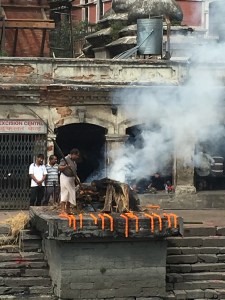
Fifteen minutes out of the airport I saw my first cremation at the river edge. IMG_7795While flames consumed the body,  little girls walked in the muddy water with magnets trying to find offerings in the funeral ashes. Despite this macabre observation, I had a profound experience talking with a Brahman priest who spoke about our mission in life and karma. He blessed me, touching my heart with a force that I still feel today.

Monkeys’ ran around stealing cotton candy. Strange men who call themselves Holy pose around the stupas coaxing tourists to take pictures, for a price. It seemed like a creative way to be a beggar, but who am I to cast accusations? My guide made an astute observation, “Don’t all religions want to be paid?”

Soak it all in. Stop to see. Touch. Smell. Taste using your fingers the local way. Chant mantras with the background roar of motorcycles. Listen to singing bowls and inhale incense. Still your breath. Calm your mind amongst chaos. Dance with joy on the street with someone you don’t know. Reach out. Embrace. If I ever get out of here, I’ll go back to Katmandu.


Heap of Jewels Nunnery (Punakha, Bhutan)

Sangchhen Dorji Lhuendrup Lhakhang Nunnery

Once upon a time and not so long ago, a very young King in the mystical Himalayan mountains discovered that he was the fulfillment of a 300 year-old prophecy. His destiny was to reunite and bring his country into the modern world. Being a descendant of the ancient and powerful Dorji family in mind and speech, he is the incarnation of a great holy man, Ngawang Namgyal (1594-1651).

Others held claim to the title too. The best way to unify a land is to marry  into the other contenders with provenance. So the fourth king, Jigme Sungye Wangchuck married all four sisters from the opposing powerful family.

IMG_0121

prayer wheel on the summit of the hill overlooking a narrow valley

The father of the four sisters ( also a Dorji family member) asked the king for land to build a Buddhist nun’s university on the highest scenic hill above the Punaka valley in Bhutan. The official name–Sangchhen Dorji Lhuendrup Lhakhang Nunnery means, “Fortress of the heap of Jewels.” The young ladies here are treasures far more precious than diamonds or pearls.

The four queen’s parents have their homestead on this hill too, situated a wee bit lower, giving the nuns and religion the best position for grace and inspiration.

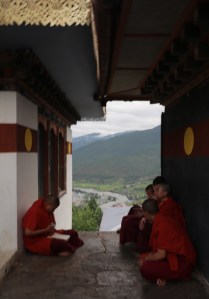
We visited many Buddhist landmarks and saw countless beautiful artifacts. Religious festivals with dance and music enriched our experiences.  Listening to monks chant in the temple hit an inner cord of my soul. But the visit here touched my heart in deeper ways than any other place in Bhutan.IMG_0136

Give me one giggling nun willing to express her thoughts and beliefs any day over all the pomp and circumstance.

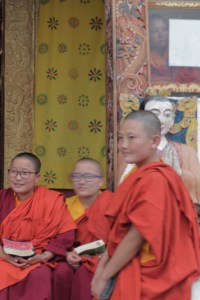
Laughter. This was the first thing different in the nunnery compared to a monastery.  These girls look and act happy.

They wanted to talk to us, to explain with eloquence and passion why they decided to become nuns or what they’re daily life is like. They study and pray. There are also classes in tailoring, embroidery, statue making, painting and ceremonial dancing. When they graduate from their studies they will go to other communities to support a religious life. One girl told me, “It’s very important that I pray for every living thing, every day.” They are dedicated to their mission of salvation. IMG_0142

curiosity. They also wanted to know about us and how we live. In my experience, the monks could have cared less. (Of course a woman cannot touch a monk. If I would have wanted to give an item, I’d have to pass it to a man who would then give it to the monk. )

Only monks can perform religious ceremonies and are paid for services. The nuns are supported with a stipend per month. Their parents may receive a spit of land to grow rice.

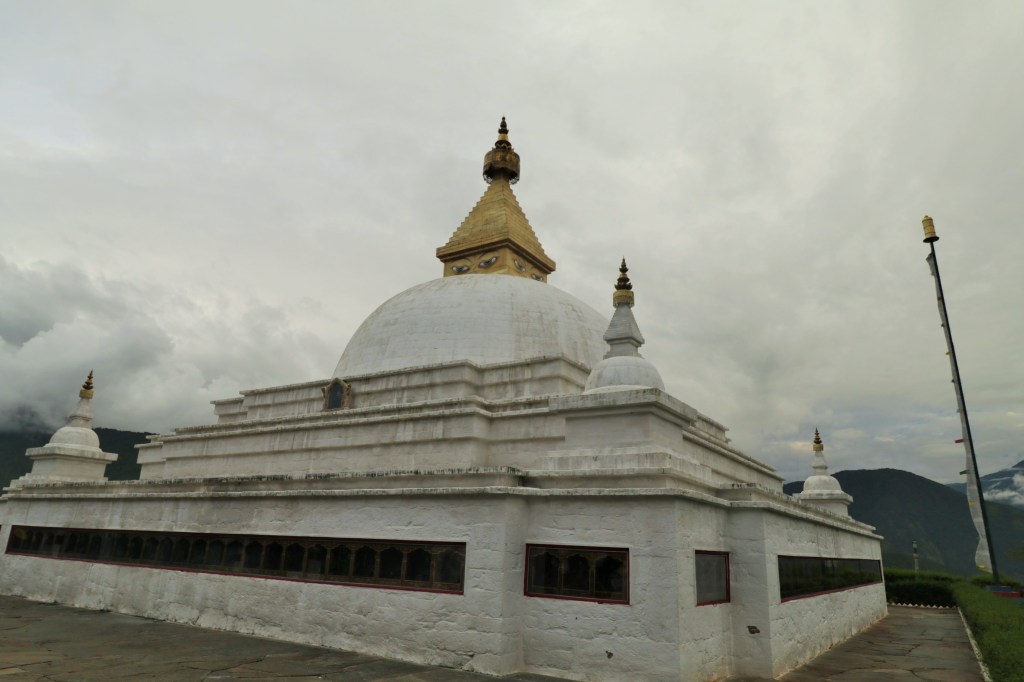
Sure, there are interesting architectural components to view here. A chorten (monument) that looks like a smaller Boudhanath Stupa sits at the point of the hill with stunning views into two narrow valleys.

The UNESCO site in Nepal is the largest stupa in the world, a place of great pilgrimage and was built by a mother of poor status who petitioned her king. It’s fitting that this replica is a reminder to the young nuns of the strength within their hands and minds. It signifies the deep power within each woman.

Walk into the temple, under the crystal chandeliers to see statues of important rampoches’. It’s impressive. But nothing compares with the beautiful spirit and promise for a rich future unfolding for the women here.


Totally Dzonged

Bhutan’s Dzongs’ are pre-17th century Buddhist fortresses located at key defense  points, such as along Tibet or Chinese mountain passes.  Thirteen forts were built without architectural plans under the spiritual dreams of  holy lamas’. Today these structures remain an odd mix of religion and government. Prayer, peace, and tranquility  are steps away from offices of the nation.

The fortresses all have similar architectural components: Steep white masonry walls with few (slotted) lower windows, an ochre band indicating this is a holy place, elaborately carved and painted wood details, roofs of bamboo and hardwood without the use of nails.  There’s a complex of courtyards, monks accommodations, and temples. The stairs are all very steep (easier to push a foe down?) with thresholds at the top to keep evil spirits out.


Punakha Dzong (Palace of Great Happiness)

Built in 1637 at the confluence of the Phochu (father) and Mochu (mother) Rivers. This large building has three courtyards and a six-story tower.  This is the second oldest and largest Dzong in Bhutan. There are sacred relics here from the ancient battle with Tibet and the resulting unified Bhutan as well as holy mummified remains. The greatest dangers are due to location– flash floods or ice racing down from high glacial lakes, earthquakes, and fires. This dzong is where the  Wangchuck King’s of Bhutan are crowned and married.

Miraculously,  a platinum statue of the Rimpoche inside the temple didn’t melt during the last fire in 1986. This is a glorious dzong, rebuilt after the disaster in the older style.

Chhimi Lhakhang Monastery 

Built by the Divine Madman in 1499 after he trapped a demoness under the rock chorten near the entry.  This wild lama, Drukpa Kunley, loved the phallus symbol which was probably used from an earlier religion since it signifys abundance and prosperity. Evidently, if you paint a penis on your house it will dispel the evil eye and stop gossip. In my town, this would act the other way around.

I was fortunate to witness the fertility ceremony where the almost four-foot tall phallic relic was carried by a young woman three times around the monastery.  There’s a book of success stories inside the temple, if you remain a doubting Thomas.

I received the ancient bow blessing, but I’m not sure what’s supposed to happen. Maybe I should have asked first?


Paro Ringpung Dzong

A beautiful structure built high on a bluff in 1644, this dzong houses 14 shrines and temples. It is the center for the district monastic body as well as the government of the Paro District. On an even higher hill behind the dzong, is a seven-story watch tower that is now the National Museum. Some scenes in the movie “The Little Buddha” were filmed here.


Tiger’s Nest (Taktsang) MonasteryIMG_0296

Located six miles outside of Paro, this spectacular monastery balances on a 3,281 foot cliff. It’s believed that Guru Rinpoche, the father of Buddhism in Bhutan flew on the back of a tiger from Tibet and landed here around the year 800. He lived in the eight cave complex with the first of many temples built in the fourteenth century. I saw one cave where women weren’t allowed. (Bummer)  There are several nearby structures where various teachers live(d) and taught. Today, only three monks live here as caretakers. Getting supplies up would be a daunting task for a religous community.

There have been several devastating fires, the most recent from either a butter lamp or electrical malfunction in 1998.The King paid over 135 million to have the entire structure rebuilt in the old style.

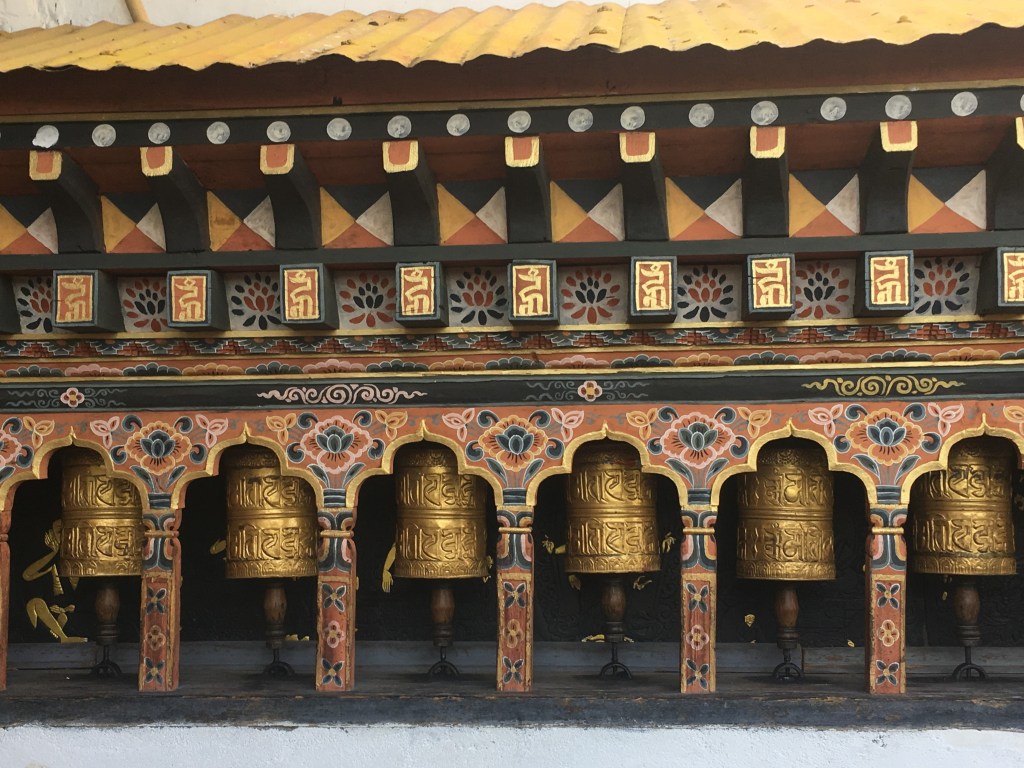
All of these historic places are treasures. The art is magnificent–from statues to paintings, metal work and wood carvings.  Take time to enjoy a Buddhist ceremony, complex yet so simple in theology. Cleanse your thoughts in incense. Listen to drums and chants, or bells ringing on the prayer wheels. Reflect on time past, present, and future, united in this single second.


Climb Ev’ry Mountain

Nepal is the spinal cord of the world with 1,913 mountain peaks towering greater than 18,000 feet.

IMG_0428

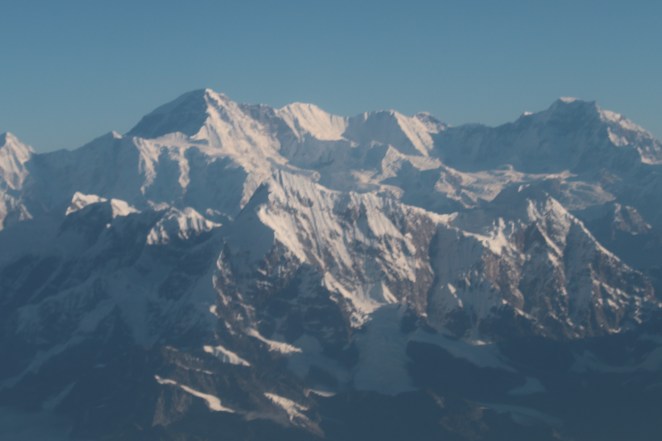
Mount Everest is the background mountain to the left. Below Everest to the left is Nutse –fourth tallest in the world at 25,790′. The the right of Everest is Lhotse–27,939′. Follow the ridge to the Right background for Mt. Makalu–27,805′

Of that huge number, 14 are the highest places on earth within this relatively small country.  Mount Everest (29,029′) has trekkers gasping with more than awe. At the top, climbers only breathe 1/3 of their normal consumption of oxygen.

The soaring Himalayas march straight through Bhutan with 21 mountain peaks above 23,000′. In the picture below right is the highest, Gangkhar Puensum, at 24,840′. The media is all about Everest, but Bhutan isn’t a runner-up in the world of adventure climbers. The government offers cheaper permit fees, trying to steal some of Nepal’s historic thunder. Currently, offical paperwork will cost  $1,800 to climb Annapurna. (*keep in mind that’s permit only, not outfitting the expedition.)

Don’t plan on clawing your way up all of these mountains. Many are decreed as holy in the Buddhist faith. Since one in ten climbers dies on Everest and most of the others suffer with varing degrees of altitude sickness, the Nepal government probably has their hands full with permits to (only?) 326 mountain tops.

Summiting mountains is a rich person’s game–or a well sponsored team. The 2017 climbing permit fees for Everest were $11,000. That only gets a trekker a pat on the back.

It doesn’t include the mandatory evacuation and medical insurance. There’s also a trash removal fee of about $4,000. Imagine the amount of human waste that needs to be cleaned! And I’m not counting over 200 bodies still left on the mountain.  A quick google search gives rates of $30,000-$65,000.

IMG_0725

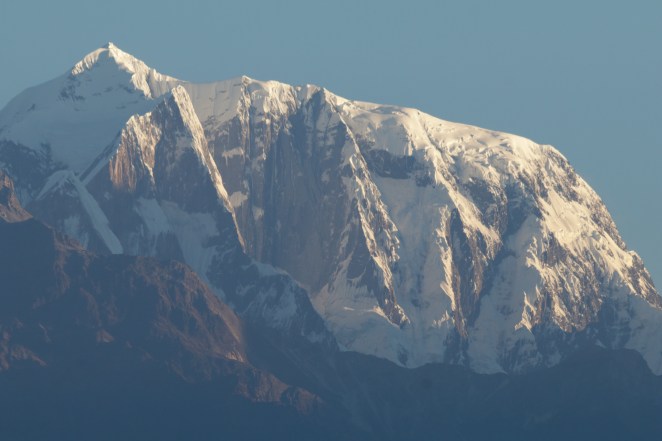
Close up on Anapurna with morning sunrise

I was very happy to travel in comfort with Yeti Airlines on the Everest Express flight from Katmandu. (www.yetiairlines.com) Passengers on both sides of the airplane were able to see the view, and the pilot allowed everyone a few moments inside the cockpit. The online cost is $176.00 US.

We had a picture-perfect early morning flight. If Yeti feels the weather is  bad, the money will be refunded. That’s their call, not yours. Another consideration is that the windows on the plane are curved at the edges, creating a prism-like distortion, but it’s easy to avoid if the camera lens is zoomed out and you don’t shoot side-ways.

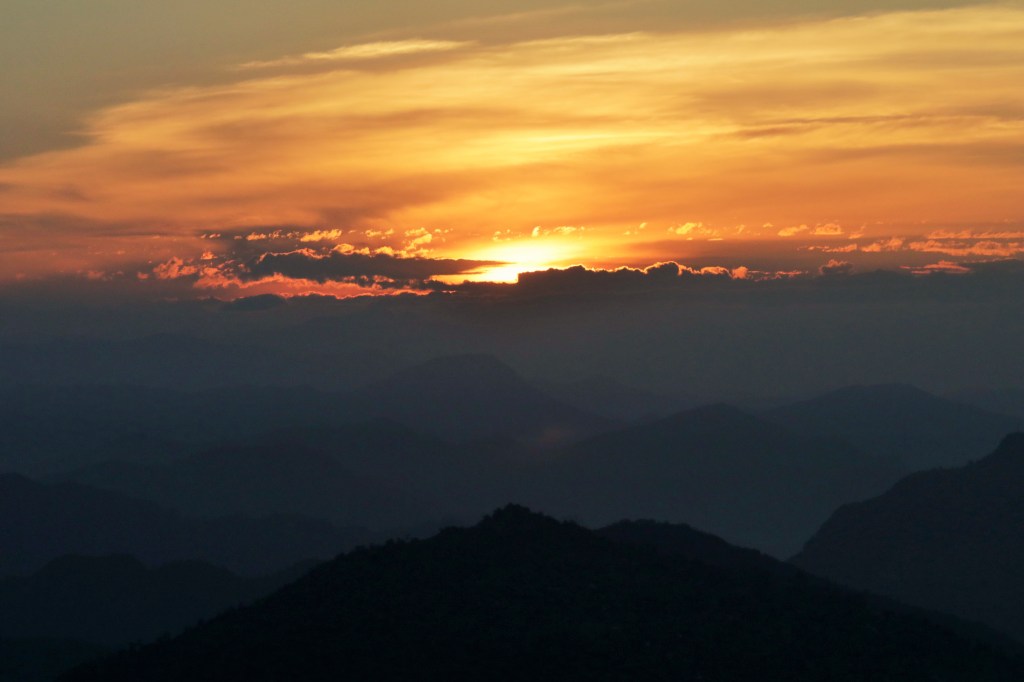
On another early morning, we drove to a high lookout above the Pokhara Valley to watch the sunrise at Annapurna and (lower but closer) Machhapuchhre.

These spectacular photos are going to have to hold me until I can return and get a little closer with a 14-day trek to Everest base camp.

Climb every mountain, ford every stream. Follow every rainbow, ’till you find your dream! (Sound of Music. Composer Richard Rodgers)

This slideshow requires JavaScript.