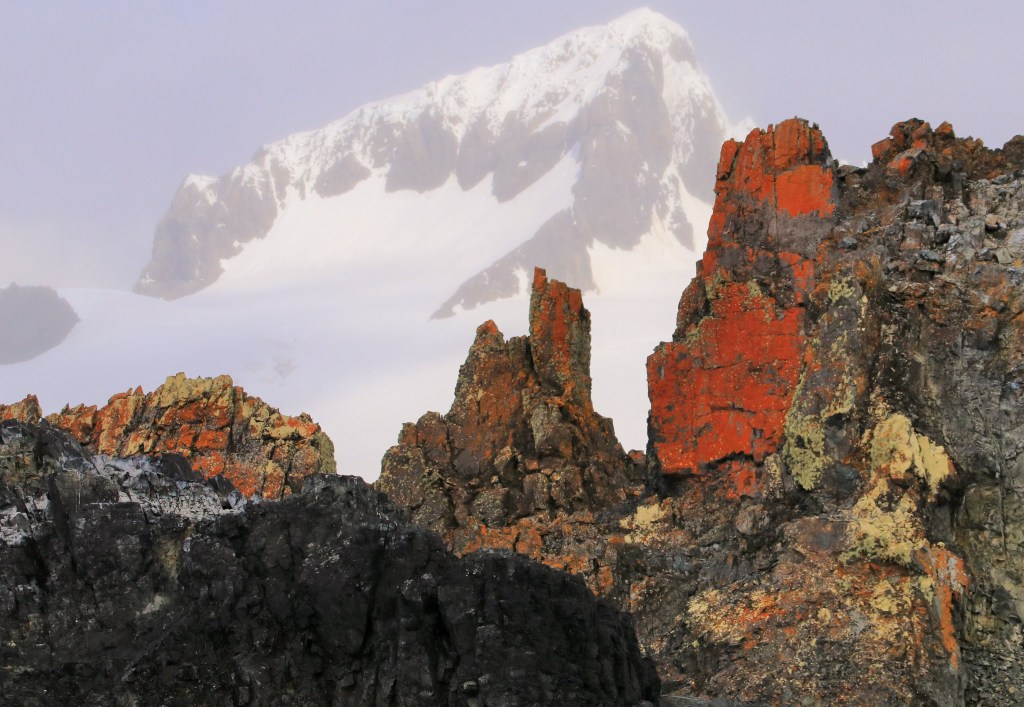
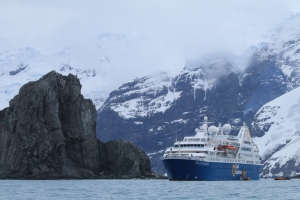
This Quark Expedition is sailing back north, heading toward the Drake Passage and Ushuaia, Argentina. This is our last landing for Antarctica. Tomorrow we will be reluctant tourists, leaving this unique, beautiful place.


But for now we will enjoy Half Moon, a 1.2 mile long island between Livingston and Greenwich Islands in the South Shetlands.
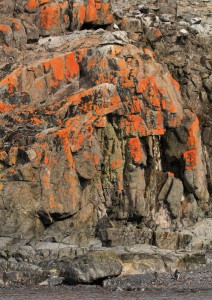
beautiful lichen
The Argentine Camara station is located at one end
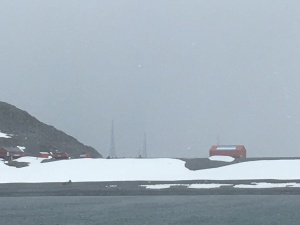
Argentine Camara Station
and a Chinstrap penguin nesting area at the other.
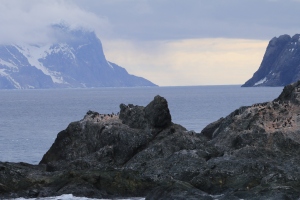
Blue-eyed Shags nest on top of orange lichen pinnacles against glaciated mountains beyond. 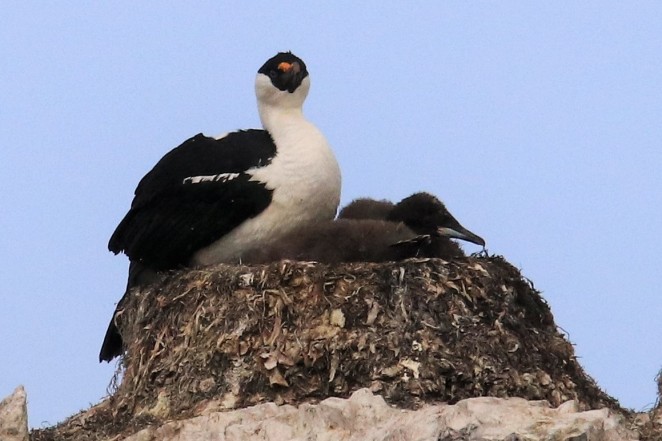
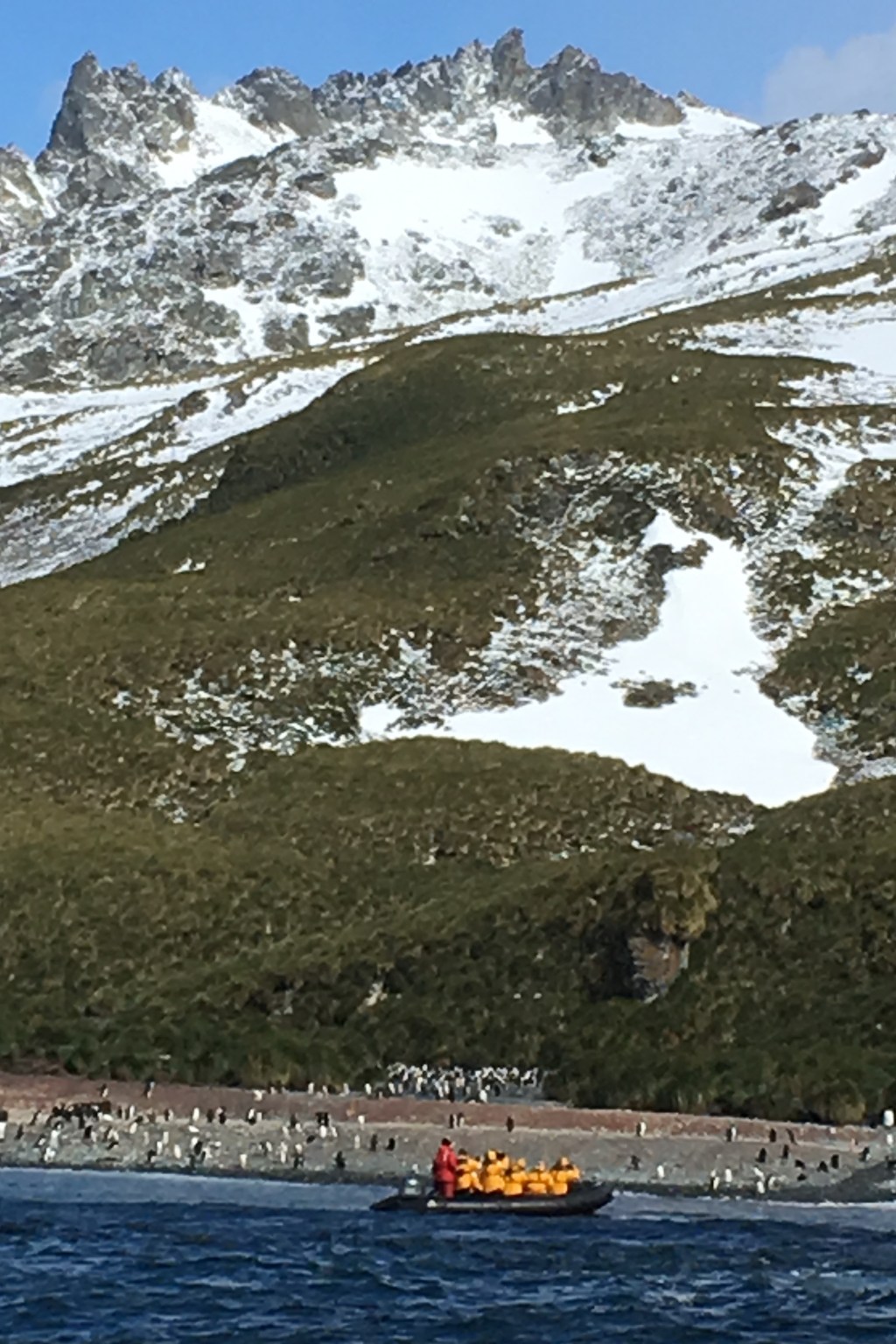
Before landing, we bounced in the zodiacs over choppy waters, checking out seals, shags, and this very cheeky skua who landed right next to me.
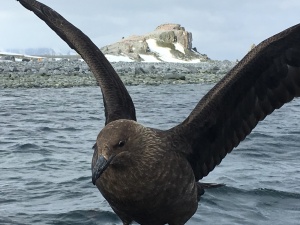
not sure if he wanted to be friends
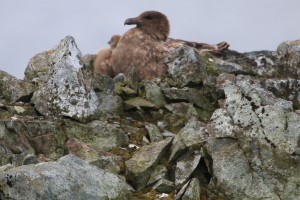
On land, amongst the rocks, broken penguin shells led to a mother skua snuggling with her chick.
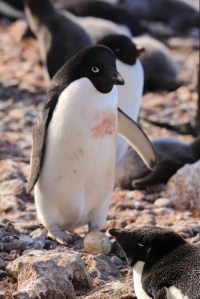
A single Adele penguin approached me with a tilt of the head and a confused look in its eyes. “How do I get back home?” The poor thing was obviously lost, speaking in penguin before wandering off in search of a more appropriate friend. 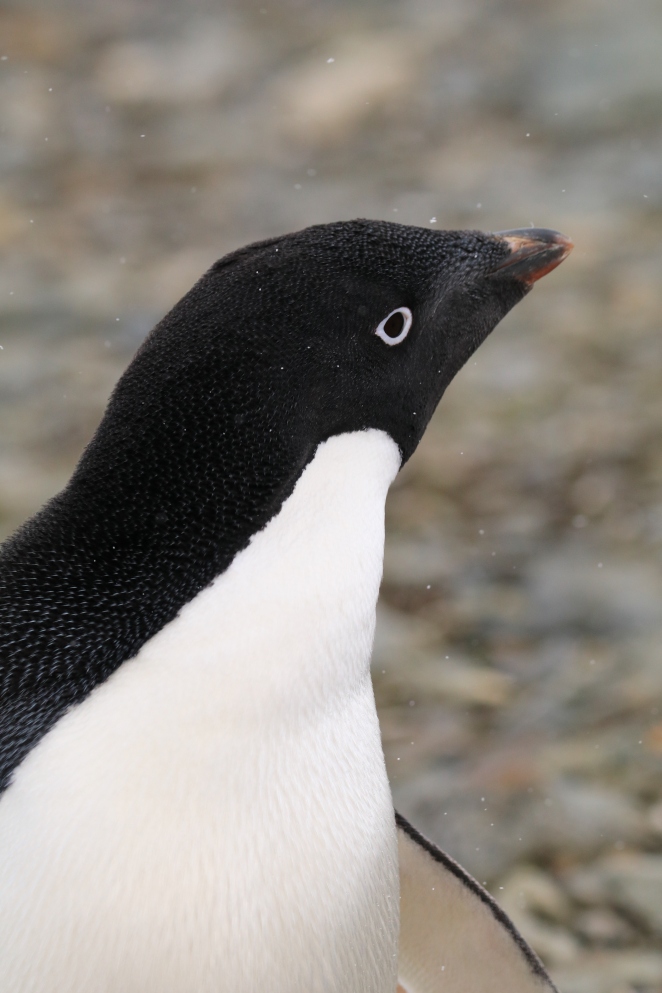
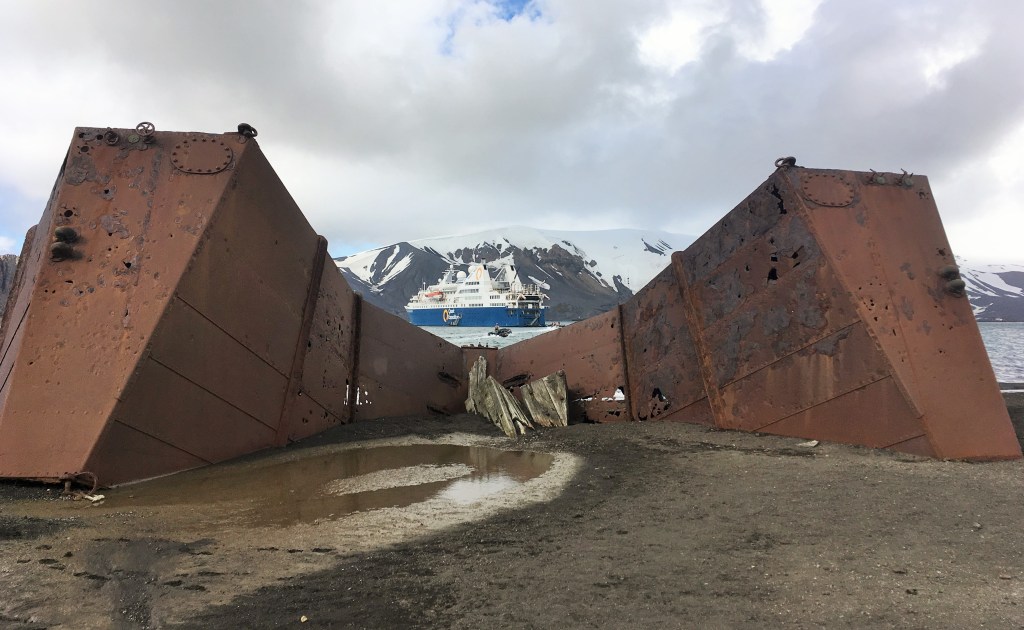
An old whaling craft remains on the beach, another testament of history in this part of the world. 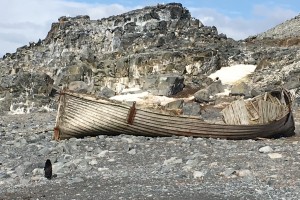
Half Moon Island is the breeding site of approximately 3,300 Chinstrap Penguins. Since this is our last landing, I spent time enjoying their antics and reflecting on all I’ve seen and learned.


I must admit to wiping a tear away, thinking about how much more there is to experience in this vast land. This little penguin expressed my emotions back at me. 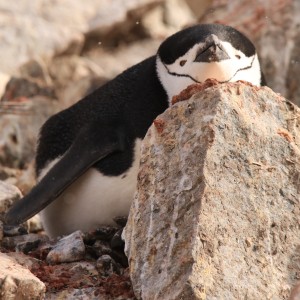
Before I left home, my friends asked strange questions . “WHY do you want to go there?” or “Where is that place….North or South pole?”
I hope my words and pictures have explained the wonders to be found here. More important, I hope I’ve inspired YOU to experience this adventure.
Good-bye from Antarctica.
This leaves a great big question—“Where shall I go next?” —trust me, I have a long list! Stay tuned. 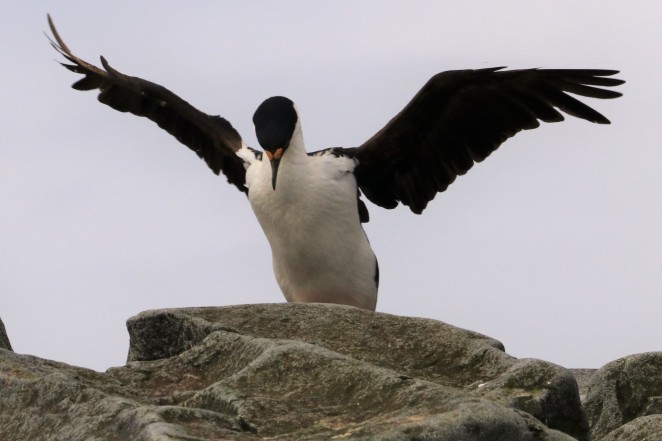


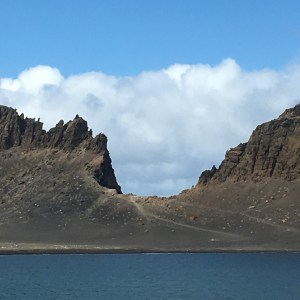
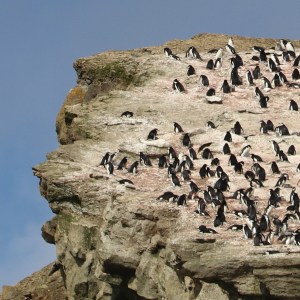 If you were a bird, would you want to hang out where it’s warm? Of course. The world’s largest chinstrap penguin colony with over 100,000 breeding pairs are here. We also saw blue-eyed shags (cormorants) with juveniles as big as the adults, nesting high above on the cliffs. (Thank goodness for that 600mm lens!)


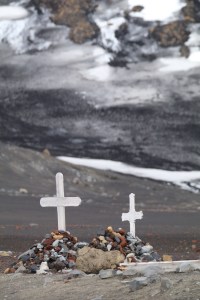


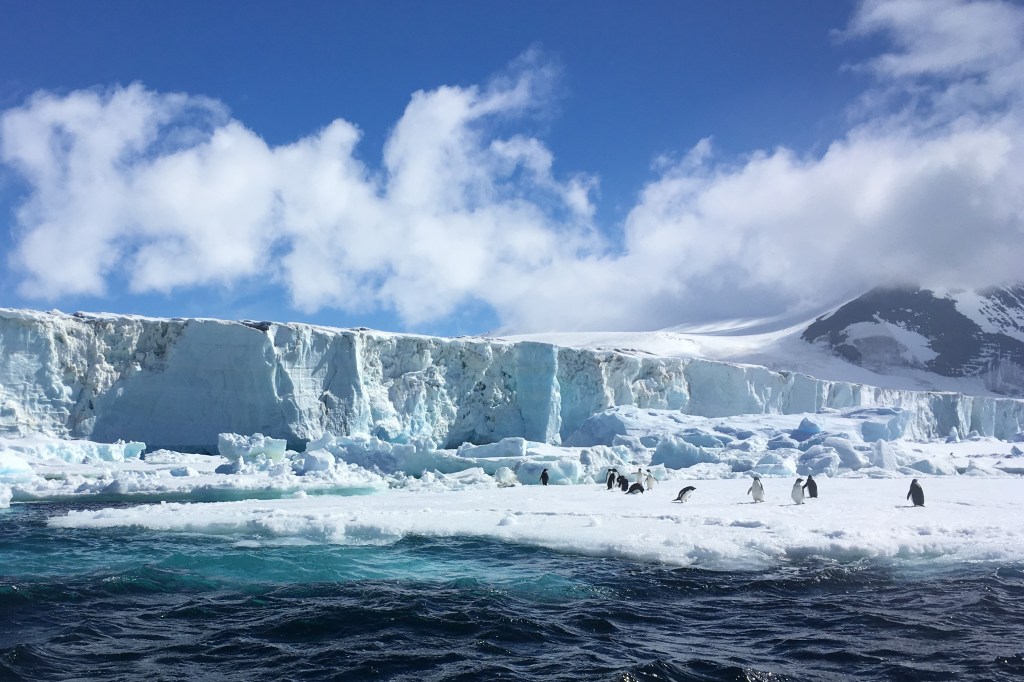
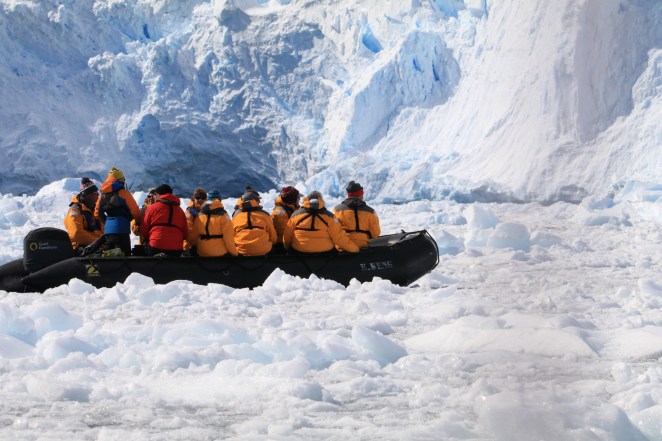
 We zodiac cruised around them, pressing forward into thick brash ice that popped and crackled as air trapped millennia ago released from the melting pieces. Imagine, what animal exhaled that air last, now being freed into the atmosphere again.
 Coming around a flat berg, I held my breath passing a sleeping Leopard Seal with a blood-smeared mouth.
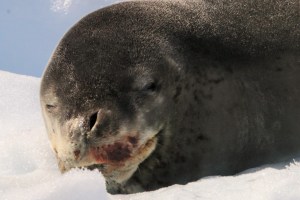 With reports of them attacking zodiac boats, I hoped it didn’t decide to wake up and jump at us. Other seals live and breed in colonies. These guys are loners, eating other seals and penguins along with krill and fish. The shape of the head looks rather reptilian rather than the cute seals doing tricks at Sea World.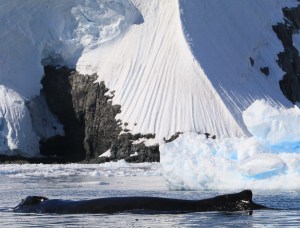


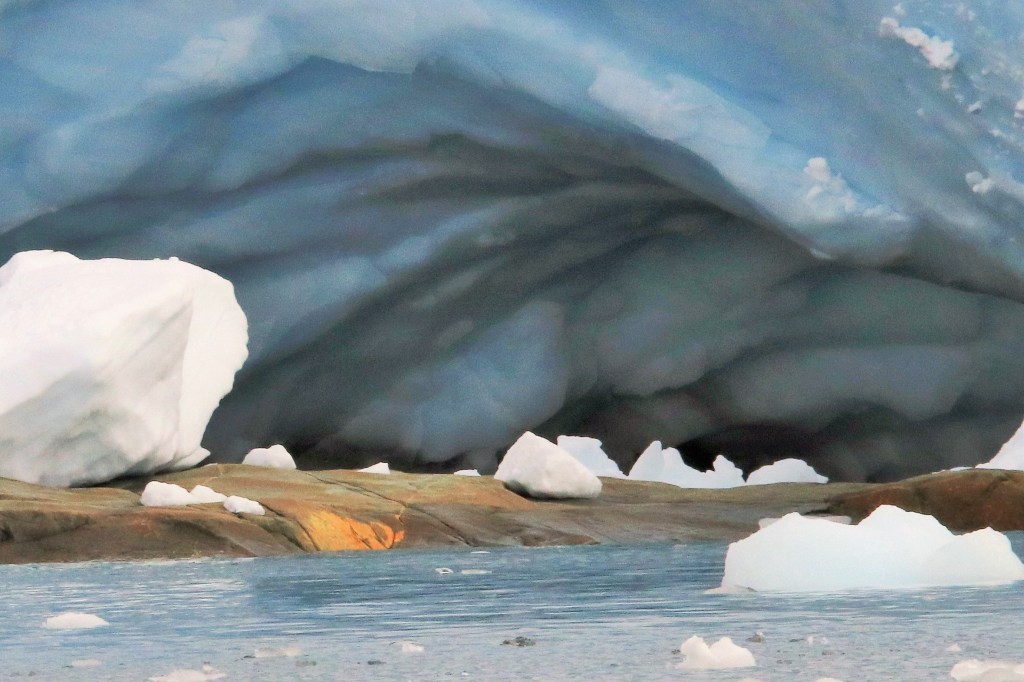


 This day we chased through the harbor, following a group of Humpback Whales from a safe distance, shooting with our cameras rather than exploding harpoons.


 .
.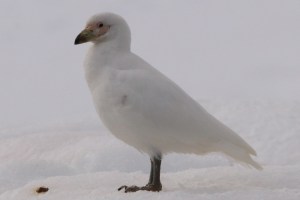 sitting on the ice with a meal that looked suspiciously like the remains of a penguin chick. They also steal krill from penguins and are quite the scavengers. This is the only land bird native to Antarctica.


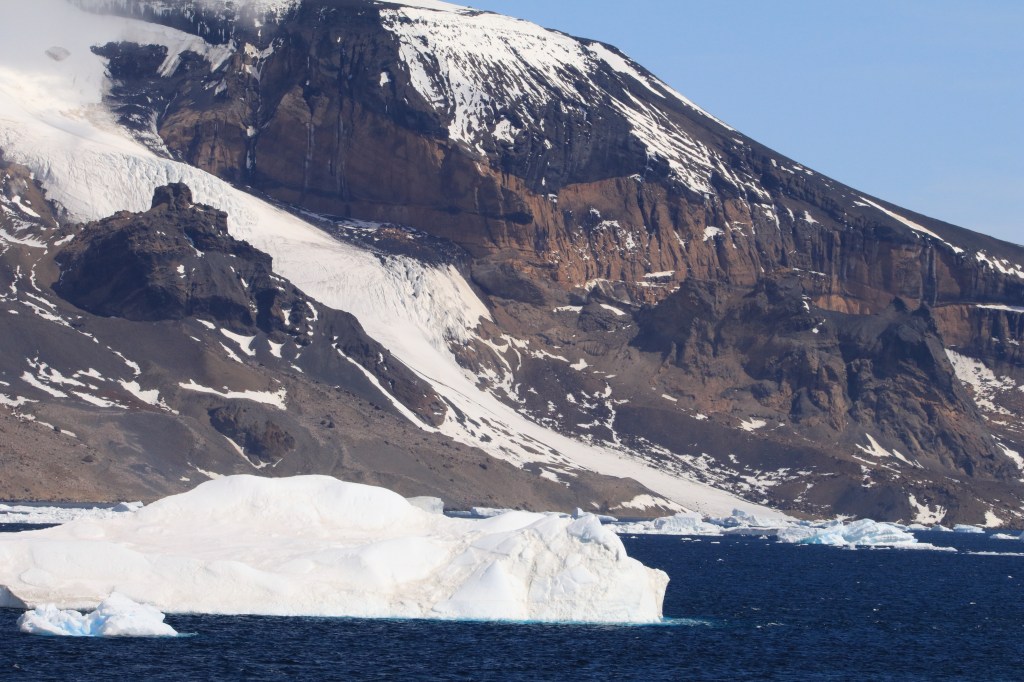




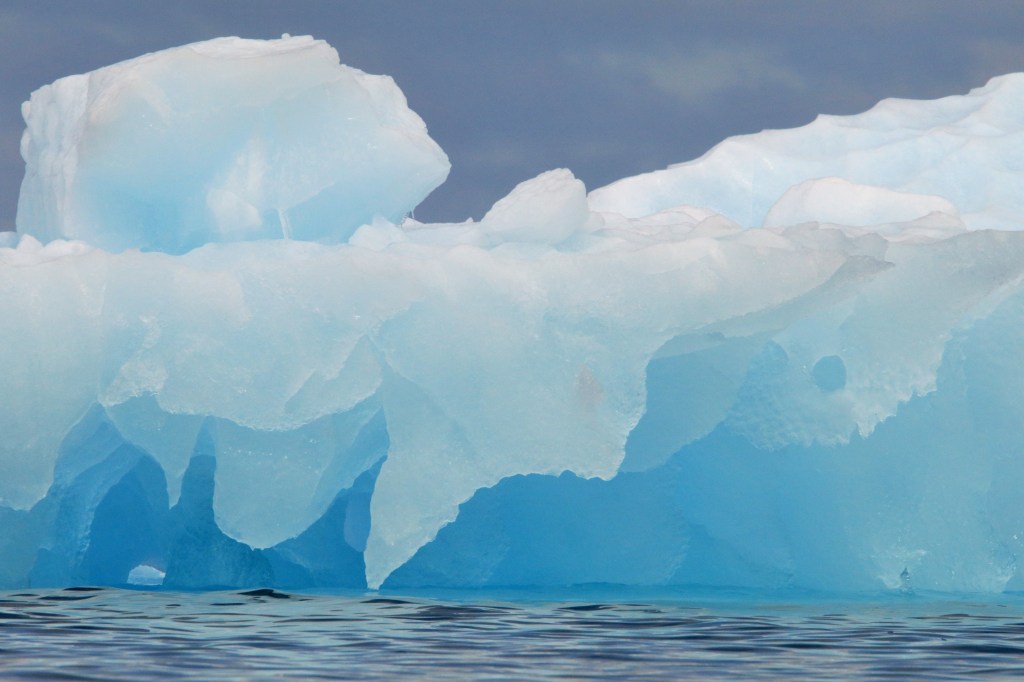




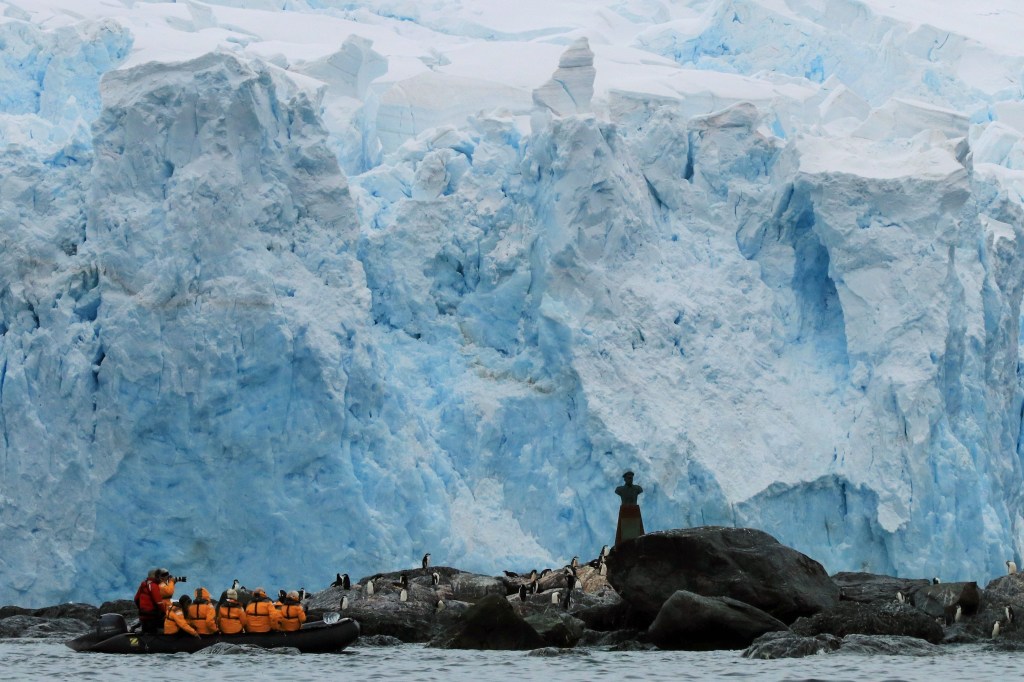
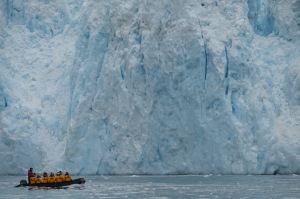 Endurance Glacier (named after the rescue) is a piedmont glacier. Do you know what that means? Did you know there are so many glaciers in Antarctica that many have never been named? Maybe your class can petition to name one. See the blue ice? This means it’s old and compressed.


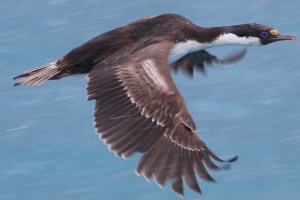 This is a juvenile blue-eyed Cormorant, still in brown plumage. A giant Petral takes off before me.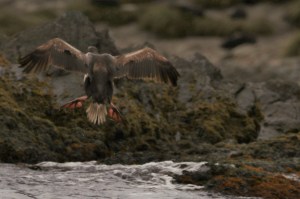


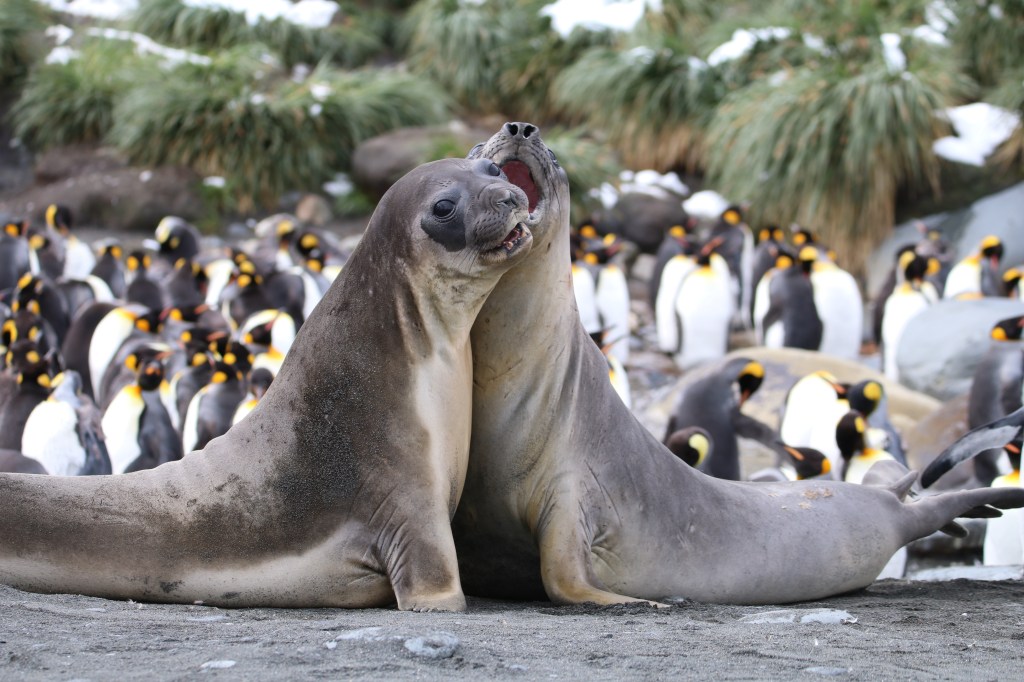
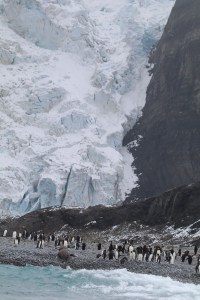 Gold Harbor is as beautiful as the metal, but not named for it. Instead, the moniker originated from sentimental sealers for the brilliant aura the sun casts on the cliffs in the morning and at sunset.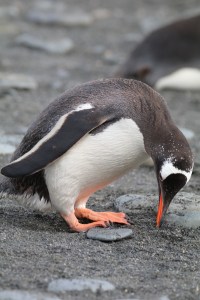




 Adventure Quest